REVIEW · SICILY
Hike near the summit craters up to the maximum safe altitude currently foreseen
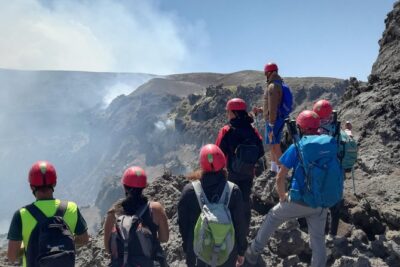
Etna puts you close to a living volcano. This five-hour hike begins at 1,900 meters, uses the cable car to reach 2,500 meters, then climbs across lava fields toward the highest safe point currently allowed. I like the route’s mix of dramatic scenery and real geological explanation, and I like that the guide and safety equipment are included.
The main catch is cost clarity: the advertised price is $66.38 per person, but you must pay another €52 on site for the cable car. The climb also reaches thin, cold air and rough volcanic ground, so this is not a gentle sightseeing walk. You need decent fitness, warm layers, and a willingness to move carefully.
Guides such as Filippo, a geologist with a PhD, and experienced leaders including Vincenzo, Daniele, and Podlo have helped make this experience memorable for many people. The strong 4.9 rating from 57 ratings and a 100 percent recommendation rate fit the tour’s main strengths: skilled guides, well-timed breaks, impressive views, and a route that feels like much more than a cable-car outing.
Key points to know before you book
- You reach about 3,000 meters: This is the maximum altitude currently permitted by summit safety rules, at the base of Mount Etna’s South-East Crater.
- The cable car saves your legs early: You start at 1,900 meters and ride to 2,500 meters before the main hike begins.
- The route covers about 6.5 kilometers: Expect roughly 500 meters of uphill gain, uneven volcanic ground, crater rims, lava channels, and fumaroles.
- The South-East Crater is viewed from a safe distance: Access is closed because of heat, unstable ground, collapses, and the risk created by shallow magma.
- Equipment is supplied: Trekking poles, hiking shoes, helmets, warm jackets, extra socks, and an extra backpack are available as part of the tour.
- The cable car costs extra: Budget €52 per person for the round trip, plus possible parking and snowshoe charges.
Starting at 1,900 meters on Etna’s south side
You meet at the Esagonal Piazzale Funivia Etna Sud in Nicolosi at 8:30 a.m. This is the south-side cable-car area, and the meeting point is also where you finish. A place at the start offers breakfast and sandwiches, which is useful because the tour lasts about five hours and the route itself is not built around regular food stops.
After check-in, your authorized vulcanological guide explains the plan and helps organize the cable-car ride. The group can include up to 15 people. That is a useful size for a mountain walk: large enough for a social feel, but small enough for questions and guide supervision to remain practical.
The starting elevation matters. At 1,900 meters, you are already high above sea level, but the real physical test begins later. You will be walking in cold, exposed conditions, and the air becomes noticeably thinner as you gain height. I would not treat the first cable-car ride as a sign that the excursion will be easy.
More Volcano Crater Hikes in Italy
- Etna – Trekking to the summit craters (only guide service) experienced hikers
★ 5.0 · 286 reviews - Etna, Summit Craters
★ 5.0 · 272 reviews - Etna: Trekking to the summit craters at 3,340 meters
★ 5.0 · 50 reviews
The cable car to 2,500 meters
The round-trip cable car is not included in the advertised $66.38 price. You pay €52 per person on site, so the real cost is higher than the headline figure. Parking is also separate, and transport from your accommodation is not provided.
Still, the cable car adds good value if you want to reach the upper slopes without spending the entire day on a much longer ascent. It takes you directly to the high-altitude section, where the volcanic scenery becomes stark and unusual. You trade a little convenience for a much more manageable five-hour outing.
The cable-car service can be affected by maintenance or mountain conditions. On one occasion, the hike continued without the usual ride, with an old lava tunnel and the 2002 crater becoming highlights of the altered route. That is a useful reminder that Etna is not a theme park attraction. The mountain decides what is safe, and the guide may change the route when needed.
Climbing across young volcanic ground
At about 2,500 meters, the main trek begins. You gain around 500 meters over roughly 6.5 kilometers, though the exact distance and elevation can change with conditions and safety limits.
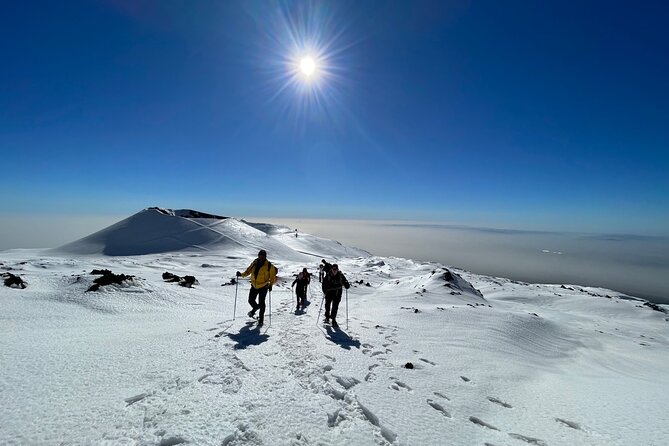
The route crosses lava fields and follows lava channels toward the upper craters. You can expect irregular, unstable footing rather than a smooth mountain path. Trekking poles are especially useful here, both for balance and for taking some strain off your legs during the descent.
The supplied hiking shoes are helpful if you do not have suitable footwear. The tour also provides helmets, warm jackets, extra socks, and an additional backpack. These items make the price more useful, especially for people who are traveling around Sicily and do not want to pack full mountain equipment.
You should still bring your own hat and gloves. Those are specifically not included, and you will feel the omission quickly at this altitude. A beanie, neck warmer, sunglasses, and warm base layers are sensible additions. Snowshoe rental costs €15 if deep snow requires it, payable to the guide.
Fumaroles, lava channels, and the South-East Crater
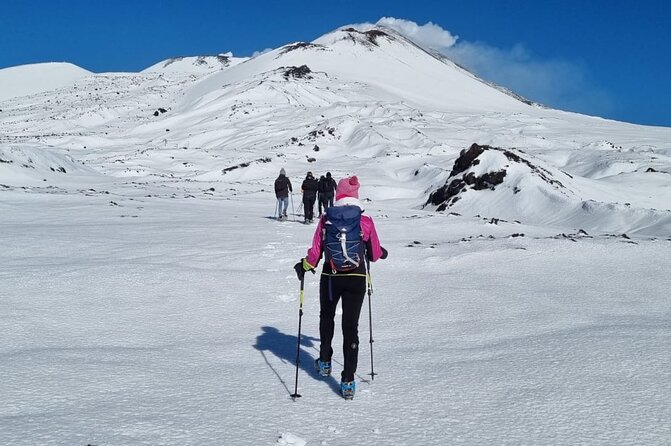
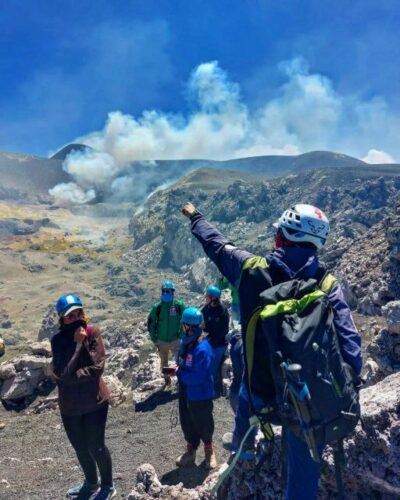
The most striking part of the route is not just the height. It is the evidence of heat and movement beneath your feet. Hot fumaroles release volcanic gases, while lava channels and hardened flows show how molten rock has traveled across the upper slopes.
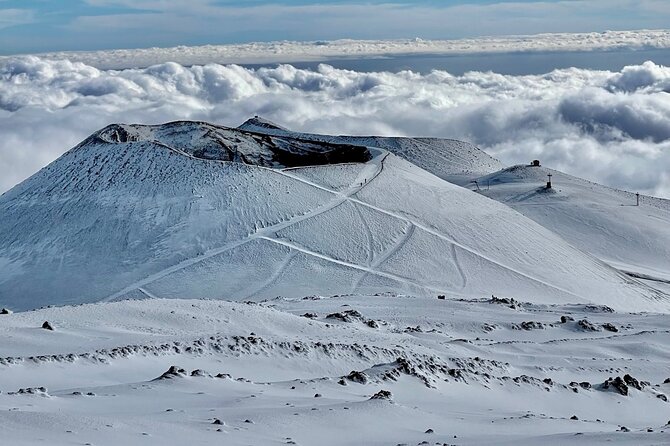
The destination is the base of the South-East Crater, Etna’s most active cone. From the permitted viewpoint, you can look toward a crater that has produced many recent eruptions. You do not climb onto the cone itself, and that restriction is not a disappointment. It is the reason the excursion can operate safely near an active volcano.
Zafferana and Civil Protection authorities have closed access to the cone because of extreme heat, unstable ground, and the possibility of collapses when magma is shallow. Your guide keeps the group at a safe distance while explaining what you are seeing. This turns the boundary into part of the lesson: Etna is impressive precisely because it is still active and unpredictable.
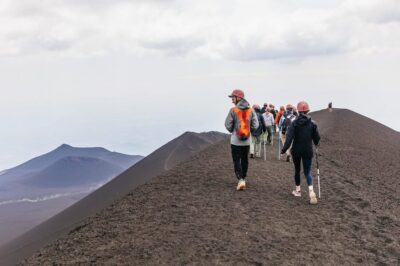
The route can include walking along crater rims. That gives you wide views and close contact with volcanic shapes, but it may cause dizziness if you are sensitive to heights or exposed edges. Take your time, use the poles, and tell the guide if you feel unsteady.
Same trip, a different kind of day out:
- Etna Morning Trip
★ 4.5 · 1,241 reviews - Mt. Etna nature and flavors half day Tour from Catania
★ 5.0 · 545 reviews - Etna excursion 3000 meters with 4×4 cable car and Trekking
★ 4.5 · 504 reviews - Mount Etna Adventurous Hiking Tour with Equipment
★ 4.5 · 439 reviews
What the guide adds to the walk
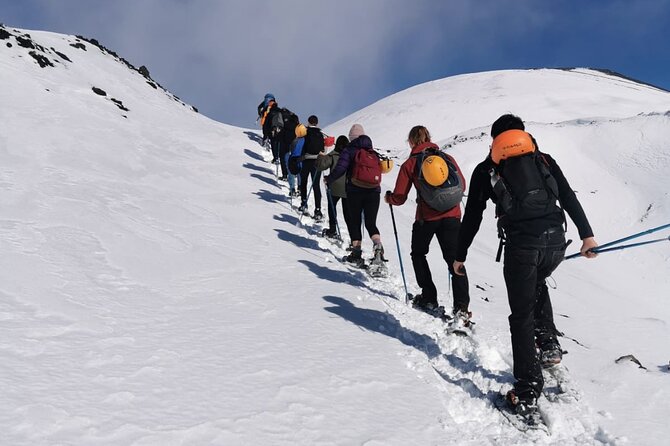
This tour depends heavily on the guide. The volcano is easier to understand when someone explains why one crater looks fresh, how a lava channel formed, or why a certain zone is closed.
Filippo has a PhD in geology and has been praised for combining detailed explanations with calm encouragement. That combination matters on a steep high-altitude route. You get the science without turning the hike into a classroom, and you receive support when the thinner air makes the final climb feel slow.
Vincenzo has also been singled out for clear explanations, friendly conversation, and a good sense of route choice. Daniele guided a family group that particularly enjoyed learning about Etna, while Podlo helped make the Crateri del Rift route memorable. The exact guide is not guaranteed, but the experience has a clear emphasis on volcanic science rather than simply leading people uphill.
Pauses are spaced carefully, giving you time to recover and take in the geology. This is important because many people climb too fast at altitude, then struggle later. A steady pace lets you watch the crater views, ask questions, and save strength for the descent.
The final altitude is impressive, but not a summit climb
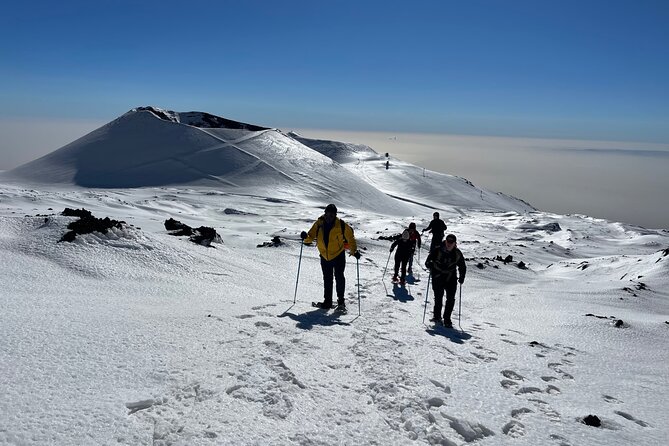
At roughly 3,000 meters, you reach the highest point currently allowed by the regulations. This is at the base of the South-East Crater, not the rim of the active cone.
The distinction matters when you set expectations. You are not taking an unrestricted walk to Etna’s summit crater. Instead, you are reaching the upper slopes and getting as close as safety rules permit. For most people, that is the sensible version of a summit experience on an active volcano.
Weather, ash, gas, snow, and volcanic activity can all change the permitted route. The excursion may be adjusted, shortened, or suspended if conditions create a risk. That is not a flaw in the operation. It is essential mountain judgment, and the safe altitude can change from one day to the next.
Views from the high slopes are a major reward. The setting is open and dramatic, with crater forms, lava flows, and distant Sicilian scenery depending on visibility. The experience is strongest when you accept that the mountain controls the timetable.
The descent follows a different rhythm
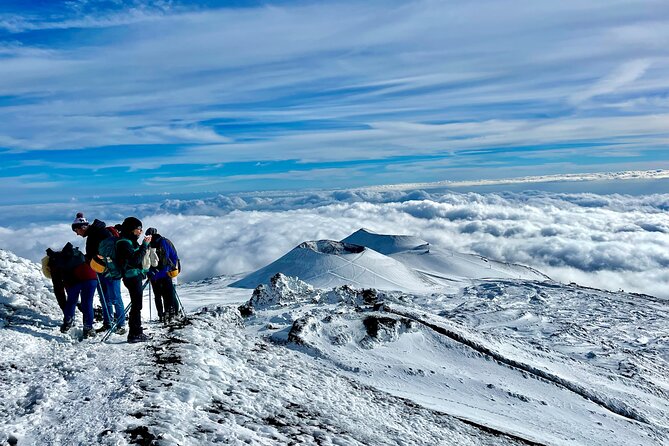
After reaching the upper limit, you descend on foot to the cable-car station and ride back to the starting point. The downhill section is not simply a repeat of the ascent.
Loose volcanic ground can make descending more demanding than expected. Your poles are valuable here, and your knees may appreciate the slower pace. The guide’s route choices and pauses help keep the group together.
The descent also gives you a second look at the features you passed earlier. A lava channel can appear different when viewed from below, and the changing angle helps you understand how the flows moved. One altered excursion even included older smaller craters and lava caves on the way down, showing how the route can shift while still delivering a strong volcanic experience.
You should allow the full five hours rather than planning a tight lunch or transport connection immediately afterward. The duration is approximate, and weather or safety decisions can affect the pace.
Fitness, altitude, and medical concerns
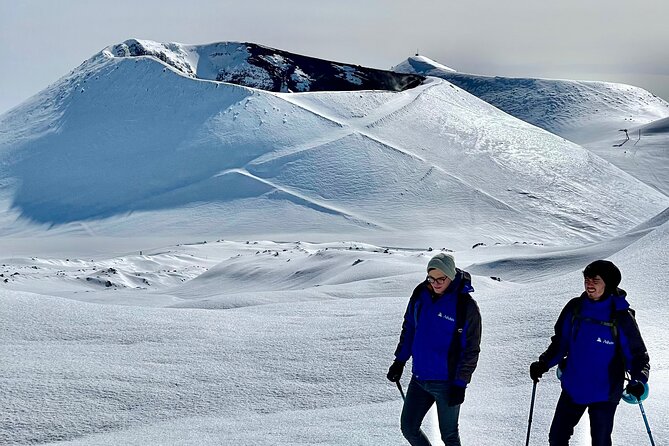
The tour is graded E, intended for hikers accustomed to high altitude. The operator describes it as suitable for people with moderate fitness, but not for those who do little physical activity. That is a fair warning.
The distance is not extreme on paper, yet the altitude makes the walk harder. The gain of about 500 meters takes place above 2,500 meters, where you may tire sooner than expected. Uneven ground, crater rims, and thin air add to the work.
Children over seven can join if they are used to walking. Age alone is not the key issue. A child who handles long walks well may manage it, while an inactive adult may find it unpleasant.
The excursion is not suited to people with certain cardiovascular or respiratory conditions, hypertension, or other medical concerns. You should tell the guide about relevant health issues before setting out. Fumaroles and ash can irritate your eyes, so contact lenses are not recommended. If you wear them, sunglasses are advised.
What to bring, and what you can borrow
The equipment supplied is one of the tour’s strongest practical features. You can use:
- Trekking poles
- Trekking shoes
- Helmet
- Warm jacket
- Extra socks
- Extra backpack
You still need personal basics. Bring gloves, a hat or beanie, warm layers, sunglasses, and water. A neck warmer is useful in cold wind. The operator does not include hats or gloves, and these small items can make a big difference above 2,500 meters.
Do not dress for a warm Sicilian morning at the coast. Etna’s upper slopes can be cold even when lower towns are sunny. You may find that the borrowed jacket is welcome during the cable-car ride and final ascent.
Is the $66.38 price good value?
The advertised price looks attractive for a five-hour guided excursion near Etna’s upper craters, especially with safety equipment, accident insurance, admission to Mount Etna, and an authorized vulcanological guide included.
The extra €52 cable-car payment changes the calculation. Add parking if you drive, and add €15 for snowshoes when deep snow requires them. Transport from your accommodation is also not included.
Even so, the package can be good value if you would otherwise need to rent equipment, find a suitable route, and judge volcanic safety on your own. The guide’s expertise is the core purchase. You are paying for access to a regulated high-altitude route and for someone who can interpret changing conditions.
I would compare the full likely cost, not just the headline price. If you already have suitable mountain gear and prefer hiking independently, a self-guided visit may cost less, but it will not provide the same close explanation of the craters, lava, gases, and safety boundaries.
Booking flexibility and changing mountain conditions
You can cancel for a full refund if you do so at least 24 hours before the 8:30 a.m. start. Changes made inside that window are not accepted, and late cancellations are not refunded.
The tour requires suitable weather and a minimum number of participants. If poor conditions or low numbers force a cancellation, you are offered another date, another experience, or a full refund.
That policy is useful for planning Sicily, where you may be moving between towns. Still, do not leave the excursion until the final day of a short visit. Etna conditions can change, and a replacement date is only helpful if you have time available.
Who should book this Etna hike?
I would choose this tour if you want a serious encounter with Mount Etna but do not want a full-day expedition. It suits active families, fit casual hikers, and experienced walkers who value a guide’s scientific explanation.
It is especially good for you if:
- You want to reach 3,000 meters without making a much longer ascent from the lower slopes.
- You enjoy geology, volcanic activity, and clear explanations.
- You prefer a small group with supplied mountain equipment.
- You can handle steep, uneven ground and cold high-altitude conditions.
- You accept that the route may change for safety.
I would hesitate if you rarely exercise, dislike loose ground, have health conditions affected by altitude, or expect to stand on the active summit cone. The tour gets close to Etna’s most active crater, but it does not enter the restricted zone.
Should you book the Mount Etna summit crater hike?
Yes, if you want the best balance of altitude, scenery, volcanic detail, and manageable duration on Etna’s south side. The cable car reduces the approach, the guide adds real meaning, and the 3,000-meter viewpoint delivers a strong sense of reaching the upper mountain.
Go in with accurate expectations. This is not a casual walk, and the total price is higher after the cable-car fee. Bring gloves, a hat, sunglasses, and warm clothing. If your fitness is sound and you respect the mountain’s rules, this is a powerful way to meet Etna up close without pretending an active volcano is completely predictable.
FAQ
Where does the Mount Etna hike begin?
The meeting point is Esagonal Piazzale Funivia Etna Sud, 95030 Nicolosi CT, Italy. The tour begins at 8:30 a.m. and ends at the same location.
How high does the hike go?
The route reaches about 3,000 meters, the maximum altitude currently allowed by summit regulations. The endpoint is at the base of the South-East Crater, not on the active cone.
Is the cable car included in the tour price?
No. You must pay €52 per person on site for the round-trip cable car. The advertised tour price is $66.38 per person.
What equipment is provided?
The tour provides trekking poles, trekking shoes, helmets, warm jackets, extra socks, an extra backpack, accident insurance, and an authorized vulcanological guide. Hats and gloves are not included.
How difficult is the hike?
The hike is rated E for people used to high altitude. It covers about 6.5 kilometers, includes roughly 500 meters of ascent, and crosses uneven volcanic ground. Moderate physical fitness is required.
Can the route change because of weather or volcanic activity?
Yes. The guide may adjust or suspend the excursion if weather, environmental, or volcanic conditions create a safety risk. If the tour is canceled because of poor weather or insufficient numbers, you can choose another date or receive a full refund.
More Volcano Crater Hikes in Sicily
- Mount Etna: Summit Crater Trek with Cable Car
★ 4.8 · 1,875 reviews - Etna: summit craters trekking with volcano guide 3350mt
★ 4.7 · 1,712 reviews - Etna Sunset Tour: Volcano trek, Cave & tasting from Catania
★ 4.8 · 1,290 reviews - Lanzarote: Guided Volcano Hike with Transfers
★ 4.9 · 861 reviews
More Volcano Hikes and Treks in Italy
- Etna Morning or Sunset – Trek & Lava Tunnel with Gear
★ 5.0 · 133 reviews - Etna Southern Slope Guided Easy Trek
★ 4.8 · 36 reviews - Sicily: Mount Etna’s North Slope Craters Guided Hike Tour
★ 5.0 · 8 reviews - Mount Etna: Summit Guided Hiking Tour up to 3,400 m
★ 4.8 · 4,792 reviews
Just added around Sicily
- Sicily: Mount Etna’s North Slope Craters Guided Hike Tour★ 5.0 · 8 reviews
- Etna Southern Slope Guided Easy Trek★ 4.8 · 36 reviews
- From Cefalù: Full-day tour to Mount Etna & Taormina★ 4.1 · 3 reviews
- Enoteca dell’Etna: Iemu Spizzicannu Tasting★ 5.0 · 9 reviews
- calice in cratere★ 5.0 · 6 reviews
- Capo d’Orlando: Mini-cruises to Salina Panarea and Stromboli★ 3.0 · 5 reviews
- Etna: Trekking to the summit craters at 3,340 meters★ 5.0 · 50 reviews
- 30 minutes Etna volcano private helicopter tour from Fiumefreddo★ 5.0 · 106 reviews
Volcano Crater Hikes, compared.
summit craters trekking with volcano guide 3350mt
Our review of it →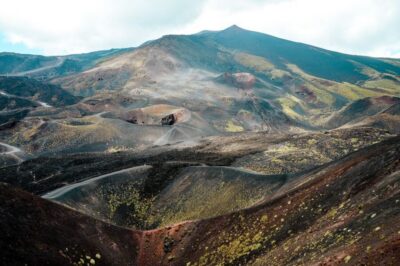
Etna Sunset Tour: Volcano trek, Cave & tasting from Catania
Our review of it →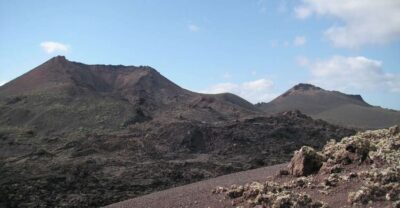
Fagradalsfjall Volcano Hike – Small Group with Local Guide
Our review of it →