REVIEW · SICILY
Etna – Trekking to the summit craters (only guide service) experienced hikers
Etna rewards strong legs and early starts. This north-side ascent from Piano Provenzana offers two things I especially like: a less crowded route through fresh lava fields and lateral craters, plus guides who explain the volcano as you walk. Guides such as Nikos, Daniele, Poldo, and Vincenzo are praised for setting a steady pace and making the geology easy to follow. The main drawback is simple: this is a demanding mountain hike, and the advertised summit may be restricted by volcanic activity or weather.
I also like that the operator supplies boots, poles, helmets, warm jackets, and extra socks, which takes some pressure off your packing list. You still need proper fitness, long trousers, sun protection, and ideally gloves. The extra transport charge can also surprise you, since the 4×4 ride from the lower station is paid separately.
Key points to know before booking
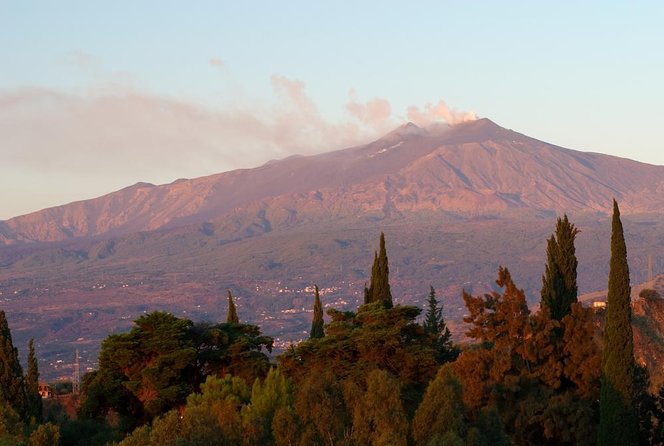
- The north side feels quieter and wilder: Piano Provenzana is less crowded than Etna’s southern station and sits among the remains of the 2002 lava flow.
- The hike reaches about 3,323 meters when conditions allow: Guides choose the highest safe route according to gas, heat, fractures, weather, and official restrictions.
- The descent is the real test: After climbing roughly 550 meters, you may walk down about 1,500 meters of height loss to Piano Provenzana.
- The tour includes useful mountain gear: Hiking shoes, trekking poles, helmets, jackets, extra socks, and a spare backpack are provided.
- The 4×4 transfer costs extra: Budget about €50 per person for the uphill off-road ride, and confirm the current return arrangement before departure.
- Small groups help: The maximum group size is 12, and many departures run with fewer people.
Starting at Piano Provenzana after the 2002 eruption
You meet at the Chiosco Bar Mareneve di Ferraro in Piano Provenzana, on Etna’s north side. The meeting time is 7:45 a.m., with departure around 8:00 to 8:15. From May through October, an afternoon departure at 1:00 p.m. may also be available.
Piano Provenzana is more than a parking area. The tourist facilities were destroyed by the October 27, 2002 eruption, and the site was rebuilt among the old lava flows. Pine woods, black volcanic rock, cafés, and scattered craters make the starting area feel tied to the mountain rather than designed around it.
Arrive early enough for coffee, a pastry, and a bathroom stop. You can also fill your water bottle before setting out. The parking area has blue-lined spaces for cars and camper vans. Parking costs €5 for the day on weekdays and €8 on Sundays and public holidays.
The access road is paved and suitable for a private or rental car. In winter, you should carry snow chains or use winter tires. There is no accommodation transfer included, so you need to arrange your own way to Piano Provenzana.
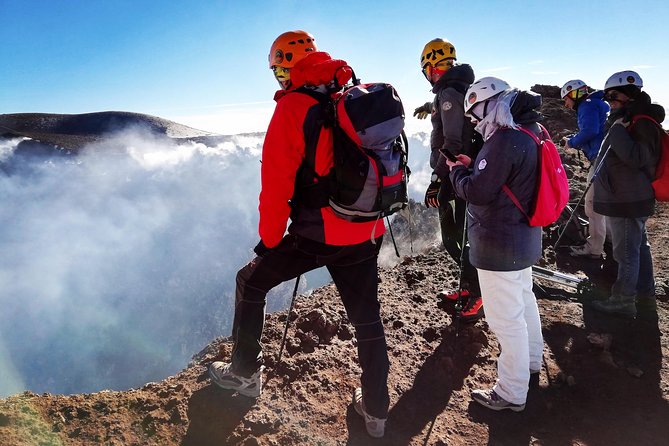
Before the hike, the guides give a safety briefing and sort out equipment. This is the moment to explain any health concerns honestly. The route reaches high altitude, follows unstable volcanic ground, and may pass near gas emissions and crater edges.
More Volcano Crater Hikes in Italy
- Etna, Summit Craters
★ 5.0 · 272 reviews - Hike near the summit craters up to the maximum safe altitude currently foreseen
★ 5.0 · 57 reviews - Etna: Trekking to the summit craters at 3,340 meters
★ 5.0 · 50 reviews
The 4×4 climb across Etna’s northern flank
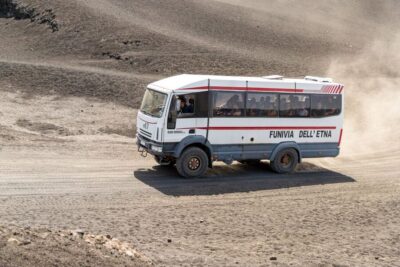
The first part of the day is a ride in an authorized off-road vehicle. The route follows about 9.5 kilometers of rough track, rising from roughly 1,800 meters to the high starting point near 2,960 meters.
This drive is not just a shuttle. You pass through pine forest, older lava flows, newer black rock, eruptive fractures, deep side craters, and channels cut by past lava. The views open toward northern Sicily, the Aeolian Islands, Calabria, the Strait of Messina, and both the Ionian and Tyrrhenian Seas.
On exceptionally clear days, you might see the Madonie range, the Gulf of Catania, Syracuse, Augusta, and the broad Valle del Bove. Weather changes quickly at Etna, so do not count on every view. Clouds can roll in even when the coast below is sunny.
The exact transport arrangement deserves attention. The supplied details describe an uphill 4×4 supplement of €50 per person, paid locally. Another note says that people choosing a public bus for the return from about 2,850 meters pay €70 instead of €50. Since the wording is not perfectly clear, confirm which vehicle or return option applies to your date.
That extra charge is not small compared with the tour price of $139.13. Still, the ride saves a long, unattractive climb on loose volcanic ground and gets you quickly into the high mountain zone. I consider it a practical expense, but it should be included in your real budget from the beginning.
Walking toward Etna’s four summit craters
The main hike begins near 2,960 meters. The planned route climbs about five kilometers with approximately 550 meters of ascent toward the summit zone. When conditions allow, you may reach around 3,323 meters and see Etna’s four principal craters: North-East, Voragine, Bocca Nuova, and South-East.
Do not read the summit wording as a guarantee that you will stand at the highest point. Etna is active, and access changes with gas, heat, fractures, explosions, snow, ice, wind, and official orders. The guide chooses the safest route toward the most active crater that can be approached responsibly.
One departure may reach 3,300 meters. Another may stop around 3,000 or 3,100 meters. A recent eruption or a temporary closure can change the plan after you book. This is not poor organization by itself. On an active volcano, safety rules have to win. Still, the operator should communicate these changes clearly, and you should book with that uncertainty in mind.
The route over loose scoria and sand can feel strange at first. You may take two steps upward and slide back one. The volcanic surface is unstable, so sturdy footwear matters. The guides provide trekking poles and shoes, but I would still bring long hiking socks and trousers that cover the tops of your boots.
Several people particularly praise the guides’ pacing. Nikos is described as stopping at useful points to explain volcanic activity without turning the day into a lecture. Daniele is praised for calm explanations and for reassuring people who feel nervous near the crater edges. Poldo is remembered as warm, funny, and highly informed about the volcano.
The pace is designed to keep the group together. Guides do not simply race to the summit and leave slower walkers behind. Breaks help with breathing, water, photographs, and the effects of altitude.
What the summit area feels like
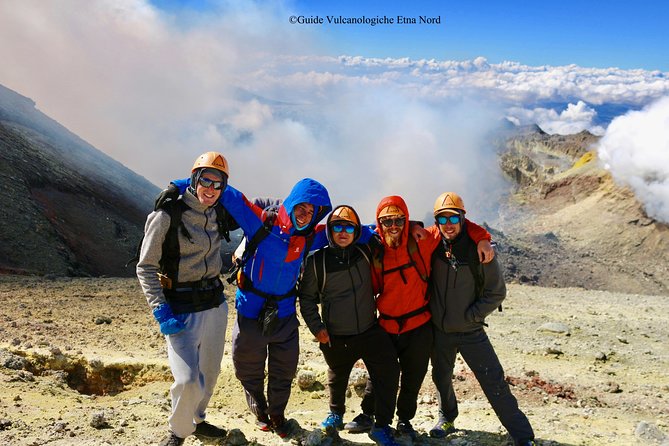
At the top, Etna changes character. The green woodland is long gone, replaced by gray, black, and reddish volcanic material. Steam and gas may rise from openings, and the wind can be fierce. Even in warm Sicilian weather, the summit zone can feel cold.
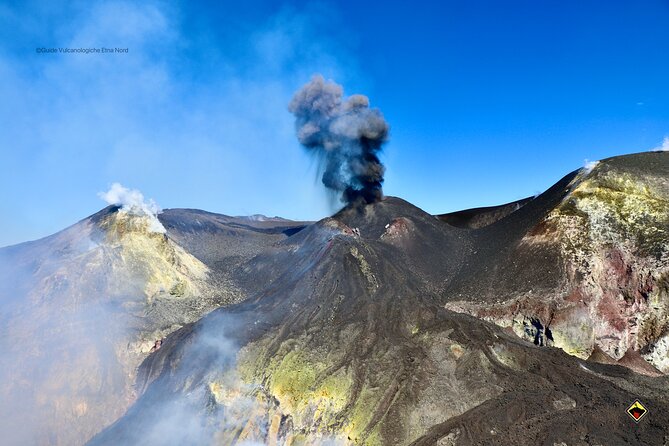
The guides explain the differences among craters, lava flows, ash, fractures, and recent eruptions. If the volcano is active and conditions are safe, you may see or hear fresh activity. One particularly striking account describes lava bombs being thrown from an active crater. That kind of sight is possible, but never guaranteed and never something the guides can promise.
The route near crater rims can cause dizziness. You should take the warnings seriously, especially if you are uncomfortable with heights, loose ground, strong wind, or volcanic gases. Contact lenses are discouraged because ash and fumes may irritate your eyes.
The scenery is the reward for the effort. From high on Etna, the coast, inland Sicily, and the sea may spread below you. On a clear day, the contrast between the dark summit and the bright Mediterranean is memorable. On a cloudy day, the experience becomes more about wind, ash, steam, and the strange feeling of walking through an active volcanic area.
Same trip, a different kind of day out:
- Etna Morning Trip
★ 4.5 · 1,241 reviews - Mt. Etna nature and flavors half day Tour from Catania
★ 5.0 · 545 reviews - Etna excursion 3000 meters with 4×4 cable car and Trekking
★ 4.5 · 504 reviews - Mount Etna Adventurous Hiking Tour with Equipment
★ 4.5 · 439 reviews
The long descent to Piano Provenzana
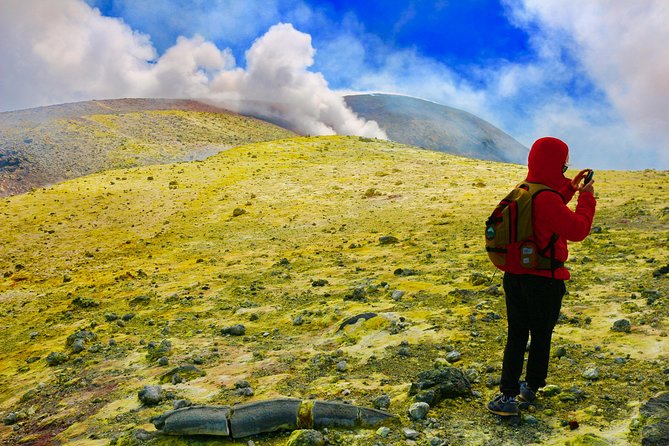
The return is not a short stroll back to the vehicle. The published route describes about seven kilometers of descent, with approximately 1,500 meters of negative height change, from around 3,300 meters to 1,800 meters.
This is where strong knees matter. Loose sand and scoria can make the upper descent entertaining for some people and tiring for others. You may slide down sandy gullies, but small volcanic stones can also work their way into your boots.
After the softer volcanic sections, the route crosses roughly 2.5 kilometers of ski slopes with harder, rockier ground. The surface changes underfoot, so trekking poles become useful. Long socks and trousers are not just for warmth. They help keep grit from rubbing your ankles.
The total walking distance is generally about 12 to 13 kilometers, though individual reports describe around 10.5 kilometers and nearly five hours on the mountain. The full day can run longer than the headline duration. A schedule described as about five and a half hours may become six to six and a half hours from meeting time to return, especially with equipment, transport, pauses, and changing volcanic conditions.
Bring lunch or substantial snacks. There is no promise of a meal at altitude, and food tastes particularly good after the hardest climb. Carry water from Piano Provenzana and use the refill points before setting off.
How difficult is this Etna hike?
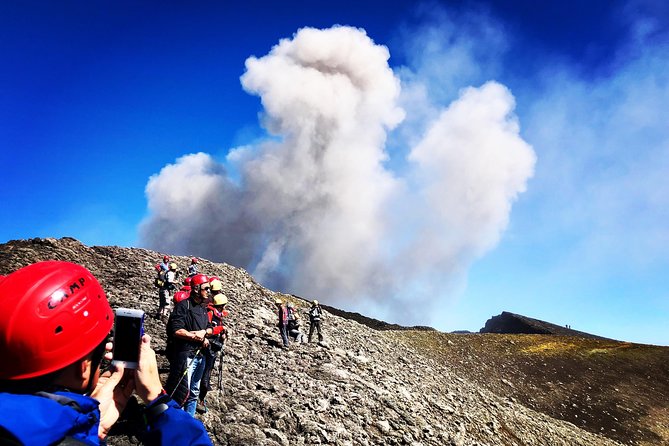
The word trekking is important here. This is not a gentle sightseeing walk from a cable-car station. You need good general fitness, reliable balance, and the ability to walk uphill and downhill for several hours at altitude.
The ascent can feel manageable if you are used to hiking, but the soft surface makes it harder than the distance suggests. The descent may be more demanding than the climb because of the height loss and the constant braking required by your legs.
The excursion is not suitable for children under 12. It is also not intended for people with breathing conditions, hypertension, or other health issues that make high-altitude exertion risky. Pregnancy beyond the third month is not permitted.
You should tell the guide about relevant health conditions before starting. The route may be altered or stopped for safety, and the guide can only make sensible decisions if you provide accurate information.
No special mountaineering skill is listed, but you should be comfortable on loose rock and steep ground. If your usual holiday walking means flat city streets, this is probably too much. If you regularly hike hills and can handle a long descent, the challenge is realistic.
What equipment is included, and what should you bring?
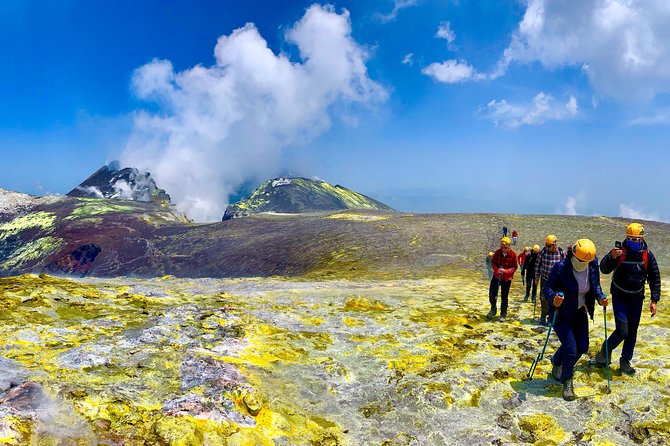
The operator provides a useful equipment package:
- Licensed volcano guide
- Trekking poles
- Trekking shoes
- Helmet
- Warm jacket
- Extra socks
- Additional backpack
- Accident insurance
- Access connected with the Mount Etna excursion
You still need to prepare carefully. Bring long trousers, sunscreen, water, lunch or snacks, and a warm hat and gloves. Hats and gloves are not included, and they matter in autumn, winter, and spring. A lightweight windproof layer is also sensible.
Some equipment may be available for a small rental charge, but the supplied information is not fully consistent with the included-equipment list. Ask at booking or at the meeting point what is included in your package. Without suitable shoes, insurance coverage does not apply, so do not treat footwear as a minor detail.
Avoid contact lenses if ash and volcanic gas bother your eyes. Sunglasses can help with glare and loose dust, though they do not replace the required helmet.
Is the $139.13 price good value?
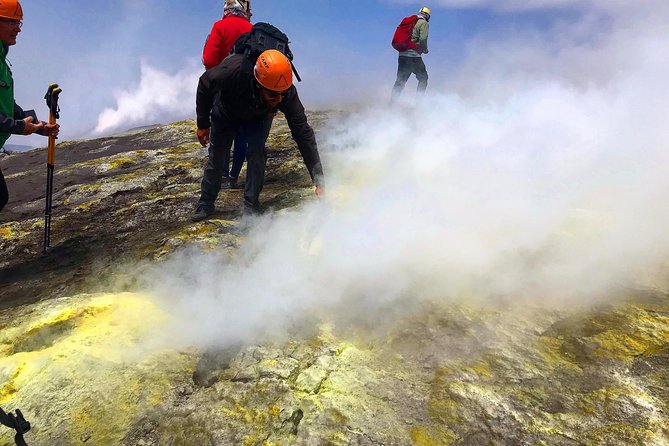
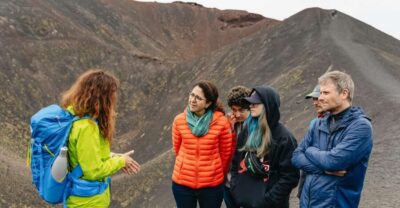
The base price is reasonable for a guided high-altitude excursion with a licensed volcano guide, safety equipment, insurance, and a small group capped at 12 people. The guide’s interpretation is a major part of the value. You are not only being walked uphill. You are being shown how lava moves, how craters form, and why the route changes with volcanic activity.
The price looks less attractive once you add the local off-road transport fee. At roughly €50 per person for the uphill transfer, the real cost is noticeably higher. If you use the bus or another return arrangement, the supplied details indicate a possible €70 charge, so confirm the exact figure.
Compared with a basic viewpoint visit, this is expensive. Compared with a full-day guided ascent reaching the upper crater zone, it can be good value, especially because boots, poles, jackets, and helmets are available.
The small group size also matters. A group of four to ten allows more questions and makes it easier for the guide to watch everyone on loose ground. The larger maximum of 12 is still manageable, but it may feel less personal than a very small departure.
Weather, volcanic rules, and cancellations
The trip depends heavily on conditions. Wind, ice, snow, poor visibility, gas, eruptions, and official restrictions can force a route change, an early finish, or cancellation.
The guide may stop below the summit even when the booking description mentions 3,323 meters. That is a normal risk of visiting an active volcano, but it can be disappointing if reaching the highest point is your main goal.
If poor weather cancels the experience, you are offered another date or a full refund. You can cancel for a full refund up to 24 hours before the start time. Changes or cancellations inside that 24-hour window are not accepted under the stated policy.
The operator also requires a minimum number of participants. If that minimum is not reached, you are offered a different date, another experience, or a full refund.
Who should book this Etna summit trek?
I would choose this tour if you want the north side of Etna, prefer a quieter starting point, and care about learning how the volcano works. It suits fit hikers who are happy with loose scoria, steep descents, cold wind, and a day that may last longer than planned.
It is also a good choice if you are traveling without full mountain gear. The supplied boots, poles, helmet, and jacket reduce the amount you need to carry, though you still need proper clothing and personal supplies.
I would skip it if you want a guaranteed summit, a short walk, or a weatherproof sightseeing plan. I would also avoid it if a long downhill hike sounds worse than the uphill climb. The return to Piano Provenzana is a serious part of the day, not an afterthought.
Should you book the Piano Provenzana route?
Book it if your priority is a close, active-volcano experience with a guide who can explain what you are seeing. The north side, the 2002 lava flow, the 4×4 approach, the summit craters, and the wide Sicilian views give this day a strong sense of place.
Before paying, confirm the current summit access, the exact off-road transport supplement, and the expected return method. Then arrive prepared for cold, wind, dust, and a long descent. If you accept that the volcano makes the final decisions, this can be one of the most memorable days of a Sicily trip.
FAQ
Where does the Etna summit trek start?
The meeting point is Chiosco Bar Mareneve di Ferraro in Piano Provenzana, Etna Nord, Via Provenzana, 95015 Linguaglossa, Sicily. The scheduled meeting time is 7:45 a.m.
How long does the experience last?
The stated duration is about five and a half hours, but the mountain section and return can take longer. Allow roughly six to six and a half hours from meeting time to return, with possible changes caused by weather, pauses, transport, and volcanic conditions.
Is the 4×4 ride included in the price?
The supplied details list the uphill off-road vehicle as an extra charge of about €50 per person, paid locally. A different return option may cost €70 instead of €50, so confirm the transport arrangement before departure.
How high does the hike go?
The route may reach the summit area between about 2,960 and 3,323 meters. The guide chooses the highest safe route based on volcanic activity, weather, gas, fractures, and official restrictions.
What equipment is provided?
The excursion includes a licensed volcano guide, trekking poles, trekking shoes, helmets, a warm jacket, extra socks, an additional backpack, accident insurance, and Mount Etna admission. Hats and gloves are not included.
Is the hike suitable for children or people with health conditions?
The excursion is not suitable for children under 12. It requires good physical fitness and is not intended for people with breathing conditions, hypertension, or other health concerns that make high-altitude exercise unsafe. Pregnancy beyond the third month is not permitted.
More Mount Etna Tours in Sicily
- From Catania: Mt. Etna, Wine and Alcantara Tour
★ 4.8 · 370 reviews - Etna Morning Tour (starting from Catania)
★ 5.0 · 362 reviews - 2002 Crater Excursion – Northern Etna
★ 5.0 · 305 reviews - Etna Sunset Tour (starting from Catania)
★ 5.0 · 294 reviews
More Volcano Hikes and Treks in Italy
- Etna Morning or Sunset – Trek & Lava Tunnel with Gear
★ 5.0 · 133 reviews - Etna Southern Slope Guided Easy Trek
★ 4.8 · 36 reviews - Sicily: Mount Etna’s North Slope Craters Guided Hike Tour
★ 5.0 · 8 reviews - Mount Etna: Summit Guided Hiking Tour up to 3,400 m
★ 4.8 · 4,792 reviews
Just added around Sicily
- Sicily: Mount Etna’s North Slope Craters Guided Hike Tour★ 5.0 · 8 reviews
- Etna Southern Slope Guided Easy Trek★ 4.8 · 36 reviews
- From Cefalù: Full-day tour to Mount Etna & Taormina★ 4.1 · 3 reviews
- Enoteca dell’Etna: Iemu Spizzicannu Tasting★ 5.0 · 9 reviews
- Capo d’Orlando: Mini-cruises to Salina Panarea and Stromboli★ 3.0 · 5 reviews
- calice in cratere★ 5.0 · 6 reviews
- Hike near the summit craters up to the maximum safe altitude currently foreseen★ 5.0 · 57 reviews
- Etna: Trekking to the summit craters at 3,340 meters★ 5.0 · 50 reviews
Mount Etna Tours, compared.
Mount Etna Morning or Sunset Day Trip with Tasting
Our review of it →
Sunset Jeep Tour of Mount Etna and Lava Flow Caves
Our review of it →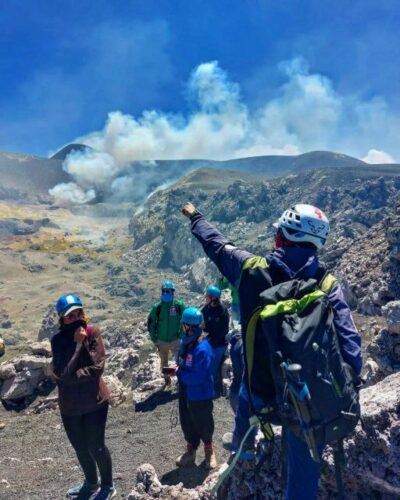
Etna and Alcantara Gorges Full-Day Tour with Lunch
Our review of it →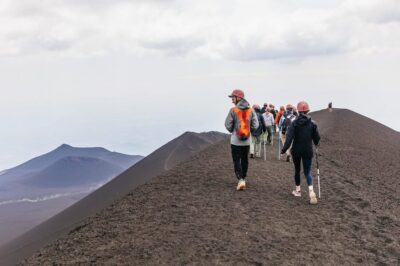
summit craters trekking with volcano guide 3350mt
Our review of it →