
REVIEW · MOSHI
Kilimanjaro climb, Kilimanjaro Crater route (10-day)
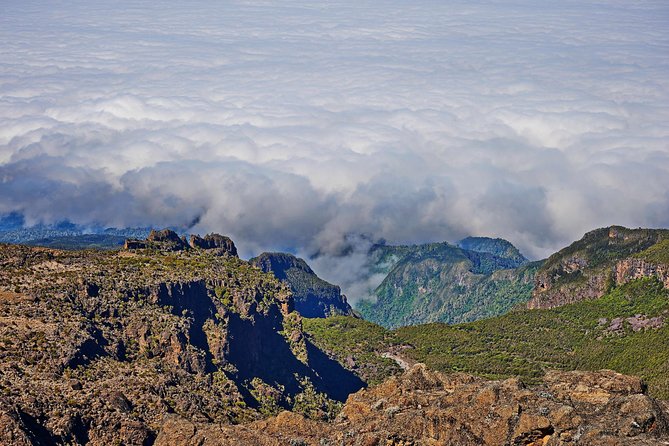
The quiet side of Kilimanjaro rewards patience. This 10-day climb follows the remote Northern Circuit, with gentle acclimatization, big views toward Kenya, and a private group format that keeps the pace personal. I especially like the slow altitude gain and the strong safety setup, including medical checks twice daily and one guide for every two climbers during the summit push. I also like that meals can be adapted for vegetarian, gluten-free, and halal diets.
The main concern is important: the experience is described as including an overnight stay in Kilimanjaro’s crater, but the day-by-day schedule provided does not show crater camping. The listed route sleeps at School Hut before the summit and Millennium Camp afterward. You should confirm this point with Altezza Travel before paying the $6,466 price.
Key points to know before booking
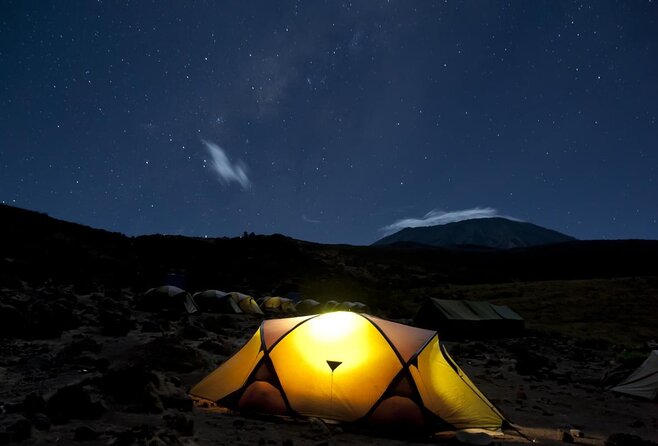
- The Northern Circuit is Kilimanjaro’s longest route, with quieter paths and extra time for altitude adjustment.
- The listed schedule does not clearly include crater camping, despite the tour description highlighting it as a major feature.
- The summit climb begins around midnight from School Hut at 4,750 meters and reaches Uhuru Peak at 5,895 meters.
- Safety support is unusually detailed, with certified Wilderness First Responder guides, oxygen, oximeters, medical kits, and regular health checks.
- The $6,466 price covers major climbing costs, including park fees, guides, porters, food, airport transfers, hotel nights, and mountain equipment.
- This is a private trip, so only your own group takes part. Group discounts are available.
Why the Northern Circuit is worth the extra days
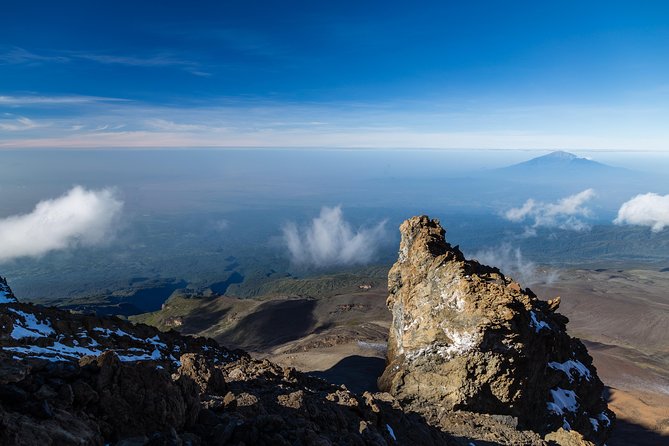
Kilimanjaro has several established routes, but the Northern Circuit takes the long way around the mountain. That matters because altitude, not technical climbing, is usually the main challenge. The extra walking days give you more time to adjust before the summit attempt.
You begin on the western side, cross the Shira Plateau, pass Lava Tower, and then circle around the northern slopes toward Kenya. The route eventually joins the Rongai path near 3rd Cave Camp before heading to the summit camps.
I like this design for two reasons. First, the early days are not rushed. Second, you see a less-used side of Kilimanjaro, with views toward the Tsavo and Amboseli valleys rather than spending the entire climb on the busier southern trails.
The tradeoff is time. Ten days on the mountain, plus hotel nights, costs more than a short Kilimanjaro itinerary. You also spend several days walking at moderate altitude before the summit push. If you want a quick, low-cost mountain holiday, this is not the right choice.
A few more volcano trips around Moshi worth a look
- 5 Days Camping Tarangire, Serengeti & Ngorongoro crater & Visiting Maasai
★ 5.0 · 58 reviews - 4 Days Group Joining Camping Safari to Tarangire Serengeti Ngorongoro Crater
★ 5.0 · 50 reviews - 3-Day Ngorongoro Crater Manyara and Tarangire Safari from Arusha
★ 5.0 · 49 reviews
Arrival in Moshi and the first hotel night
Your trip begins with pickup at Kilimanjaro International Airport. An Altezza representative meets you and takes you to Aishi Machame Hotel, where you have a room, hot water, internet access, a swimming pool, and time to rest.
Check-in begins at 2:00 PM. An evening briefing covers the climb, and the company’s managers check that you have the required clothing and equipment. This is useful because missing gear is harder to fix once you leave Moshi.
You receive another briefing the next morning with your guide and mountain crew. That extra meeting may feel repetitive, but on a high-altitude climb, repetition is sensible. It gives you another chance to ask about pace, food, weather, equipment, and health checks.
The hotel stay includes two people per room unless you pay for single accommodation. Lunch and dinner at the hotel are not included, so allow room in your budget for those meals.
Day 2: Londorossi Gate and the Shira Plateau
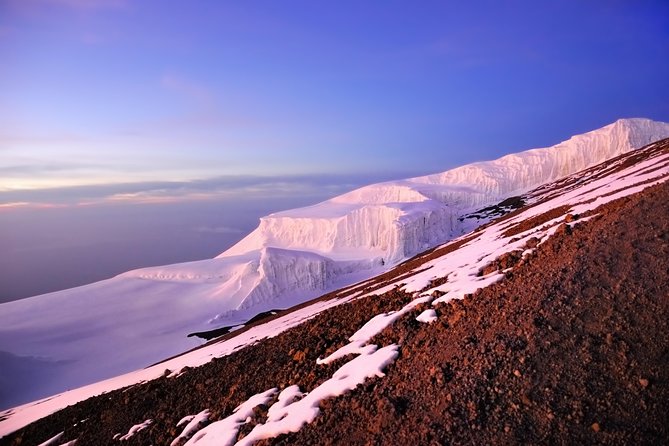
The drive to Londorossi Gate takes about three to four hours. After permits and registration with the search and rescue service, you continue by off-road vehicle toward the trailhead at roughly 3,500 meters.
That vehicle access saves energy early in the trip, but it also means your first day begins high. From the drop-off point, you walk to Shira 1 Camp. The climb is modest, with only a small gain in altitude, and the walking time is about five hours.
This first camp gives you an early look at the Shira Plateau. The high, open setting feels very different from the forested lower slopes. You have enough time to settle in without facing a punishing first day.
I would use this evening to check your sleeping bag, organize your daypack, and drink steadily. Do not treat the easy start as proof that the whole climb will be easy. The mountain saves its hardest test for summit night.
Day 3: Shira 2 and a Lava Tower acclimatization walk
The walk from Shira 1 to Shira 2 adds about 300 meters of altitude. It is not described as physically demanding, which leaves time to appreciate Kilimanjaro’s plant life and, when conditions are clear, views of Mount Meru.
After lunch and a two-hour rest, you take an acclimatization walk toward Lava Tower. You gain another 300 meters, then return to camp. This follows the useful mountain principle of walking higher during the day while sleeping lower at night.
The schedule takes about six hours. Compared with the summit days ahead, it is manageable, but the altitude can still affect your appetite, sleep, and energy. Tell your guide early if you feel unwell. Waiting until symptoms become severe is a poor strategy at high altitude.
Same trip, a different kind of day out:
- 7 Days Safari. Serengeti, Tarangire, Lake Manyara & Ngorongoro Crater.
★ 5.0 · 34 reviews - 5-Day Lake Manyara, Serengeti, Ngorongoro Crater and Tarangire
★ 5.0 · 28 reviews - 4 Days Game drives Safari Tarangire, Serengeti and Ngorongoro Crater
★ 5.0 · 14 reviews - Cycling from Kilimanjaro to Ngorongoro Crater
★ 5.0 · 10 reviews
Day 4: Lava Tower, 4,630 meters, and Moir Hut
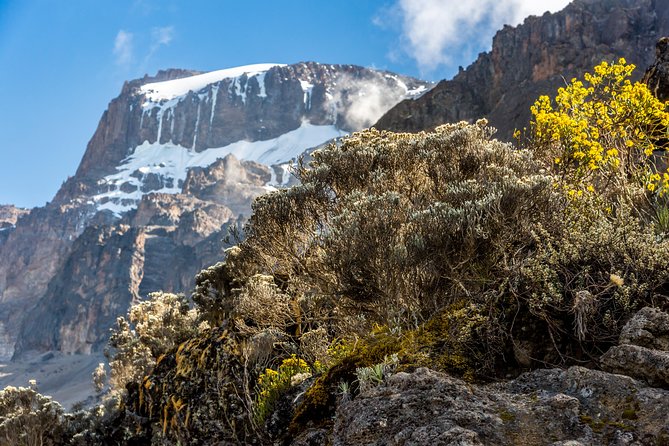
Day four is the first serious test. You leave Shira at about 3,900 meters and climb to Lava Tower at 4,630 meters. The route includes repeated ups and downs, so the effort may feel greater than the altitude gain suggests.
Lunch takes place at Lava Tower, allowing you to spend one or two hours at the higher elevation for acclimatization. Afterward, the route rises slightly before dropping to Moir Hut Camp.
The guide may skip Lava Tower and use the porter trail if someone in the group has not adjusted well. In that case, the highest point is about 4,400 meters. This flexibility is a good sign. A fixed plan is less useful than a safe plan.
The day lasts about eight hours. You should expect tired legs, colder conditions, and the possibility of discomfort from altitude. This is one of the days when a slow pace matters more than speed.
Day 5: Around the northern slopes toward Kenya
After a short, steep climb out of Moir Valley, the route begins circling Kilimanjaro’s northern side. The walking is long, about seven hours, but the path does not make a major steep ascent.
The repeated rises and drops can be tiring. Still, this section gives you one of the route’s best rewards: views toward the border with Kenya and the Tsavo and Amboseli valleys.
This is where the Northern Circuit earns its name. You are not simply marching toward the summit on one direct line. You are spending time around the mountain, seeing how the views change and allowing your body to adjust.
You should keep your daypack light but useful. Carry water, a warm layer, sun protection, and anything you need during the day. The support crew handles the larger camp equipment, but you remain responsible for your personal essentials.
Day 6: 3rd Cave Camp and the Rongai connection
The route finishes its circuit of the northern slope and reaches 3rd Cave Camp, where it meets the traditional Rongai route. The day is shorter than day five, and the schedule lists a total duration of 14 hours, which appears inconsistent with the description of a shorter trekking day.
That timing discrepancy deserves clarification before departure. Ask Altezza whether the 14-hour figure includes transfers, camp activity, or an administrative estimate. Clear timing matters when you are planning sleep and energy before the summit.
By this point, the itinerary says your body should be acclimated to around 4,000 meters. That can help, but it is not a guarantee. Altitude affects people differently, and fitness alone does not prevent altitude sickness.
Day 7: School Hut at 4,750 meters
You walk to School Hut Summit Camp at 4,750 meters. The trekking itself is described as manageable, but the goal is to preserve strength for the summit attempt later that night.
Once at camp, rest is the main task. Avoid unnecessary activity, drink fluids, and try to sleep. The climb to Uhuru Peak begins around midnight.
The listed duration is 12 hours, which includes a major amount of preparation, walking, and rest. You should think of this as a waiting day before the hardest physical effort, not as a normal hiking day.
School Hut is also the point where the published schedule differs most clearly from the crater-camping description. If sleeping inside the crater is central to your decision, ask exactly where you will sleep, on which night, and at what altitude.
Day 8: Uhuru Peak and the long descent
The summit attempt begins around midnight. From School Hut, you climb from 4,750 meters to Uhuru Peak at 5,895 meters.
Technically, the climb is described as relatively straightforward. The difficulty comes from altitude, darkness, cold, short sleep, and the need to keep moving when your body wants to stop. A guide is assigned for every two climbers, with responsibility for watching health during the climb.
The support plan includes oxygen tanks, oximeters, medical kits, and at least two medical check-ups each day. Oxygen is listed as available without a stated limit, but it should be understood as an emergency support measure, not a way to push through serious altitude symptoms.
After reaching the summit, you descend to Barafu Camp for a two-hour lunch and rest. Then you continue to Millennium Camp at 3,820 meters. The schedule lists five hours for this day, but the midnight start, summit climb, descent, and camp arrival make it a demanding period. Confirm how the company calculates the stated duration.
A walk on the nearest glacier may be possible after a successful summit. This depends on conditions and your energy. Do not treat it as a required extra. Reaching Uhuru Peak and getting down safely come first.
The descent deserves respect. Loose footing, tired legs, and damaged toes are real concerns after the summit. Use trekking poles if you have them, slow down, and keep your boots properly secured.
Day 9: Millennium Camp to Mweka Gate
Millennium Camp sits in tropical rainforest at about 3,820 meters. The lower altitude should make sleep and breathing easier after the summit, although your body may still feel worn out.
After a hot breakfast, you descend to Mweka Gate at 1,650 meters. This final walk lasts about 12 hours according to the schedule, although exact timing will depend on pace and trail conditions.
At the gate, you receive accomplishment certificates and have time to thank the support crew. The company then takes you to its offices before transferring you back to the hotel.
This last day is not just paperwork. It is the point when the mountain experience changes back into ordinary travel. You will probably be tired, dusty, and ready for a shower. The second hotel night gives you a proper place to recover before the airport.
Day 10: Hotel rest and airport transfer
The final day is simple. You rest at Aishi Machame Hotel and transfer to the airport.
Hotel checkout is at 11:00 AM. If your flight leaves in the evening, late checkout is available for an extra fee. Check your flight time before booking a costly same-day connection, since the schedule does not describe a long buffer for delays.
Airport pickup and drop-off are included. The price also includes ground transportation during the trip, which removes a major practical concern in a country where mountain access involves long road journeys.
What the $6,466 price really covers
At $6,466 per person, this is a major purchase. The value depends on how much support you want and how much independent planning you would otherwise do.
The package includes:
- Airport transfers and ground transportation
- Two hotel nights
- Mountain tents shared by two climbers
- Three meals a day on the mountain
- Tea, coffee, juice, soda, and other drinks
- Kilimanjaro National Park fees
- Tents, sleeping pads, tables, chairs, dishes, and cutlery
- Guides, porters, cooks, and camp staff
- Medical kits, oxygen, and oximeters
- Health checks at least twice daily
The meal flexibility is useful. Vegetarian, gluten-free, halal, and other meal plans are available. Breakfast, lunch, and dinner are covered for the stated number of days, but hotel lunches and dinners are not.
You still need to pay for international transport, a visa, travel insurance, tips for the mountain crew, personal clothing, boots, and a sleeping bag. Gear rental is available, and single accommodation costs extra.
Insurance is not optional in practical terms. The policy should cover trekking up to 6,000 meters and helicopter evacuation. The peak is 5,895 meters, so ordinary holiday insurance may not be enough.
Who this climb suits best
I would recommend this route to someone who wants a slower Kilimanjaro schedule, values a quiet trail, and can handle ten days of mountain travel. The private format works well for families, couples, and small groups who want control over pace and food.
It also suits people who appreciate strong logistical support. A five-person private group has used the company successfully, and the planning process allowed changes to fit the group’s needs. One family also combined a Kilimanjaro climb with a six-day safari, so the company can be useful if you want to add more time in Tanzania.
This is not a good choice if you are looking for a quick, cheap ascent or dislike long periods at altitude. You need moderate physical fitness, suitable personal gear, and a realistic view of the summit. The itinerary is long, and some stated durations need clarification.
Should you book the Kilimanjaro Northern Circuit?
Book it if you want the longest route, quieter northern views, detailed safety support, and plenty of time for acclimatization. The private format and included park fees, crew, meals, equipment, transport, and hotel nights give the high price real substance.
Before booking, get written confirmation about the crater night. The description presents crater camping as a defining feature, but the schedule places you at School Hut and Millennium Camp instead. Ask for the exact sleeping location, altitude, date, and equipment for the crater portion.
If Altezza confirms the crater stay and explains the unusual timing entries, this can be a strong choice for a serious first Kilimanjaro climb. If crater camping is your main reason for booking and the company cannot confirm it clearly, choose a program with a matching day-by-day plan.
Free cancellation is available up to 24 hours before the start time for a full refund. Changes or cancellations inside that window are not accepted or refunded.
FAQ
How long does the Kilimanjaro climb take?
The experience lasts about 10 days, including arrival, hotel stays, the mountain climb, descent, and departure day.
What is the price per person?
The listed price is $6,466 per person.
Does the price include airport transfers?
Yes. Pickup and drop-off at Kilimanjaro International Airport are included, along with ground transportation during the trip.
Is this a private climb?
Yes. Only your own group participates. Group discounts are available.
What meals are included?
Three meals a day are provided on the mountain. Vegetarian, gluten-free, halal, and other meal plans are available. Drinks such as tea, coffee, juices, and soda are also included.
Is crater camping included?
The description highlights an overnight stay in the Kilimanjaro crater, but the day-by-day schedule provided does not clearly show it. Confirm the exact crater-camping arrangements with Altezza before booking.
What insurance do I need?
You need insurance covering trekking up to 6,000 meters and helicopter evacuation. The insurance cost is not included.
Just added around Moshi
- Tanzania Wildlife Safari – Tarangire | Serengeti and Ngorongoro Crater★ 5.0 · 2 reviews
- 7 Days Rhino Ngorongoro Crater Safari Tour★ 5.0 · 5 reviews
- Mt Kilimanjaro 360° Trek with Once-in-a-Lifetime Crater Camping★ 5.0 · 8 reviews
- Cycling from Kilimanjaro to Ngorongoro Crater★ 5.0 · 10 reviews
- 5-Day Lake Manyara, Serengeti, Ngorongoro Crater and Tarangire★ 5.0 · 28 reviews
- 5 days Safari to Lake Manyara, Serengeti and Ngorongoro crater★ 5.0 · 3 reviews
- 4 days Safari Lake Manyara, Ngorongoro crater and Serengeti★ 5.0 · 4 reviews
- 4 days Tarangire National park, Serengeti National park and Ngorongoro crater★ 5.0 · 3 reviews
Moshi Volcano Tours, compared.
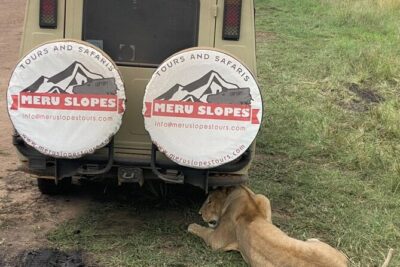
5 Days Camping Tarangire, Serengeti & Ngorongoro crater & Visiting Maasai
Our review of it →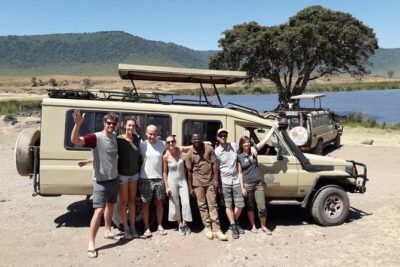
4 Days Group Joining Camping Safari to Tarangire Serengeti Ngorongoro Crater
Our review of it →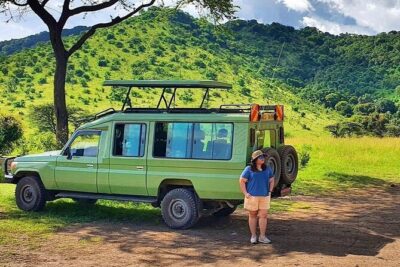
3-Day Ngorongoro Crater Manyara and Tarangire Safari from Arusha
Our review of it →
7 Days Safari. Serengeti, Tarangire, Lake Manyara & Ngorongoro Crater.
Our review of it →
5-Day Lake Manyara, Serengeti, Ngorongoro Crater and Tarangire
Our review of it →
4 Days Game drives Safari Tarangire, Serengeti and Ngorongoro Crater
Our review of it →
Cycling from Kilimanjaro to Ngorongoro Crater
Our review of it →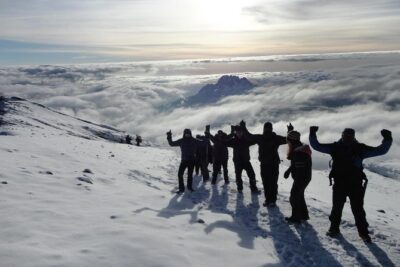
Mt Kilimanjaro 360° Trek with Once-in-a-Lifetime Crater Camping
Our review of it →Browse the lists this tour appears in