
REVIEW · NICOLOSI
Etna Summit Craters
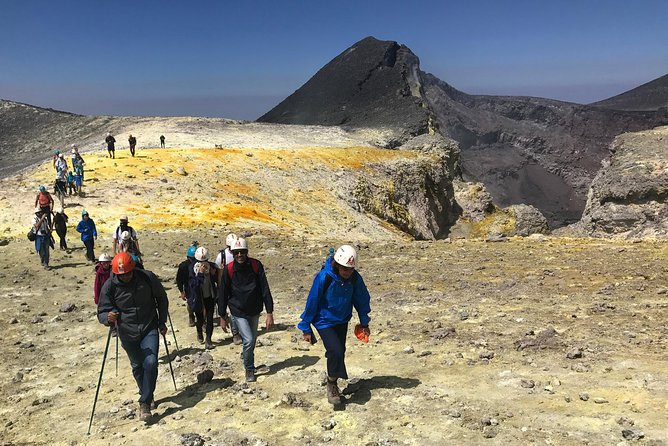
Etna saves its best drama for the top. This full-day climb takes you from Rifugio Sapienza to Mount Etna’s active summit craters, with volcanic guides, recent lava flows, black ash, and wide views over Sicily. I especially like the high-altitude route and the chance to see Bocca Nuova, Voragine, the Northeast Crater, and the Southeast Crater up close. The supplied shoes, socks, windbreaker, helmet, and trekking poles also make packing easier.
I also like the guides’ careful approach. Peppe, Giuseppe, Giovacchino, and other guides are praised for being friendly, attentive, and good at explaining the volcano. The catch is simple: this is not a gentle walk. The altitude and steep volcanic ash make it a demanding five- to six-hour hike, and you must pay an additional €52 for the cable car and €25 for the 4×4 bus.
Key points at a glance
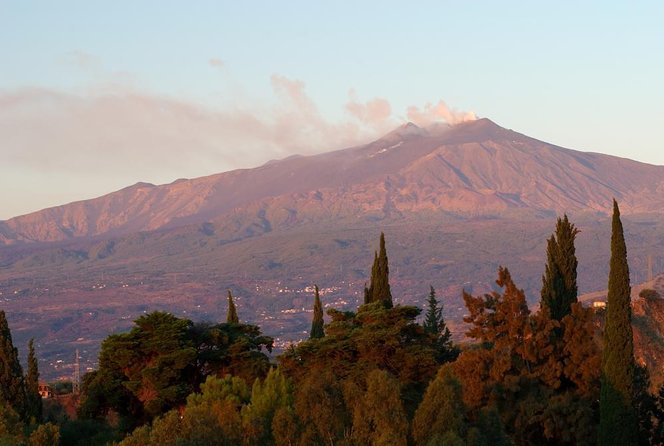
- Reach 3,340 meters: Walk to Etna’s summit craters, the highest point in Sicily.
- See active volcanic zones: Visit Bocca Nuova, Voragine, the Northeast Crater, and the Southeast Crater.
- Travel through fresh volcanic ground: The route crosses recent lava flows and dark ash that can look almost lunar.
- Get careful mountain support: Alpine and volcanological guides lead the hike and provide safety advice.
- Use supplied gear: High-collar hiking shoes, new socks, a windbreaker, helmet, and trekking poles are included.
- Budget for added transport costs: The listed €70 price does not include the €52 cable car or €25 4×4 bus ticket.
Why the summit craters are Etna’s main event
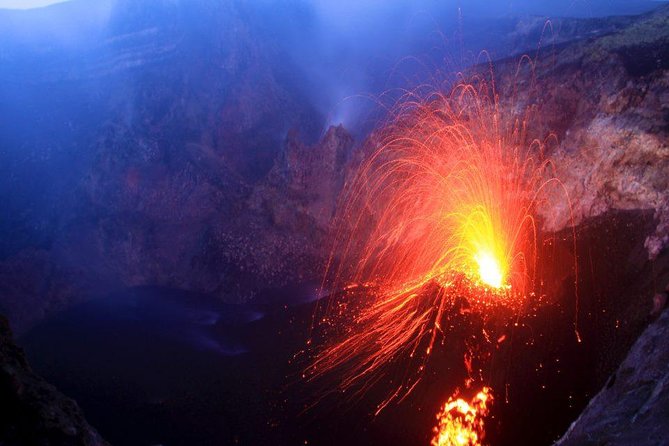
Mount Etna is interesting from almost any angle, but the summit gives you the clearest sense of its force. At lower levels, you see old lava fields and broad views. Near the top, you walk beside crater depressions filled with sulfur and volcanic ash, where much of the mountain’s explosive activity takes place.
I like that this is not simply a cable-car ride followed by a photo stop. After reaching about 2,800 meters by cable car and 4×4 vehicle, you continue on foot toward the summit craters at roughly 3,340 meters. That final section is the heart of the experience.
The setting can feel stark and strange. Black volcanic ash replaces ordinary trail soil, and the crater rims have a raw, unfinished look. One recent participant described the ground as almost lunar. That is a useful description, especially if you are picturing a normal mountain hike. This is more exposed, more barren, and far more volcanic.
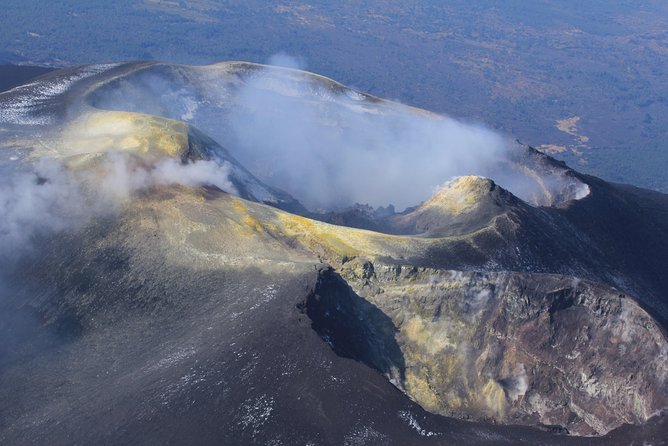
The summit route also gives you a close view of several major craters. Bocca Nuova and Voragine are particularly important volcanic features, while the Northeast and Southeast Craters help show how Etna’s activity changes over time. You may not see flowing lava, and the excursion does not promise it. Lava sightings depend on current volcanic conditions.
More Volcano Crater Hikes in Italy
- Etna Summit Craters
★ 5.0 · 4 reviews - Mount Etna: Summit Crater Trek with Cable Car
★ 4.8 · 1,875 reviews - Etna: summit craters trekking with volcano guide 3350mt
★ 4.7 · 1,712 reviews
Starting at Rifugio Sapienza
You meet the guide inside Bar Ristorante Crateri Silvestri at Rifugio Sapienza, about 1,900 meters above sea level. This is a practical meeting point because it is already at the cable-car station and near the Silvestri Craters.
Arrive ready to go. You will want long pants, sunglasses, gloves, a cap, a scarf, and sun protection. The temperature and wind can change sharply as you gain height, so layering matters. The operator supplies a windbreaker, but your own base layers remain important.
The included gear is a real benefit. You can use high-collar hiking shoes, new socks, trekking poles, and a protective helmet. I would still tell you to check the fit of the shoes and poles before setting off. A poor fit becomes annoying quickly on a steep, uneven route.
The meeting point also gives you a chance to buy food before departure. You receive a 20 percent discount on sandwiches, snacks, and drinks at the restaurant. The discount is helpful, since the hike takes about five to six hours and the mountain route is not a place to count on finding food along the way.
Cable car and 4×4 ride to 2,800 meters
The first cable-car ride takes about 15 minutes. It removes a large amount of the lower ascent, allowing you to save energy for the summit section. The views open up as you rise, though clouds or weather can affect what you see.
From the cable-car station, the usual plan is a 15-minute 4×4 bus ride toward 2,800 meters. This transport is not included in the €70 tour price, and the ticket costs €25 on site. The cable car costs another €52, so your actual transport budget is €77 beyond the excursion fee.
One useful detail is that the exact approach can vary. On one August outing, the group walked from the cable car to about 3,000 meters instead of using the bus. That made the route feel more physical and gave the group more time on the volcanic ground. You should not assume this will happen every time, but it shows that the guide may adjust the ascent to current conditions and the group’s plan.
The cable car ticket is also used for the return to Rifugio Sapienza. The route information describes the final descent reaching the cable-car terminal, followed by a 15-minute ride back down.
The hike to Etna’s summit craters
The main mountain portion lasts about three and a half hours according to the itinerary, while the full hike is described as five to six hours. The difference likely reflects walking speed, stops, the approach route, and time spent at the craters. You should plan for the longer figure.
From roughly 2,800 meters, you walk toward the summit craters at 3,340 meters. This is the most demanding section because of the altitude and the loose volcanic ash. Each step can shift under your feet, making trekking poles useful rather than decorative.
You need to be comfortable with sustained uphill walking. One participant found the altitude particularly hard and warned that the excursion involves many meters of ascent. That is important advice. Even if you exercise regularly, you may find high-altitude walking tiring in a different way from a normal trail.
The guide’s role matters here. The route includes a safety briefing, guided walking, and scenic stops. Giuseppe was praised for creating a fun and reassuring outing, while Peppe was described as kind and friendly. Giovacchino also received warm praise for his personality. The strongest theme is attentive support: the guide checks how you are doing and helps keep the group moving safely.
The guides speak English and Italian. If you need explanations in one of those languages, the tour is straightforward. The focus is not just on reaching the top, but on understanding the volcano’s structure and activity as you walk.
More Volcano Hikes and Treks in Italy
- Mount Etna: Trek to 3000m with cable car and 4×4
★ 4.6 · 3,823 reviews - Nicolosi: Mount Etna Central Crater Guided Trekking Tour
★ 4.8 · 182 reviews - Mount Etna: Central Crater (3,340 meters) with Jeep and Trek
★ 4.7 · 83 reviews - Catania, Etna trekking with guide and cable car at 3000 meters + transfer available
★ 4.9 · 14 reviews
Four active craters and a huge volcanic view
At the summit, you visit the active crater area and examine the broad, sulfur-filled depressions. The atmosphere can feel mysterious, but the guides help connect the scene to geology and volcanology rather than leaving you with only dramatic views.
Bocca Nuova and Voragine are among the key craters you may see, along with the Northeast and Southeast Craters. The route is designed to show how Etna’s summit has several active centers rather than one simple opening.
The phrase highest point in Sicily gives the trip a clear goal, but do not expect a conventional summit marker or a tidy mountaintop experience. The reward is the volcanic setting itself: crater rims, ash slopes, eruptive cones, and views across a mountain that is still active.
Weather will shape the experience. On a sunny March outing, the views were described as excellent, while another outing involved snow and the sound of erupting volcanoes. Conditions can change the surface underfoot and the feel of the hike. The same route may be dry and dusty in one season, snowy in another, and clouded in another.
You may also see recent lava flows. That adds a strong visual link between Etna’s past activity and its present life. Still, do not book this expecting to see glowing lava. One person specifically noted that no lava appeared during the outing, yet still considered the trip unique and adventurous.
Down through volcanic ash to the Valle del Bove
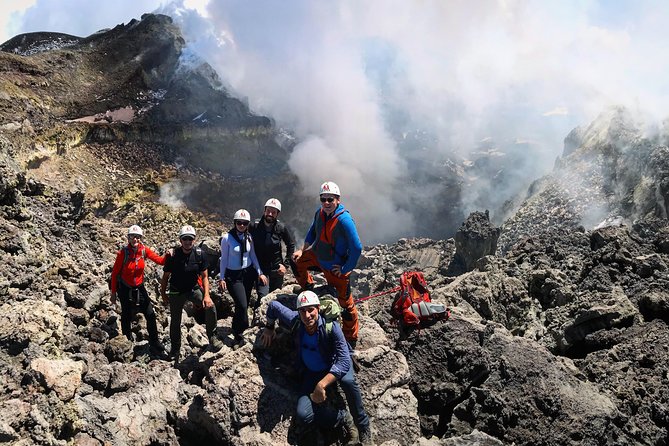
After the summit craters, you descend on foot along slopes of volcanic ash. The downhill section can be easier on your lungs, but loose ash creates its own challenge. Your feet may slide, and trekking poles can help with balance.
This part of the route leads to the Belvedere della Valle del Bove. The Valle del Bove is a large caldera linked to ancient eruptive centers, and the viewpoint gives you a sense of Etna’s scale. It is one thing to stand beside a crater. It is another to look across a vast depression shaped by earlier eruptions.
I like this descent because it prevents the excursion from becoming a simple up-and-back climb. You see different volcanic forms on the way down, and the route gives your legs a change from the uphill push. It also provides a strong contrast between the sharp summit craters and the broad caldera below.
The descent is not automatically easy. Loose ash can be awkward, and fatigue will be building by this point. If your knees or ankles are sensitive, the trekking poles and sturdy footwear are especially valuable.
The Laghetto crater and the ride back down
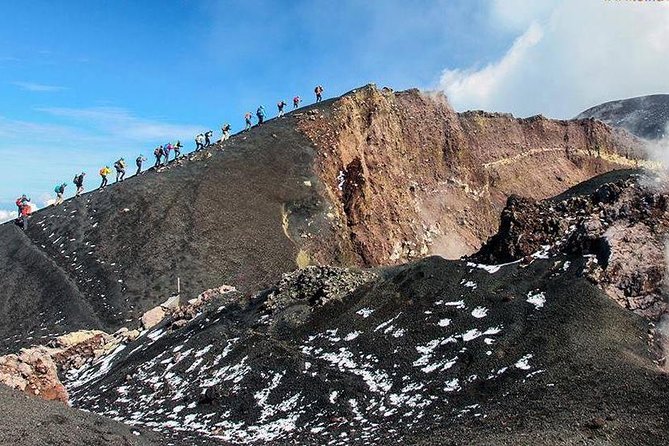
Near the end, you skirt the imposing eruptive cone of the Laghetto crater and continue toward the cable-car terminal. This final volcanic feature helps round out the geology lesson. You have seen summit craters, lava flows, ash slopes, an ancient caldera, and an eruptive cone in one outing.
The return cable-car ride takes about 15 minutes and brings you back to Rifugio Sapienza. From there, you return to Bar Ristorante Crateri Silvestri, the original meeting point.
By this stage, you will likely be tired. That is not a flaw, but it is part of the deal. The itinerary combines high altitude, rough footing, transport changes, guided stops, and several hours on foot. Plan your day around the hike rather than trying to squeeze in another major activity afterward.
What the €70 price really covers
The €70 tour fee is fair if you value the guide and equipment, but it is not the final cost. Add €52 for the cable car and €25 for the 4×4 bus, bringing the stated total to €147 per person before food or other purchases.
That is a significant amount, so the value depends on what you want from Etna. You are paying for access to the summit area, a qualified alpine or volcanological guide, safety support, and loaned hiking equipment. If you do not own suitable shoes, poles, or weather protection, the included gear adds practical value.
The guide is the biggest reason to choose this rather than attempting a high route without support. The terrain is demanding, the altitude is serious, and volcanic conditions can change. A good guide can explain what you are seeing while keeping an eye on the group.
The 20 percent restaurant discount is a small extra, not a reason to book. Bring the clothing and personal items listed for the tour, and budget for both transport tickets from the start.
Free cancellation is available up to 24 hours before departure for a full refund. You can also reserve now and pay later, which helps if your Sicilian schedule is still changing.
Who should book this Etna hike?
I would choose this excursion if you want the most demanding and volcanic version of an Etna visit. It suits people who are accustomed to challenging hikes and who are excited by geology, active craters, and unusual terrain.
You should think twice if you prefer a relaxed sightseeing day. This is not a short walk around the Silvestri Craters. The route reaches 3,340 meters and includes substantial ascent and descent on loose volcanic ground.
The activity is not suitable for children under 10, pregnant women, wheelchair users, people with mobility impairments, or anyone with heart problems. It is also not recommended for people with vertigo, a fear of heights, epilepsy, haemophilia, high blood pressure, recent surgery, or people over 95.
Do not hide a medical concern from the guide. The altitude and effort make honest self-assessment important. A friendly guide can support you, but cannot make a high mountain route safe for someone who should not be there.
Final verdict: book it for the summit, not a casual walk
I would book the Etna Summit Craters excursion if reaching the active summit area is your main goal and you are prepared for a hard day. The craters, recent lava flows, ash slopes, Valle del Bove viewpoint, and guide-led geology make this one of the strongest ways to experience Mount Etna.
I would skip it if you want an easy outing, need a low-cost activity, or are unsure about high-altitude exertion. Remember the real price, bring warm protective clothing, and expect five to six hours of work.
For fit hikers who want Sicily’s volcanic heart rather than a quick scenic stop, this is a memorable choice. The excellent rating makes sense, especially because the guides are repeatedly praised for kindness, patience, and safety. Just respect the mountain. Etna may look calm, but it is never merely scenery.
FAQ
Where does the Etna Summit Craters tour start?
Meet your guide inside Bar Ristorante Crateri Silvestri at Rifugio Sapienza.
How long does the excursion last?
The excursion lasts one day. The hike itself takes about five to six hours, while the itinerary lists about three and a half hours at Mount Etna plus the transport rides.
How high does the hike go?
The hike reaches the summit craters at approximately 3,340 meters.
What transport is used?
You take a cable car for about 15 minutes, then usually a 4×4 bus for about 15 minutes to reach the higher starting point. You take the cable car back down at the end.
Are the cable car and 4×4 bus included?
No. The cable car ticket costs €52 and the 4×4 bus ticket costs €25. Both are paid on site.
What equipment is included?
The tour includes high-collar hiking shoes, new socks, a windbreaker, trekking poles, and a protective helmet.
What should I bring?
Bring long pants, a cap, gloves, sunglasses, protective cream, and a scarf. Warm, practical clothing is important because conditions can change at altitude.
Is this suitable for beginners?
The hike is intended for people accustomed to challenging hikes. It is not described as a gentle walk, and the altitude and loose volcanic ash can make it strenuous.
Which languages are available?
The live guide service is available in English and Italian.
Can I cancel the booking?
You can cancel up to 24 hours in advance for a full refund. Reserve now and pay later is also available.
More Volcano Crater Hikes in Nicolosi
- Etna Sunset Tour: Volcano trek, Cave & tasting from Catania
★ 4.8 · 1,290 reviews - Lanzarote: Guided Volcano Hike with Transfers
★ 4.9 · 861 reviews - From Antigua: Pacaya Volcano Trek
★ 4.4 · 798 reviews - From Reykjavík: Fagradalsfjall Volcano Hike with Geologist
★ 4.8 · 780 reviews
More Mount Etna Tours in Nicolosi
- Mount Etna: Roundtrip Cable Car and 4×4 Bus Ticket
★ 4.3 · 1,602 reviews - Etna excursion to 3000 mt. with cable-car and jeep 4×4
★ 4.6 · 550 reviews - Etna by Panoramic Bus, Audioguide 9 languages, from Catania
★ 4.2 · 364 reviews - From Etna South: Ride a Quad Bike on the Volcano
★ 4.6 · 92 reviews
Just added around Nicolosi
- Nicolosi: Mt. Etna Guided Quad Tour Adventure★ 4.2 · 6 reviews
- Nicolosi: Excursion Etna Craters at 3000 mt.★ 4.2 · 3 reviews
- Mount Etna with pick-up and drop-off from Catania: 3000 meters with cable car and jeep★ 4.7 · 64 reviews
- Mount Etna: Central Crater (3340mt.) with cable car and jeep★ 4.5 · 76 reviews
- Mount Etna: Central Crater (3,340 meters) with Jeep and Trek★ 4.7 · 83 reviews
- From Etna South: Ride a Quad Bike on the Volcano★ 4.6 · 92 reviews
- Catania: Mount Etna 3000m Tour with Hotel Pickup★ 5.0 · 3 reviews
- Etna Summit Craters★ 5.0 · 4 reviews
Mount Etna Tours, compared.
Mount Etna Morning or Sunset Day Trip with Tasting
Our review of it →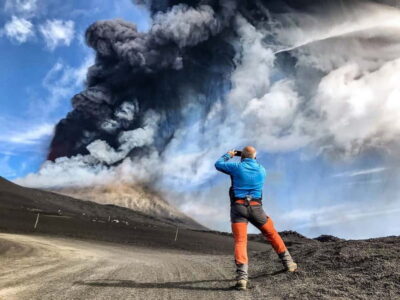
Sunset Jeep Tour of Mount Etna and Lava Flow Caves
Our review of it →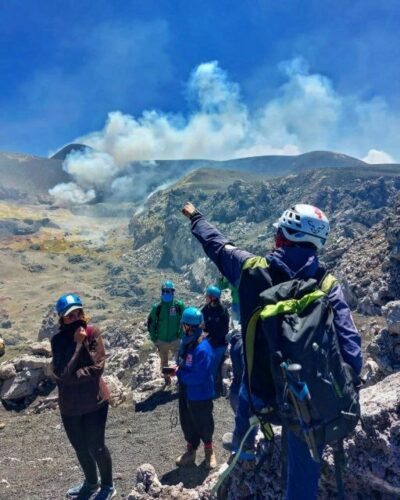
Etna and Alcantara Gorges Full-Day Tour with Lunch
Our review of it →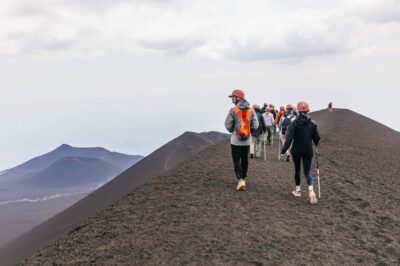
summit craters trekking with volcano guide 3350mt
Our review of it →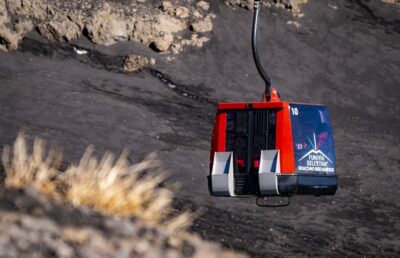
Browse the lists this tour appears in