
REVIEW · CHILE
Villarrica Volcano Ascent – Zenit
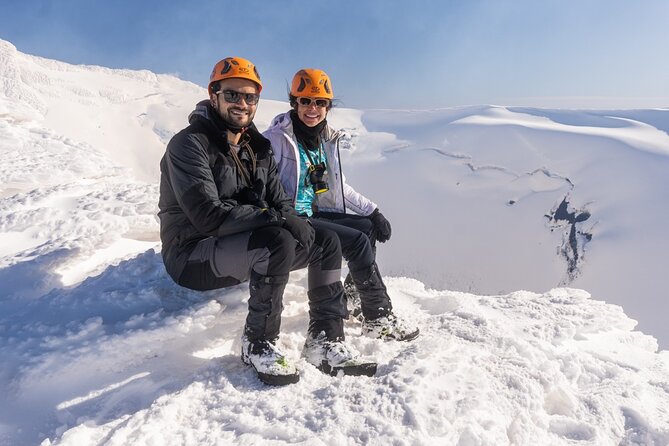
A volcano climb with a sled ride back. From Pucón, Zenit takes you toward the 2,847-meter summit of Villarrica, one of South America’s most active volcanoes. The day shifts from a steady uphill walk with poles to crampons and an ice axe on more exposed snow and ice. At the top, you may see fumaroles and, if conditions allow, the orange glow of magma.
I like the small maximum group of 12, and I like that the guides stay close through the harder sections rather than treating the climb as a simple race uphill. The descent is another strong point: you can slide down sections of snow on a board, an entertaining finish after a serious ascent.
The main caution is weather. Villarrica can turn cloudy, icy, or nearly impossible to see at short notice. You need good fitness, patience, and ideally several spare days in Pucón so you can move the climb if conditions are poor.
Key points to know before climbing Villarrica
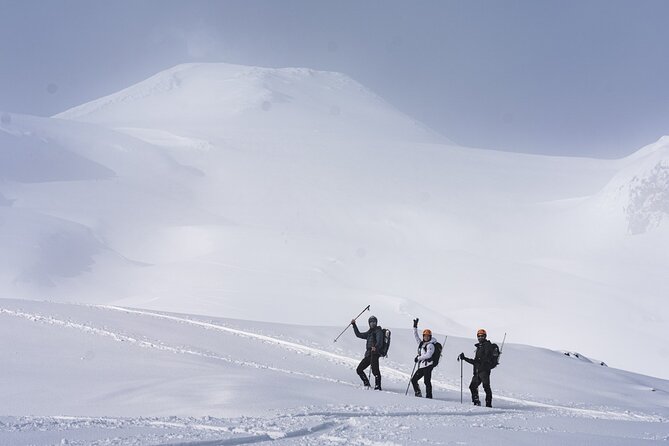
- You gain about 1,700 meters, so this is a demanding mountain day, not a casual hike.
- The 6:00 am start leaves time for the long approach and changing mountain conditions.
- Crampons, an ice axe, and trekking equipment are provided, with equipment fitting handled through the Zenit agency.
- Three of the nine hours are transfers, leaving about six hours for the mountain portion and related preparation.
- The summit experience depends heavily on weather and volcanic activity, and the crater edge may be closed.
- Snow sliding on the way down gives the return trip a playful edge after the strenuous climb.
Why Villarrica is such a serious day from Pucón
Villarrica is not simply a tall peak with a nice view. It is an active volcano, rising to 2,847 meters above the region around Pucón. Its fumarole activity gives the summit a sense of immediacy that an ordinary mountain lacks.
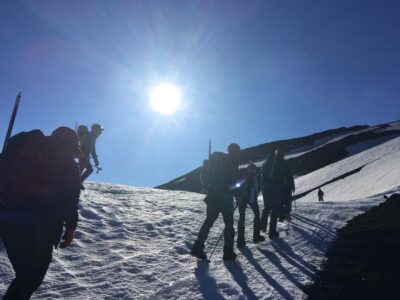
The climb also gives you a useful lesson in mountaineering technique. You begin on foot with poles, then may put on crampons as the surface becomes more icy or exposed. An ice axe becomes part of the equipment in the steeper upper sections. That progression makes the trip feel like a real introduction to glacier-style climbing, even though you are joining a guided outing rather than attempting a technical expedition alone.
I appreciate that this is not sold as an effortless viewpoint walk. The 1,700-meter ascent is substantial. You need a moderate level of fitness, and you should expect fatigue to build as the day goes on. The guides help with pacing and stopping, which matters most when the slope gets steeper and your energy starts to fade.
The volcano also has cultural importance as a sacred mountain. At the summit, the fumaroles make that connection feel tangible. If the weather cooperates and volcanic conditions allow, you might see incandescent magma inside the crater. That possibility is never a guarantee, but it is one reason this climb feels more memorable than a standard summit hike.
A few more volcano trips around Chile worth a look
- Pucón: Villarrica Volcano Climb
★ 4.8 · 191 reviews - From Puerto Varas: Osorno Volcano & Petrohue Falls Day Tour
★ 4.6 · 121 reviews - Puerto Montt: Osorno Volcano and Petrohué Falls Guided Tour
★ 4.5 · 104 reviews
The 6:00 am start and the long approach
Your day begins at Pedro de Valdivia 205 in Pucón at 6:00 am. That early hour is practical rather than glamorous. A mountain start gives the group more time to reach the upper slopes, deal with changing weather, and return safely within the scheduled nine hours.
About three hours of the total duration are used for transfers to the volcano. This is important when you plan your day. The advertised nine hours does not mean nine hours of continuous uphill movement, but it is still a full-day commitment once you include transport, equipment, breaks, climbing, and the descent.
Zenit keeps the group size to a maximum of 12 people. That is a sensible limit for a climb that requires changing equipment and careful movement on snow. The guide-to-climber ratio can vary, but one outing used four guides for a small group, and the guide team included Luisa, Felipe, Agustin, Leo, Edgar, and Jorge across the reported experiences.
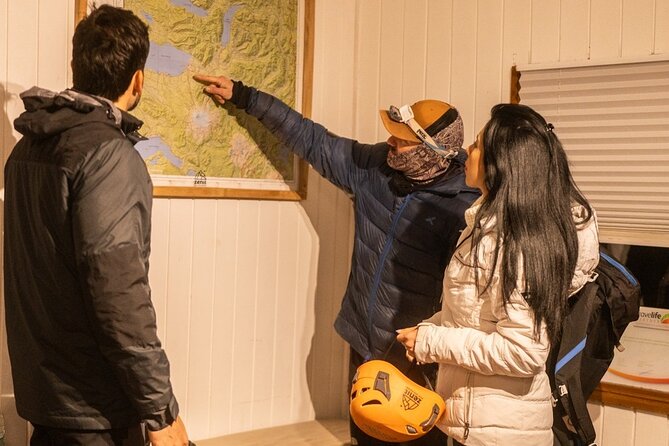
You may have a preparation meeting at the Zenit agency before the climb. This can include a briefing about the day and a fitting for trekking boots. That meeting is useful because footwear that fits well matters during a long ascent. It also gives you a chance to understand the equipment and ask about the planned route before leaving in the dark.
From walking poles to crampons and an ice axe
The first part of the ascent uses walking poles and a steady uphill rhythm. This section lets you settle into the effort before the climb becomes more technical. A snow lift may be available for the first stretch, which can reduce some of the initial walking, but it should be treated as a possibility rather than a guaranteed part of every outing.
As you gain height, the terrain can require crampons and an ice axe. These tools are not decorative extras. Crampons help your boots grip icy snow, while the axe offers support and security on more exposed ground. The guides lead you through this change, explain the next stage, and keep an eye on the group.
This is where the trip asks the most from you. The altitude, the 1,700-meter elevation gain, and the repeated uphill effort can make the pace feel slow. That is normal. One strong part of Zenit’s approach is the use of regular stops and encouragement. The guides Luisa and Felipe, in particular, were praised for being friendly and good company, while the larger guide team was credited with patience and close attention during tiring sections.
You should not expect a private mountaineering lesson at every step. The group has a schedule, and the guides must make decisions for everyone. Still, the reported guide support is one of the strongest reasons to choose an organized ascent rather than trying to handle Villarrica without professional help.
The summit, fumaroles, and the limits of the crater
The summit is the emotional high point of the day, but it may not look the same on every attempt. In clear weather, the view opens across the lakes near Pucón and the surrounding geography. From above, the area’s shape becomes easier to understand, with water, volcanic slopes, and distant ridges arranged below you.
Villarrica’s own activity is the main attraction. At the top, you can observe fumaroles, and in especially favorable conditions you may see incandescent magma inside the volcano. That sight is not promised. Cloud, wind, volcanic conditions, or safety rules can limit what you see.
The crater edge may also be closed. During one ascent, intense volcanic activity meant the group could not reach the crater rim. The climb remained worthwhile, but the final point was different from what some people might imagine when they picture a volcano summit. This is an important distinction: reaching the permitted high point is not always the same as standing at the crater’s edge.
I like that safety takes priority here. An active volcano is not a static outdoor attraction, and Zenit cannot control the mountain. If you need a fixed, guaranteed summit scene, this is the wrong kind of trip. If you can accept that the route and viewpoint may change, the uncertainty becomes part of the experience rather than a surprise.
Same trip, a different kind of day out:
- Volcano & Hotsprings 4K
★ 4.5 · 87 reviews - Full Day Mountaineering to Villarrica Volcano from Pucón
★ 5.0 · 62 reviews - Private Day tour Petrohue Falls, Osorno Volcano & Puerto Varas
★ 5.0 · 45 reviews - Trekking Mirador el volcano + Geometric hot springs
★ 5.0 · 38 reviews
The descent, including the famous snow slides
The descent gives your legs a different problem. Walking downhill after a long ascent can be hard on tired thighs, especially if visibility has dropped or frost has formed on your glasses. Take your time and listen to the guides instead of rushing toward the fun part.
On suitable snow sections, you can use a board to slide downhill. The experience is sometimes called skibunda, and it turns the return into something closer to controlled sledding than ordinary hiking. It is a memorable touch, especially after the seriousness of crampons, ice, and the upper mountain.
The snow slide is fun, but it does not erase the physical demands of the day. You still need to descend safely, and conditions can make the return uncomfortable. One ascent took place in extremely poor weather, with visibility of only about 10 meters. Frost on eyewear and a severe thigh cramp made the descent particularly difficult. That example is a good reminder to bring patience and to take the weather seriously.
The views on the way down can also be excellent. When clouds lift, the lakes and wider geography around Pucón come into view. You get a different perspective from the ascent, and the changing angle helps you understand just how much height you gained.
Weather is the biggest part of the decision
Villarrica’s weather can change the character of the entire day. A clear forecast does not guarantee clear conditions at the top, and a poor forecast may force Zenit to cancel or move the outing. The activity requires good weather, so if the company cancels for that reason, you are offered another date or a full refund.
I strongly suggest keeping at least four days available around the climb if your schedule permits. That advice comes directly from the practical reality of the mountain. A flexible plan gives you a better chance of getting views, a more comfortable ascent, and a clearer summit experience.
If you have only one free day, you may still decide to go. Just understand the tradeoff. You could reach the mountain in fog, wind, or freezing conditions and see very little. You might still make the summit, but the outing could feel more like an endurance test than a scenic adventure.
You can cancel for a full refund up to 24 hours before the start time. Cancellations or changes made inside that window are not refunded or accepted. The time cutoffs use local Chilean time, so check your watch and schedule carefully.
Is $195 a fair price?
At $195 per person, this is not a cheap half-day activity. It is also not simply a transport service to a trailhead. The price includes admission and an organized ascent of an active 2,847-meter volcano, along with professional guiding and the technical equipment needed for the route.
The value depends on what you would otherwise need to arrange. You would need transport from Pucón, route knowledge, mountain equipment, and the judgment to decide when snow and volcanic conditions are safe. Zenit combines those pieces into one guided day, with a small group limit and support on the steepest sections.
I would consider the price reasonable for someone who specifically wants a guided Villarrica ascent and does not already own the needed gear. The value is less clear if you are mainly seeking a viewpoint or an easy volcano walk. This is a strenuous mountain outing, and its reward depends on your fitness and the weather.
The equipment provision is especially useful for visitors who are touring Chile rather than carrying mountaineering gear. A day-before boot fitting can also prevent a common problem: discovering halfway up that your footwear is uncomfortable. Ask what will be provided and what you should bring during the preparation meeting.
Who should book this ascent?
This trip suits you if you enjoy physical challenges, want to learn basic snow-climbing skills, and can give the mountain priority in your schedule. You should be comfortable with a long day, a 1,700-meter climb, and the possibility that the summit view will not appear.
It is also a good fit if you want more than a photo from a lookout. The switch from poles to crampons, the ice axe work, the fumaroles, and the snow-slide descent create a varied day with several distinct phases.
You should think twice if you have limited fitness, a fixed schedule, or a strong dislike of cold and uncertain weather. The listing calls for moderate physical fitness, but that phrase should not be read as easy. The gain in elevation and the possible upper-mountain conditions make this a demanding activity.
The guide team is a major part of the value. Friendly communication, patient stops, and encouragement can make the difference between turning back and reaching the permitted high point. Zenit’s team, including Luisa, Felipe, Agustin, Leo, Edgar, and Jorge, has been praised for exactly those qualities.
Should you book Zenit’s Villarrica ascent?
Book it if climbing an active volcano is one of your main goals in Pucón and you can protect several days for the attempt. The combination of professional guides, provided equipment, volcanic activity, high views, and a snow-slide descent makes this one of the area’s more distinctive outdoor experiences.
Do not book it expecting a guaranteed crater-edge visit or perfect scenery. The crater may be restricted, the weather may be poor, and the climb can be tiring. With that understood, Zenit offers a well-supported way to take on a serious mountain day, and its 99 percent recommendation rate and 5-star rating from 111 reviews reflect strong overall satisfaction.
FAQ
Where does the Villarrica Volcano ascent begin?
The meeting point is Pedro de Valdivia 205, 4920552 Pucón, Araucanía, Chile.
What time does the tour start?
The activity starts at 6:00 am.
How long does the full experience last?
The total duration is approximately nine hours, including travel time.
How much of the nine hours is used for transfers?
About three hours are used for transfers to the volcano.
How high is Villarrica Volcano?
Villarrica reaches 2,847 meters.
How much elevation do you gain?
The ascent involves about 1,700 meters of elevation gain.
Is equipment included?
Admission is included, and the experience provides climbing equipment such as trekking boots, crampons, and an ice axe. A preparation meeting may be held for equipment fitting.
How large is the group?
The maximum group size is 12 people.
What happens if bad weather cancels the climb?
You can choose another date or receive a full refund if Zenit cancels because of poor weather.
Just added around Chile
- Volcano & Hotsprings 4K★ 4.5 · 87 reviews
- Private Day tour Petrohue Falls, Osorno Volcano & Puerto Varas★ 5.0 · 45 reviews
- Full Day Mountaineering to Villarrica Volcano from Pucón★ 5.0 · 62 reviews
- Trekking Mirador el volcano + Geometric hot springs★ 5.0 · 38 reviews
- San Pedro de Atacama: Volcano Downhill Bike Tour★ 4.8 · 5 reviews
- San Pedro de Atacama: Láscar Volcano Summit Hiking Day Trip★ 4.5 · 8 reviews
- Puerto Varas: Osorno Volcano Day Trip by Air-conditioned Van★ 4.6 · 17 reviews
- Puerto Montt: Osorno Volcano Tour Shore Tour in Private★ 4.6 · 3 reviews
Chile Volcano Tours, compared.
From Puerto Varas: Osorno Volcano & Petrohue Falls Day Tour
Our review of it →
Puerto Montt: Osorno Volcano and Petrohué Falls Guided Tour
Our review of it →
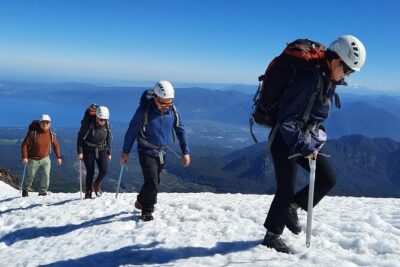
Full Day Mountaineering to Villarrica Volcano from Pucón
Our review of it →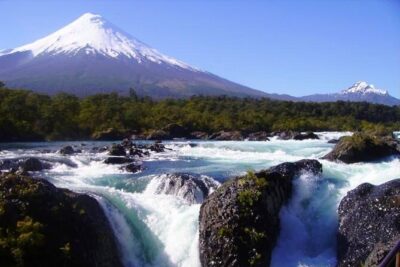
Private Day tour Petrohue Falls, Osorno Volcano & Puerto Varas
Our review of it →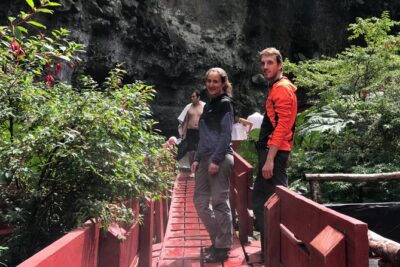
Trekking Mirador el volcano + Geometric hot springs
Our review of it →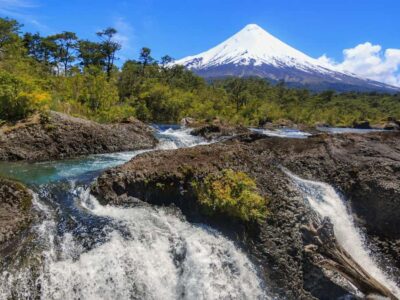
Puerto Varas: Osorno Volcano Day Trip by Air-conditioned Van
Our review of it →Browse the lists this tour appears in