REVIEW · HAWAII
A Guided Hike Adventure: Kilauea Iki Crater and a Lava Tube
Volcanoes leave a lasting impression. This four-and-a-half-hour hike through Hawaii Volcanoes National Park combines Kilauea Iki’s hardened lava lake with a walk through Nahuku Lava Tube, giving you two very different views of volcanic activity in one outing. I especially like the small-group format and the practical gear provided, including day packs, trekking poles, binoculars, and rain gear.
The tour also earns points for its thoughtful food and pacing. A healthy breakfast and trail snack are included, and guide Jennifer received praise for answering every question while keeping the walking pace comfortable for the whole group. The main consideration is that this is still a 7.5-kilometer hike over uneven volcanic ground, so good closed-toe shoes and a reasonable level of fitness matter.
Key points at a glance
- Walk across a cooled lava lake: Kilauea Iki formed during the dramatic 1959 eruption, and its hardened floor gives you a close look at how a molten crater changes over time.
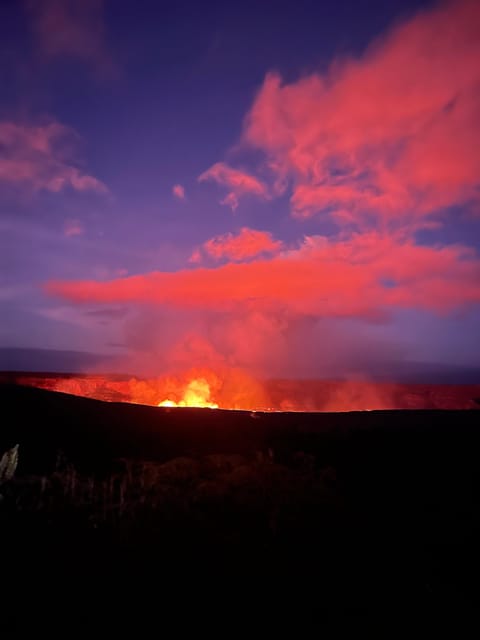
- See current volcanic activity from a safe viewpoint: The tour begins with views toward Halemaʻumaʻu Crater, where activity has continued since December 23, 2024, according to the supplied tour information.
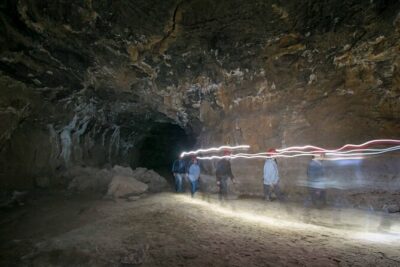
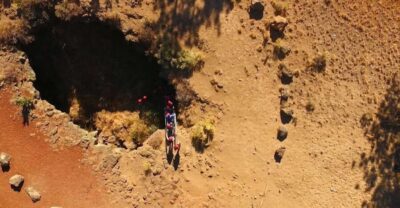
- Enter Nahuku Lava Tube: This natural tunnel lets you walk through an ancient lava flow and see the underground side of Hawaii’s volcanic story.
- Expect personal guiding: Groups are typically limited to two to six people, with a maximum of 10 participants.
- Carry less, worry less: Packs, poles, binoculars, rain gear, breakfast, and a hiking snack are included.
- Budget for the park fee: The national park admission is separate, costing $15 per person, $30 per vehicle for a one-week pass covering Hawaii national parks, or $80 for an annual national parks pass.
Why this hike works so well in Volcanoes National Park
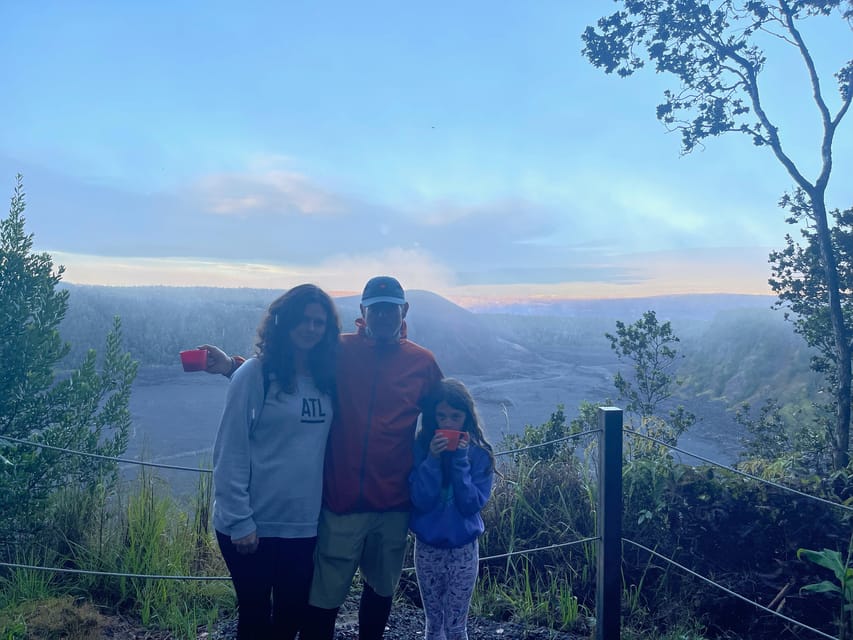
Many volcano tours rely on a roadside viewpoint and a short walk. This one asks you to spend several hours on foot, which changes the experience. You get time to notice the texture of cooled lava, the shape of the crater walls, and the way volcanic ground supports plant life at different stages.
I like that the route links several parts of the park’s story rather than treating the volcano as a single spectacle. You begin with a broad view of Halemaʻumaʻu, cross the floor of Kilauea Iki, then enter a lava tube. Above ground, you see the scale of an eruption. Underfoot, you see what lava can leave behind.
The guides add much of the value. The company describes its hiking leaders as trained in wilderness medicine, with professional and personal experience in outdoor settings. That matters on a trail where weather, footing, and volcanic terrain can change the feel of the walk. A guide who can explain geology while also watching the group’s pace is far more useful than someone who simply points out a crater.
The small size helps, too. Groups usually run from two to six people, although the maximum is 10. You have a better chance to ask questions, hear the guide clearly, and get help adjusting your pace. Jennifer, named in the tour feedback, was praised for answering questions and making sure everyone could keep up. That is exactly the kind of practical attention you want on a half-day hike.
More Lava and Eruption Tours in the USA
- Hilo Shore Excursion: Active Volcano, Lava Tube, Waterfall and Gardens
★ 5.0 · 393 reviews - Hilo Shore Excursion: Volcano Safari Lava Caves & Black Sand
★ 4.5 · 363 reviews - Maui Circle Island-PRIVATE-Air Tour for 2-5: Waterfalls & Lava!
★ 5.0 · 228 reviews
Starting near Devastation Trail
The listed starting points are Devastation Trail or the Devastation Trail parking lot. Your exact meeting point can vary with the option you book, so check the confirmed details before setting out.
Devastation Trail is a fitting place to begin. Even the name gives you a hint about the park’s character. This is not a polished garden walk. Volcanoes National Park shows nature in a raw, unfinished state, with ash, rock, exposed ground, and plant life returning at its own pace.
The tour lasts 270 minutes, or four and a half hours. That includes the guided route through the park, the crater walk, and the lava tube visit. Since the total hiking distance is listed as 7.5 kilometers, or about 4.5 miles, plan on a real outing rather than a quick attraction stop.
You should arrive ready to walk. Closed-toe shoes are required, and they are the sensible choice on rough volcanic ground. The company supplies trekking poles, which can help with balance and reduce strain on uneven sections. Rain gear is also available, a useful inclusion in a park where weather can shift quickly.
Halemaʻumaʻu views and an active volcano
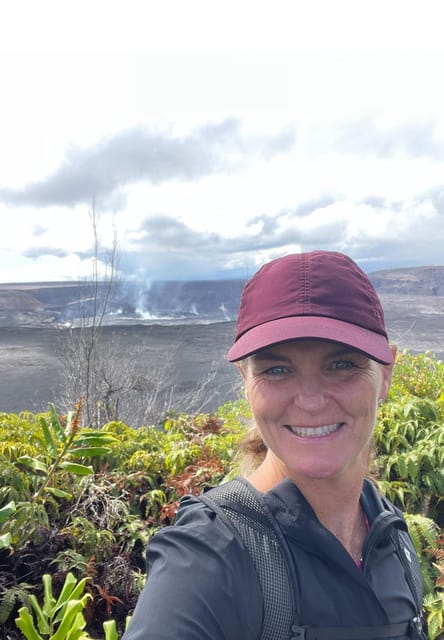
The first major feature is the view toward Halemaʻumaʻu Crater. This crater has been associated with ongoing volcanic activity since December 23, 2024, and the supplied tour details describe lava fountains rising more than 1,000 feet during eruptions that may occur every week or two.
That detail makes the timing of your visit important. Volcanic activity is unpredictable, and you should not book this outing expecting a guaranteed lava fountain. The reliable part is the chance to see the crater and discuss current activity with your guide. If an eruption is visible, it becomes a memorable bonus rather than a promise.
This is where a live guide earns the fee. A crater can look like a large hole from a distance, but the guide can explain what you are seeing, how eruptions change the interior, and why fresh volcanic features matter. You can also ask questions as conditions develop, rather than trying to piece together the story from a sign or a quick online search.
Bring patience here. The volcano does not perform on a schedule, and the most valuable part of the stop may be the explanation of what has happened over time. The sight is powerful even without an active fountain, because the crater represents an area still shaped by forces beneath the ground.
Crossing Kilauea Iki’s hardened lava lake
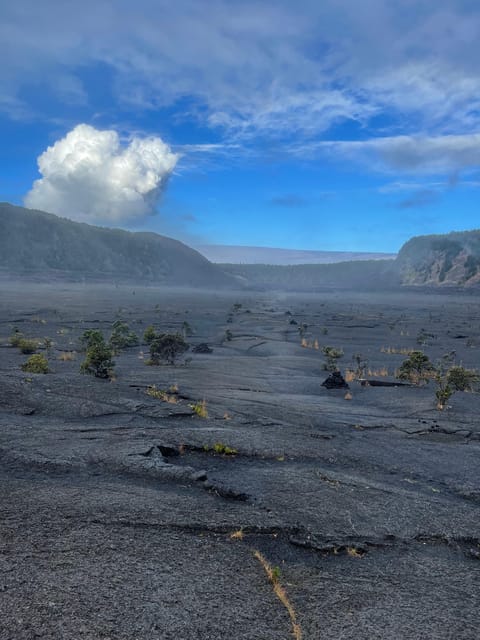
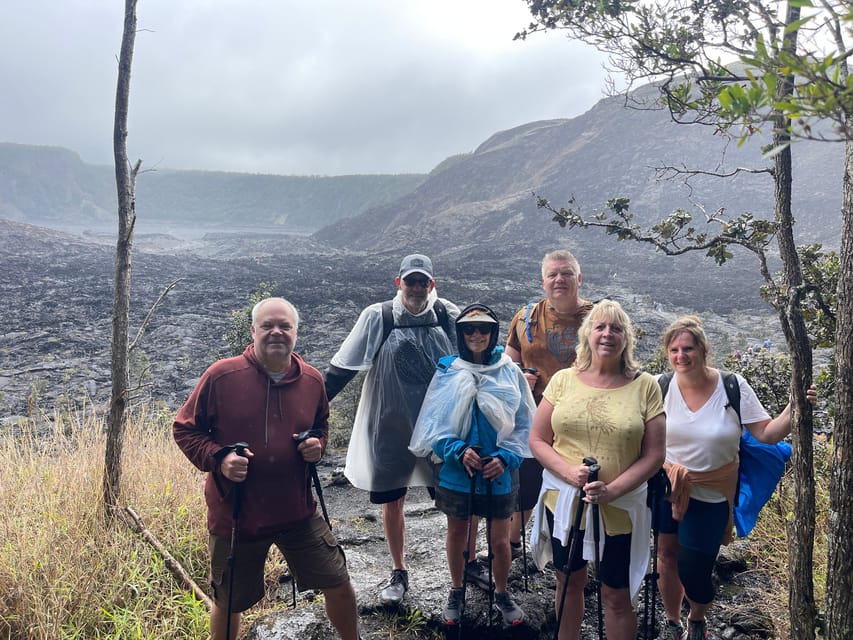
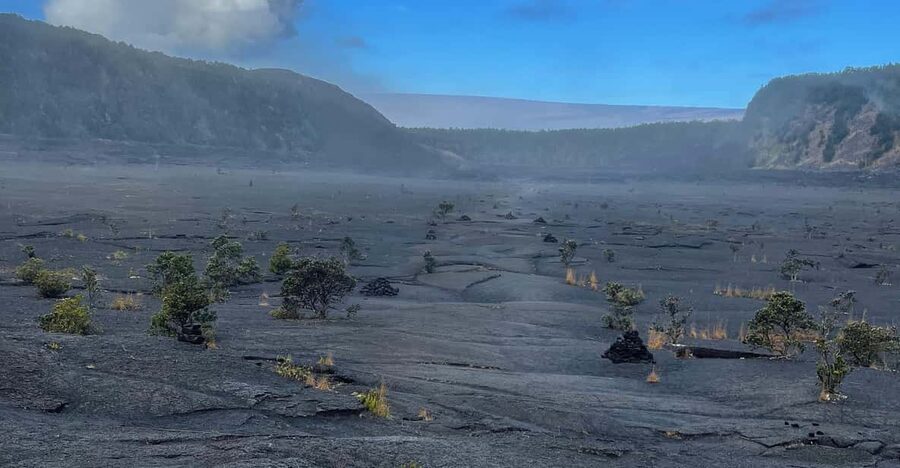
The central feature is the walk across Kilauea Iki Crater’s hardened lava lake. The lake formed during the 1959 eruption, when molten lava filled the crater before cooling into the surface you can cross today.
This is more than a scenic walk. You are standing on what was once a moving, glowing body of lava. The hardened surface gives you a direct sense of time: an eruption can reshape a crater in a matter of hours, then leave behind a solid field that remains visible for decades.
The terrain is described as rugged, with remnants of hot lava flow adding to the stark appearance. The walk may look simple in photographs, but volcanic ground is not the same as a smooth paved path. Trekking poles can help, particularly if you are less steady on irregular surfaces.
I would pay close attention to the guide’s instructions here. Stay with the group and follow any marked route or safety guidance. The value of a guided walk is not just the information. It is also having someone familiar with the route and conditions manage the practical side of the outing.
The crater floor should appeal to anyone interested in geology, photography, or the sheer physical scale of an eruption. It is also a good fit for people who want a more active park visit. You are not merely looking at a volcanic site from a railing. You are moving through it.
More Volcano Hikes and Treks in the USA
- Oahu: Diamond Head Crater Hike and North Shore Experience
★ 4.7 · 189 reviews - Hidden Craters Hike of Kona
★ 5.0 · 156 reviews - Glacier Hiking & Geothermal Cave Pools Tour
★ 5.0 · 139 reviews - Haleakala Crater Hiking Experience
★ 5.0 · 70 reviews
Nahuku Lava Tube and the underground story
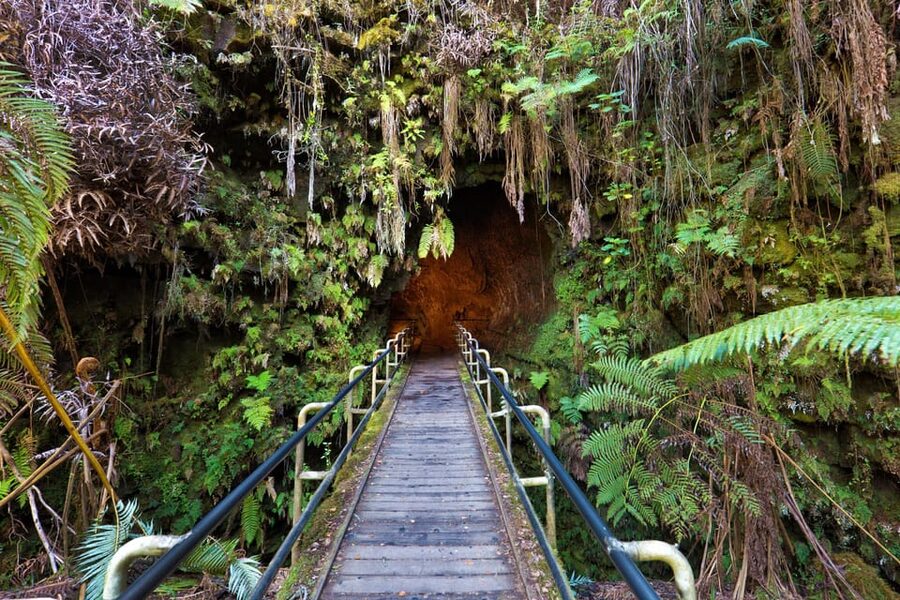
The Nahuku Lava Tube adds a completely different setting. Above ground, volcanic activity appears as a huge crater and a broad field of cooled rock. Inside the tube, the story becomes narrower, darker, and more intimate.
Lava tubes form when the outer surface of a lava flow cools while hotter lava continues moving beneath it. Once the flow drains, it can leave a natural tunnel. Walking through Nahuku lets you see the pathway created by that process rather than only its surface effects.
The tube is one of the park’s best-known natural features, but the guided visit still benefits from context. Your guide can connect the tunnel’s formations to the eruption processes you have already discussed at Kilauea Iki. The route becomes a lesson in sequence: molten material moves, the outside cools, the interior drains, and the empty passage remains.
A lava tube is also a welcome change of pace during a longer hike. The shade and enclosed setting offer a break from the open crater terrain, though you should still wear proper shoes and follow the guide’s directions. The supplied information does not promise a particular temperature, lighting condition, or formation display, so treat the tube as a natural volcanic passage rather than a staged attraction.
What the guide adds to the four-and-a-half-hour route
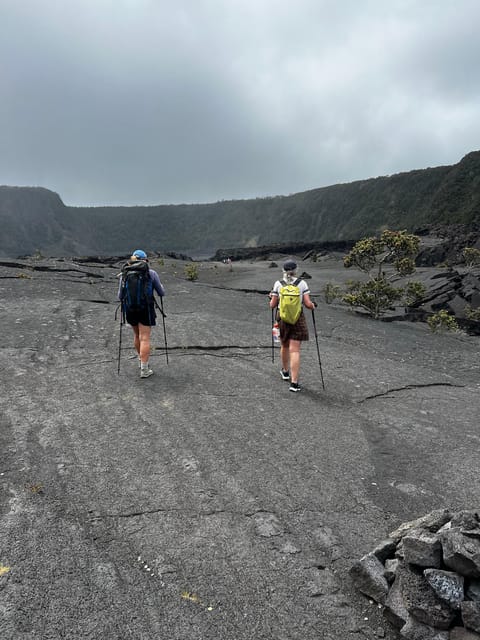
A good guide can turn a walk into a connected story. Here, the subject is not just volcanoes. It includes geology, ecology, park history, native plants, wildlife, and the way life returns after an eruption.
The guide team is described as having wilderness experience, wilderness medicine training, and strong communication skills. Those qualifications matter because the route mixes education with physical activity. You need someone who can explain the science in plain language, notice when a hiker needs a pause, and keep the group together.
The feedback about Jennifer is especially useful. She was praised for answering every question and keeping the hiking pace comfortable for everyone. That gives you a helpful picture of the guiding style: attentive rather than rushed, with room for conversation.
Small groups make this more likely. In a group of two to six, you can ask about a plant, a rock formation, or the eruption history without feeling that you are holding up a busload of people. The maximum group size is 10, so your experience can vary depending on the date, but it remains more personal than a large coach excursion.
Packs, poles, food, and rain gear
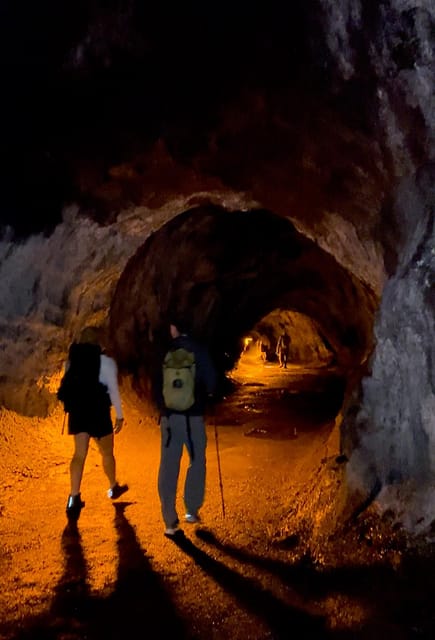
The included equipment is one of the strongest practical features. You receive a high-quality day pack, trekking poles, binoculars, and rain gear. That reduces the amount of specialized gear you need to bring or rent.
The binoculars are particularly useful for crater views and distant details. They will not turn an uncertain eruption into a guaranteed sighting, but they can help you examine features that are hard to make out with the naked eye.
Food is another quiet advantage. A healthy breakfast and a snack for the hike are included. The specific menu is not provided, but the feedback gave the food unusually high praise, calling it the best hiking food the writer had experienced. That suggests care in the preparation, though anyone with dietary needs should confirm arrangements before booking.
You still need to bring closed-toe shoes. The supplied information does not list water, sunscreen, a hat, or extra layers, so you should ask the operator what personal items are recommended for the day. Do not assume that included rain gear replaces all personal clothing needs.
Price and overall value at $157
At $157 per person, this is not the cheapest way to see Hawaii Volcanoes National Park. The price makes more sense when you consider what is bundled into the four-and-a-half-hour outing: a wilderness medicine trained guide, route planning, a small group, day packs, trekking poles, binoculars, rain gear, breakfast, and a trail snack.
You are also paying for interpretation. If you already know the park well, have your own equipment, and prefer to walk alone, you may find the cost harder to justify. If you want to understand what you are seeing and avoid arranging each practical detail yourself, the value improves.
Remember to add the park admission fee. It is $15 per person, $30 per vehicle for a one-week pass covering all Hawaii national parks, or $80 for an annual pass covering all United States national parks. Active-duty military members can use the available free military pass.
The tour offers free cancellation up to 24 hours before the start time, plus a reserve-now-and-pay-later option. Those terms are useful when your Hawaii schedule depends on weather or changing park conditions. Confirm the meeting point and start time after booking, since those details can vary by option.
Who should book this hike?
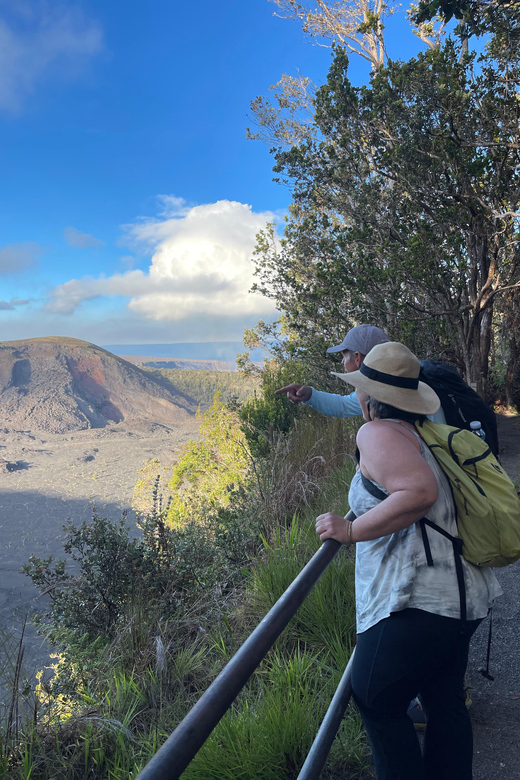
I would recommend it to adults and families with children aged eight and older who enjoy walking, asking questions, and spending several hours outdoors. It suits first-time visitors who want a structured introduction to the park, as well as returning visitors who want a closer look at Kilauea Iki and Nahuku Lava Tube.
It is a particularly good match for:
- People interested in volcanoes and geology
- Hikers who appreciate a moderate, guided outing
- Visitors who want a small group instead of a large bus tour
- Anyone who values included gear and food
- Nature lovers who want to learn about plants, wildlife, and volcanic recovery
It may be less suitable if you want a short, effortless sightseeing stop, dislike uneven ground, or need a fully accessible route. The experience requires closed-toe shoes and covers 7.5 kilometers of varied volcanic terrain. Children under eight are not permitted.
The tour also has a clear conservation angle. The company follows Leave No Trace principles and contributes to conservation efforts in Volcanoes National Park. That matters in a fragile volcanic environment, where careless foot traffic and discarded waste can affect slow-growing ecosystems.
Should you book the Kilauea Iki and lava tube hike?
Book it if you want more than a crater viewpoint. The combination of Halemaʻumaʻu views, the 1959 Kilauea Iki lava lake, and Nahuku Lava Tube gives you a strong half-day look at how volcanoes shape Hawaii above and below ground.
The best reasons to choose it are the small groups, included gear, careful pacing, and guide attention. Jennifer’s praised approach, especially her willingness to answer questions and adjust the pace, is the kind of service that can make a demanding walk feel manageable.
Skip it if you are looking for guaranteed active lava, a very short walk, or the lowest possible price. Volcanic activity cannot be promised, and the park admission fee comes separately. For hikers who want a personal, educational outing and are comfortable walking across rough terrain, $157 is a fair price for the equipment, food, guiding, and time involved.
FAQ
How long does the guided hike last?
The experience lasts 270 minutes, or four and a half hours.
How far is the hike?
The route is listed as 7.5 kilometers, or approximately 4.5 miles.
What sights are included?
The hike includes views of Halemaʻumaʻu Crater, a crossing of Kilauea Iki Crater’s hardened lava lake, and a visit to Nahuku Lava Tube.
Is the national park entrance fee included?
No. You need to purchase a separate Volcanoes National Park pass if you do not already have a valid national park pass.
How much is the park pass?
The listed fees are $15 per person, $30 per vehicle for a one-week pass covering Hawaii national parks, or $80 for an annual pass covering all national parks. An active-duty military free pass is also available.
What equipment is provided?
The tour provides day packs, trekking poles, binoculars, and rain gear. A healthy breakfast and a hiking snack are also included.
What is the group size?
The tour is limited to 10 participants, with groups typically ranging from two to six people.
What should I bring?
Closed-toe shoes are required. The supplied information does not specify additional personal items, so confirm packing advice with the operator before your hike.
Are young children allowed?
Children under eight are not permitted on the experience.
What happens if I need to cancel?
You can cancel up to 24 hours in advance for a full refund. A reserve-now-and-pay-later option is also available.
More Lava Tubes and Ice Caves in the USA
- Big Island Waterfalls, Blacksand Beaches, Lava Tubes & Volcanoes
★ 5.0 · 24 reviews - Bend Oregon Guided Lava Tube Cave Tour
★ 4.5 · 19 reviews - Bend: Half-Day Lava Tube Cave Tour
★ 4.9 · 7 reviews - Guided Hike Adventure: Kilauea Iki and Lava Tube
★ 5.0 · 3 reviews
More Hawaii Volcano Tours in the USA
- Hilo Shore Excursion: Volcanoes National Park & Black Sand Beach
★ 4.5 · 2,338 reviews - Diamond Head Crater
★ 5.0 · 943 reviews - Big Island: Fat Tire E-Bike Tour through Volcanoes National Park
★ 5.0 · 546 reviews - Big Island, Hawaii: Volcanoes National Park Safari
★ 4.5 · 545 reviews
Just added around the USA
- 3 Day Tour to Oregon Redwood Crater Lake from San Francisco★ 4.0 · 13 reviews
- Volcano & Mountain Air Tour by Envi Adventures★ 5.0 · 5 reviews
- Northern Arizona Meteor Crater and Walnut Canyon from Phoenix – Private Tour★ 5.0 · 22 reviews
- See Park City Olympic Park Utah Crater Cheese Farm & Jordanelle★ 4.5 · 24 reviews
- Wupatki and Sunset Crater National Monuments from Phoenix – Private Tour★ 5.0 · 7 reviews
- Lava Run Off-Road Adventure★ 5.0 · 115 reviews
- Natural Indoor Hot Spring and Spa Utah Crater Soak & Swim★ 4.5 · 20 reviews
- Crater Lake Day Shared Tour★ 5.0 · 51 reviews
Lava Tubes & Ice Caves, compared.
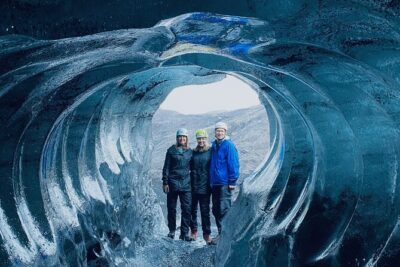
Ice Cave by Katla Volcano Super Jeep Tour from Vik
Our review of it →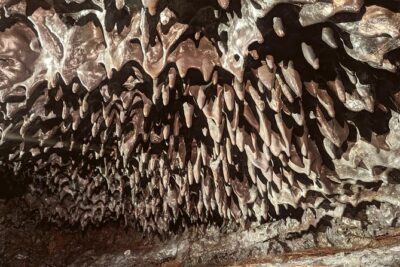
Discovery of the lava tubes 2004 of Piton de la Fournaise
Our review of it →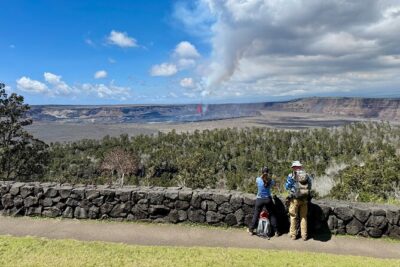
Hilo Shore Excursion: Active Volcano, Lava Tube, Waterfall and Gardens
Our review of it →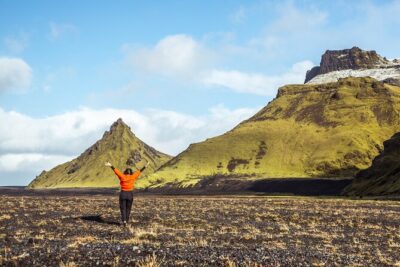
Katla Ice Cave & South Coast Day Tour from Reykjavik
Our review of it →
Katla Volcano Ice Cave – Super Jeep Tour from Vik
Our review of it →
Big Island Waterfalls, Blacksand Beaches, Lava Tubes & Volcanoes
Our review of it →