REVIEW · HAWAII
Private Tour: Hawaii Volcanoes National Park Eco Tour
Feel the volcano breathe. This private Hawaii Volcanoes National Park tour combines expert geological guidance with walks through steam vents, rainforest, lava fields, and the Kilauea Iki crater area. I like the personal pace and the chance to ask plenty of questions, especially with guides such as Erik, Jay, Michelle, Justin, and Tyson. The main drawback is that you drive between several stops, and the $160 price does not include park admission or transportation to the meeting point.
This is a strong choice if you want more than a quick photo stop. The guides explain geology, native plants, birds, Hawaiian culture, and eruption history in a way that gives the scenery meaning. Just bring water and snacks, and remember that views of active lava depend entirely on current volcanic conditions.
Key points before you book
- Private guiding makes the difference: Your group gets its own guide, with a route and pace that can be adjusted to your interests and time limit.
- The tour blends science and culture: Expect discussion of volcanic chemistry, native plants, Hawaiian traditions, park history, and the 1959 eruption.
- You may walk more than expected: Several short walks connect with driving sections, and the experience can feel like a walking tour with a vehicle between areas.
- The 3-hour option covers a lot: You can see major highlights in less than a day, but six hours gives you more room for trails and questions.
- Lava viewing is never guaranteed: The Keanakako’i Overlook is the best listed place to look for an active summit eruption, but conditions control what you see.
- Pack your own food and water: Snacks are not included, and there is little opportunity for a proper lunch during the park visit.
Why a private volcano tour earns its price
At $160 per person, this is not the cheapest way to see Hawaii Volcanoes National Park. You still pay the National Park entrance fee, listed as $30 per vehicle, and you must arrange your own transportation to the starting point at the Volcano House area.
The value comes from interpretation. You can drive the park roads and follow trails on your own, but a guide can point out olivine crystals, explain why steam rises from one patch of ground, identify plant adaptations, and connect the 1959 eruption to what you see underfoot. That extra context is what turns a scenic outing into a useful lesson about Kilauea.
Private also means flexible. A family with young children can include the Junior Ranger program. A group with an early flight can keep to a shorter route. A keen hiker can ask for more walking, while a mixed-age group can balance trails with vehicle stops. The operator asks you to contact them after booking to set your preferred departure time and discuss the route.
The strongest praise goes to the guides. Erik is repeatedly described as engaging, adaptable, and strong with children. Jay brings experience from working as a park ranger and at the park. Tyson is praised for his geology background and friendly manner, while Michelle and Justin are noted for tailoring the experience to the group. Guide availability can change, but the pattern is clear: the human side of this tour is a major part of its value.
More Private Volcano Tours in Big Island
- Private Guide Meet In Hawaii Volcanoes National Park
★ 5.0 · 181 reviews - Private Big Island Tour: Coffee, Beaches, Volcanos, Waterfalls
★ 5.0 · 54 reviews - Private Tour of Hawaii Volcanoes National Park
★ 5.0 · 25 reviews
Starting at Volcano House and the crater rim
The meeting point is at 1 Crater Rim Drive, inside Hawaii Volcanoes National Park, near the historic Volcano House hotel. This is a useful starting place because you are already in the park and close to several important features.
The first section takes you toward steam vents and Sulphur Banks. You can feel heat rising from the ground, a simple but memorable reminder that Kilauea is not just a mountain with an old crater. It remains a place of heat, gas, shifting rock, and active geological forces.
You then move through native rainforest toward the Devastation Trail area. The change from forest to volcanic ground is one of the park’s most effective lessons. Your guide can explain how plants survive in a setting affected by gases, ash, heat, and fresh volcanic deposits.
The pace here depends on your group. The tour is suitable for most people, but it is not just a drive-by sightseeing loop. Comfortable shoes and water matter, especially if you choose a longer version or ask for additional walking.
Thurston Lava Tube and the old-growth forest
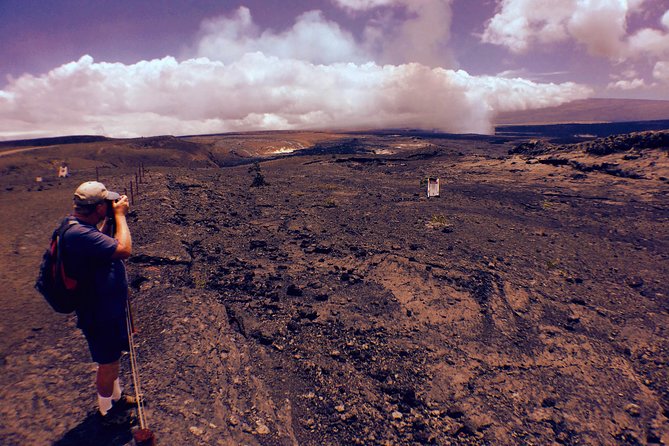
Nahuku, also called Thurston Lava Tube, is one of the easiest places to grasp how molten rock can shape a cave. You walk through an older native forest before reaching the tube, then hear how lava once moved through the ground and left a hollow passage behind.
The listed visit is about 15 minutes, so expect a short, focused stop rather than a long cave expedition. That is enough time for a guide to explain how lava tubes form and point out features inside.
This stop works well for families because it adds variety. You are not looking at another open crater or black rock field. You are walking through a forest and then entering a dramatic volcanic formation. If you have children, this is one of the places where a clear explanation can make the geology feel real rather than abstract.
Halemaumau Trail and the summit caldera
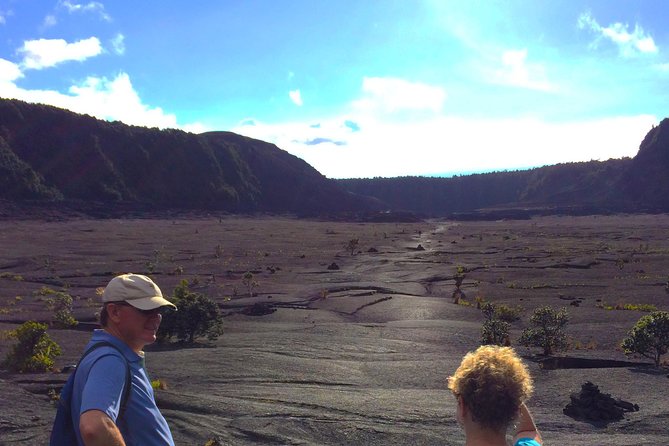
The Halemaumau Trail provides views toward Kilauea’s summit caldera, along with time to discuss native plants, birds, geology, and Hawaiian culture. The walk is listed at about 15 minutes, but the guide’s explanation is the real purpose of the stop.
The caldera is not simply a large hole in the ground. Its appearance and condition can change with volcanic activity, and access or viewing areas may be affected by current park conditions. A guide can help you understand what you are seeing without pretending that every visit will look the same.
This is also one of the better places to connect the physical volcano with Hawaiian culture. The tour presents Kilauea as a place of continuing cultural importance, not only as a scientific subject. That balance is valuable, especially if you want to understand the island beyond its postcard views.
More Private Volcano Tours in the USA
- Private Tour from Hilo to Hawaii Volcanoes Natl Park Mercedes Van
★ 5.0 · 19 reviews - Hilo-6 Hour Private Tour-Volcanoes NP, Rainbow Falls and more.
★ 5.0 · 16 reviews - Meet in the park – Private Hawaii Volcanoes National Park Tour
★ 5.0 · 16 reviews - Private Sprinter Van 10 Seats tour from Kona Coast to Volcanoes National Park
★ 5.0 · 14 reviews
Steam Vents and Sulphur Banks
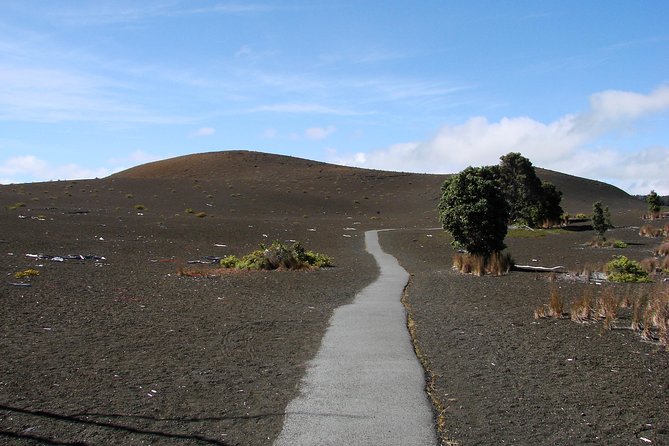
At the steam vents, you get close to the geothermal heat. These are good photography stops, but keep your attention on the ground and on the guide’s safety instructions. The heat and fumes are part of the experience, not background decoration.
Sulphur Banks adds a more technical layer. Here, the guide discusses geochemistry and the ways native plants cope with volcanic gases. The area is described as safe to explore because gas concentrations are low, but conditions can vary in volcanic areas. Stay with the guide and respect any park restrictions.
I like this part of the route because it shows that volcano study is not limited to watching lava. Chemistry, heat, gas, soil, and plant life all belong to the story. You see a living system rather than a single dramatic event.
Kilauea Iki Trail and the 1959 eruption
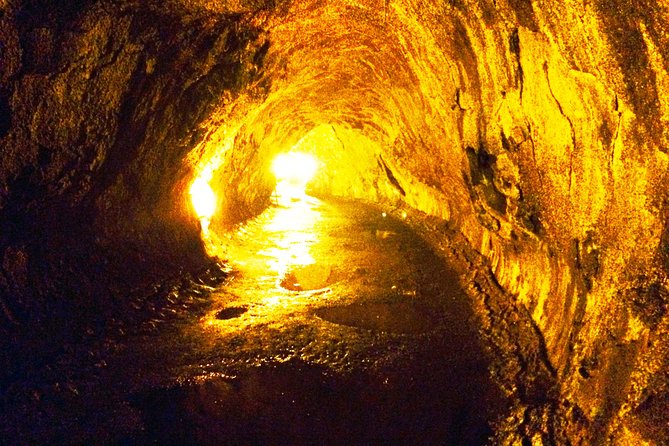
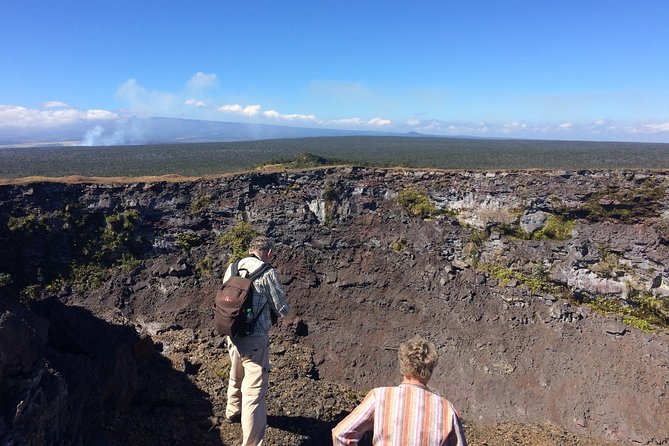
Kilauea Iki is described as the park’s most popular trail, with a surface that can feel almost lunar. The guide explains the 1959 eruption, including its exceptionally high lava fountains, while you look across or walk near the crater area.
The listed stop is about 15 minutes, so the full crater hike is not automatically part of every short tour. This is an important point. The tour can be tailored, but the exact amount of trail time depends on your chosen duration, physical ability, park access, and the route agreed with the operator.
If you want substantial hiking here, request it when arranging your departure time. Several people who chose longer tours valued the extra walking, while three-hour visits still provided a strong overview. The private format gives you a better chance of shaping that balance than a fixed bus excursion.
Devastation Trail and volcanic details underfoot
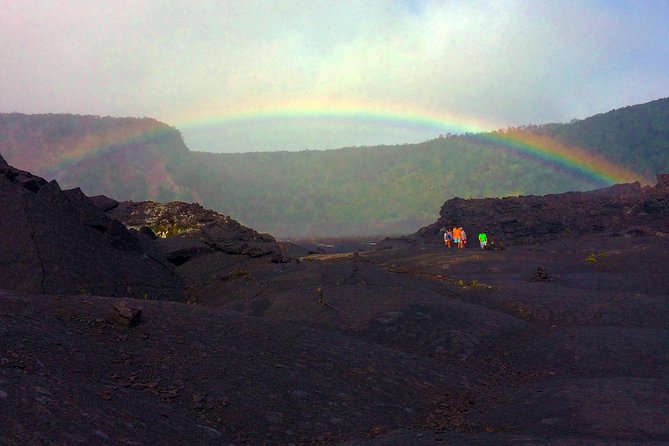
Devastation Trail shows what happened when the 1959 eruption buried native rainforest in volcanic debris. The stop lasts about 30 minutes, giving you more time than several of the shorter viewpoints.
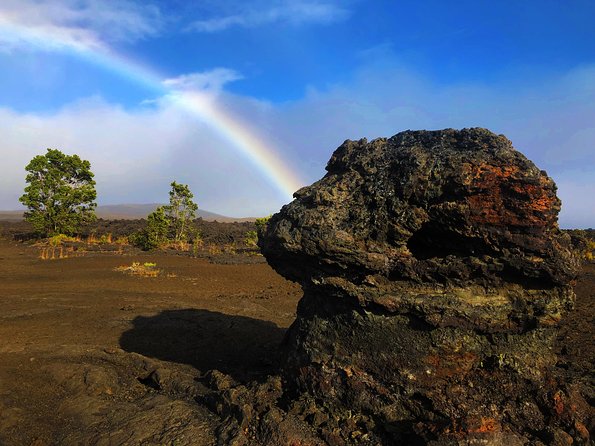
Look closely at the ground. The tour highlights Pele’s tears, olivine crystals, and other unusual rock formations. These details are easy to miss if you simply walk through taking wide photographs.
This is where a guide earns their keep. A small green crystal or glassy fragment may look like ordinary rubble until someone explains how it formed. You should not remove natural material from the park, but you can learn to recognize what makes it special.
Chain of Craters Road and Lua Manu
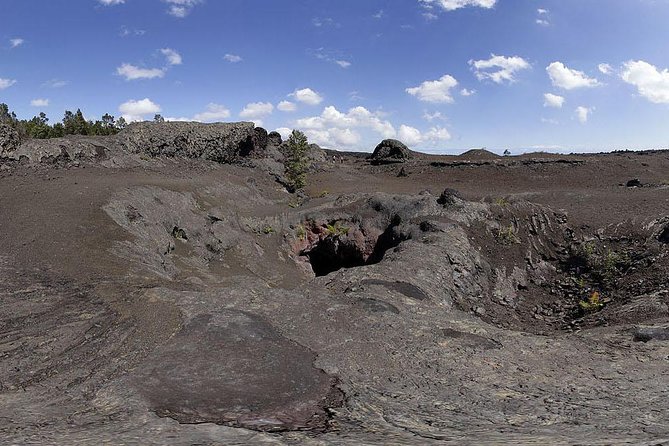
The Chain of Craters Road links several volcanic settings and gives the tour its broadest sense of Kilauea’s reach. The route includes stops such as Lua Manu, where the guide discusses pit craters and their importance to the volcano.
The listed time is about 45 minutes, though the actual experience depends on road conditions, viewing access, and your chosen route. You should expect driving between stops here. One person found that the vehicle time reduced the feeling of looking around while moving, even though the driving is clearly part of how this large park is covered.
That criticism is fair. A private guide does not remove the distances inside the national park. You gain interpretation and route planning, but you are still in a big volcanic park rather than a compact museum.
Keanakako’i Overlook and uncertain lava viewing
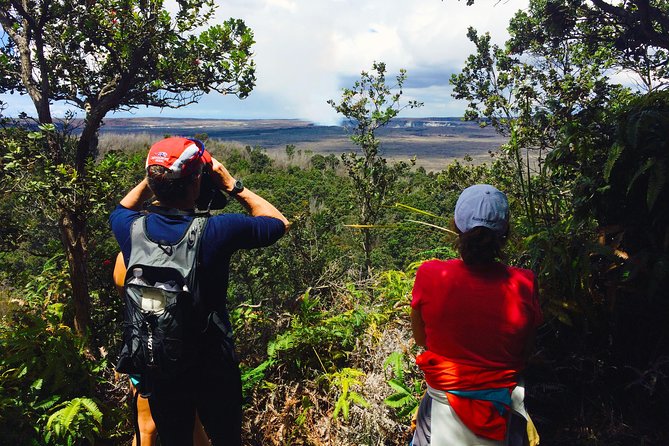
Keanakako’i Overlook is presented as the best place on this route to look for an active summit eruption when lava is visible. Guides may use binoculars or spotting scopes to help you see activity at a distance.
Do not book this tour solely for a lava show. Summit eruption viewing depends on current conditions, and no guide can promise an active display. Seismic activity, closures, weather, and changing access can also affect what you see.
When activity is present, this can become the emotional high point of the visit. When it is not, the tour still has plenty to offer through the crater views, trails, rainforest, steam vents, and volcanic deposits.
Holei Sea Arch on the coastal end
The Holei Sea Arch provides a change of mood after the inland volcanic sites. The walk is easy and takes about five minutes, with a chance to photograph the arch and discuss native seabirds.
It is a brief stop, but it shows how Kilauea reaches all the way to the coast. The park is not only craters and steam. Lava, ocean, erosion, and seabird habitat are part of the same story.
The coastal road can add useful range to a longer tour. On a three-hour visit, the guide may need to choose between this and other stops, so tell the operator what matters most to you.
Visitor Center, Volcano Art Center, and the old hotel
The Kilauea Visitor Center is a quick five-minute option. You can pick up information about the park, look for a local book about the volcano or Hawaiian culture, and collect a Junior Ranger program for children.
The guide can help a child complete the program and receive an official Junior Ranger badge at the end of the tour. That is a practical bonus for families, especially when children need a hands-on task to stay interested.
The Volcano Art Center Gallery offers another short stop and a chance to see the original Volcano House hotel, described as the oldest hotel in the state. It adds art and local culture to a route otherwise focused on geology. Neither stop is likely to satisfy someone seeking a long gallery visit, but both work well as brief additions.
Three hours or six hours?
The tour lasts approximately three to six hours. A three-hour version can provide a very good overview, with major crater views, steam vents, forest, lava formations, and several short walks. People who selected this length often found the time passed quickly and wished they had booked longer.
The six-hour option makes more sense if you want a slower pace, more hiking, extra questions, or a greater chance to include the coastal end of Chain of Craters Road. It may also suit families who need more time for stops and children’s activities.
Do not assume that every one of the 12 listed places receives a full visit on a three-hour tour. The operator asks you to discuss your preferred itinerary, so be direct. Say if you care most about hiking, geology, Hawaiian culture, active eruption viewing, photography, or family-friendly stops.
What to bring and how to plan
Bring water and snacks. Food and drinks are not included, and there may not be a proper lunch opportunity inside the park. One practical suggestion from the experience is to pack something more substantial than convenience-store snacks.
Wear shoes suitable for short walks on volcanic ground and forest paths. The tour is not described as difficult, and most people can participate, but the exact walking demand changes with the route and duration.
You arrange your own transportation to and from the meeting point. The tour ends back there, and hotel pickup is not included. Admission to the national park is also separate, at the stated $30 per vehicle.
Departure time is flexible, but it is not automatically fixed at the moment of booking. After booking, contact Kilauea EcoGuides to agree on the time and discuss the itinerary. Confirmation is sent within 48 hours, subject to availability. At least two people are required per booking, and a booking can include up to 25 people, although the private format means only your own group participates.
You can cancel up to 24 hours before the experience for a full refund. Current volcanic conditions can change access or viewing plans, so keep some flexibility in your day.
Who will get the most from this tour?
I would choose this for a couple, family, or small group that wants to understand the park rather than simply collect photographs. It is especially useful for first-time visitors, people curious about geology, and anyone who wants Hawaiian culture included in the conversation.
Families benefit from the adjustable pace and Junior Ranger option. Older adults can still enjoy the tour if the group agrees on shorter walks and more driving. One group with adults in their 80s and young people in their teens and twenties found the format worked across generations.
This may not suit you if you want to roam entirely on your own, avoid vehicle time, or pay only for transportation. You can visit many of these sites independently. The fee makes sense when you place a high value on interpretation, route planning, personal questions, and access to a guide who can adjust the day.
Should you book it?
Book it if you want a personal, educational visit to Kilauea and can accept that lava viewing is uncertain. The guides receive especially strong praise for their science knowledge, cultural awareness, warmth, and ability to adapt the route.
Choose the three-hour version for a focused park introduction. Choose closer to six hours if you want more trails, more time at the volcano, and a less hurried day. Before paying, factor in the park fee, your own transportation, food, and water.
I would skip it only if your priority is the lowest possible cost or complete independence. For everyone else, the private format can turn a confusing collection of craters, forests, gases, and lava rock into a clear, memorable story about Hawaii’s still-active volcano.
FAQ
Where does the Hawaii Volcanoes National Park Eco Tour begin?
The tour begins at 1 Crater Rim Drive, Hawaii Volcanoes National Park, near the historic Volcano House hotel.
Where does the tour end?
The activity ends back at the meeting point.
How long does the tour last?
The tour lasts approximately three to six hours, depending on the option and agreed itinerary.
How much does the tour cost?
The listed price is $160 per person.
Is the National Park entrance fee included?
No. The National Park entrance fee is listed separately as $30 per vehicle.
Is hotel pickup included?
No. Hotel pickup and drop-off are not included, and you must arrange transportation to and from the attractions.
Is this a private tour?
Yes. Only your group participates in the activity.
How many people are required to book?
A minimum of two people is required per booking. A booking can include up to 25 people.
Can I choose the departure time?
The departure time is flexible, but you must contact the local operator after booking to provide your preferred time.
Will I definitely see active lava?
No. Lava viewing at Keanakako’i Overlook depends on current eruption conditions.
Are food and drinks included?
No. Food and drinks are not included unless specifically stated. Bringing water and snacks is advised.
Is the tour offered in English?
Yes. The tour is offered in English and includes a mobile ticket.
Can children participate?
Most people can participate, and the tour includes Junior Ranger programs for children. The guide can help a child complete the program and receive a badge.
Can I cancel for a refund?
You can cancel up to 24 hours before the experience for a full refund.
More Volcano National Parks in the USA
- Volcano National Park Adventure From Kona
★ 5.0 · 339 reviews - Volcano National Park Adventure from Waikoloa
★ 5.0 · 216 reviews - Self-Guided GPS Audio E-Bike Tour Hawaii Volcanoes National Park
★ 4.5 · 131 reviews - Hilo Cruise Ship Excursion: Volcanoes National Park Rainbow Falls
★ 4.5 · 130 reviews
More Volcano National Parks in Big Island
- Hilo Shore Excursion: Volcanoes National Park & Black Sand Beach
★ 4.5 · 2,338 reviews - Big Island: Fat Tire E-Bike Tour through Volcanoes National Park
★ 5.0 · 546 reviews - Big Island, Hawaii: Volcanoes National Park Safari
★ 4.5 · 545 reviews - Small-Group Big Island Tour: Hawaii Volcanoes National Park and Kona Coffee Farm
★ 5.0 · 343 reviews
Just added around Big Island
- Private Electric Bike Tour with Lava Hike in Pāhoa★ 5.0 · 8 reviews
- Volcanoes Hawaii Wonders National Park – Full Day★ 5.0 · 5 reviews
- Volcano Adventure Tour & Waterfall – Shore Excursion from Hilo Harbor★ 4.0 · 10 reviews
- Volcanoes National Park Private Tour★ 5.0 · 13 reviews
- Volcano Adventure – Search the Most Recent Active Volcano from Kona★ 4.0 · 27 reviews
- Hilo-6 Hour Private Tour-Volcanoes NP, Rainbow Falls and more.★ 5.0 · 16 reviews
- Volcano Tour from Kona★ 5.0 · 5 reviews
- Private – Hawaii Volcanoes NP and Black Sand Beaches Tour★ 5.0 · 9 reviews
Volcano National Parks, compared.
Teide National Park Sunset & Stargazing Tour
Our review of it →
Sunset and Stargazing at Teide National Park
Our review of it →
Teide National Park Sunset & Stargazing with Dinner (Star Safari)
Our review of it →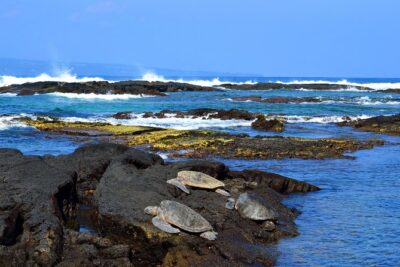
Hilo Shore Excursion: Volcanoes National Park & Black Sand Beach
Our review of it →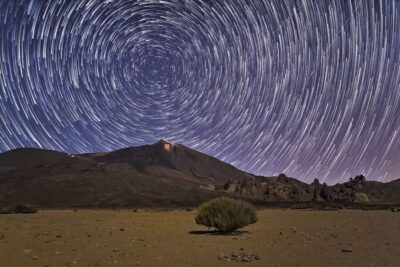
Teide National Park: Sunset & Stargazing Safari with Dinner
Our review of it →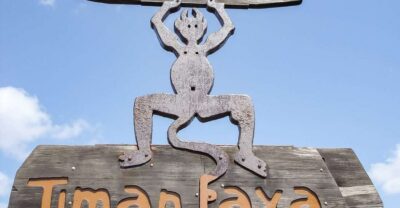
Timanfaya National Park Volcanic Craters Tour
Our review of it →
Teide National Park Full-Day Tour with Pickup
Our review of it →