REVIEW · INDONESIA
mount rinjani 3D/2N summit,lake.hot spring and crater rim
Rinjani rewards effort with huge views. This three-day trek gives you the full mountain story: the open grasslands above Sembalun, a sunrise from the 3,726-meter summit, Lake Segara Anak, hot springs, and a second night on Senaru Crater Rim. I especially like the two different trekking routes, which let you climb through eastern savanna and descend through thick tropical forest. I also like the small-group setup, limited to 10 people, with guides and porters handling camp equipment and cooking gear.
The main drawback is the physical demand. Summit morning begins around 3 a.m., and the trail includes steep, loose sections both up and down the crater. You also pay the national park fee separately, listed as IDR 200,000 per person per day, so the advertised $137 price does not cover every cost.
Five things to know before choosing this Rinjani trek
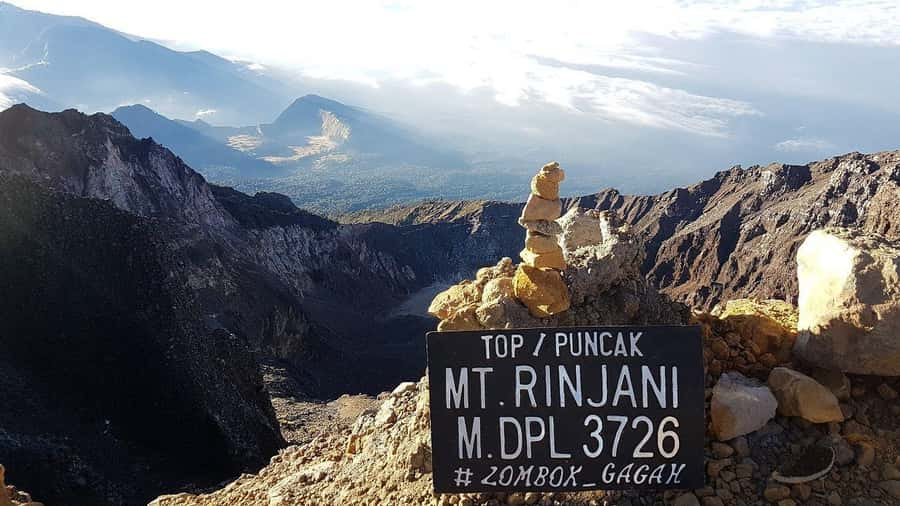
- The summit starts at 3 a.m.: You climb in darkness for about three hours to reach the 3,726-meter summit near sunrise.
- You see both sides of Rinjani: The route begins at Sembalun and finishes in Senaru, rather than returning by the same trail.
- Lake Segara Anak is part of the adventure: You descend into the crater for lunch, lake views, and a short visit to the hot springs.
- Two crater camps create two different views: Sembalun Crater Rim gives you sunset over the lake, while Senaru Crater Rim looks across the crater toward the summit and Gunung Baru.
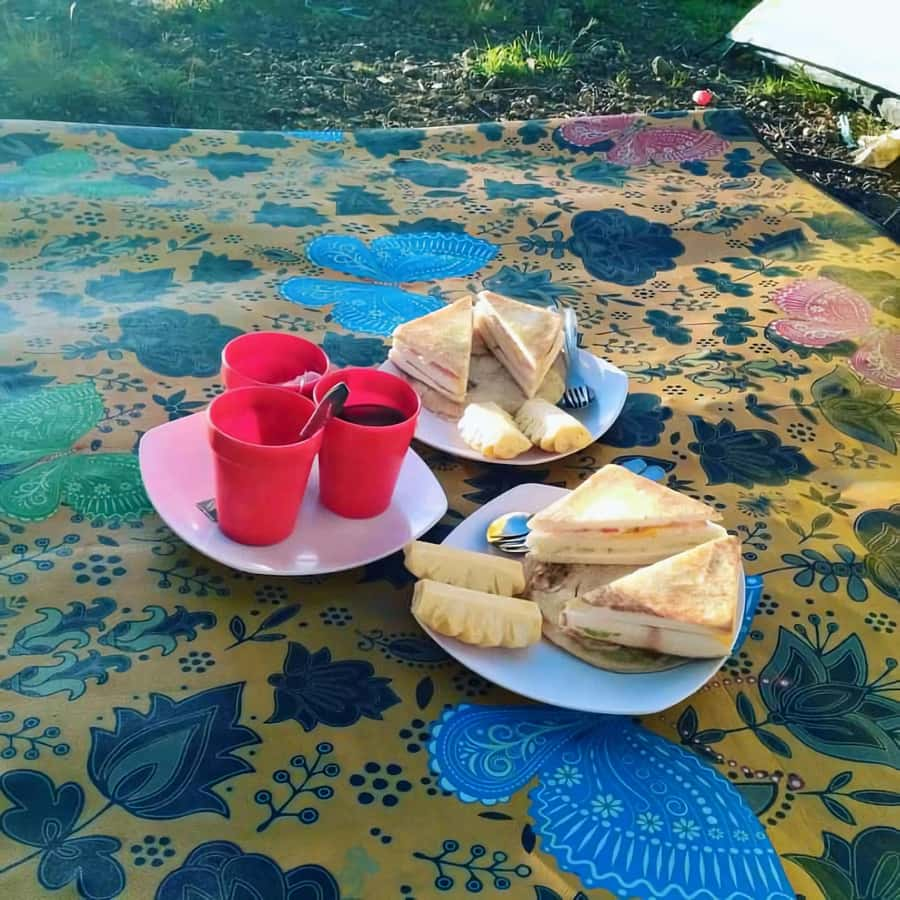
- The $137 rate covers useful basics: Guides, porters, meals, water, tents, sleeping gear, trekking poles, and gloves are included, but the park fee, footwear, headlamp, and personal bag are not.
- The service gets strong praise: Reno and his two porters are specifically praised for taking good care of the group before, during, and after the trek.
What the three-day route really involves
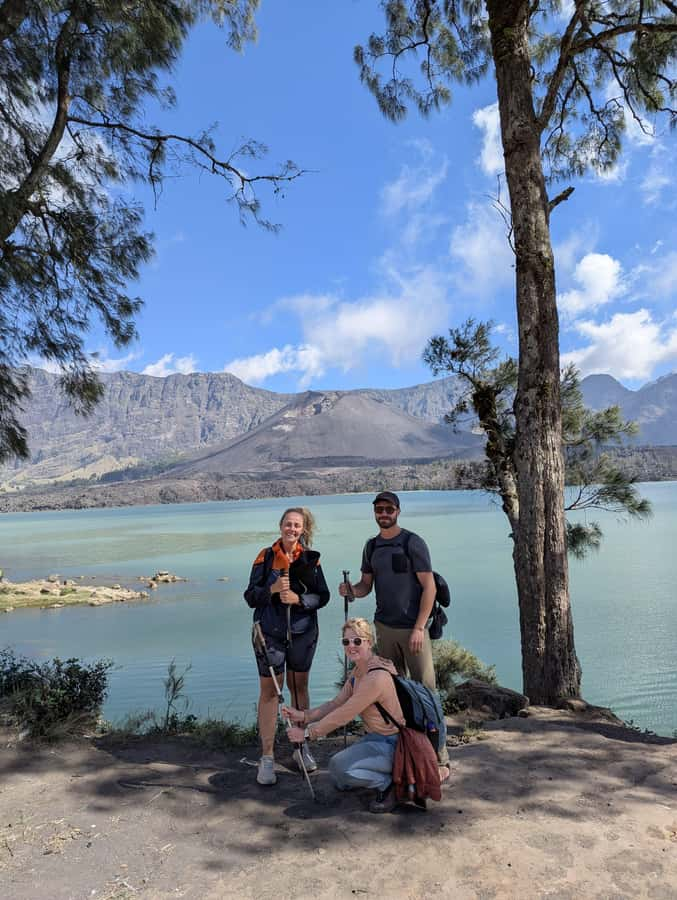
This is the most popular Rinjani program because it packs the mountain’s main sights into three days and two nights. You climb from Sembalun, reach the summit, descend to the crater lake, cross toward Senaru Crater Rim, then walk down to Senaru village.
That variety is the trip’s biggest strength. You are not simply walking up and down one trail. Each section feels different. Sembalun begins in broad, open grassland. The crater rims feel exposed and dramatic. The descent to the lake is rocky and demanding. The final section runs through thicker forest.
The trip is still a serious trek, not a casual sightseeing outing. You need to carry your day-to-day items, manage an early summit start, and handle several steep climbs. The porters carry cooking equipment and camping supplies, but an extra porter for your own luggage costs more.
More Volcanic Hot Springs in Indonesia
- Jakarta: Volcano, Tea/Rice Fields, Hot Spring, Local Food
★ 4.9 · 515 reviews - Active Volcano, Rice Field, Hot Spring, Fruit market, Tea Plantation with Lunch
★ 5.0 · 513 reviews - Bandung: White Crater, Scenic Tea Plantations & Hot Spring
★ 4.9 · 122 reviews
Day one: Sembalun’s grasslands and the first crater rim
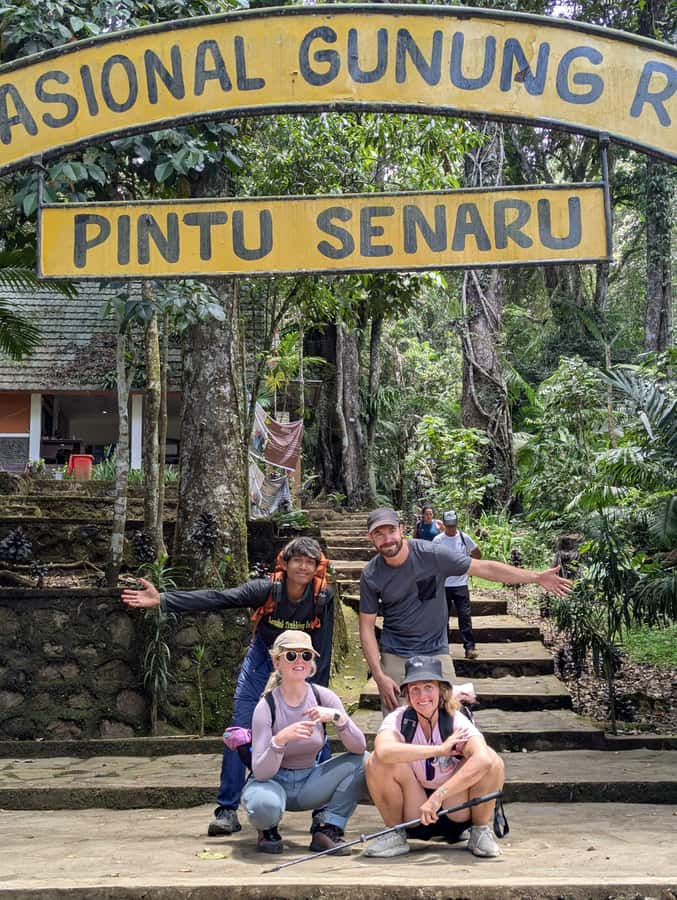
Pickup is scheduled for 7 a.m. from a hotel in Senaru, with Sembalun also available as a pickup location. The group first travels by 4WD vehicle to Sembalun, where you register at the Rinjani Trek Centre at about 1,156 meters.
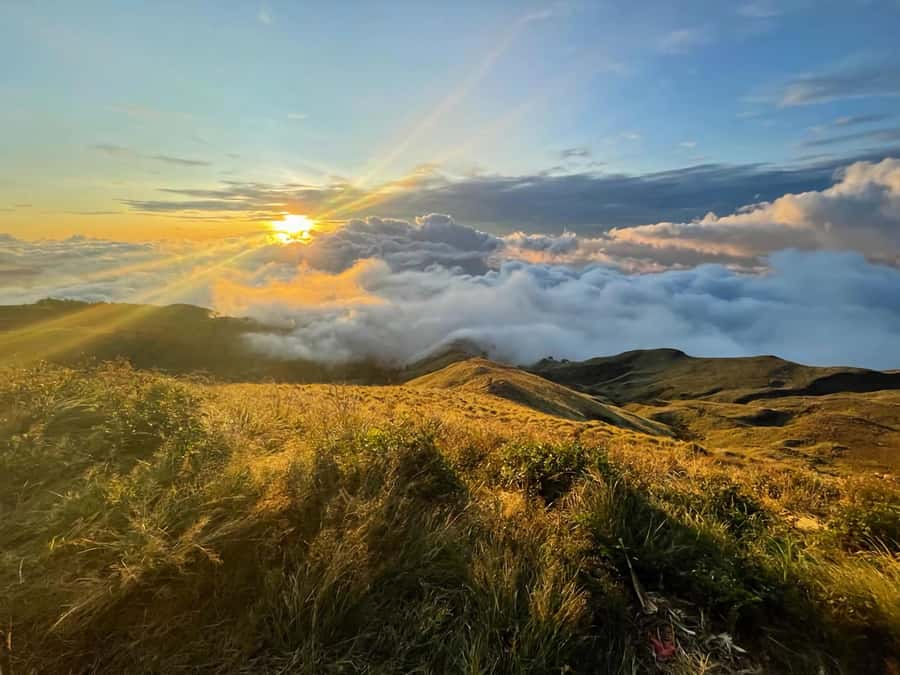
The opening trail crosses wide, rolling grassland. This is a good change from the forested routes found later in the trip. You get long views across the eastern side of Mount Rinjani, and the steady trail gives you time to settle into the walking rhythm.
You stop at Pos 1 and Pos 2 for rests and snacks. At Pos 3, around 1,800 meters, you take a longer break for lunch. These rest points matter because the route becomes much steeper after Pos 3. Do not treat the first part as easy mileage and rush it. A measured pace will help you later, especially with the summit still ahead.
The final climb to Sembalun Crater Rim is the day’s hard section. You gain height on a steep trail before reaching camp at about 2,639 meters. Once there, the reward is immediate: views toward Lake Segara Anak, the summit, and northern Lombok, with sunset as the light begins to change.
This camp is also where the next morning’s challenge becomes real. You are already high on the mountain, but the summit still requires a separate climb in darkness. Keep your headlamp and warm clothing close, not buried inside a larger bag.
The 3 a.m. climb to Rinjani’s 3,726-meter summit
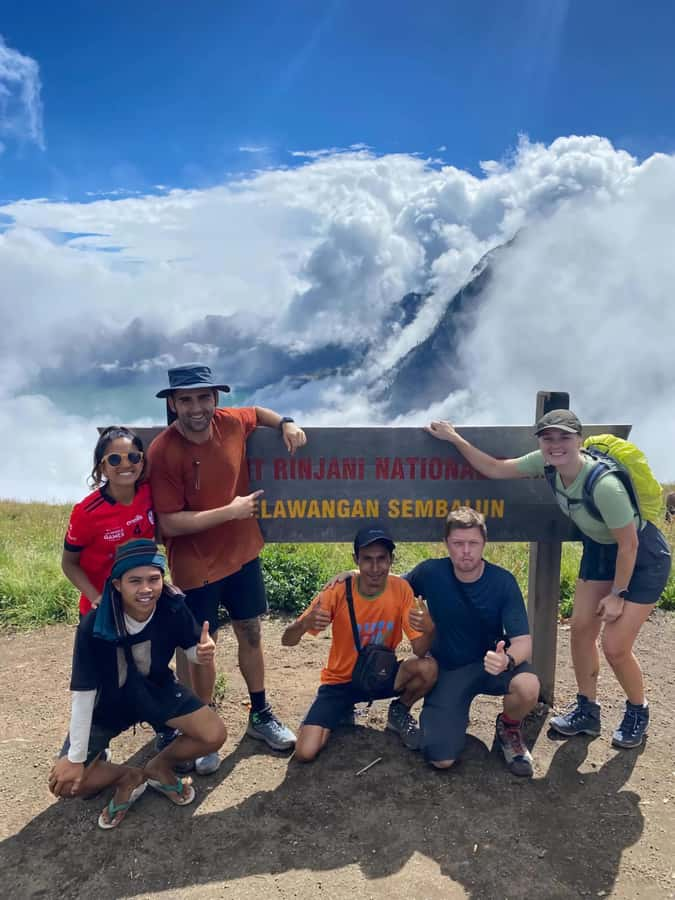
Wake-up time is around 3 a.m., followed by a light breakfast. The summit walk takes about three hours, bringing you to the top near sunrise.
The early start is necessary if you want the best light from the summit, but it is also one of the trip’s toughest features. You are walking after a full day of climbing, often with limited sleep, and the trail is described as challenging. A flashlight or headlamp is required, yet it is not included, so bring one yourself.
At 3,726 meters, the summit offers the trip’s biggest viewpoint. The plan is to see sunrise over Mount Rinjani, with views that can include the crater, tropical forest, Mount Agung in Bali, and the three Gili Islands. Weather controls how much you see, of course, but the timing gives you the best chance for clear early views.
After the summit, you return to the Sembalun campsite for a hot breakfast and rest. This return matters more than it may sound. You have another major descent ahead, so take the break seriously rather than treating breakfast as a quick stop.
Descending to Segara Anak Lake and the hot springs
From the Sembalun Crater Rim, you descend into the crater. The trail leads toward Lake Segara Anak, located around 2,000 meters, where you stop for lunch.
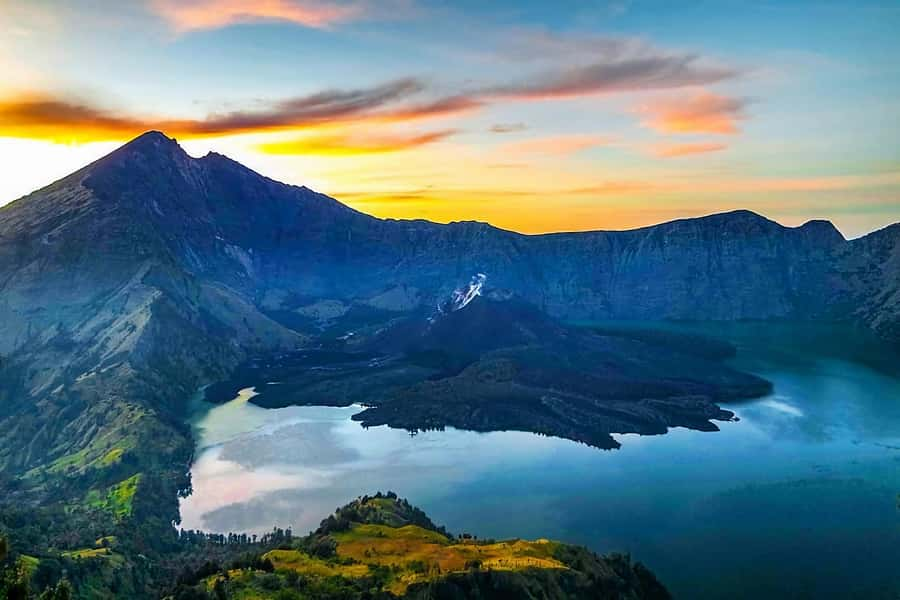
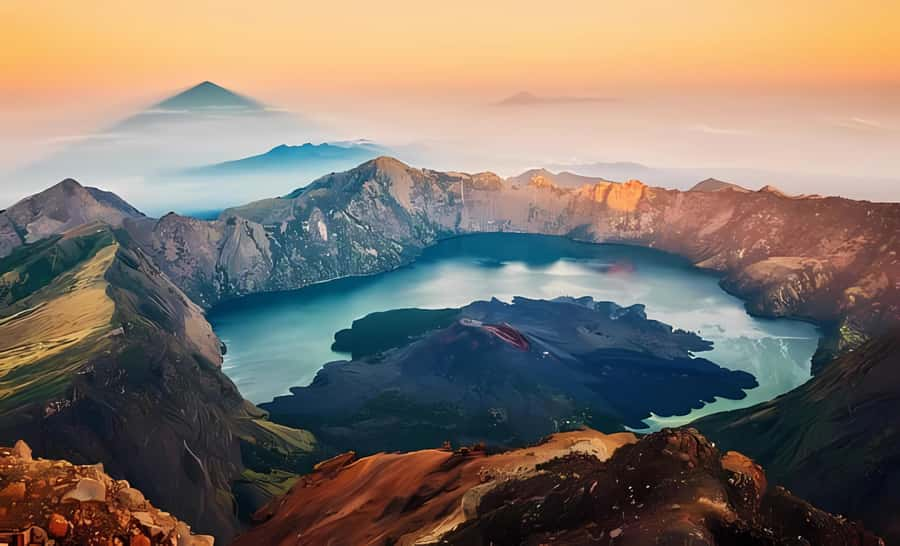
The lake is one of the trip’s most unusual sights. It sits inside Rinjani’s volcanic crater, surrounded by high crater walls and the small volcanic cone called Gunung Baru. After the open slopes above Sembalun, the lake feels enclosed and much more sheltered.
You also have time to visit the hot springs for a few minutes. This is not a long spa session, and the schedule still has plenty of walking in it. Think of the hot water as a brief recovery stop after the summit and descent, not a full afternoon break.
The practical challenge is the terrain. Going down into the crater can be hard on your knees, and the later climb out is steep and rocky. You need sturdy hiking shoes, long pants, water, and a rain jacket. The package includes drinking water during the trek, but carrying your own bottle or day pack is still necessary.
More Volcano Crater Hikes in Indonesia
- 2D1N Senaru Crater Rim Trekking
★ 5.0 · 178 reviews - Mount Rinjani 2 Days 1 Night Senaru Crater Rim
★ 5.0 · 131 reviews - Mount Rinjani 2-Day Trek to Senaru Crater Rim
★ 4.8 · 89 reviews - Mt. Rinjani 2D1N Senaru Crater Rim
★ 5.0 · 75 reviews
Day two ends at Senaru Crater Rim
After lunch and the hot springs, the route follows the lakeshore before climbing out of the crater. The trail passes through dense forest and rises toward Senaru Crater Rim at about 2,641 meters.
This is a demanding second half to the day. You have already climbed the summit and descended to the lake, then must gain height again. The itinerary calls for dinner and camping at Senaru Crater Rim, where the views shift once more.
From this side, you can look across Segara Anak toward Rinjani’s summit. Gunung Baru sits within the crater, and the view may also extend to Mount Agung in Bali and the Gili Islands. The camp is well placed for sunset, giving you another chance to watch the crater change color in the evening.
The two rim camps are worth comparing. Sembalun offers the first dramatic sunset over the lake and a direct position for the summit climb. Senaru gives you a wider sense of the crater after you have crossed it. You see the mountain from two angles, which is a major reason this route feels more complete than a simple out-and-back trek.
Day three: four to five hours down through forest
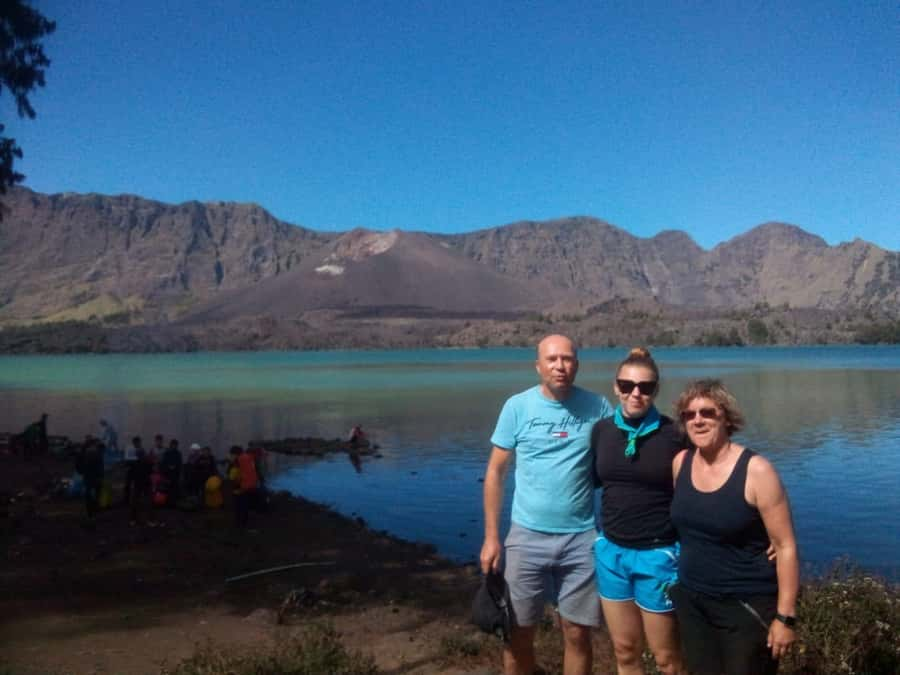
After breakfast, you begin the descent to Senaru. The route uses Pos 3, Pos 2, and Pos 1 as rest points, with a longer lunch break along the way.
As you lose height, the forest becomes thicker and greener. This final section is a different kind of walk from the exposed slopes near Sembalun. The shade may be welcome, but the descent can still be tiring after two demanding days.
Arrival in Senaru is scheduled for about 1 p.m. The experience offers pickup options in Sembalun and Senaru, plus drop-off options in Senaru and Sembalun. Confirm the exact arrangement after booking, especially if you need transport onward after the trek. Transfers after the trek are not included.
What the $137 price covers
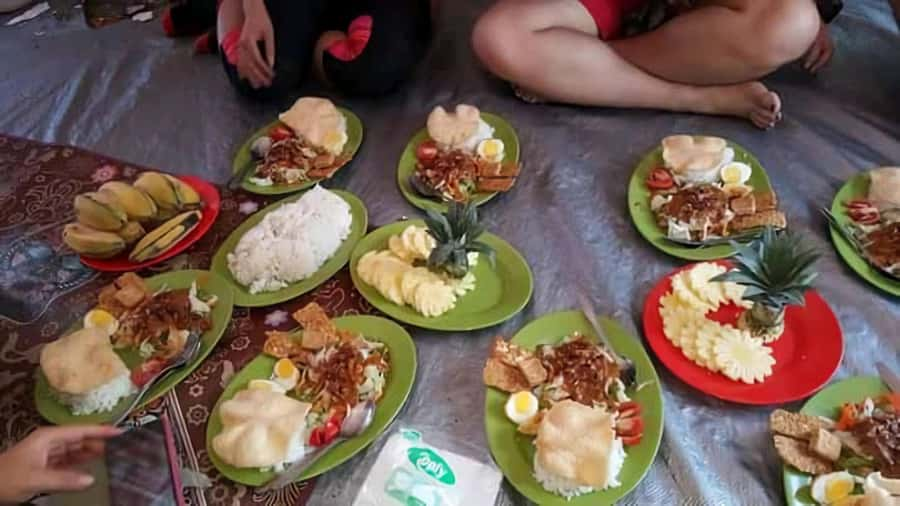
At $137 per person, this trek offers solid value if you need a guided camping program rather than arranging every part yourself. The price includes an English or Indonesian-speaking guide, professional porters, food, drinking water, a tent, toilet tent, toilet paper, sleeping bag, mattress, gloves, and trekking poles.
Those inclusions remove several practical worries. You do not need to organize camp equipment or cooking gear, and the porters carry those supplies. The small group limit of 10 people also gives the guide a manageable group to watch on steep sections.
The price is not all-inclusive. The national park entrance fee is listed separately at IDR 200,000 per person per day. You also need to budget for a headlamp or hand torch, small day pack, hiking shoes, rain jacket, long pants, and any extra porter service for your personal luggage.
Accommodation before the trek in Senaru or Sembalun is not included either. If you arrive the day before, arrange that night separately. Food and drinking water are included during the trek, but you should still bring cash for extra needs.
What to pack for comfort and safety
The supplied packing advice is sensible for a high mountain trek. Bring your passport, sun hat, sunscreen, water, camera, hiking shoes, jacket, rain gear, gloves, long hiking pants, toiletries, cash, flashlight, and power bank.
The flashlight deserves special attention. The summit walk begins around 3 a.m., and a headlamp is not included. A hands-free headlamp is more useful than a phone light, especially on steep or rocky ground.
Wear shoes made for uneven trails. The route includes open slopes, steep climbs, rocky descents, forest paths, and crater terrain. Gloves and trekking poles are included, which should help with grip and balance, but your footwear still matters.
Pack light. A small day pack is not included, so bring your own. Keep water, rain gear, a jacket, snacks if desired, camera, phone, and headlamp where you can reach them. Your larger luggage may require an extra porter.
The guide and porter service
The most specific praise goes to Reno and his two porters. Their care is highlighted from the planning stage through the trek and afterward, with particular approval for the service before and after the walk.
That matters on Rinjani. The route has several points where pacing, food, rest, and camp organization affect how well you manage the next section. An experienced English-speaking guide can also help keep instructions clear for an international group.
Two five-star ratings describe the organization and team as excellent. That is a small sample, so I would not treat it as a guarantee. Still, the praise is focused on useful things: kindness, care, organization, and support rather than only the views.
The group size is limited to 10 participants. That is small enough to feel more personal than a large hiking group, while still giving you some company on a demanding route.
Who should book this trek?
I would choose this trip if you want the main Rinjani highlights in one route: summit sunrise, Segara Anak Lake, hot springs, two crater rims, and a descent through Senaru forest.
It suits fit hikers who accept early starts, steep trails, camping, and long days. It is not suitable for children under 7, and the physical details make clear that younger children and inexperienced walkers may not be a good match.
You should also choose it if you value practical support. The guide, porters, meals, water, tents, sleeping gear, poles, and gloves create a useful base for the trek. You still need to bring the right clothing, light, footwear, and personal bag.
Before paying, contact the provider after reserving, as requested. Confirm your pickup point, drop-off point, accommodation plans, park fee, and what luggage the porters will carry.
Should you book the Mount Rinjani 3D/2N trek?
Book it if you want a demanding but well-rounded Rinjani route and you are prepared for the 3 a.m. summit start. The strongest reasons are the changing scenery, the two crater rims, the lake and hot springs, and the practical help from guides and porters.
Skip it if you want a relaxed mountain holiday, dislike camping, or are not comfortable with steep rocky trails and long walking days. At $137, it is good value for the included equipment and support, but you must add the national park fee, pre-trek accommodation, personal gear, and possible onward transport.
For a prepared hiker, this is one of the better ways to see Rinjani’s many sides in a single trip. Bring a real headlamp, good shoes, warm layers, and patience. The mountain will handle the rest.
FAQ
How long is the Mount Rinjani trek?
The trek lasts three days and two nights.
Where does the trek start?
The route starts from Sembalun after registration at the Rinjani Trek Centre.
Where does the trek finish?
The planned route finishes in Senaru at approximately 1 p.m. on day three.
Can I be picked up in Senaru or Sembalun?
Yes. Pickup options are listed for both Senaru and Sembalun.
What time does pickup take place?
Pickup is scheduled for 7 a.m.
When does the summit climb begin?
You wake at about 3 a.m. on day two for the summit climb.
Is food and drinking water included?
Yes. Food and drinking water are included during the trek.
Is camping equipment provided?
Yes. The package includes a tent, toilet tent, toilet paper, sleeping bag, and mattress.
Is the national park entrance fee included?
No. The entrance fee is listed separately at IDR 200,000 per person per day.
Is a headlamp included?
No. You need to bring your own headlamp or hand torch, especially for the early summit climb.
More Volcano Hikes and Treks in Indonesia
- Mount Batur Sunrise Trekking Private All Inclusive
★ 5.0 · 906 reviews - From Bali: Ijen Volcano Sunrise Hike with Transfer & All Fee
★ 4.8 · 139 reviews - Banyuwangi: Ijen Crater Bluefire and Sunrise Guided Trek
★ 4.9 · 65 reviews - Trekking Mt. Rinjani 2 Days 1 Night Senaru Crater Rim
★ 5.0 · 55 reviews
Just added around Indonesia
- Amazing Mount Batur Jeep Sunrise and Black lava★ 5.0 · 17 reviews
- Day Trip Batur Volcano and 2 Beautiful Waterfall★ 5.0 · 2 reviews
- Batur Volcano 4WD Jeep Tour: Black Lava Adventure★ 4.5 · 2 reviews
- Fullday Sibayak Volcano Hiking Tour★ 5.0 · 2 reviews
- Bukit Lawang Berastagi 4 Days 3 Nights Volcano & Jungle Trekking★ 5.0 · 7 reviews
- 6 Day North Sumatra Highlights – Jungles Orangutans Lakes and Volcanoes★ 3.5 · 2 reviews
- 3-Day Private Tour: Tumpak Sewu Waterfall, Mt Bromo & Ijen Crater★ 5.0 · 10 reviews
- 2 Days Tour of Mount Bromo Ijen Crater★ 5.0 · 3 reviews
Volcano Crater Hikes, compared.
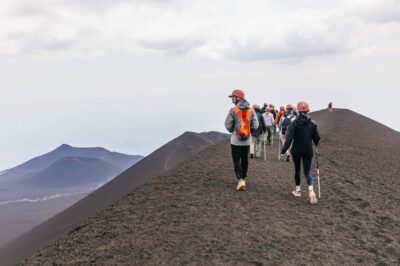
summit craters trekking with volcano guide 3350mt
Our review of it →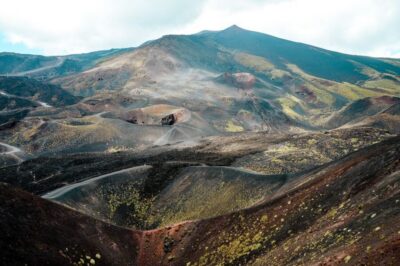
Etna Sunset Tour: Volcano trek, Cave & tasting from Catania
Our review of it →
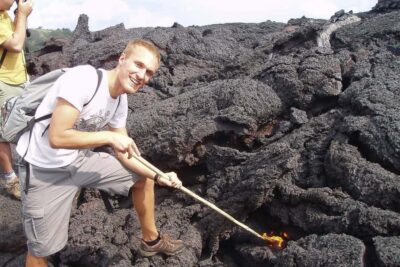
Fagradalsfjall Volcano Hike – Small Group with Local Guide
Our review of it →