
REVIEW · BANYUWANGI
Ijen Volcano Midnight Hike with Blue Fire & Guide (SHARING)
The night begins before the night ends. This Ijen Volcano hike from Banyuwangi pairs a tough uphill walk with two rare sights: possible blue fire in the dark and a turquoise crater lake at sunrise. I like the included gas mask and headlamp, which remove two worries on a sulfur-filled trail, and I like the careful guide setup, with one guide for every seven people.
The $20 price also covers transport, park fees, a health certificate, snacks, coffee, breakfast, and safety equipment. That is strong value for a shared trip. The catch is simple: you need a decent level of fitness, very warm clothes, and a willingness to walk uphill for about 3.8 kilometers before most people have had any sleep. Blue fire is never guaranteed, and access can close when sulfur activity is too high.
Key points to know before you book
- Blue fire depends on conditions: You may see it from a distance, but volcanic activity can close access.
- The hike covers about 3.8 kilometers each way: Expect a steady uphill walk of 1.5 to 2 hours.
- Safety gear is included: You receive a gas mask, headlamp, first aid support, and portable oxygen access.
- The sunrise is the reliable prize: The turquoise crater lake and changing mountain colors are the main visual reward.
- Transport keeps the logistics easy: Pickup and drop-off in Banyuwangi are included, with a drive of about one to 1.5 hours each way.
- A health certificate is required: It is included in the tour price and has been mandatory since 2024.
Why Ijen makes such a powerful night hike
Ijen is not a gentle viewpoint reached by a short walk. It is an active volcanic area where sulfur miners carry loads from the crater, and where fumes can make the air unsafe. That gives the outing a serious edge. You are not simply walking to a scenic overlook. You are entering a working volcanic site with strict safety needs.
The timing is part of the appeal. Pickup takes place in Banyuwangi, followed by a drive to Paltuding Post, the entrance area for Ijen National Park. The hike starts around midnight, so you walk in darkness and reach the crater area before dawn.
That schedule gives you a chance to see the famous blue fire. The flames come from burning sulfur gases and are visible only in darkness. Still, you should treat blue fire as a bonus, not the product you are buying. High sulfuric activity may make the crater area off-limits, and conditions can change.
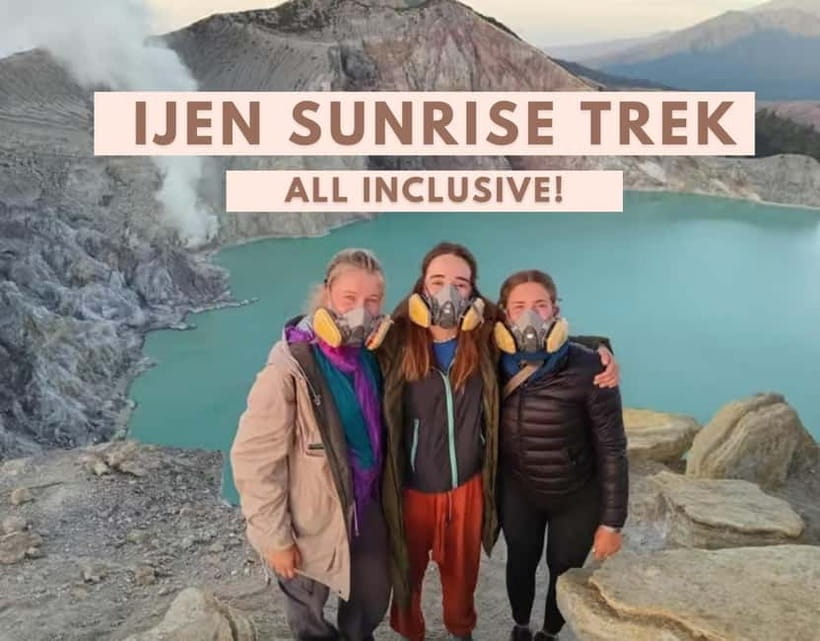
The sunrise view is a more dependable reason to go. From the upper viewpoint, you can watch the turquoise crater lake brighten as the sky changes. The surrounding peaks take shape slowly, which makes the early start feel worthwhile even if the blue fire cannot be seen.
More Volcano Hikes and Treks in Indonesia
- Mount Batur Sunrise Trekking Private All Inclusive
★ 5.0 · 906 reviews - 2D1N Senaru Crater Rim Trekking
★ 5.0 · 178 reviews - From Bali: Ijen Volcano Sunrise Hike with Transfer & All Fee
★ 4.8 · 139 reviews
Pickup in Banyuwangi and the drive to Paltuding
The day begins with pickup from your hotel or guesthouse in Banyuwangi. The drive to Paltuding Post takes about one to 1.5 hours, depending on traffic and road conditions. The road is generally smooth, but early morning traffic can cause a short delay.
I like having this transfer included. You do not need to arrange a private car in the middle of the night or work out how to reach the park entrance yourself. It also means you can try to rest during the drive before the hike.
Because the return drive takes about an hour, the transport matters even more after the walk. By then, your legs may feel heavy and your sleep schedule will be in pieces. Being returned directly to your accommodation is a small comfort that has real value.
This is a shared trip, so pickup timing may not feel as private or quick as a dedicated car. In exchange, the low $20 price keeps the outing accessible. If you want a private departure time and no other people in the vehicle, this is not the right format.
Getting ready at Paltuding basecamp
At Paltuding, you meet the local trekking leader and prepare for the climb. This is the right moment to check your jacket, gloves, shoes, water, and headlamp. The tour provides a gas mask and headlamp, but you should still bring warm clothing and comfortable hiking shoes.
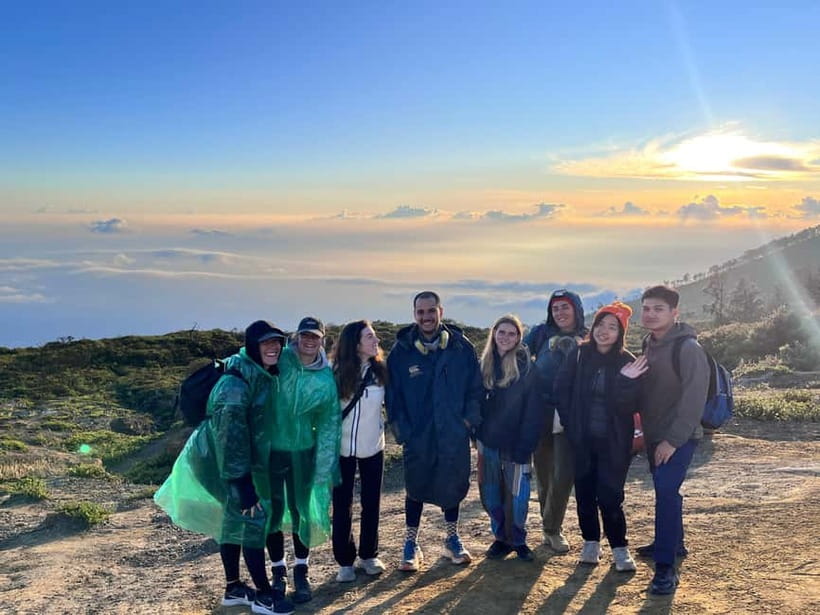
The temperature before sunrise can fall between 5°C and 15°C. That range may sound manageable until you stand still in the dark, possibly in wind, after a hard climb. A warm jacket is essential, and gloves are a smart addition.
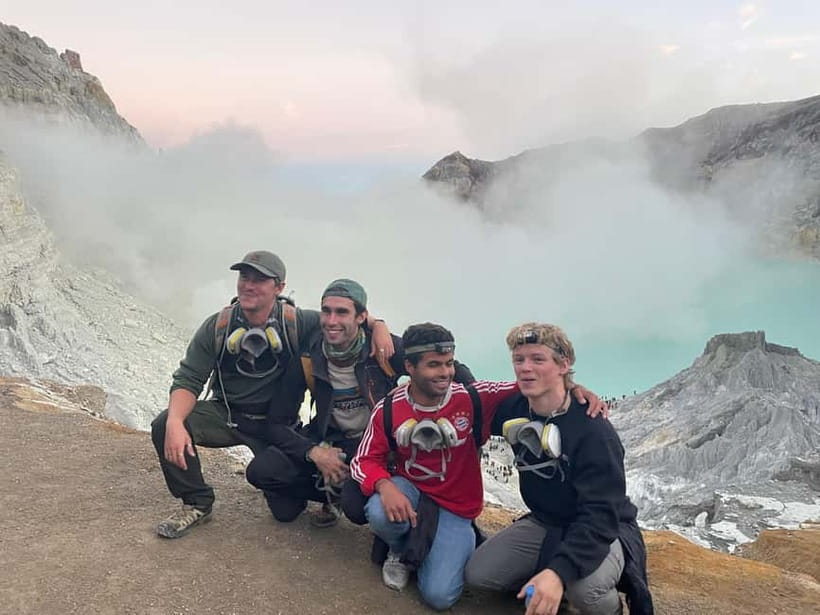
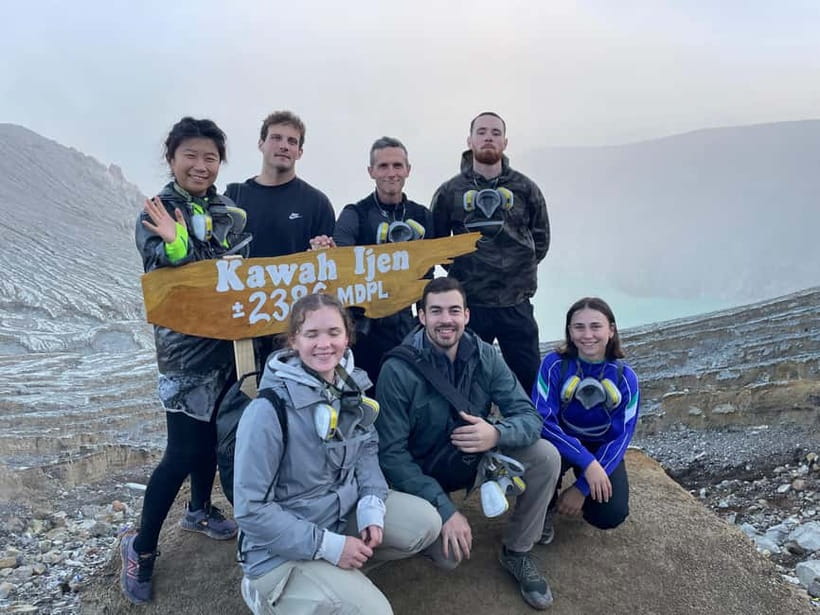
The gas mask is not a decorative extra. It is mandatory near the crater area and helps when sulfur fumes become strong. Clean, well-maintained masks are provided, which is important because a poor-fitting or dirty mask would quickly make the walk less pleasant.
The group also has access to a first aid kit and a portable oxygen canister. Those items do not make the hike risk-free, but they show that the operator is planning for a volcanic walk rather than treating it like an ordinary nature trail.
A health certificate is required for this hike, and the cost is included. This is useful because you do not need to arrange that requirement separately before arrival.
The 3.8-kilometer climb through darkness
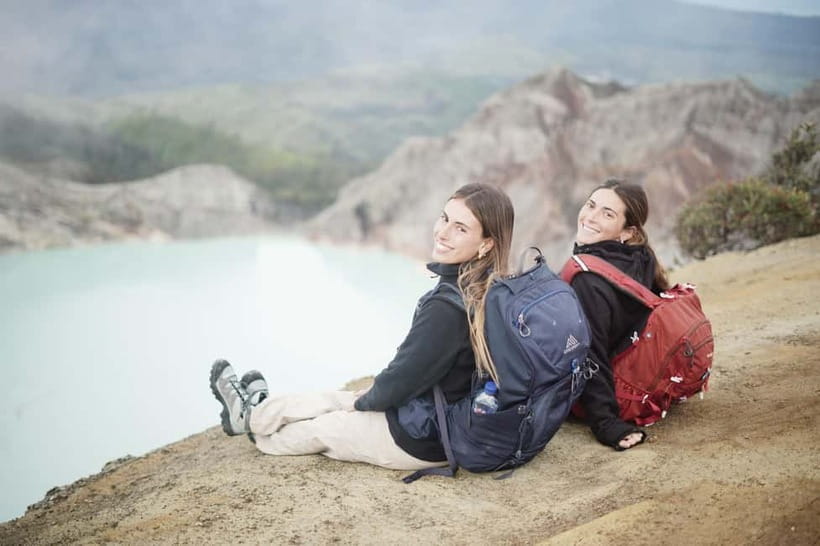
The route to the crater covers about 3.8 kilometers and usually takes 1.5 to 2 hours. It is a marked trail with a steady uphill grade. You do not need technical climbing skills, but you do need reasonable stamina.
The darkness changes how the walk feels. A headlamp shows only the next section of path, while the rest of the mountain disappears around you. The pace may be affected by the group, and you can expect other hikers, guides, and sulfur miners on the route.
A shared tour works best if you accept a group rhythm. The guide can help keep people together, point you in the right direction, and make sure nobody is left struggling alone. Groups larger than seven receive at least two guides, which gives the leader more ability to watch the front and back of the group.
The hike is described as suitable for most people with moderate fitness, but do not confuse that with easy. The slope, cold, darkness, and lack of sleep add up. If you rarely walk uphill or have a low level of fitness, this outing may be too demanding.
The tour is not suitable for children under 12, pregnant women, or people with heart or respiratory problems. Those restrictions make sense given the exertion and sulfur exposure.
More Bromo and Ijen Volcano Tours in Indonesia:
- Borobudur Sunrise from setumbu Hill , Merapi Volcano & Prambanan Full Day Tour
★ 5.0 · 1,030 reviews - Banyuwangi/Bali: Ijen Volcano Midnight Blue Fire Guided Tour
★ 4.9 · 854 reviews - Borobudur Sunrise, Merapi Volcano & Prambanan Full Day Tour
★ 4.8 · 717 reviews - From Bali: 24-Hour Trip to Ijen Crater & Javanese Breakfast
★ 4.7 · 371 reviews
Blue fire near the crater
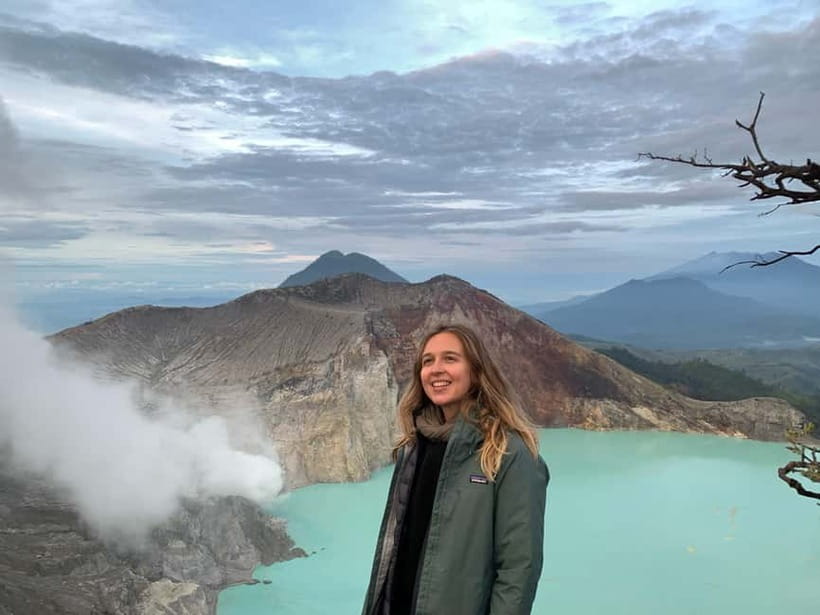
The blue fire is the most unusual part of the outing. When conditions allow, you may see blue flames near the crater area in the darkness. The effect can look unreal, but the setting is also hazardous, so the guide’s instructions matter.
The tour does not guarantee a sighting. High sulfur activity can block access, and the fire may not be visible on a particular morning. You should be prepared for the possibility that the hike continues without this feature.
The gas mask becomes especially useful here. Sulfur fumes can become strong, and your guide will give instructions about where to go and how to respond if the air worsens. Do not treat the blue fire as a reason to ignore safety directions or move away from the group.
One useful detail from the experience is that the blue fire may be viewed from a distance if conditions allow. That is worth keeping in mind when setting expectations. You may not walk right beside the flames, and access can be restricted.
The trip’s strongest appeal comes from the combination of rarity and uncertainty. You get a chance to see a volcanic phenomenon that only appears in darkness, but you also experience a real mountain site where nature controls the schedule.
Sunrise over the turquoise crater lake
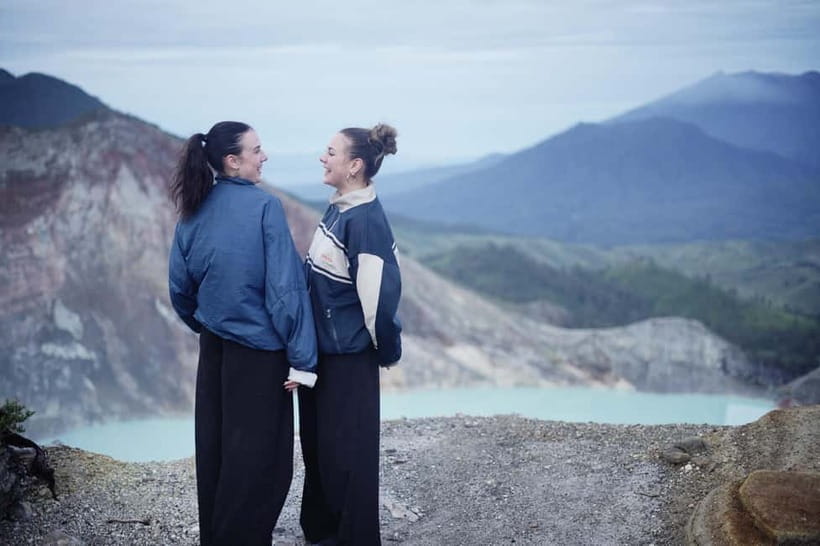
After the dark crater visit, you continue to a sunrise viewpoint. This is where the outing shifts from strange and smoky to open and scenic. As daylight arrives, the turquoise crater lake becomes visible, along with the surrounding peaks.
The color of the lake is one of Ijen’s main attractions. The view changes minute by minute as the sun rises, so the cold wait has a clear payoff. It is also the best time for photographs, although you should bring only what you can carry comfortably.
The sunrise viewpoint may feel busy because the trail can be crowded. That is a drawback of visiting a famous site at the most popular time of day. Still, the broad view gives you space to focus on the lake, the peaks, and the changing light.
I would treat this as the central reward of the trip. If blue fire is unavailable, the sunrise still gives the hike a proper finish. If you see both, the contrast is memorable: blue flames in a dark volcanic setting, followed by a bright lake below the peaks.
The dead forest and the human side of Ijen
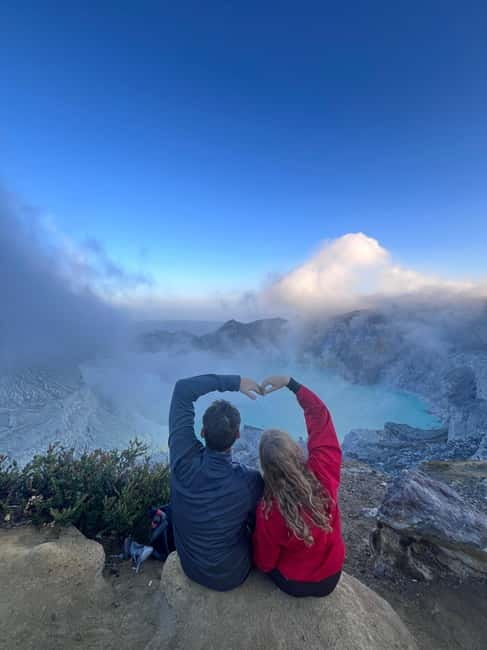
An optional short detour leads to the dead forest. The area was shaped by past volcanic eruptions, and its bare, eerie appearance adds a different mood to the trip. It is not a major extra hike, but it gives you another way to read the mountain.
The most striking human detail along the route is the presence of local sulfur workers. Their loads and working conditions show the physical demands of life around the volcano. Seeing them helps put your own hike in perspective, even though your visit is short and supported by safety gear.
You should approach this part with respect. The miners are working, not performing for visitors. Keep noise down, follow the guide’s direction, and avoid turning a difficult job into a backdrop for careless photos.
The outing also asks you to think about the difference between sightseeing and work. You walk the same mountain for a few hours with a mask, headlamp, and transport waiting below. Local sulfur workers face the volcano as part of their daily income.
The descent, breakfast, and return to Banyuwangi
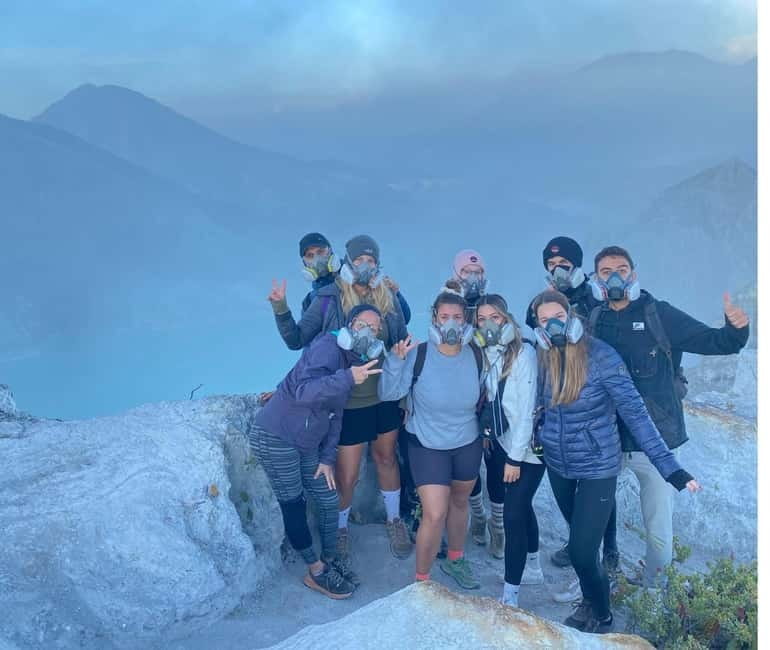
The return walk to Paltuding usually takes one to 1.5 hours. Going down is easier on the lungs, but it can still be hard on tired knees and legs. The path is easy to follow, though it may be busy.
At basecamp, you can have a coffee break and Indonesian breakfast before the drive back. This is a practical inclusion, not just a pleasant extra. After a midnight start and several hours on the trail, food and a hot drink help you recover.
The return vehicle takes you back to your Banyuwangi accommodation. The full schedule can leave you tired for the rest of the day, so avoid planning another demanding activity immediately afterward.
This is also where the shared format shows its best side. You have a driver, a guide, equipment, food, entrance fees, and a direct return arranged in one package. For $20 per person, that is a lot of moving parts handled for you.
What the $20 price really covers
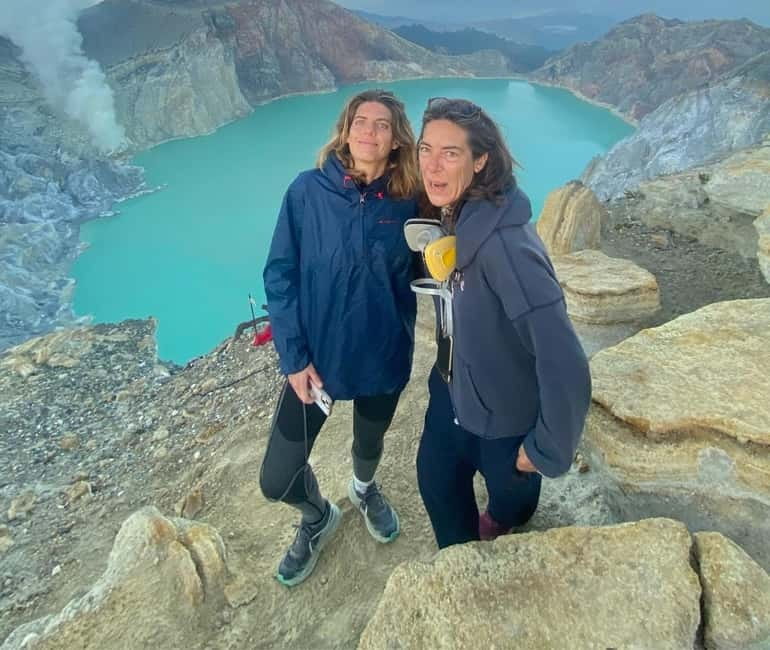
The price is low for the amount included. You receive round-trip transport from Banyuwangi, the Ijen National Park entrance fee, the Jambu entrance fee, parking, a local guide, a health certificate, a gas mask, a headlamp, a first aid kit, portable oxygen access, coffee, snacks, and breakfast.
That package reduces the small expenses that can quietly add up. You do not need to pay separately for park entry or rent basic safety equipment. The health certificate is especially useful because it is mandatory.
The price does not include travel insurance or personal expenses. You should also bring your own water and suitable clothing. Large bags and luggage are not allowed, so pack only what you need for the hike.
The tour provider says it is not always the cheapest choice, but the added cost appears tied to guide ratios, equipment, and safety planning. At $20, the value is already strong, so the key question is not whether you can find a cheaper outing. It is whether the operator gives you enough support for a difficult volcanic walk.
Who should book this Ijen hike?
I would recommend it if you want a distinctive Java experience and are comfortable starting after midnight. You should be able to walk uphill for several hours, cope with cold temperatures, and accept that blue fire may not be available.
It suits people who value straightforward logistics. Pickup, entrance fees, guide support, equipment, breakfast, and the return ride are all covered. English-speaking guides also make it easier to understand safety instructions and ask for help.
It is less suitable if you need a relaxed morning, dislike shared transport, or have heart or respiratory problems. It is also a poor fit if you expect a guaranteed blue fire show or an easy stroll to a viewpoint.
The overall score of 4.8 out of 5 reflects the parts that matter most here: smooth organization, helpful guides, safety gear, and a rare volcanic setting. The most praised elements are the calm handling of the hike, the included gas mask and health certificate, and the clear support given along the trail.
My verdict: a strong value trip with one big condition
Book this Ijen hike if you can handle the physical effort and keep your expectations flexible. The blue fire is the headline, but the turquoise lake at sunrise, the dead forest, the sulfur workers, and the well-organized return make the whole outing worthwhile.
Bring warm layers, gloves, proper shoes, and water. Be ready for darkness, cold, fumes, crowds, and little sleep. If that sounds like an acceptable price for one of Java’s most unusual mountain experiences, the $20 shared tour is an excellent deal.
FAQ
How long is the Ijen hike?
The walk to the crater is approximately 3.8 kilometers each way. The uphill section usually takes 1.5 to 2 hours, while the descent takes about 1 to 1.5 hours.
Is blue fire guaranteed?
No. Blue fire depends on volcanic conditions, and access may be restricted during periods of high sulfuric activity. The tour focuses on the hike, sunrise, and crater views as well.
What equipment is included?
The tour provides a gas mask and headlamp. It also includes access to a first aid kit and portable oxygen canister.
What should I bring?
Bring comfortable or hiking shoes, warm clothing, gloves, and water. Temperatures before sunrise can range from 5°C to 15°C.
Is transportation included?
Yes. Pickup and drop-off from accommodation in Banyuwangi are included, along with transport to and from Paltuding Post.
Is a health certificate required?
Yes. A health certificate is mandatory for the hike, and it is included in the tour price.
Who should not join this hike?
The activity is not suitable for children under 12, pregnant women, people with heart problems, people with respiratory issues, or people with a low level of fitness.
Just added around Indonesia
- Amazing Mount Batur Jeep Sunrise and Black lava★ 5.0 · 17 reviews
- Day Trip Batur Volcano and 2 Beautiful Waterfall★ 5.0 · 2 reviews
- Batur Volcano 4WD Jeep Tour: Black Lava Adventure★ 4.5 · 2 reviews
- Bukit Lawang Berastagi 4 Days 3 Nights Volcano & Jungle Trekking★ 5.0 · 7 reviews
- Fullday Sibayak Volcano Hiking Tour★ 5.0 · 2 reviews
- 6 Day North Sumatra Highlights – Jungles Orangutans Lakes and Volcanoes★ 3.5 · 2 reviews
- 3-Day Private Tour: Tumpak Sewu Waterfall, Mt Bromo & Ijen Crater★ 5.0 · 10 reviews
- 2 Days Tour of Mount Bromo Ijen Crater★ 5.0 · 3 reviews
Bromo & Ijen Volcano Tours, compared.
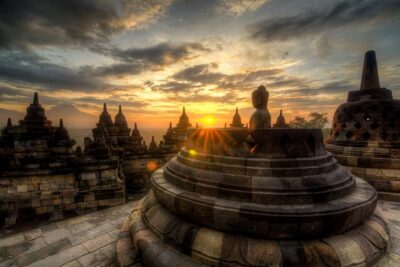
Borobudur Sunrise from setumbu Hill , Merapi Volcano & Prambanan Full Day Tour
Our review of it →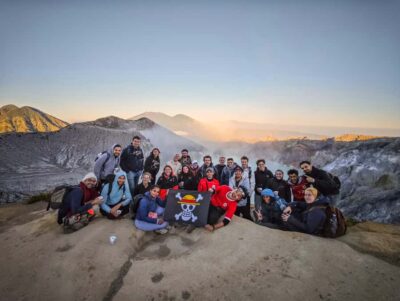
Banyuwangi/Bali: Ijen Volcano Midnight Blue Fire Guided Tour
Our review of it →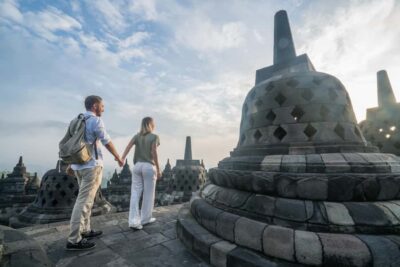
Borobudur Sunrise, Merapi Volcano & Prambanan Full Day Tour
Our review of it →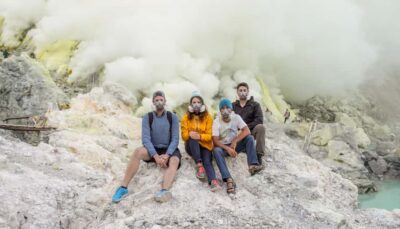
24-Hour Trip to Ijen Crater & Javanese Breakfast
Our review of it →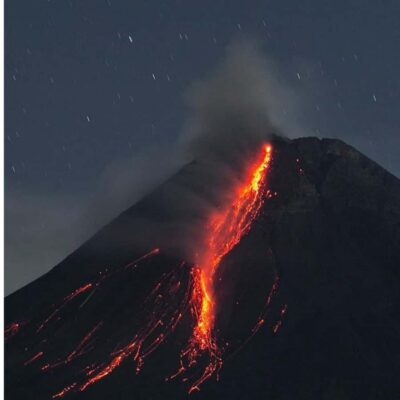
Yogyakarta Volcano: Merapi Volcano on Hilltop (Lava Viewing)
Our review of it →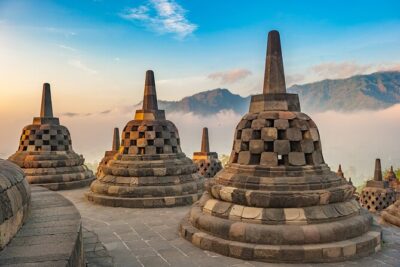
Borobudur(climb up), Merapi Volcano and Prambanan Temple Tour
Our review of it →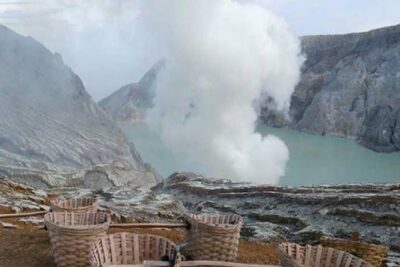
Active Volcanoes Bromo and Ijen – Start Surabaya 3 Days and 2 Nights
Our review of it →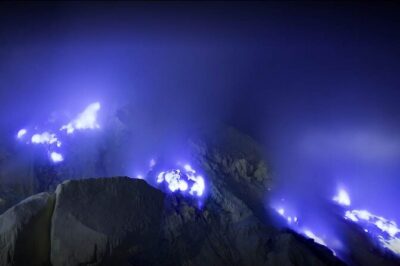
Browse the lists this tour appears in