REVIEW · TENERIFE
Teide National Park: Moonlight Tour & Stargazing Experience
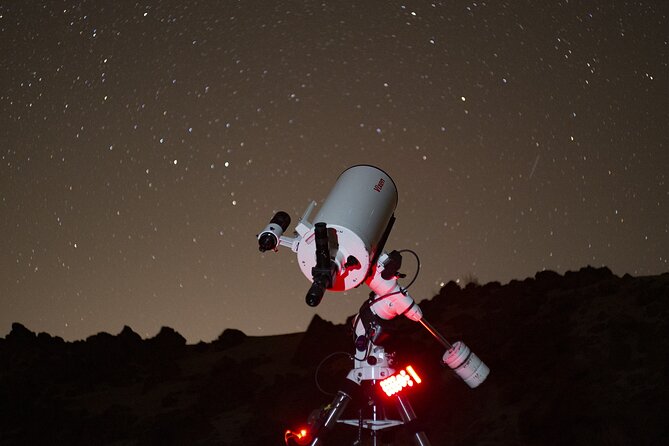
Moonlight changes everything. This 80-minute evening in Teide National Park combines bright-moon viewing with a clear introduction to constellations, planets, and the Polar Star. I like the mix of naked-eye stargazing and high-grade telescopes, and I also like that an astrophoto telescope can show you striking images of what you are observing.
The guides add real value, with Miguel, Óscar, and Ozzy receiving particular praise for clear explanations and friendly presentation. The main caution is that the group may be large, with one visitor reporting about 60 people and queues at six telescopes, while moon visibility can vary despite the tour being scheduled around bright lunar nights.
Key points before you book
- Bright-moon setting: The tour runs only on nights when the moon is at its brightest, giving Teide’s scenery a very different look from a standard dark-sky session.
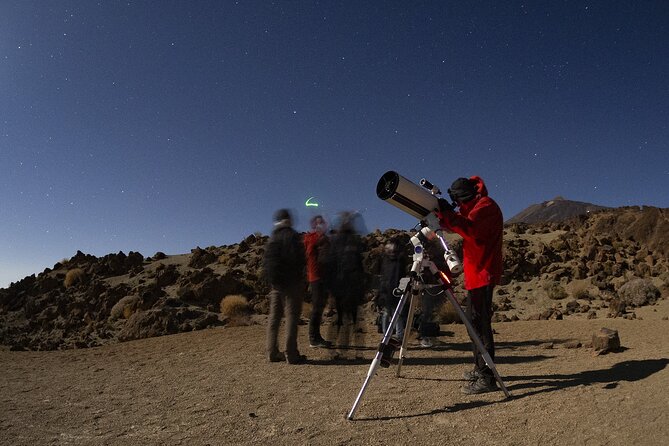
- Two ways to observe: You begin with the naked eye, then move to high-grade telescopes for closer views of the moon, planets, satellites, and other visible objects.
- Astronomy made approachable: The guide explains bright constellations, the Polar Star, zodiac constellations, visible planets, and the stories linked to them.
- Astrophoto telescope: You may see impressive space images through the special telescope, though you should not assume that you will personally take home photographs.
- Cold-weather essential: Warm clothing and warm shoes are not optional at night in the park, even in April.
- Self-drive meeting point: You meet at the parking area in front of Minas de San José. There is no hotel transport or dinner included.
Why Teide looks different after dark
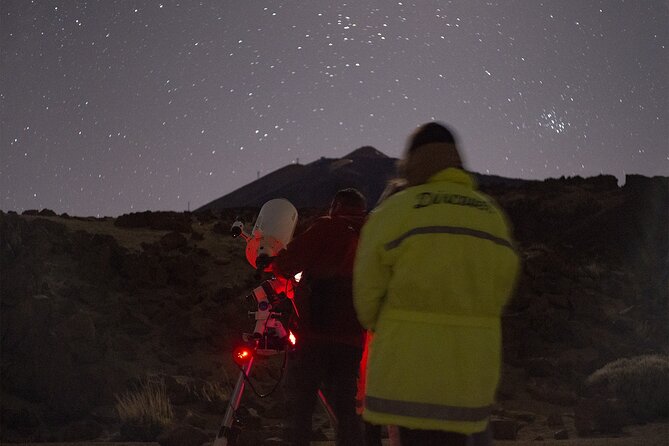
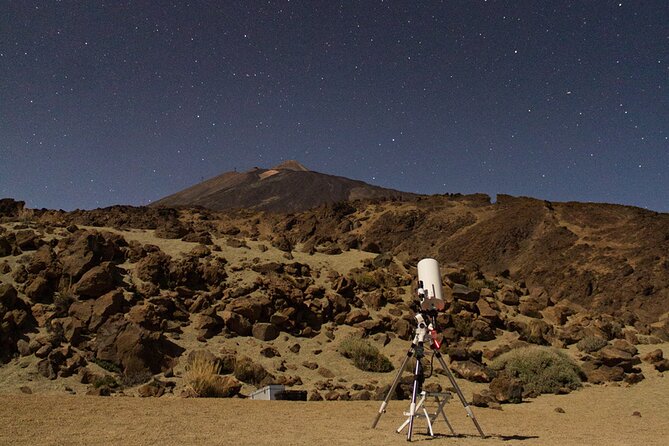
Teide National Park is famous in daylight for its volcanic scenery, but moonlight gives it a quieter and more dramatic character. The moon throws strong contrast across the rock and open spaces, making familiar views look new without the need for artificial lighting.
I like this focus because it is not simply a standard star tour moved to nighttime. The bright moon is part of the subject. You get to consider the park itself, then look upward at the sky above it.
The timing also gives you a useful comparison. In daylight, Teide is about volcanic forms and wide views. At night, your attention shifts to light, shadow, planets, and the patterns of the stars. The scenery remains important, but it becomes the setting for the astronomy rather than the main event.
There is one catch. This is not designed around the darkest possible sky. A bright moon can make some faint stars harder to see, so the experience favors moon observation and clear constellations over seeing every possible star. If your main goal is a black sky packed with faint points of light, a new-moon stargazing session may suit you better.
More Volcano National Parks in Spain
- Tenerife: Teide National Park Sunset & Stargazing Tour
★ 4.2 · 3,812 reviews - Tenerife: Sunset and Stargazing at Teide National Park
★ 4.7 · 2,826 reviews - Teide National Park Sunset & Stargazing with Dinner (Star Safari)
★ 5.0 · 2,601 reviews
The Minas de San José meeting point
You make your own way to the parking area directly in front of the natural environment of Minas de San José. If you approach from the south, use the second car park on the right. From the north, use the first car park on the left.
This detail matters because there is no hotel pickup or drop-off. You need to plan your own transport and allow time to find the correct parking area before the scheduled start. The meeting point is also useful for seeing the park at sunset if you arrive early, something one self-driving visitor found appealing.
The tour lasts 80 minutes, so this is a focused evening activity rather than a full night out. Dinner is not included, and you should plan food separately rather than expecting a meal at the meeting point.
The provider offers Spanish and English tours. If you book months ahead, the start time may change, so watch for confirmation by WhatsApp or email. That update matters in a mountain setting, where the timing of darkness and moonrise affects what you see.
Starting with constellations and the Polar Star
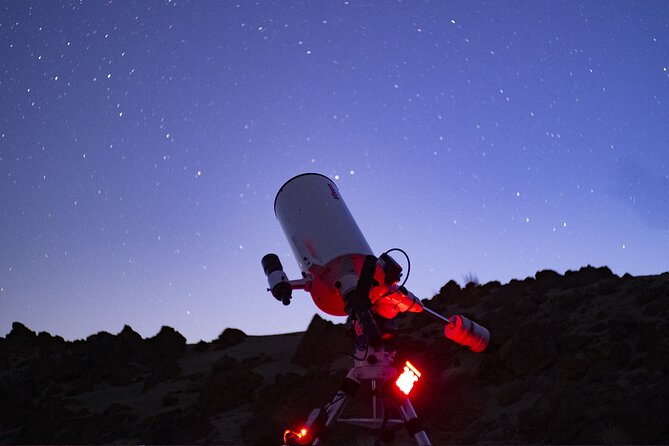
The first part uses your own eyes rather than a telescope. Your guide points out the brightest constellations and explains how to locate the Polar Star. You also get an introduction to visible planets and zodiac constellations.
This is a good opening because it helps you understand the sky before you look through equipment. A telescope can show a beautiful object, but the view means more when you know where to look and why that object appears in that part of the sky.
The explanations also include the stories connected with the constellations. That gives the session a human side without turning it into a technical lecture. Óscar was praised for using clear, concise language, while Miguel was described as funny and able to keep the group interested. Those qualities matter here because astronomy can become dry if the guide gives you names without context.
You should expect the guide to explain rather than simply point. The activity is suitable for someone with little astronomy experience, and you do not need to arrive already knowing the constellations. At the same time, the material should still give an interested beginner enough to follow.
The exact stars and planets depend on the date and conditions. Mars and Jupiter were visible on one evening, and another session included the moon rising. Those examples show the range of objects you might see, but they should not be treated as a fixed promise for every date.
What the high-grade telescopes add
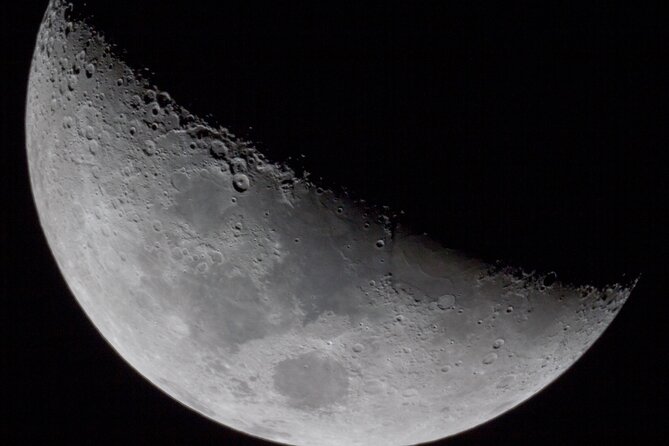
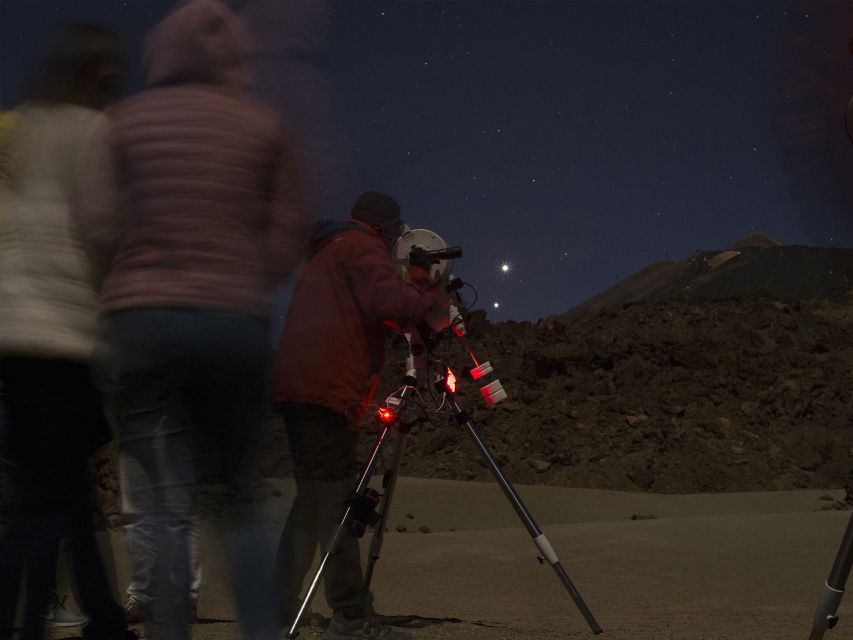
After the naked-eye introduction, the group moves to high-grade telescopes. These are used to examine the moon in much greater detail, along with planets, satellites, and other impressive objects that are visible that night.
The moon is the star of this particular experience. Through a good telescope, you can see its surface with sharper contrast and more detail than you can with your unaided eyes. The bright lunar setting also helps connect the telescope view with the scenery around you.
The equipment is a real reason to consider the tour. Most people do not carry a suitable telescope in their luggage, and finding a dark, permitted place to use one on your own can be difficult. Here, an astronomical guide handles the equipment and explains what you are seeing.
Still, telescope time may not be completely private. One report described a group of roughly 60 people and a queue for six telescopes. That could mean waiting between views, especially if everyone wants a look at the same object. If you prefer a quiet, small-group astronomy session, ask about the expected group size before paying.
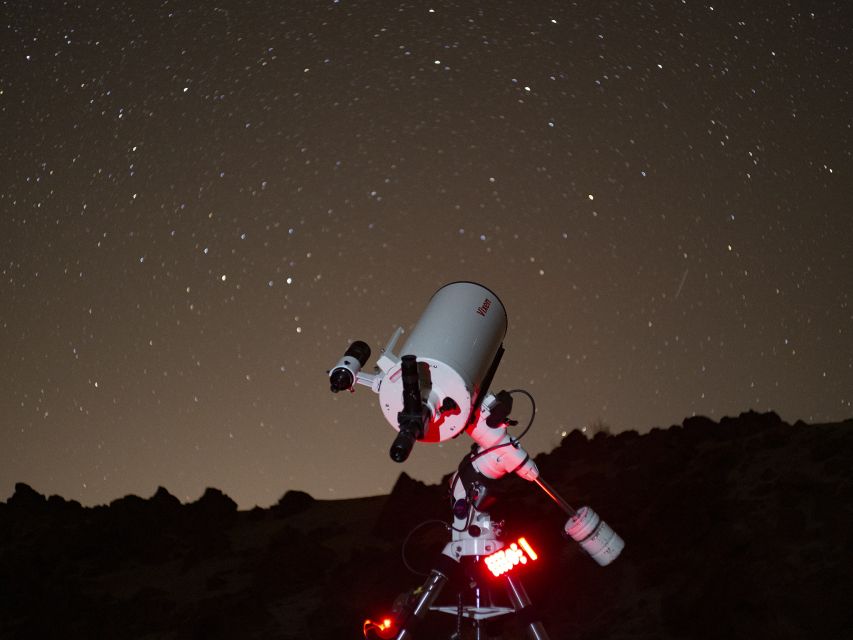
The same report also raised an important point: you may not be able to take your own photographs through the telescope. The activity includes an astrophoto telescope, but that does not necessarily mean personal hands-on photography for every person. Think of it as a way to see impressive astronomical images during the presentation, not as a guaranteed photography workshop.
More Volcano National Parks in Tenerife
- Teide National Park: Sunset & Stargazing Safari with Dinner
★ 4.6 · 2,115 reviews - Tenerife: Teide National Park Full-Day Tour with Pickup
★ 4.5 · 1,613 reviews - Tenerife: Quad Adventure Tour in Teide National Park
★ 4.7 · 1,492 reviews - Tenerife: Teide National Park Guided Buggy Tour
★ 4.7 · 609 reviews
The astrophoto telescope and what you actually see
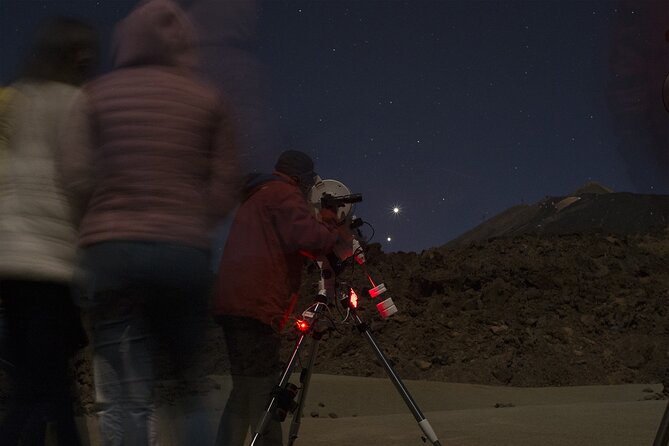
The astrophoto telescope is intended to turn telescope observations into detailed images. That can help you notice features that are difficult to see in a quick glance through an eyepiece.
This is useful for people who find the first view through a telescope too fleeting. An image gives the guide something to explain and lets you connect the live observation with a sharper visual record. Francesca particularly enjoyed the space photography alongside direct viewing and naked-eye observation.
You should keep your expectations practical. The supplied details do not promise that every participant receives individual photos or controls the camera. One visitor specifically felt there was no chance to make personal photographs through the telescope. If taking your own astrophotography is the main reason you are booking, clarify that point with Discover Experience first.
For most people, the value is the combination of formats. You first identify the sky with your eyes, then inspect selected objects through the telescope, then see how astronomical equipment can produce a more detailed image. That sequence makes the science easier to follow than a simple look through an eyepiece.
Guides who keep the science friendly
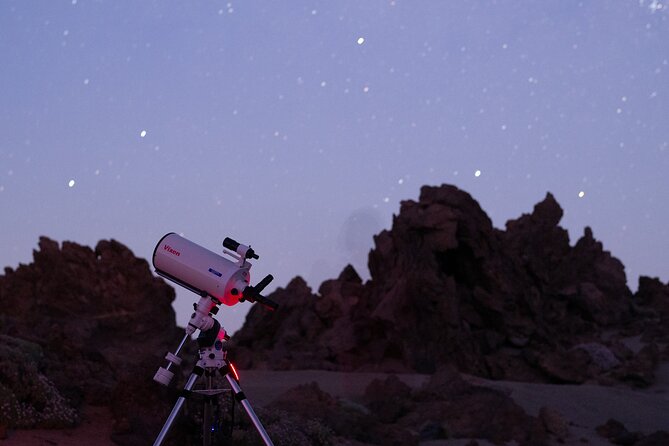
The guide can make or break a short astronomy tour. In 80 minutes, there is not enough time for long technical explanations, so the best approach is clear, lively, and well paced.
Miguel received strong praise for being funny and well informed while keeping the group engaged. Óscar was appreciated for his direct explanations, and Ozzy was described as friendly, capable, and multilingual. The activity is offered in Spanish and English, which makes it accessible to a broad range of visitors.
I would choose this experience if you want a friendly introduction rather than a formal astronomy class. The language about stars, planets, and constellations is designed for general visitors. You can enjoy the sky without knowing the difference between every planet and star before you arrive.
Guide quality can vary from one evening to another, as it can on any guided activity. The positive comments about several named guides suggest a consistent effort to make the subject enjoyable, but you should still allow for different presentation styles.
Cold nights require serious clothing
Take the clothing advice literally. Bring warm clothing, warm shoes, and comfortable footwear. A light jacket is unlikely to be enough, particularly in autumn and winter.
One person needed warmer clothing even on an April night. That is a useful warning because sunny island weather can create the wrong expectation. Teide’s nighttime conditions are a different matter, and you may spend time standing still while listening or waiting for a telescope.
Wear layers so you can adjust as needed. Choose shoes that keep your feet warm and let you stand comfortably on outdoor ground. The activity does not call for specialist hiking equipment, but sandals and thin casual shoes are poor choices.
The tour is not suitable for people with heart problems or respiratory issues. It is also not suitable for anyone who has been diving within the previous 24 hours, and unaccompanied minors cannot join. Pets are not allowed.
These rules are easy to overlook when planning a holiday around the Canary Islands. Check them before booking, particularly if your itinerary includes scuba diving earlier in the trip or if someone in your group has a medical condition affected by altitude or cold.
How the $41 price measures up
At $41 per person, the tour is reasonably priced for an 80-minute guided astronomy experience, especially since it includes an astronomical guide, naked-eye instruction, high-grade telescopes, astrophoto equipment, and insurance during the activity.
The value depends on what you would otherwise do. If you want access to proper telescopes and a guide who can explain the sky, the price is fair. You are paying for equipment and interpretation, not simply a place to stand beneath the stars.
The cost looks less attractive if you expect dinner, transport, or a private session. None of those are included. You need to arrange your own ride to Minas de San José, and a large group may limit how long you spend at each telescope.
Free cancellation up to 24 hours before the activity and the option to reserve now and pay later reduce some booking risk. The schedule can change if you book far in advance, so keep an eye on the provider’s WhatsApp or email confirmation.
Who will enjoy this moonlit Teide evening
I would recommend this tour to first-time stargazers, couples seeking a short evening activity, families with accompanied older children, and anyone curious about the night sky but unsure how to read it. The guide’s explanations give the experience structure, and the telescope viewing adds something you would not get from simply stopping at a scenic viewpoint.
It also suits people who want to see Teide after dark without committing to a much longer excursion. Eighty minutes is manageable, though you should add your own driving time to and from the meeting point.
It may not suit serious amateur astronomers who want a private telescope session or full control of an astrophotography setup. It is also a weaker match for anyone who wants a totally dark sky with no moonlight. The bright moon is the point here, and that means some fainter stars may be less prominent.
Group size is the biggest practical unknown. A group of about 60 can make the telescope portion feel less personal. If you are sensitive to queues or want more time with the equipment, ask about attendance before booking.
Should you book the Teide Moonlight Tour?
Book it if you want a friendly, well-priced introduction to the night sky with telescope access and a striking moonlit setting. The strongest parts are the clear constellation lesson, the chance to see the moon and planets through serious equipment, and the guides’ warm presentation.
Go in prepared for cold weather, self-transport, and possible waiting at the telescopes. Also confirm the exact schedule and ask how the astrophoto telescope is used if personal photographs matter to you.
I would choose this activity for its balance of scenery and simple astronomy. Just remember that it is a bright-moon experience, not a faint-star hunt, and that the quality of your evening will depend on visibility, group size, and the current position of the moon.
FAQ
How long does the Teide Moonlight Tour last?
The activity lasts 80 minutes.
How much does the experience cost?
The listed price is $41 per person.
Where is the meeting point?
Meet in the parking area directly in front of the natural environment of Minas de San José. Coming from the south, use the second car park on the right. Coming from the north, use the first car park on the left.
Is hotel pickup included?
No. Hotel pickup and drop-off are not included, so you must arrange your own transportation to the meeting point.
What languages are available?
The live guide is available in Spanish and English.
What should I wear?
Bring comfortable shoes, warm clothing, and warm shoes. Warm clothing is especially important in autumn and winter because nighttime temperatures are low.
Is the tour available every night?
No. The activity is available only on nights when the moon is at its brightest. If you book months ahead, the starting time may change, and the provider will contact you by WhatsApp or email to confirm the schedule.
More Volcano Sunset Tours in Tenerife
- From Santiago del Teide: Sunset Quad Trip to Mount Teide
★ 4.8 · 735 reviews - Tenerife: Morning or Sunset Teide Buggy Tour
★ 4.9 · 404 reviews - Tenerife: Quad Bike Tour to Mount Teide at Sunset
★ 4.4 · 368 reviews - Teide Night Experience with Dinner and Stargazing
★ 3.9 · 359 reviews
More Volcano Sunset Tours in Spain
- Teide by Night: Sunset & Stargazing with Telescopes Experience
★ 4.5 · 1,492 reviews - Teide: Guided Sunset & Stargazing Tour by Night with Dinner
★ 4.7 · 1,339 reviews - Sunset & Stargazing Experience From Teide
★ 4.5 · 1,129 reviews - Tenerife: Teide Quad Trip (day/sunset) with jet ski option
★ 4.7 · 932 reviews
Just added around Tenerife
- Tenerife: Water Jet-Ski / Teide Volcano Quad Safari Combo★ 4.5 · 6 reviews
- Tenerife: Teide Stargazing with an Astrophysicist★ 4.9 · 74 reviews
- Tenerife: Teide National Park and Volcano Buggy Tour★ 4.0 · 39 reviews
- Tenerife: Teide National Park & Teno Rural Park Private Tour★ 5.0 · 35 reviews
- Puerto de la Cruz: Quad to Mount Teide Day or Sunset★ 4.7 · 25 reviews
- Tenerife: Teide Mountain Buggy On-Road GuidedTour with drink★ 4.6 · 67 reviews
- Tenerife: Teide & Orotava Shore Excursion (special cruises)★ 4.7 · 19 reviews
- Tenerife: Teide and Stars★ 4.2 · 24 reviews
Mount Teide Tours, compared.
Mount Teide Tour with Cable Car Ticket & Transfer
Our review of it →
Teide National Park Sunset & Stargazing Tour
Our review of it →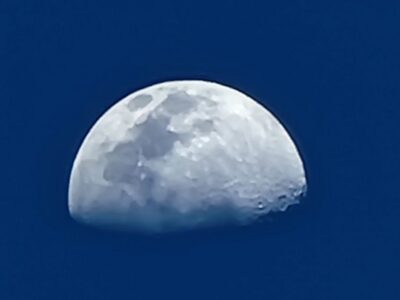
Sunset and Stargazing at Teide National Park
Our review of it →
Teide National Park Sunset & Stargazing with Dinner (Star Safari)
Our review of it →
Teide National Park: Sunset & Stargazing Safari with Dinner
Our review of it →
Mount Teide, Masca, Icod and Garachico Day Trip
Our review of it →
Teide National Park Full-Day Tour with Pickup
Our review of it →