
REVIEW · SORRENTO
Private Pompeii Tour with Archaeologist & Winery on Mt Vesuvius
Pompeii rewards a guide who knows where to look. This private outing pairs an archaeologist-led Pompeii visit with a relaxed winery lunch near Mount Vesuvius, giving you both ancient streets and present-day Campania. I like the personal pace and the chance to shape the route around your interests. I also like the easy Mercedes van pickup from Sorrento or Naples.
The main drawback is cost. At $434.46 per person, this is a serious splurge, and the winery meal is extra at either €50 for the Classic tasting or €60 for the Superior option, though the supplied details also quote slightly different prices of €55 and €65. You should confirm the current amount before booking. The tour also does not climb to the top of Vesuvius.
Key points at a glance
- Fabrizio Belleni leads the Pompeii walk: He combines archaeological detail with stories about ordinary Roman life and adjusts the route to your pace.
- The visit focuses on Pompeii’s Forum area: You can see the Basilica, Temple of Apollo, Forum Baths, Macellum, House of the Faun, and other major sites.
- Your group has a private Mercedes van: Pickup and drop-off are available from Sorrento and Naples, making the day easier than arranging separate trains, taxis, and tickets.
- The winery meal is a full Neapolitan lunch: Expect starters, spaghetti with Vesuvius cherry tomatoes, pastiera, and five local wines.
- You can customize the archaeological visit: Tell Fabrizio about special interests in advance, since Pompeii covers about 150 acres and cannot be seen fully in a short visit.
- The tour is not a Mount Vesuvius summit excursion: You visit a winery inside the national park, but the van does not take you to the crater top.
Why this Pompeii and winery combination works

Pompeii and wine belong together here. The buried city gives you the dramatic ancient story, while the winery shows how people still work with the volcanic soil around Vesuvius. Instead of spending the whole day on hot paving stones, you get a change of pace with food, views, and a family-run wine stop.
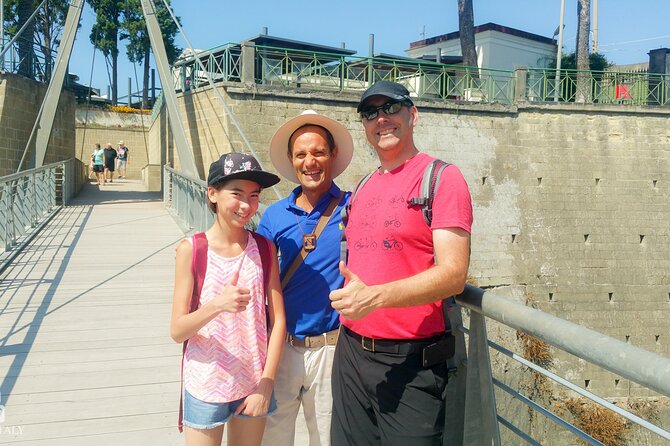
Fabrizio Belleni is the key to the experience. His job is not simply to point out old walls. He explains how spaces worked, who used them, and what daily life may have felt like. The strongest praise for him centers on his clear explanations, good humor, patience, and ability to answer questions without turning the walk into a lecture.
That personal approach matters at Pompeii. The site is huge, and it is easy to wander from one ruined building to another without understanding the city. With a private guide, you can ask for more detail on architecture, religion, food, theater, or domestic life. You can also slow down if the uneven streets begin to wear you out.
The outing usually lasts about four to seven hours. That wide range is important. A shorter visit will focus on the Forum and a few major buildings. A longer version can include more houses, theaters, or museum time. Tell Fabrizio what you most want to see before the day begins.
More Private Volcano Tours in Italy
- Private tour Pompeii Vesuvius and Winery from Sorrento
★ 5.0 · 32 reviews - Pompeii, Mt. Vesuvius, Herculaneum Private Tour
★ 5.0 · 24 reviews - Private Tour Pompeii, Vesuvius and Herculaneum
★ 5.0 · 19 reviews
A private ride from Sorrento or Naples
Pickup and drop-off are arranged around your location, and the transport is by air-conditioned Mercedes minivan. That is a meaningful benefit in this part of Italy. You avoid piecing together a train, taxi, and Pompeii entrance, then finding another ride to the winery.
The private format also means you are not tied to a large group’s walking speed. One person can ask about Roman law, another can focus on frescoes, and someone else can simply ask for a water break. Fabrizio has also been praised for carrying chilled water in the van, a small touch that becomes useful after a warm walk through Pompeii.
Give the pickup location and a phone number when arranging the outing. Children must be accompanied by an adult, and a moderate level of physical fitness is expected. Service animals are allowed. The van is comfortable, but it does not change the basic fact that Pompeii involves substantial walking over ancient surfaces.
Entering Pompeii through Porta Marina
Porta Marina is a fitting start because it introduces Pompeii as a real city, not just an archaeological field. This was the main route toward the sea, with a double-arched gateway built for both people and carts. The gate is part of the old defensive walls, so you begin by seeing how the city controlled movement and protected its boundaries.
From here, Via Marina leads toward the Forum and the center of civic life. The approach helps you understand the layout before the monuments begin to blur together. It also provides access to the Antiquarium and nearby baths.
The stop itself is brief, listed at about five minutes, but its value comes from orientation. I would pay close attention here to Fabrizio’s explanation of the street plan and the route ahead.
The Basilica, Temple of Apollo, and Forum
The Basilica was Pompeii’s major secular public building. It was a courthouse and business center, not a church. Inside, you can still see the long central space and the bases of 28 brick columns, along with the raised tribunal where magistrates handled legal matters.
That detail makes the building easier to picture. Roman public life was not separated into neat modern categories. Law, commerce, politics, and social status all met in the same central district.
Next comes the Temple of Apollo, one of the city’s oldest sacred sites. Its roots reach back to the sixth century BC, and its design reflects both Greek and Italic influences. The portico once held 48 columns, while replicas of Apollo and Diana recall the statues now kept in Naples.
The temple also has a marble altar and an Ionic column topped by a sundial. The view toward Vesuvius adds drama, but the site is valuable even without the mountain. It shows how religion shaped the city’s public spaces.
The Forum is the central stage. This broad, rectangular plaza served political, commercial, and religious purposes. You can walk across its paving stones and see the remains of column bases that once supported statues of emperors and citizens.
I find the Forum most useful when a guide connects the buildings around it. On your own, it can look like a broad open space surrounded by fragments. With context, you can picture markets, legal business, ceremonies, and official gatherings taking place around the same square.
Same trip, a different kind of day out:
- Priority Access Pompeii & Mt. Vesuvius Full day from Sorrento
★ 4.5 · 1,376 reviews - From Sorrento: Pompeii and Vesuvius Guided Tour with Lunch
★ 4.8 · 683 reviews - From Sorrento: Day Tour to Pompeii Ruins and Mount Vesuvius
★ 4.3 · 489 reviews - From Sorrento: Pompeii and Vesuvius Tour
★ 4.5 · 201 reviews
The Macellum and Forum Baths
The Macellum was Pompeii’s main food market. Small shops lined the edges, while a circular pavilion occupied the middle of the courtyard. Archaeologists found fish scales and bones in the drainage system, giving you a practical clue about the goods sold here.
You can also see the stone table used to check official weights and measures. That is the sort of small feature I value on this tour. It moves the story away from emperors and monuments and toward the ordinary business of buying food.
The Forum Baths offer another view of daily routine. The complex had changing rooms, a cold room, a warm room, and a hot room. Hollow walls and floors circulated heat, showing how advanced Roman bath engineering could be.
Stucco ceiling decoration, a bronze brazier, and the restored women’s section add human detail. Baths were places to wash, but also to meet, talk, exercise, and spend time in public. The stop is relatively short, yet it gives you a clear sense of how technology and social life worked together.
Two grand homes: the House of the Faun and House of the Vettii
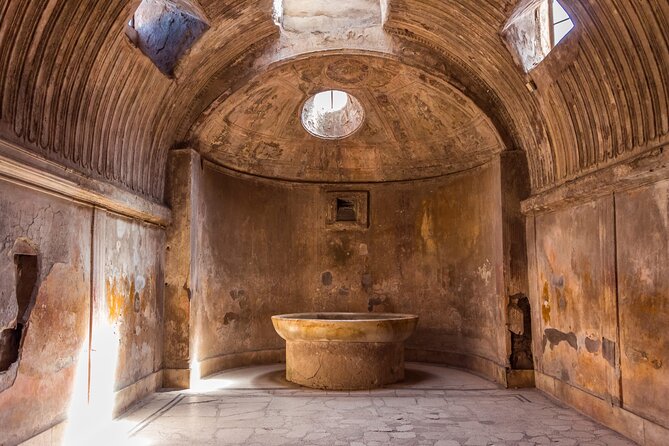
The House of the Faun occupies an entire city block and ranks among Pompeii’s largest private residences. Two atriums and two peristyle gardens show the scale of elite domestic life.
The famous Dancing Faun statue and Alexander Mosaic are now represented by replicas at the house, with the originals in the Naples Archaeological Museum. That is worth knowing before you arrive. The building remains impressive, but you should not expect to see the original masterpieces in place.
The House of the Vettii offers a different story. Its owners were two brothers who rose from slavery to become wealthy merchants. The home’s frescoes, gardens, fountains, and dining rooms reveal how success could be displayed in Roman society.
The House of the Vettii is especially strong for art lovers. Look for the Room of the Cupids, mythological scenes, and the famous Priapus image near the entrance. The peristyle garden has been replanted according to ancient patterns, helping you imagine the house as a lived-in place rather than a shell.
These homes are a good reason to choose a private tour. Fabrizio can help you compare the grand scale of the House of the Faun with the social story of the Vettii family. Without guidance, it is easy to notice decoration but miss what the homes say about class, wealth, and ambition.
The Chaste Lovers block and Pompeii’s active excavations
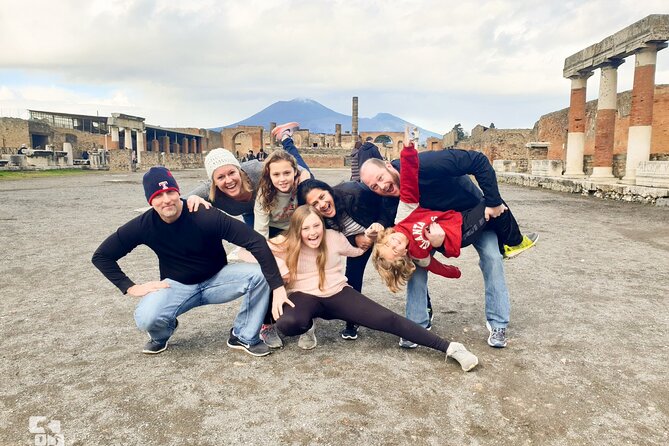
The Insula dei Casti Amanti, or Block of the Chaste Lovers, offers a look at Pompeii as an ongoing archaeological project. The block includes homes, a bakery, and the House of the Painters at Work. It reopened with an overhead walkway that lets you view the excavated spaces from above.
This is one of the more modern parts of the visit. You are not only seeing a finished ruin. You are also seeing how archaeologists work to record, protect, and present a site that is still being studied.
The elevated route is part of the Pompeii for All access plan. Still, do not read that as a promise of an easy day for every body type. The overall park is large, and your physical comfort will depend on the day’s route and pace. Tell Fabrizio in advance if you need a gentler plan. He has been praised for adapting the walk to different abilities and for making sure nobody feels pushed to keep up.
Theater life at Teatro Grande
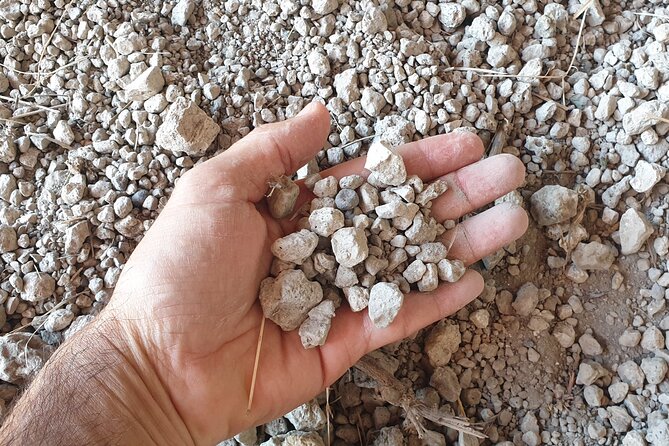
Teatro Grande is a horseshoe-shaped theater built into a natural slope. It held about 5,000 people and arranged seating according to social rank. The lower seats were for local elites, while higher areas were for the general public.
The theater’s acoustics are still notable. You may be able to test them by speaking from the orchestra area, depending on current site rules and conditions. Mount Vesuvius forms a striking backdrop, and the space continues to host cultural events, including the Pompeii Theatrum Mundi summer season described for 2026.
This stop changes the tone of the day. After courts, temples, markets, and homes, you see Pompeii as a place of performance and shared entertainment. The nearby Triangular Forum area also helps show how public spaces extended beyond the main Forum.
The Antiquarium and the human side of Pompeii
The Antiquarium near Porta Marina gathers fragile objects that cannot remain outdoors. It traces Pompeii from its Samnite beginnings through the Roman period and the eruption in AD 79.
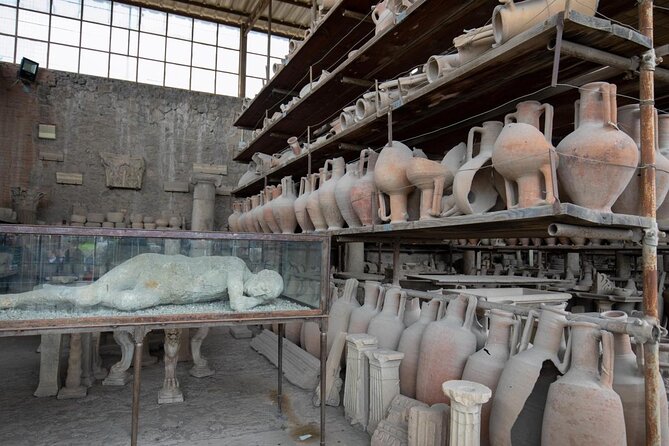
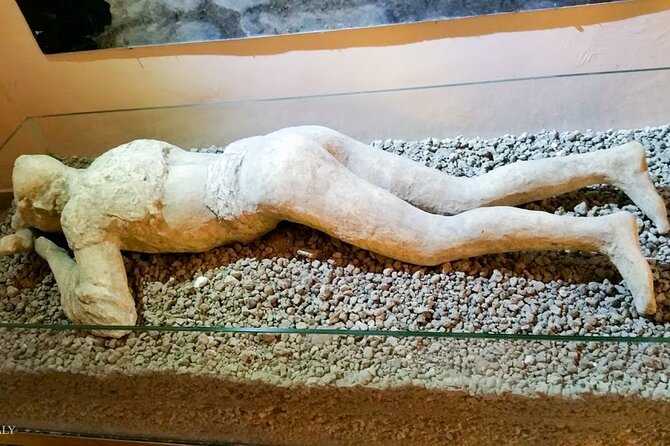
The collection includes the Moregine silver treasure, amulets, frescoes, and plaster casts of victims. The Dog of Pompeii is particularly affecting. These casts can make the disaster feel personal in a way that walls and columns cannot.
If the museum is included in your route, it can work well near the beginning or end. Early in the visit, it gives you useful context. Later, it helps you connect the streets and buildings with the people who lived there.
The supplied details describe multimedia projections and digital assistants in 2026. Museum displays can change, so treat those as features to confirm for your date.
Lunch and five wines at Cantina del Vesuvio
After Pompeii, the drive to Cantina del Vesuvio takes about 10 to 15 minutes according to the tour description. The winery sits inside Mount Vesuvius National Park and offers views toward the Bay of Naples and the volcano.
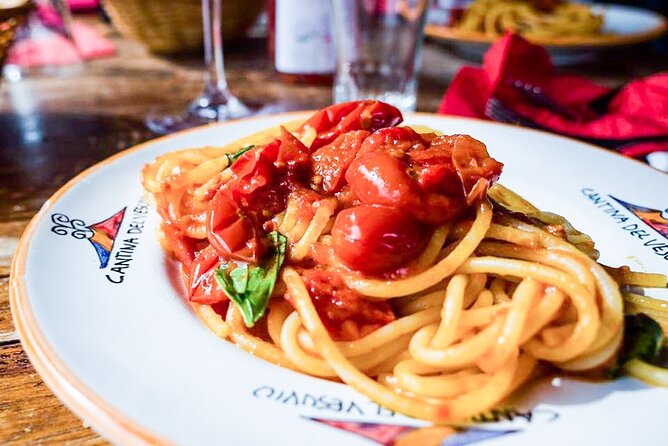
The visit begins with a guided 15-minute walk through the vineyards. You learn about the local Lacryma Christi wines before sitting down to eat. This is not just a tasting counter with a few crackers. The meal includes a Neapolitan starter, spaghetti with Vesuvius cherry tomatoes, and pastiera, a traditional dessert made with ricotta and wheat.
The starter includes ricotta, bruschetta with cherry tomatoes, provolone, salame, and capocollo. The pasta is simple by design, using local tomatoes and pasta from a noted regional maker. That straightforward menu fits the setting better than a fussy meal would.
Five wines accompany the food. Vegetarian and gluten-free options are available, but mention your needs ahead of time. The lunch is paid on site, and the supplied information gives two slightly different price sets: €50 or €55 for the Classic tasting, and €60 or €65 for the Superior option. Ask for the current price when you book.
You can also arrange to ship wine and olive oil home. That may appeal if you find a bottle you cannot reasonably fit into your luggage.
Is the $434.46 price fair?
This tour costs far more than joining a basic group bus to Pompeii. You are paying for private transport, a private guide, Pompeii Express skip-the-line admission, route planning, and the convenience of combining Pompeii with a winery without arranging the connections yourself.
For two or more people, the value improves because the private format spreads the guide and vehicle cost across your group. It is also a useful choice if you have limited time in Sorrento or Naples and want one organized day rather than several separate bookings.
Still, the price does not include lunch and wine. Add the tasting fee, and the total rises. I would choose this outing for a special day, a family group, or anyone who places a high value on personal attention. If your priority is the lowest possible cost, use public transport and visit Pompeii with a standard admission ticket instead.
Who should book this private day?
I would recommend it most strongly if you want:
- A private guide who can adjust the route
- A clear introduction to Pompeii rather than an unguided wander
- Pickup from Sorrento or Naples
- A balance of archaeology, food, and wine
- A slower, more personal day for a couple, family, or small group
It is less suitable if you want to hike to the summit of Vesuvius. The tour visits a winery in the national park, but the itinerary does not reach the crater. It is also not ideal if your budget is tight or if you want to see every corner of the archaeological park. Pompeii is simply too large for that within a four-to-seven-hour outing.
Free cancellation is available up to 24 hours before the start time. Changes or cancellations inside that window are not refunded, so leave room in your plans if your schedule is uncertain.
Should you book it?
Book this tour if you want Pompeii explained by an archaeological guide and prefer a private vehicle, a flexible route, and a pleasant meal afterward. Fabrizio Belleni receives the strongest praise for his preparation, friendly manner, careful pacing, and ability to bring Roman daily life into focus.
I would confirm three things before paying: the final winery price, the exact Pompeii route for your chosen duration, and the pickup location. If those details suit your plans, the combination is compelling. You get the city’s major monuments, a taste of the local volcanic wine country, and a full Neapolitan lunch without spending your day solving transport problems.
FAQ
How long does the private Pompeii and winery tour last?
The experience lasts approximately four to seven hours. The exact length depends on the route chosen at Pompeii and the time spent at the winery.
Is hotel pickup available?
Yes. Private pickup and drop-off are offered from Sorrento and Naples. You need to provide the meeting location and a phone number.
Is Pompeii admission included?
Yes. Pompeii Express skip-the-line admission is included in the tour price.
Is the winery lunch included in the tour price?
No. The winery visit is reserved for you, but lunch and wine tasting are paid on site. The supplied details list Classic and Superior tasting prices, with slightly different amounts, so confirm the current fee before booking.
How many wines are included at the winery?
The meal includes five separate local wines. A Superior wine option is also available for an additional charge.
What food is served at the winery?
The sample menu includes ricotta, bruschetta with Vesuvius cherry tomatoes, provolone, salame, and capocollo, followed by spaghetti with Vesuvius cherry tomatoes and pastiera for dessert.
Does the tour climb to the top of Mount Vesuvius?
No. The tour visits Cantina del Vesuvio inside Mount Vesuvius National Park, but it does not go to the summit or crater.
Can the Pompeii route be customized?
Yes. You can request particular sites or interests in advance, and Fabrizio can adjust the walking tour to your preferences and physical pace.
Is the tour suitable for children and people with mobility concerns?
Children must be accompanied by an adult, and a moderate level of physical fitness is expected. The Pompeii for All route includes an accessible elevated walkway at the Chaste Lovers block, but you should discuss specific needs with the guide before booking.
More Private Volcano Tours in Sorrento
- BEST Gobustan, Volcanoes & Absheron Fire Tour (Group or Private)
★ 5.0 · 1,254 reviews - Mount Batur: Private Volkswagen Volcano Safari
★ 4.6 · 1,120 reviews - Mount Batur Sunrise Trekking Private All Inclusive
★ 5.0 · 906 reviews - Private South Coast Fire and Ice: Glacier viewpoint & Lava Show
★ 5.0 · 451 reviews
More Vesuvius and Pompeii Tours in Sorrento
- Mt Vesuvius and Pompeii Tour by Bus from Sorrento
★ 4.5 · 170 reviews - From Sorrento: Mount Vesuvius Tour with Lunch & Wine Tasting
★ 4.5 · 169 reviews - Pompeii & Mount Vesuvius Tour with Guided Visit, Tickets & Lunch
★ 4.5 · 155 reviews - From Sorrento: Semiprivate Vesuvius Tour
★ 3.8 · 46 reviews
Just added around Sorrento
- Sorrento: Pompeii and Vesuvius Day Trip with Entry and Lunch★ 4.4 · 11 reviews
- Sorrento: Vesuvius Day Trip with Entry and Lunch★ 3.5 · 6 reviews
- From Sorrento: Pompeii and Mount Vesuvius Trip with Lunch★ 4.5 · 18 reviews
- Campania Express Train Pompeii Tour with Vesuvius or Winery★ 3.0 · 3 reviews
- From Sorrento: Semiprivate Vesuvius Tour★ 3.8 · 46 reviews
- From Sorrento: Pompeii & Mt. Vesuvius Tour with Lunch & Wine★ 4.2 · 42 reviews
- From Sorrento: Pizza-Making Class w/ View of Mount Vesuvius★ 5.0 · 22 reviews
- From Sorrento: Pompeii by Train with Vesuvius & Guided Tour★ 3.8 · 41 reviews
Mount Vesuvius & Pompeii Tours, compared.

Pompeii and Mount Vesuvius Day Trip from Rome with Pizza Lunch
Our review of it →
Pompeii Day Trip with Optional Vesuvius and Lunch
Our review of it →
Naples or Sorrento: Full-Day Pompeii and Mount Vesuvius Tour
Our review of it →
Pompeii & Mt.Vesuvius Day Tour from Naples with Pizza Lunch
Our review of it →
Mount Vesuvius: Skip-the-Line Ticket and Smart Digital Guide
Our review of it →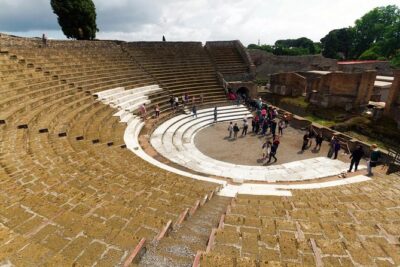
Pompeii & Mt Vesuvius All-Inclusive Small Group w/ Lunch
Our review of it →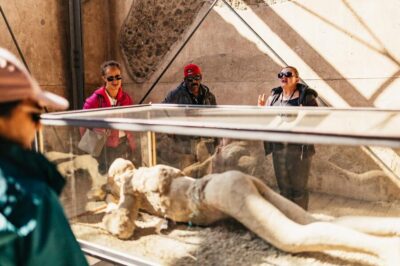
Pompeii and Mt. Vesuvius with Lunch and Wine Tasting
Our review of it →Browse the lists this tour appears in