
REVIEW · CATANIA
Mount Etna: Guided Trek 3,000 Meters to the Summit
Etna turns a hike into a science lesson. I like the cable-car ascent and the chance to walk across fresh and older lava flows with a volcanologist guide. I also like the moderate pace, which makes the six-hour outing feel achievable rather than punishing. The main catch is that weather and volcanic safety can change the route, and the cable car fee needs careful checking because the tour details list it both as included and as a €50 payment on site.
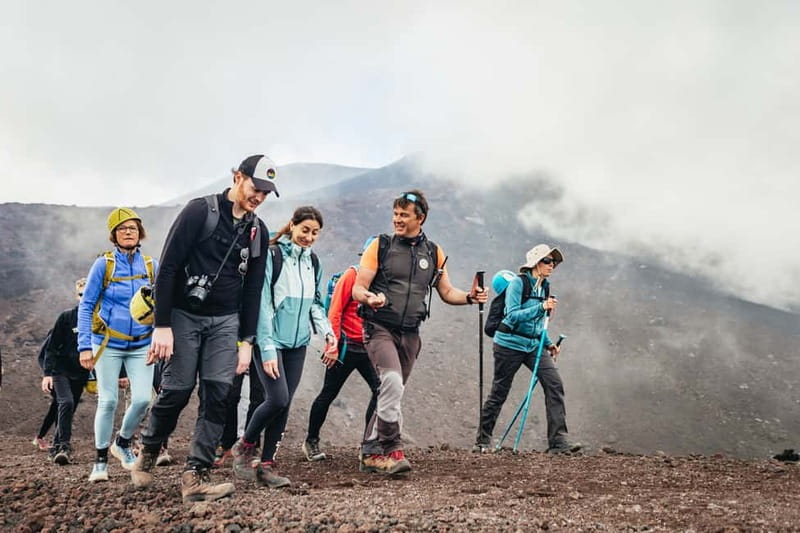
I especially value the guides on this outing. Luca gets repeated praise for his humor, clear explanations, and patient pacing, while Marco and Manuel have also been singled out for adapting to weather and different fitness levels. Bring proper boots, warm layers, water, and something to cover your face. Etna is not a stroll through a park. Loose ash, wind, rock, and exposed sections make preparation matter.
Key points at a glance
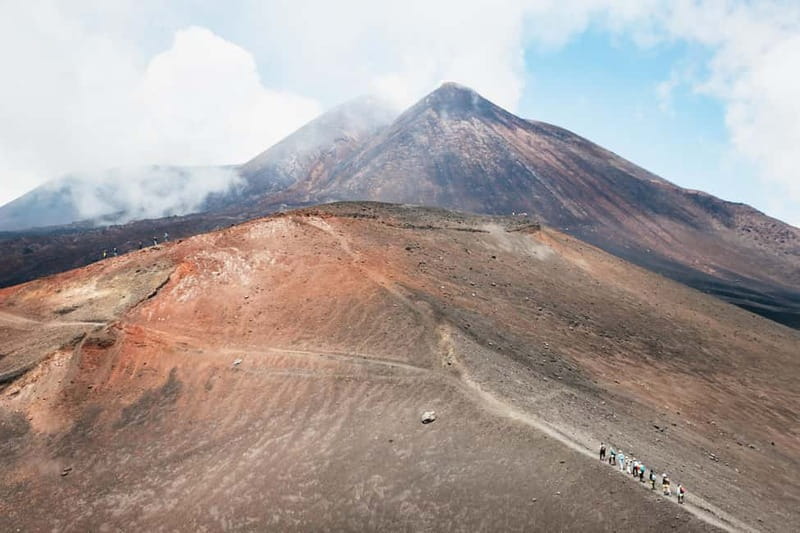
- 3,000-meter high point: Reach the base of Etna’s summit craters after hiking across ash, rock, and old lava flows.
- Cable car approach: Ride from the starting area to about 2,500 meters, saving your legs for the rougher upper route.
- Active volcanic sights: See the still-fuming 2001 Crater at roughly 2,700 meters.
- Excellent guide support: Luca, Marco, and Manuel are praised for clear explanations, patient pacing, and careful handling of mixed-ability groups.
- Serious mountain conditions: Wind, volcanic ash, cold, and sudden weather changes are part of the experience.
- Price to verify: The advertised price is $113.29 per person, but a €50 cable-car charge is also listed as payable locally.
Why this Etna trek is different
Mount Etna is not just a mountain with a good view. It is an active volcano, and the ground tells the story. You cross black lava, loose volcanic ash, and rock shaped by eruptions from different periods. Old and recent lava flows appear beside one another, giving the walk a changing surface and a clear sense of Etna’s ongoing activity.
This tour takes you to about 3,000 meters, the highest point stated for the experience. You do not simply ride up, take a photograph, and return. The cable car handles the lower part, then you hike through rough volcanic terrain toward the summit craters.
That distinction matters. The cable car makes the upper mountain reachable for people who have reasonable fitness but do not want to spend the whole day climbing from the base. At the same time, the final section still asks you to walk on ash and rock without a normal trail. Some parts can be exposed, so you need a steady step and a good head for open slopes.
The reward is a close look at Etna’s craters and broad views from high above Sicily. On clear days, the setting feels enormous. On windy or cloudy days, the volcano becomes more severe and dramatic, but visibility may be limited.
More Volcano Hikes and Treks in Catania
- Etna Sunset Tour: Volcano trek, Cave & tasting from Catania
★ 4.8 · 1,290 reviews - Catania: Mount Etna Adventurous Hiking Tour with Equipment
★ 4.7 · 784 reviews - From Catania: trek on Mount Etna, Lava Cave & tasting Tour
★ 4.8 · 563 reviews
Meeting at La Terrazza Dell’Etna
The tour begins and ends at La Terrazza Dell’Etna. There is no hotel pickup or drop-off, so you need to arrange your own way to the meeting point and return from it.
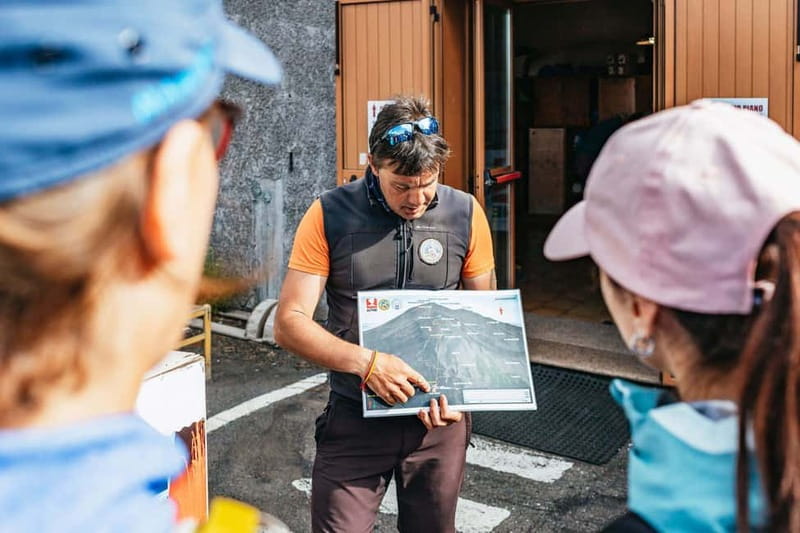
Your guide starts with a briefing. This is more important than it sounds. The guide can explain the pace, the condition of the route, and the safety rules before you set off. Since volcanic conditions can change, the route may be altered or stopped if weather, environmental conditions, or volcanic activity create danger.
The listed languages are English and Italian. You may be walking with people at different fitness levels, but the guides have a strong reputation for keeping groups together. Luca is often praised for remembering names, setting a comfortable pace, and making the technical information easy to follow. That personal approach is useful on a six-hour outing, especially when the group is tired.
The 20-minute cable-car ride to 2,500 meters
The cable car takes about 20 minutes and carries you to around 2,500 meters. It provides a fast change in altitude and gives you a first look at Etna’s upper slopes.
This is one of the tour’s best practical features. Starting the hike higher means you can spend your energy on the volcanic terrain and summit area instead of a long climb from the lower slopes. You still need to walk uphill, but the cable car makes the outing more manageable for people with medium physical training.
The ride is also your first reminder that conditions can be different at altitude. A pleasant morning below can turn cold and windy higher up. Keep your warm clothing easy to reach rather than buried at the bottom of your bag.
There is an important cost issue here. The activity information says a cable-car ticket is included, but it also says the €50 ticket is not included and must be paid on site. Some feedback also describes paying €60, with no clear explanation for the difference. I would confirm the current cable-car charge directly before booking or before setting out. That one question can prevent an unpleasant surprise.
Hiking through ash, rock, and lava
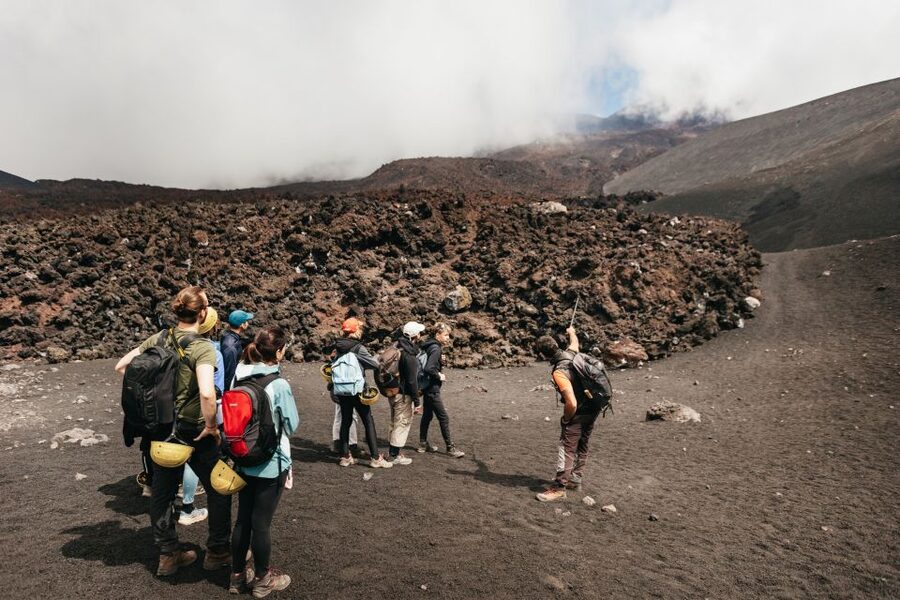
After leaving the cable car, the main walk begins. The hiking sections are listed as about two hours followed by another hour and a half, with the day totaling around six hours including transport and breaks.
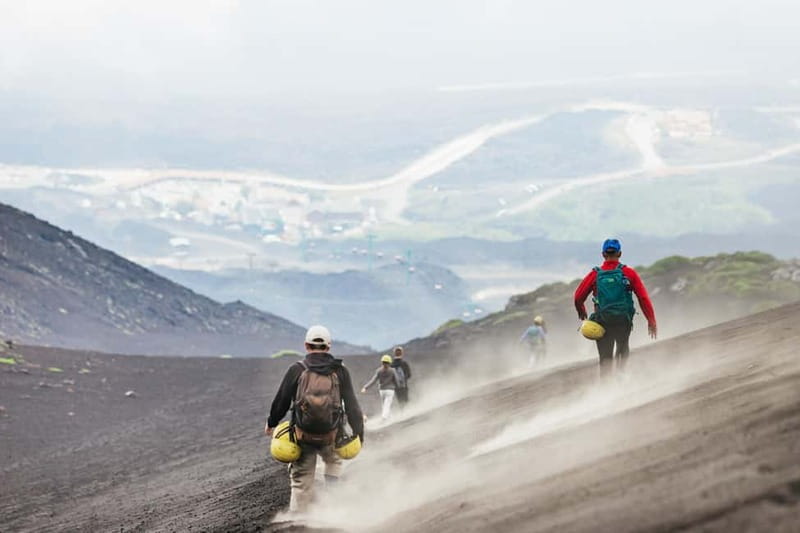
The route crosses ground without a standard paved trail. You may walk over loose ash, small volcanic stones, and solid lava. The descent can be trickier than the climb because your boots may slide on the loose surface. High-top trekking boots and long trousers are sensible choices, since small stones can work their way into low shoes.
Trekking poles are provided, and you should use them. They help with balance on ash and give your knees extra support on the way down. Helmets and insurance are also included.
The guide adds much of the value here. Instead of seeing a field of black rock as one large mass, you learn how different eruptions shaped the area. The guides explain Etna’s geology and volcanic processes while pointing out old and recent flows. Luca is particularly praised for combining facts, anecdotes, and humor without rushing the walk.
The route is suitable for people with medium fitness who are used to walking on sand and rock. It is not suitable for children under 10, pregnant women, people with mobility impairments, or anyone with heart, respiratory, or serious balance problems. You should also tell the guide about any health concerns before leaving.
More Volcano Hikes and Treks in Italy
- Etna Volcano: South Side Guided Summit Hike
★ 5.0 · 311 reviews - Mount Etna: North Upper Craters Guided Tour by 4×4 with Trek
★ 4.6 · 243 reviews - Catania: Mount Etna Sunset Trekking with Wine Tasting
★ 5.0 · 140 reviews - Etna Summit Area (2900 mt) Lunch and Alcantara Tour – Small Groups from Taormina
★ 5.0 · 83 reviews
Reaching the summit crater area
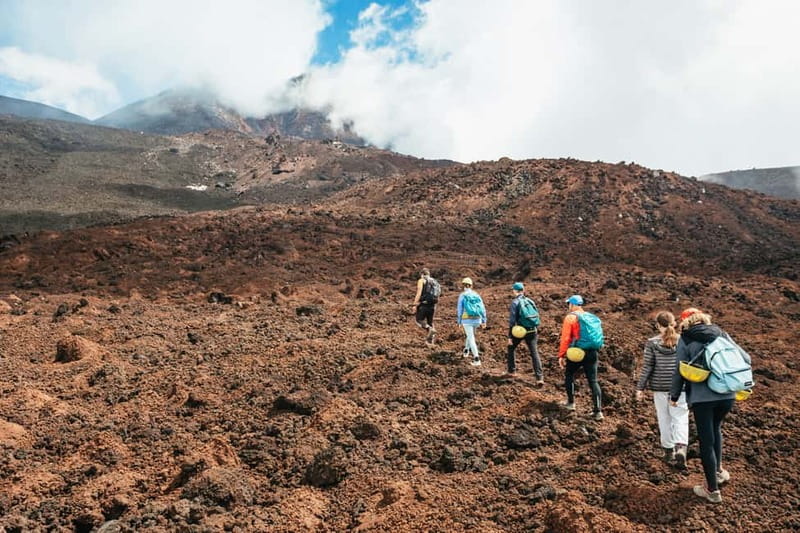
The highest part of the hike brings you to the base of the summit craters at about 3,000 meters. The wording matters: this is a trek to the summit crater area, not a promise that you will walk into an active crater or reach the highest rim in every condition.
The guide decides how far the group can safely go. Weather, wind, ash, and volcanic risk can all affect access. Some outings reach several crater viewpoints, while others turn sooner because conditions are poor. That flexibility is a strength, not a flaw. An active volcano is not a fixed museum exhibit.
At this height, the views are the main prize. You look across Etna’s volcanic slopes and, when conditions allow, far beyond the upper mountain. The feeling comes from the combination of height and raw ground underfoot. You are not looking at a distant crater from a viewing platform. You are walking through the material produced by the volcano.
Wind can be fierce. One account describes winds around 100 kilometers per hour, while another describes rain, frost, and snow in May. Those conditions may not occur on your day, but they explain why the packing list is serious. Bring a windproof jacket, pullover, gloves, hat, sunglasses, sunscreen, and a spare shirt.
Contact lenses are forbidden because windblown volcanic ash can irritate your eyes. Bring glasses instead if you need vision correction. A face covering is also a smart addition, especially if volcanic gases or ash blow toward the group.
The fuming 2001 Crater at 2,700 meters
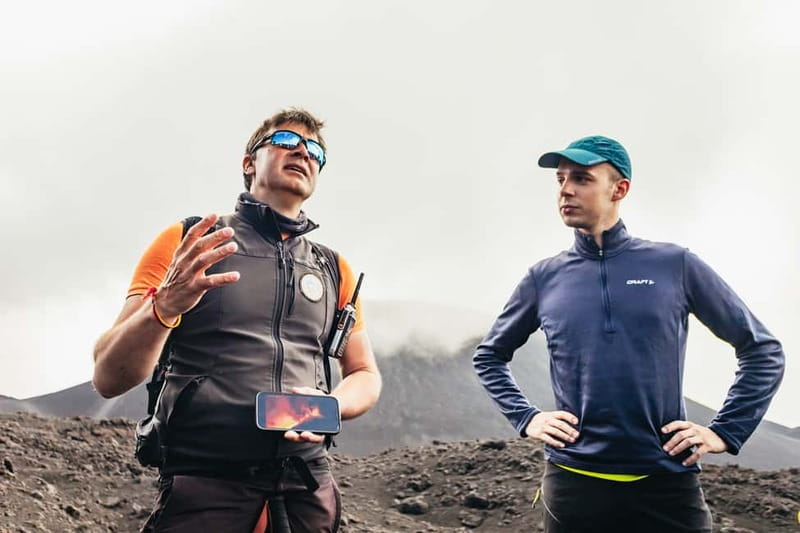
During the descent, the group stops at the 2001 Crater, which still fumes at about 2,700 meters. This is a memorable stop because it gives you a direct look at a relatively recent eruption site without needing to reach the highest point.
The stop also helps break up the downhill walk. You have time to look around, listen to the guide, and understand how recent eruptions changed the mountain. The exact amount of visible steam or gas depends on conditions, wind, and volcanic activity, so do not expect a guaranteed dramatic plume.
This is one of the places where a guide adds real value. Etna can look stark and simple at first glance. A good explanation connects the crater, the lava, and the surrounding ash to the forces that made them.
Descending to 2,500 meters and taking lunch
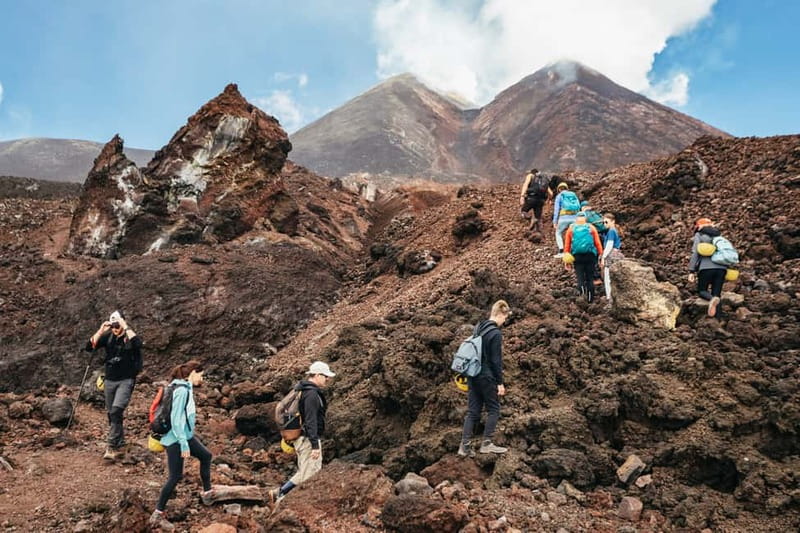
The descent returns you toward the cable-car area at 2,500 meters. Walking downhill over loose ash can be harder than expected, particularly if your knees are not used to uneven ground.
A break is scheduled on the way for lunch, but food is not included. Bring a packed lunch or substantial snack, along with at least 1.5 liters of water. A 10 to 20-liter backpack should be enough for your food, water, layers, sunscreen, gloves, and spare clothing.
The advice to bring an extra T-shirt is practical. You may begin the day warm and later need dry clothing after walking uphill. Long trousers are recommended, both for warmth and to keep ash and stones away from your legs.
After the descent, you take the cable car for another roughly 20 minutes and return to La Terrazza Dell’Etna. The tour ends at the same meeting point, so plan your onward transport with the six-hour duration in mind. Starting times vary, and the mountain schedule can shift.
What the $113.29 price really buys
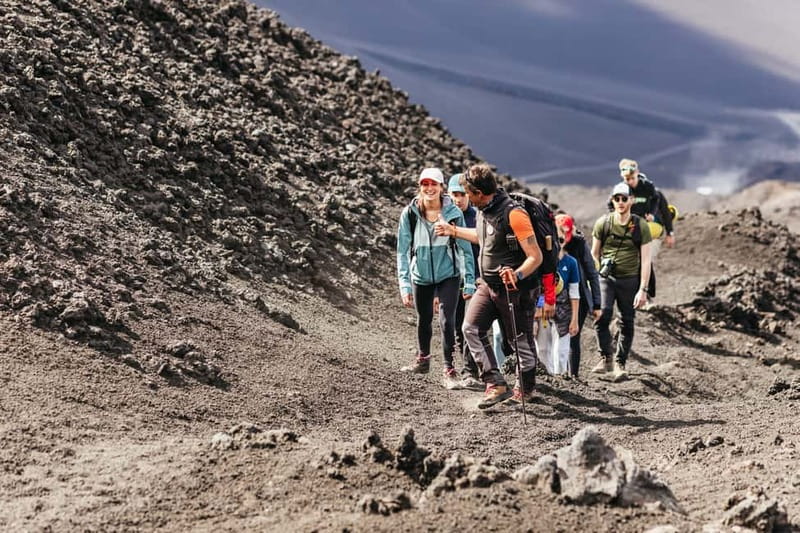
At $113.29 per person, this is not a cheap sightseeing stop. The value depends on how much support you want on a high-altitude volcano.
The price includes a guide, helmet, trekking poles, and insurance. The guide is the key part. You receive route support on difficult ground, explanations of the volcano, and help adjusting the pace. That is more useful here than it would be on an ordinary marked trail.
The cable-car charge is the unclear part. The details list the ticket among the inclusions, then separately state that a €50 ticket is payable on site. Since some people report paying €60, I would treat the advertised price as a starting point until the operator confirms the current arrangement.
Equipment loans may also be available in some situations. One account describes being lent hiking shoes and a windproof jacket. Do not assume this is guaranteed for every booking, but it is worth asking Etna Est in advance if you lack suitable gear.
Free cancellation is available up to 24 hours before the activity, and you can reserve now and pay later. Those policies help if your Sicily plans depend on weather, but they do not remove the need to check the forecast and the volcano conditions before you go.
Who should book this experience?
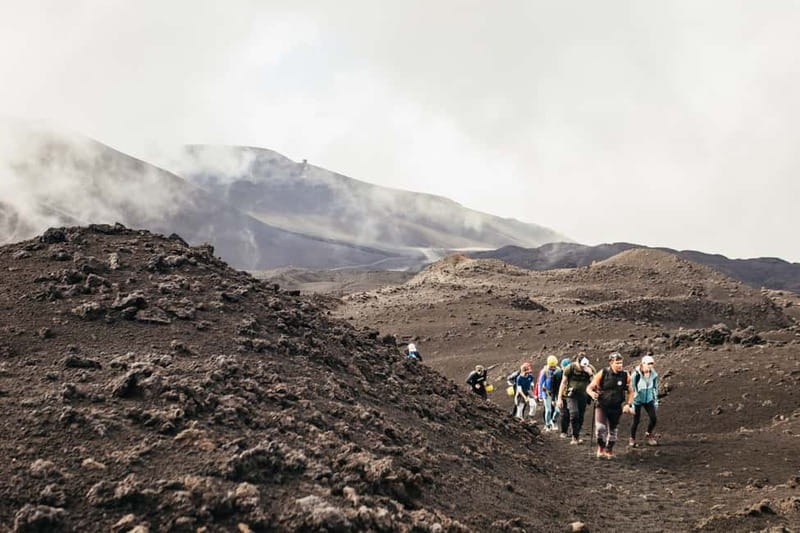
I would recommend it to you if you want more than a quick cable-car ride and have reasonable fitness. You should be comfortable walking for several hours on uneven ground, with sections that feel more like a scramble than a normal hike.
It suits people who want geology and local volcanic knowledge along with mountain views. It is also a good fit if you prefer a guided pace and do not want to work out the route alone.
I would think twice if you dislike loose rock, strong wind, cold conditions, or exposed paths. People with respiratory issues, heart problems, vertigo, or mobility impairments should not book this activity. It is also not suitable for children under 10 or pregnant women.
The experience can be physically moderate rather than extreme, but the mountain itself is serious. A guide can manage the route, not erase the altitude or the weather.
Should you book the Mount Etna 3,000-meter trek?
Book it if you want to walk into Etna’s volcanic world, not just photograph it from below. The cable car saves time, the hike reaches dramatic crater country, and the guides add clear explanations and steady support. Luca receives especially strong praise, but Marco and Manuel also appear to offer the patience and care this route needs.
Before paying, confirm the cable-car charge, the meeting details, and the route’s current maximum altitude. Pack as if the mountain will be cold, windy, and dusty. If you do that, this is a strong choice for an active half-day in Sicily, with a good balance of effort, scenery, and real volcanic insight.
FAQ
How long does the Mount Etna trek last?
The activity lasts about six hours. The schedule includes two cable-car rides of roughly 20 minutes each, hiking sections of about two hours and one and a half hours, and a break for lunch.
How high does the tour go?
The stated maximum altitude is about 3,000 meters. The walk reaches the base of the summit craters, with the exact route subject to weather, environmental conditions, and volcanic safety.
Where does the activity start and finish?
You meet at La Terrazza Dell’Etna, and the activity ends back at the same meeting point.
Is hotel pickup included?
No. Hotel pickup and drop-off are not included.
Is the cable-car ticket included?
The supplied activity details are inconsistent. They list the cable-car ticket as included, but also state that a €50 ticket must be paid on site. Confirm the current policy before booking.
What languages does the guide speak?
The tour is offered in English and Italian.
What should I bring?
Bring sunglasses, hiking shoes or trekking boots, sunscreen, warm clothing, at least 1.5 liters of water, a snack or packed lunch, and a 10 to 20-liter backpack. Gloves, a hat, a windproof jacket, long trousers, and an extra shirt are also recommended.
Do I need good physical fitness?
You need medium physical training and should be comfortable walking on sand and rock without a normal trail. Some sections may be exposed, and the descent can be slippery on loose volcanic material.
Is the tour suitable for children?
It is not suitable for children under 10 years old.
Can the route change or be canceled?
Yes. The guide may change or interrupt the schedule if weather, environmental conditions, or volcanic risks make the activity unsafe.
More Mount Etna Tours in Catania
- Catania: Mount Etna Morning or Sunset Day Trip with Tasting
★ 4.8 · 4,028 reviews - Catania: Sunset Jeep Tour of Mount Etna and Lava Flow Caves
★ 4.8 · 2,113 reviews - Sicily: Etna and Alcantara Gorges Full-Day Tour with Lunch
★ 4.8 · 1,766 reviews - Catania: Etna Sunset Tour with Pickup and Drop-off
★ 4.8 · 1,348 reviews
Just added around Catania
- Private Tour from Catania to Etna Naxos and Taormina★ 4.5 · 7 reviews
- Trekking in the morning on Mount Etna★ 5.0 · 2 reviews
- Sicily private shore excursion – Etna and Taormina with personal driver★ 3.5 · 3 reviews
- Mount Etna Sunset with sicilian tasting★ 5.0 · 29 reviews
- Private visit to the cellars of Etna with wine tasting★ 4.5 · 6 reviews
- Tour two wineries of Etna wine tasting and lunch★ 5.0 · 10 reviews
- Etna Quad on the Volcano Day (ATV)★ 4.0 · 8 reviews
- Sunset Trekking on Mount Etna★ 5.0 · 3 reviews
Mount Etna Tours, compared.
Mount Etna Morning or Sunset Day Trip with Tasting
Our review of it →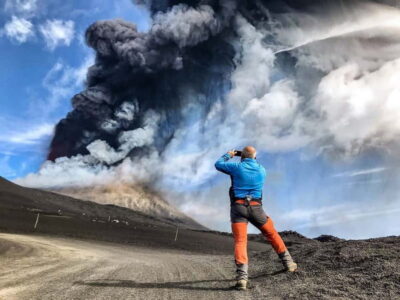
Sunset Jeep Tour of Mount Etna and Lava Flow Caves
Our review of it →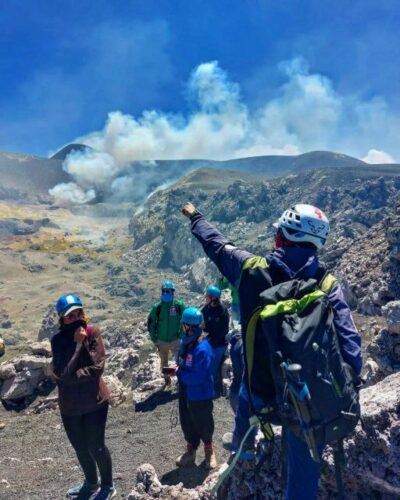
Etna and Alcantara Gorges Full-Day Tour with Lunch
Our review of it →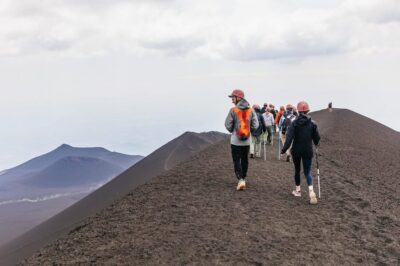
summit craters trekking with volcano guide 3350mt
Our review of it →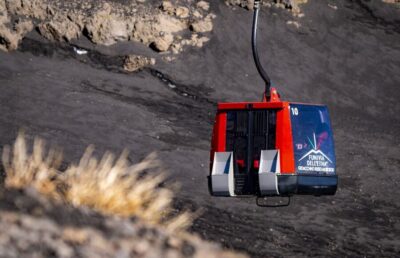
Browse the lists this tour appears in