
REVIEW · BAKU
Baku: Gobustan, Mud Volcanoes, Ateshgah, and Yanardag Tour
Ancient art meets living fire. This nine-hour private tour links Azerbaijan’s most unusual sights outside Baku, from Stone Age carvings and bubbling mud to a temple built around sacred flames. I especially like the private transport, which keeps a long day comfortable, and the chance to see both Gobustan’s archaeology and Absheron’s fire traditions in one outing.
I also like the mix of indoor and outdoor stops. The Gobustan Museum gives you useful context before you walk among the rocks, while the English-speaking guide can connect the petroglyphs, Zoroastrian worship, and natural gas fires into one clear story. The main drawback is cost: the $99 price does not include about $24 in admission fees or lunch, and the outdoor stops can be tiring in strong sun.
Five things to know before you go
- Gobustan begins with a modern interactive museum, including touch screens and 3D panoramas that show how people lived thousands of years ago.
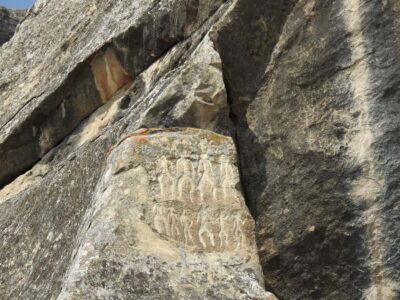
- The petroglyphs span several periods, with more than 6,000 rock drawings and caves spread through the Gobustan site.
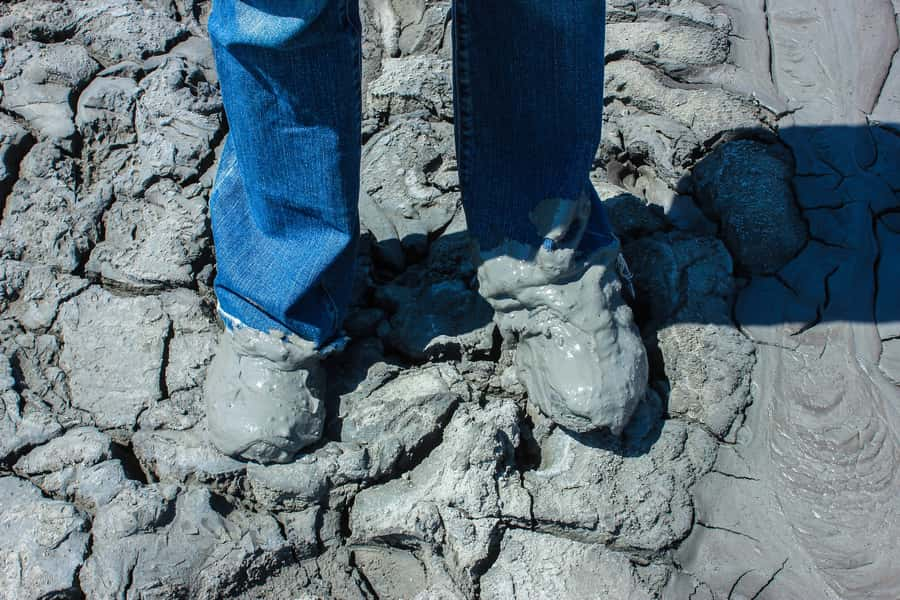
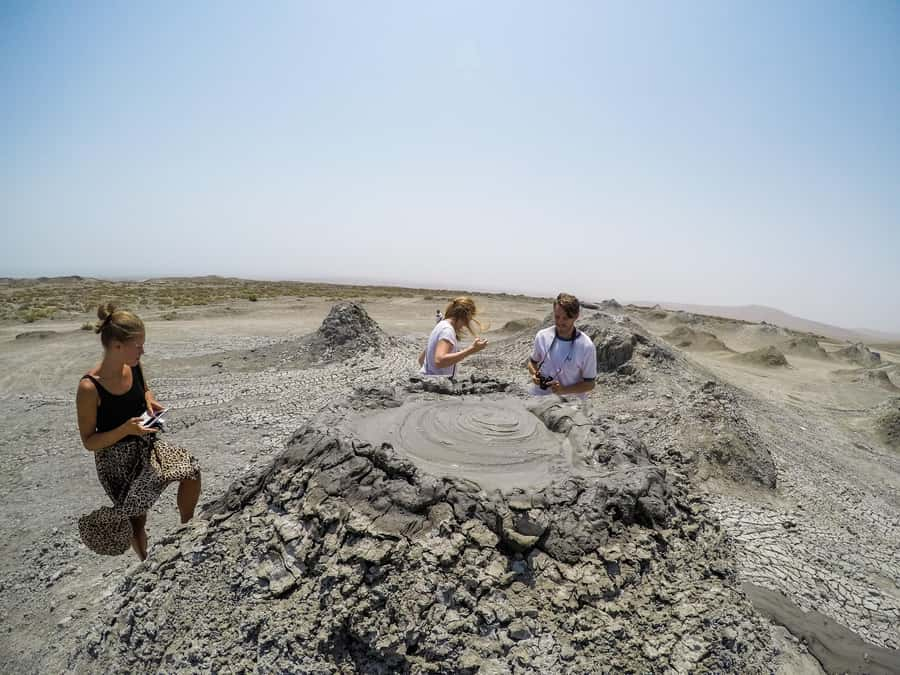
- Mud volcanoes are a close-up experience, not just a distant viewpoint. You climb active formations and look into their craters.
- Ateshgah explains Azerbaijan’s fire worship traditions, with links to both Zoroastrian and Hindu practice.
- Yanardag is a natural gas flame, burning on a hillside near Baku and still visited by pilgrims from Iran and India.
- The real total is higher than $99, since entrance fees and lunch are extra.
Why this Baku day trip makes sense
Baku has plenty to occupy you for several days, but some of Azerbaijan’s defining sights sit outside the city. This tour covers the Absheron area in one organized day, with hotel or other pickup in Baku and drop-off at Fountain Square at the end.
The route is appealing because it does not focus on only one period of history. At Gobustan, you look back thousands of years to early human communities. At Ateshgah, you explore later religious traditions built around fire. At Yanardag, the subject becomes geology and natural gas rather than an ancient artifact.
You also get a private group and private transportation. That matters on a nine-hour outing with several stops. You are not being moved with a large crowd, and the guide can spend more time on questions or adjust the pace within the planned route.
The day is still demanding. The stated schedule gives about two hours at Gobustan, 40 minutes at the mud volcanoes, one hour at Ateshgah, and 40 minutes at Yanardag, along with driving and a lunch break in central Baku. Comfortable shoes, water, sunscreen, and a camera are sensible choices.
More Gobustan Mud Volcano Tours in Baku:
- Baku: Gobustan, Mud Volcano, Fire Mount, Temple Lunch Entry
★ 4.9 · 3,246 reviews - BEST Gobustan, Volcanoes & Absheron Fire Tour (Group or Private)
★ 5.0 · 1,254 reviews - Baku: Gobustan, Volcanoes, Fire Temple and Yanardag Day Trip
★ 4.7 · 433 reviews
Gobustan Museum: start with the story
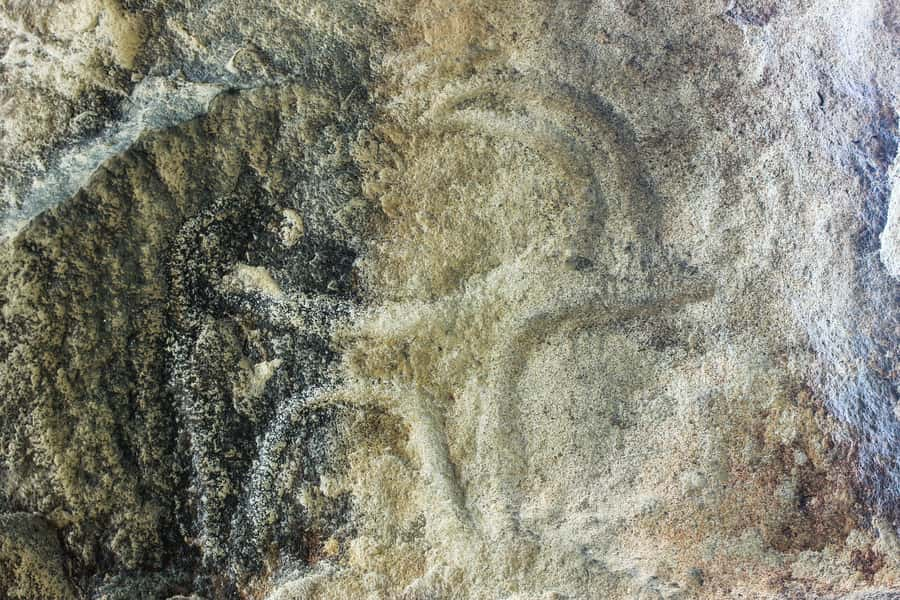
The first major stop is the Gobustan Museum, an important choice because the outdoor site can otherwise feel like a collection of scattered rocks and markings. The museum introduces the natural setting, archaeological work, population, cultural development, and the many petroglyphs found in the area.
The touch screens and 3D panoramas are especially useful. They show how people lived between roughly 5,000 and 20,000 years ago, giving you a better sense of the time scale before you see the carvings outdoors.
The exhibits include material dated to about the fourth through second millennia BC. That does not mean every object or carving you see belongs to the same period. Your guide can help explain that Gobustan was used across different eras, which is one reason the site has so much to examine.
I would pay close attention here rather than rushing through. The museum is your key to reading the rock drawings. Without some background, figures, animals, caves, and symbols can blur together. With it, the outdoor visit has more meaning.
Gobustan rocks: ancient drawings in a hard setting
After the museum, you head to the Gobustan rocks for the petroglyphs and caves. Scientists discovered the drawings in the 1930s, and the site contains more than 6,000 rock images linked to different periods.
The carvings offer clues about early people’s customs, worldview, and daily life. This is not a polished historical attraction with every detail laid out in neat order. You are looking at marks made on stone, in the same broad setting where earlier communities lived and worked.
That roughness is part of the appeal. The rocks and open ground give you a stronger sense of place than a display case alone can provide. I like that the guide is included here, since the best questions often arise once you are standing in front of a particular carving.
Give yourself time to look carefully. Some images may be easy to spot, while others require patience and a guide’s direction. The outdoor portion also means sun, uneven ground, and walking. The activity is not suitable for wheelchair users, and anyone with limited mobility should consider that before booking.
The two-hour Gobustan segment is the intellectual center of the day. If you care most about archaeology, make sure you are alert here. The later fire sites are dramatic, but Gobustan gives the tour its oldest and most distinctive layer.
Mud volcanoes: strange, active, and worth the extra fee
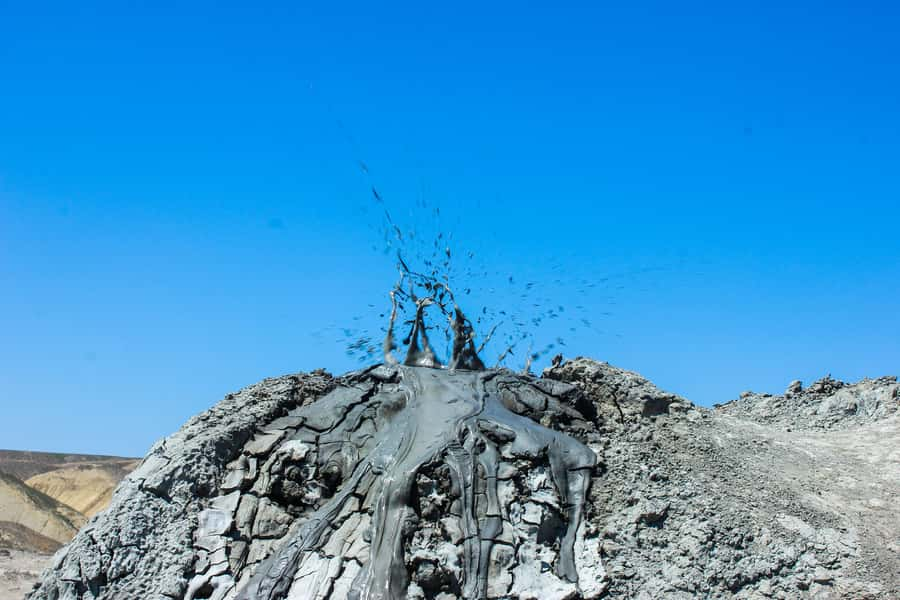
Azerbaijan is known for its large number of mud volcanoes. The country has about 350 of the world’s roughly 800 mud volcanoes, and these formations appeared in the area around 25 million years ago.
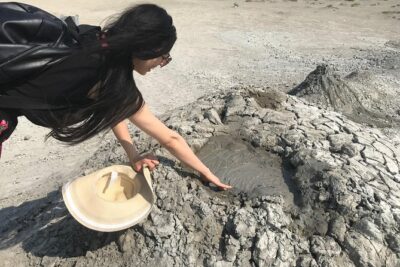
The visit lasts about 40 minutes. You climb the active mud volcanoes and look closely at their craters, where the surface can feel raw and unusual compared with the carefully presented museum and temple.
The mud has practical value as well as visual interest. It is used as raw material in chemical and construction industries, and volcanic clay and mud are also associated with treatments for skin conditions, rheumatism, and nervous system ailments. The tour presents these medicinal properties as part of the site’s story, but you should not treat the visit as medical advice or a spa treatment.
The entrance fee is listed separately at $9. That is a notable addition when you are calculating the day’s cost. You are paying for an unusual natural stop, but the visit is brief, and conditions can be dusty or exposed.
I would see this as a good fit for curious adults, photographers, and anyone who enjoys geology. If you prefer grand ruins or long museum visits, the mud volcanoes may feel more like a quick curiosity than a main event.
A few more volcano trips around Baku worth a look
- Gobustan-Mud Volcan-Fire Temple and Mountain Tour/Entrance inc
★ 5.0 · 267 reviews - Baku:Gobustan Mud Volcanoes Temple & Entry tickets included
★ 4.8 · 178 reviews - Baku: Gobustan/Absheron guided tour with lunch and tickets
★ 4.8 · 158 reviews - Baku: Half-Day Gobustan and Mud Volcanoes Tour with Entry
★ 4.7 · 144 reviews
Lunch in Baku: a needed pause between sites
After the first part of the day, the tour returns to central Baku for lunch. Lunch is not included, so you should budget for it separately.
The break matters because the day mixes driving, walking, sun, and several information-heavy stops. It gives you time to sit down before the afternoon visits to Ateshgah and Yanardag.
The exact restaurant and meal are not specified, so do not book this expecting a particular menu or dining experience. Think of lunch as an independent expense and a practical rest stop rather than a featured part of the tour.
Ateshgah Fire Temple and the story of sacred flame
Ateshgah, often called the Fire Temple of Baku, brings the tour into Azerbaijan’s long connection with fire. The site was used as both a Hindu and Zoroastrian place of worship, and the first mention of the temple dates to the seventh century AD.
You walk through the temple complex and its cells, where fire worshippers once stayed. Historical exhibits found during archaeological work help explain the site’s religious use and its links beyond Azerbaijan.
The temple is especially valuable after Gobustan because it shows a different kind of evidence. Gobustan preserves images carved into stone. Ateshgah gives you a built religious site, rooms, exhibits, and a more organized setting for understanding belief and ritual.
The one-hour guided visit should give you enough time to see the complex without turning it into a rushed photo stop. Ask your guide to explain the relationship between Zoroastrianism and Hindu worship at the temple. That connection is one of the most interesting parts of the visit.
The entrance fee for Ateshgah and Yanardag is listed together at $9. Since both are separate from the tour price, keep the additional cost in mind when comparing this experience with other day trips.
Yanardag: a hillside fire that still burns
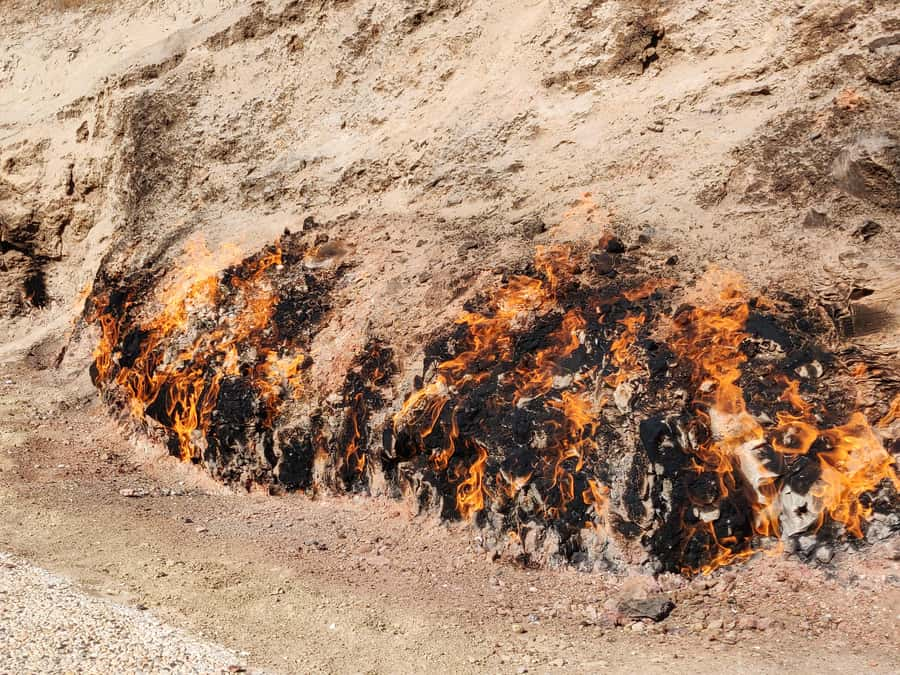
The final major stop is Yanardag, meaning Burning Mountain. It is a natural gas flame on a hillside of the Absheron Peninsula near Baku, and it has burned continuously since ancient times.
Yanardag is a simple sight, but it has strong visual impact. Flames emerge from the ground rather than from a lamp, altar, or controlled display. That makes a useful contrast with Ateshgah, where fire is connected to worship and human-built space.
Pilgrims from Iran and India still come to the site because of its sacred meaning. Your guide can help separate the natural explanation from the religious importance, which makes the stop more than a quick look at a flame.
The visit lasts around 40 minutes. That is enough time to see the burning hillside and hear the background, but not long enough to become a full afternoon activity. As with the mud volcanoes, sunscreen and water are worth carrying.
Yanardag works best as the final stop because it brings the day’s fire theme into the present. You begin with ancient carvings, move through religious history, and finish with a natural phenomenon that remains active today.
Guide quality can shape the whole day
Because the sights are spread out and cover several subjects, the guide matters a great deal. The tour is offered in English with an accredited guide, and the strongest praise has gone to the quality of the guiding.
Mushfiq is specifically praised for his command of Azerbaijan’s history and his enthusiasm. He also helped one group find good dinner options in Baku’s Old Town after the formal tour ended. That kind of extra local help can be valuable, especially if this is your first evening in the city.
Another guide was praised for clear English and for keeping the day to the planned schedule. That is important here. With a nine-hour route, poor timing could leave you rushing through Gobustan or arriving at the later stops tired and short on time.
Guide assignments can change, so you should not assume Mushfiq will lead every departure. Still, the available feedback points to guiding as one of this experience’s strongest features.
What the $99 price really covers
At $99 per person, the tour is not a budget sightseeing bus. You are paying for a private group, private transportation, hotel or other pickup in Baku, an English guide, and visits to four major sites.
The listed entrance costs add about $24:
- Gobustan: $6
- Mud volcanoes: $9
- Ateshgah and Yanardag: $9
That brings the known total to about $123 per person before lunch, personal expenses, or any changes in ticket pricing. It is best to compare tours using that fuller figure, not the headline price alone.
The value is strongest if you want convenience and context. Arranging Gobustan, the mud volcanoes, Ateshgah, and Yanardag independently would require transport planning across the Absheron Peninsula. A private vehicle also gives you a quieter setting than a large shared group.
The value is weaker if you are mainly interested in Baku’s city center or dislike long full-day outings. This tour spends much of the day outside the city, and some stops are short. You are paying for the combination of sites and transport rather than extended time at one attraction.
Practical advice for a smoother day
Wear shoes that can handle outdoor ground, since Gobustan and the mud volcanoes are not purely indoor visits. Bring water, sunscreen, and a camera, as the supplied advice recommends.
You should also prepare for a full day with several changes of subject. Gobustan requires attention to archaeology, Ateshgah calls for religious context, and Yanardag and the mud volcanoes are more physical and geological.
The tour allows free cancellation up to 24 hours before departure, and you can reserve while paying later. Those terms are useful if your Baku schedule is still changing, but they do not alter the extra cost of entrance tickets or lunch.
Pickup and drop-off are available in Baku, with the listed end point at Fountain Square. The tour is not suitable for wheelchair users, so mobility needs should be considered before booking.
Who should book this tour?
I would recommend it to you if you want a broad introduction to Azerbaijan beyond Baku’s central streets. It suits first-time visitors who prefer a guide to explain what they are seeing, photographers looking for unusual outdoor subjects, and history fans who enjoy moving between archaeology, religion, and geology.
It is also a good choice for a private group that values a flexible, less crowded ride. The guide’s role is important, and the praise for Mushfiq and the clear English guiding suggests that the educational side can be as worthwhile as the sightseeing.
I would hesitate if you want a relaxed day with little walking, a low all-in price, or a single major attraction explored in depth. The $99 fee becomes roughly $123 before lunch, the schedule is long, and the outdoor sites can be exposed.
If you can accept those limits, this is one of the more useful day trips from Baku. Gobustan gives you the ancient human story, Ateshgah explains sacred fire, and Yanardag shows that the region’s connection with flame is still visible today.
FAQ
How long does the Baku tour last?
The tour lasts nine hours, including the visits and transportation from Baku.
What language is the tour conducted in?
The tour includes a live English-speaking guide.
Is this a private tour?
Yes. The experience is arranged for a private group and includes private transportation.
Are entrance tickets included in the $99 price?
No. Gobustan is listed at $6, the mud volcanoes at $9, and Ateshgah and Yanardag together at $9.
Is lunch included?
No. Lunch is not included, and the tour takes a lunch break in central Baku.
What should I bring?
Bring comfortable shoes, water, sunscreen, and a camera.
Is the tour suitable for wheelchair users?
No. The experience is not suitable for wheelchair users.
Just added around Baku
- Gobustan Rock Art & Mud Volcanoes Tour★ 5.0 · 36 reviews
- Small-Group Day Trip to Gobustan, Mud Volcanoes, Ateshgah & Yanar Dagh★ 4.5 · 3 reviews
- Qobustan rock arts, Mud Volcanoes, Fire temple Ateshgah, Yanardag★ 5.0 · 30 reviews
- Gobustan and Mud volcanoes PRIVATE TOUR★ 4.5 · 12 reviews
- Mud Volcanoes & Gobustan Private Tour★ 5.0 · 9 reviews
- Gobustan National Park & Mud Volcanoes Tour★ 5.0 · 17 reviews
- Gobustan and Mud volcanoe GROUP TOUR★ 5.0 · 13 reviews
- Gobustan Rock Art and Mud volcanoes PRIVATE TOUR★ 5.0 · 9 reviews
Gobustan Mud Volcano Tours, compared.
BEST Gobustan, Volcanoes & Absheron Fire Tour (Group or Private)
Our review of it →
Gobustan, Volcanoes, Fire Temple and Yanardag Day Trip
Our review of it →
Gobustan-Mud Volcan-Fire Temple and Mountain Tour/Entrance inc
Our review of it →

Tour to the Mud Volcano in Cartagena with Lunch
Our review of it →
Browse the lists this tour appears in