
REVIEW · ROTORUA
Rotorua: Hell’s Gate Geothermal Walk
The earth is boiling beneath your feet. Hell’s Gate gives you a close look at Rotorua’s most active geothermal area, with steaming fumaroles, bubbling mud, hot water lakes, sulfur deposits, and a bush-lined path that reaches a dramatic waterfall. I especially like the excellent self-guided map and the chance to add a local guide who brings the geology and Māori connections to life. The included Māori carving activity is another welcome extra. The main drawback is the strong sulfur smell, which can be unpleasant, and the walking route is not suitable for people with mobility impairments.
This is a good choice if you want a compact geothermal experience without spending half a day at a large attraction. The walk takes about an hour, although the guided version runs for around 1.5 hours. I would allow extra time for the carving activity, the mud foot pool if available, and a coffee at the on-site cafe.
Key points before you go
- New Zealand’s largest active mud volcano: The bubbling mud and steaming ground are the main event, not just background scenery.
- A 2-kilometre self-guided walk: The route is easy to follow with the supplied map and descriptions.
- Guided walks at 10:30 AM and 2:30 PM: These are worth considering if you want more context about geology, plants, culture, and local history.
- Sulfur smell is part of the experience: Expect a strong rotten-egg odor, especially near active pools.
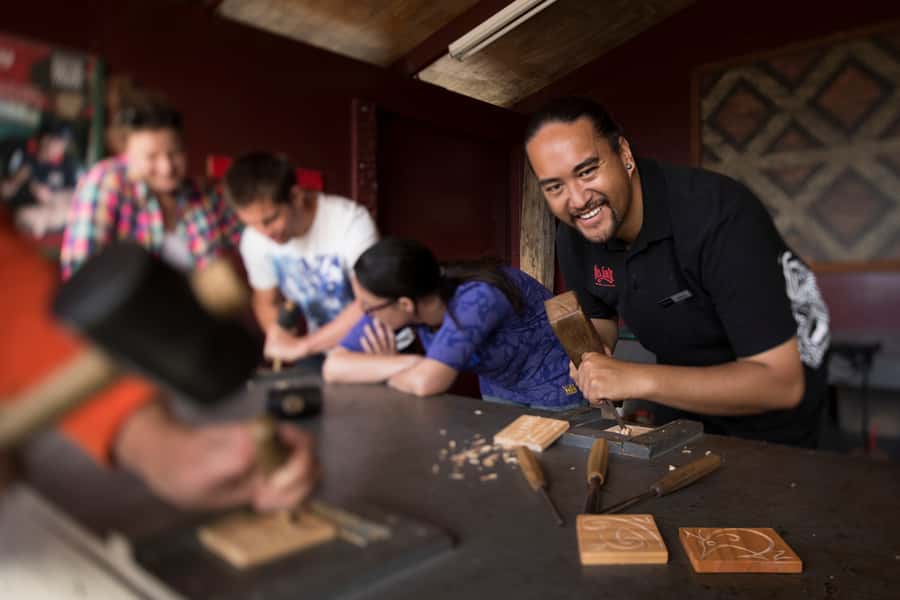
- Māori carving adds hands-on value: The activity is included, subject to availability, and children must be at least 12 to take part.
- Rain can improve the mood: Hell’s Gate operates in all weather, and mist and rain can make the hot ground feel even more dramatic.
Reaching Hell’s Gate from Rotorua
Hell’s Gate is about a 15-minute drive from central Rotorua. From town, take State Highway 30 east. About five minutes beyond Rotorua Airport, turn toward Whakatane, then continue for roughly 3 kilometres to the reserve.
That short drive makes this an easy addition to a Rotorua day. You do not need to give the attraction a full morning or afternoon unless you want to combine the walk with the other activities on site. The experience is also simple to fit around a Rotorua itinerary, since the geothermal route itself takes about one hour.
At the entrance, you receive a map for the walk. You can set off independently or join an English-speaking guide if a walk is running. The guided departures are scheduled for 10:30 AM and 2:30 PM, so check the timing before you arrive. The guided option is not simply a matter of following someone around. It gives you a better explanation of what you are seeing and helps turn a collection of pools into a story about volcanic ground, plant life, Māori culture, and changing water temperatures.
More Geothermal Parks and Geysers in Rotorua:
- Rotorua: Wai-O-Tapu Geothermal Park Entry Ticket
★ 4.6 · 2,601 reviews - Rotorua: Hell’s Gate Outdoor Mud Spa & Guided Walk
★ 4.7 · 1,140 reviews - Rotorua Lake: Deluxe Lake Spa Geothermal Hot Spring Bathing
★ 4.5 · 302 reviews
The first steps into the geothermal field
The walk leads you into the heart of an active geothermic area. This is not a polished garden with a few tame hot pools. You see steam rising from the ground, boiling water, mud in motion, and deposits left behind by mineral-rich water.
The supplied map is a real help. Each feature has an explanation, so you can stop, read, and move at your own pace. I like this format for people who prefer quiet exploring or who have limited time. You can pause for photographs without holding up a group, and you can focus on the features that interest you most.
The route covers about 2 kilometres, but it is described as an easy walk for many people. Wear comfortable shoes, since you are walking outdoors around uneven geothermal ground. The reserve is not suitable for people with mobility impairments, so check the route carefully before booking if you need accessible paths or seating.
Bubbling mud, fumaroles, and hot water lakes
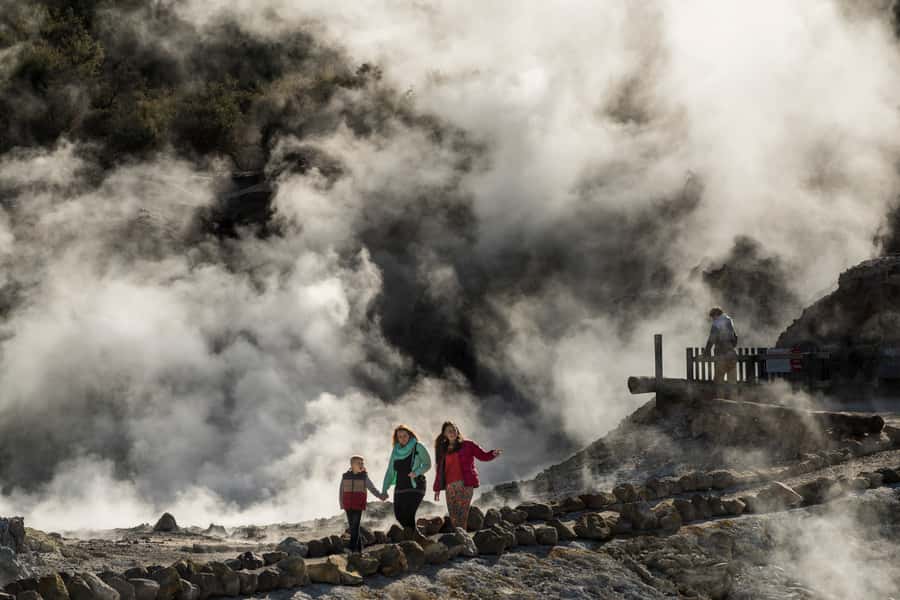
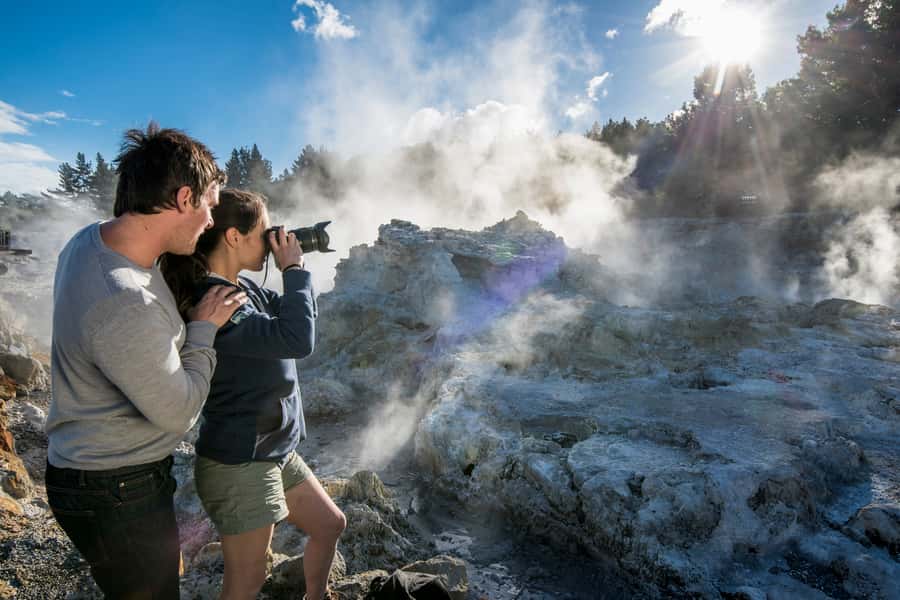
The geothermal features change as you move through the reserve. Steam escapes from fumaroles, mud bubbles and pops, and pools hold water hot enough to demand a respectful distance. Some eruptions reach temperatures above 100 degrees Celsius, so this is a place for careful walking and close attention to marked paths.
The mud volcano is one of the biggest draws. New Zealand’s largest active mud volcano gives the walk a character that differs from a standard geyser visit. You are not simply waiting for one timed eruption. Instead, you watch smaller movements across the ground, with steam, bubbles, and shifting colors providing constant activity.
Hell’s Gate also has hot water lakes, sulfur crystals, and mineral deposits. These details reward a slower pace. The map gives you basic information, but a guide can explain why the pools differ and how plants survive around them.
One practical point is safety. Boiling mud and hot water are close to the walking route, and the setting is genuinely active. Stay on the marked path and do not lean across barriers for a better photograph. One visitor felt that some fences could be higher, which is a useful reminder that this is not a place for careless wandering.
The bush walk and Southern Hemisphere hot waterfall
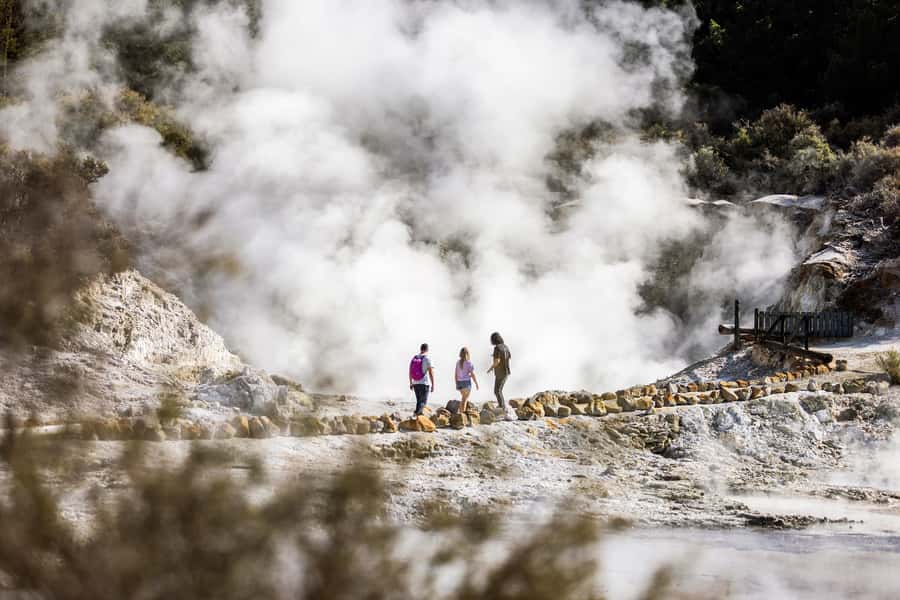
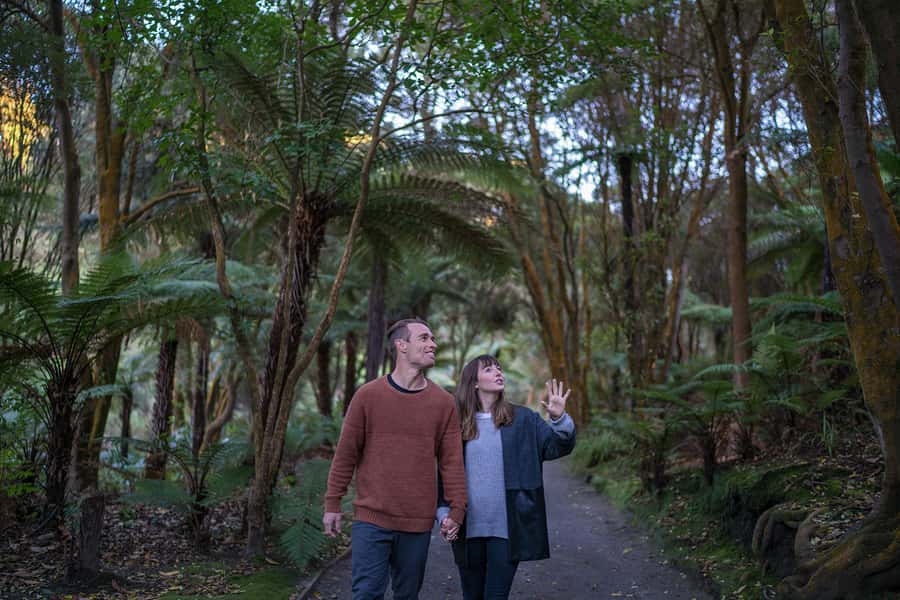
One of the most enjoyable parts of the route is the change from open geothermal ground to a vegetated section and bush walk. The contrast is striking. You move from sulfurous steam and bare mineral deposits into an area with plant life, then continue toward a hot waterfall.
Hell’s Gate is home to what is described as the Southern Hemisphere’s largest hot waterfall. The waterfall gives the visit a strong visual finish, since it combines moving water with the steam and mineral character found throughout the reserve. It also helps show that geothermal activity is not limited to bubbling pools.
The plant life is worth noticing. A guide can explain how vegetation manages to grow beside hot ground and sulfur-rich areas. This is one reason I favor the guided option if you have the time. Without some explanation, you may see an unusual plant community but miss why it matters.
The reserve also includes examples of land coral, another feature that helps make the walk more than a succession of hot pools. You can follow the route independently, but the guided walk adds meaning to details that might otherwise pass unnoticed.
A few more volcano trips around Rotorua worth a look
- Rotorua Hiking: Mt Tarawera Guided Volcanic Crater Experience
★ 5.0 · 283 reviews - Volcanic Valley Self Guided Walking and Hiking at Waimangu
★ 4.5 · 248 reviews - Rotorua: Waimangu Volcanic Valley Entry Ticket
★ 4.8 · 129 reviews - Rotorua: Mount Tarawera Volcanic Crater Half-Day Guided Walk
★ 4.8 · 121 reviews
Should you choose the guided walk or the map?
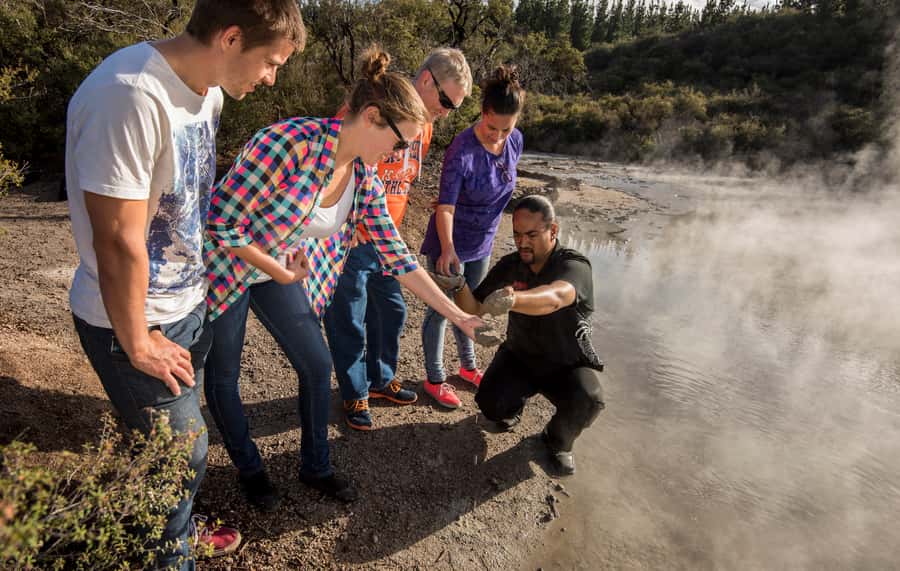
The self-guided version is perfectly workable. The map and descriptions give you enough information to identify the main geothermal features, and several people have found the 2-kilometre route easy to follow. It is the better choice if your schedule is tight or if you like to stop for photos without a group.
The guide is the stronger choice for first-time visitors who want context. Guides explain the geology, the plants, the sulfur, and the connection between culture and place. The best feedback has focused on guides who are warm, funny, and good storytellers. T, Luke, and Liam were singled out for being engaging, entertaining, and well informed, although guide availability can change.
The scheduled departures matter. If you arrive outside 10:30 AM or 2:30 PM, you may need to walk independently. The guided walk is also subject to availability, so do not assume that every admission includes a guaranteed guide.
I would choose the guided walk when possible, especially if Hell’s Gate is your main geothermal visit in Rotorua. If you have already seen several geothermal areas and mainly want photographs, the self-guided route may be enough.
Māori carving and the extras on site
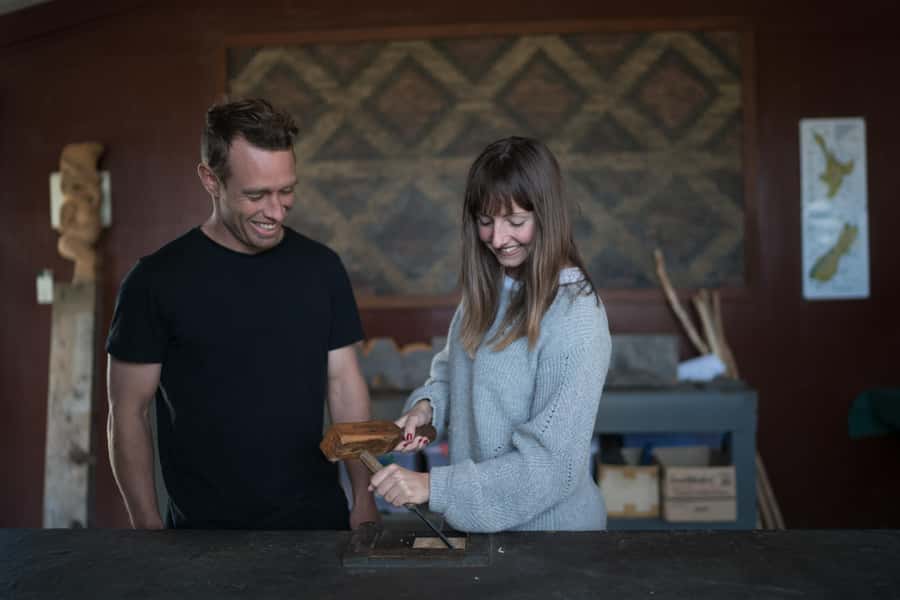
The Māori carving activity is a useful addition because it gives you something to do with your hands after looking at geothermal features. It is included when available, and the activity helps connect the visit with Māori culture rather than treating the reserve as geology alone.
Children must be at least 12 years old to participate in the carving. The carving activity, guided walk, and mud foot pool are all subject to availability, so consider them pleasant additions rather than guaranteed parts of the visit.
The mud foot pool is another possible extra. The supplied information does not guarantee access every time, so ask on arrival if you want to use it. If you are wearing jewelry, remove it before spending time around sulfur fumes and residue. One visitor found that gold and silver pieces became badly tarnished, a small but useful warning that is easy to miss.
The cafe provides a practical ending. A hot drink after a damp walk can be welcome, especially in rainy weather. Food options are available, so you can pause here rather than rushing straight back to Rotorua.
Rain, sulfur, and what to pack
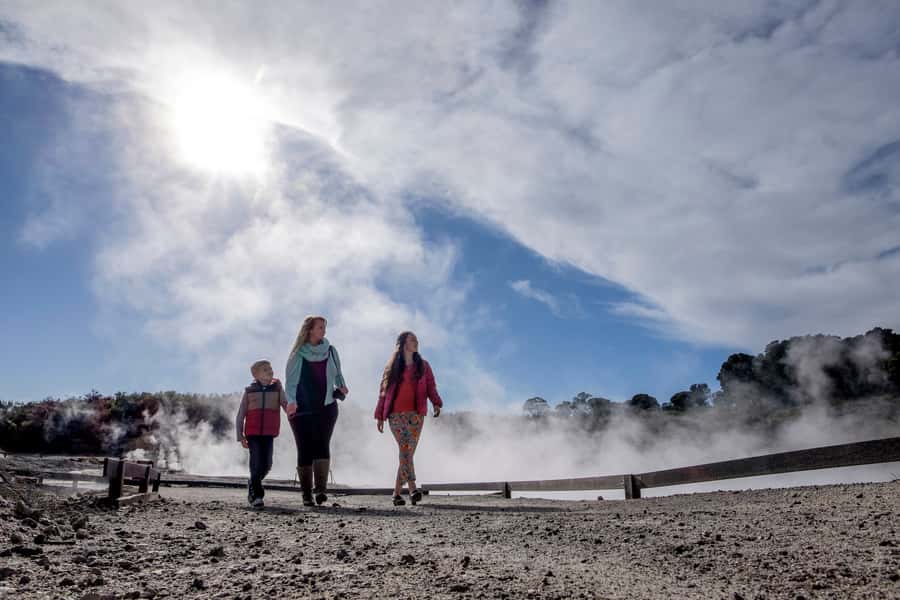
Hell’s Gate is an all-weather activity. Rain does not close the experience, and wet conditions can add mist and atmosphere to the steaming pools. If you visit in poor weather, bring weather-appropriate clothing and expect the walk to feel more exposed in places.
Pack:
- Comfortable walking shoes
- Sunglasses
- Sunscreen
- Water
- Clothing suitable for the forecast
Rain capes can be purchased on site. I would bring a waterproof layer if rain is likely, rather than relying only on a disposable cape.
The sulfur odor is strong. Think rotten eggs, particularly near active pools. Most people can tolerate it, but very young children may find the smell difficult. If you are sensitive to strong odors, keep that in mind before paying for admission.
Avoid smoking and do not bring a drone. The geothermal setting requires care, and the restrictions are sensible.
Is the $26 price good value?
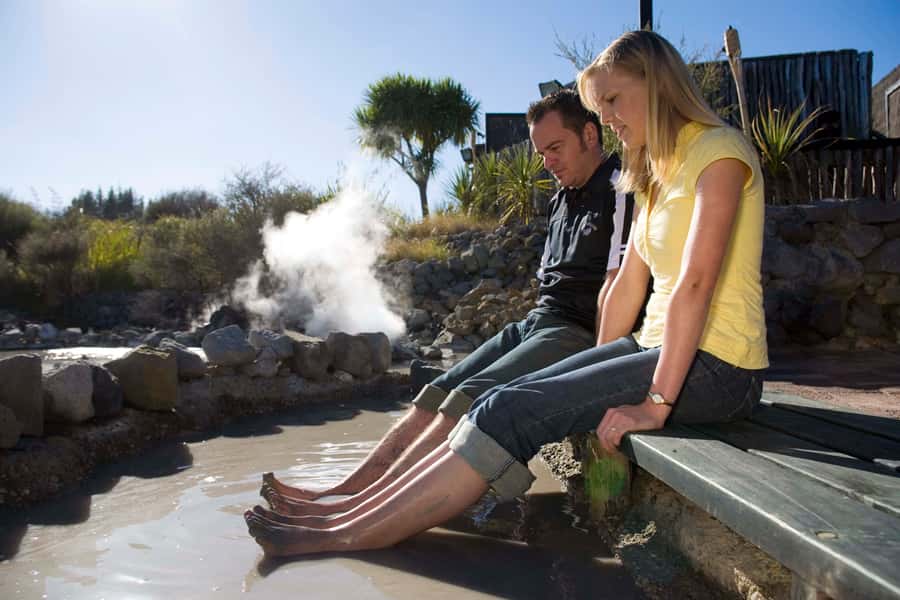
At $26 per person, Hell’s Gate is reasonably priced for a one-hour geothermal walk, especially when you consider the supplied map and the possibility of a guided walk. The value is strongest if you use the whole visit: take your time on the route, ask about the guided departure, and see if the Māori carving or mud foot pool is available.
The price is less compelling if you expect a long guided excursion with every extra guaranteed. The advertised walking time is about one hour, while the included guided tour is listed at 1.5 hours. The map-led route is the core product, and the guide, carving, and mud foot pool depend on availability.
For a short Rotorua outing, the cost works well. You get active mud, hot lakes, sulfur deposits, a major hot waterfall, and a setting that feels very different from an ordinary park. I would not judge the value by the number of hours alone. The quality comes from seeing several geothermal features in one compact circuit.
Who will enjoy this walk most?
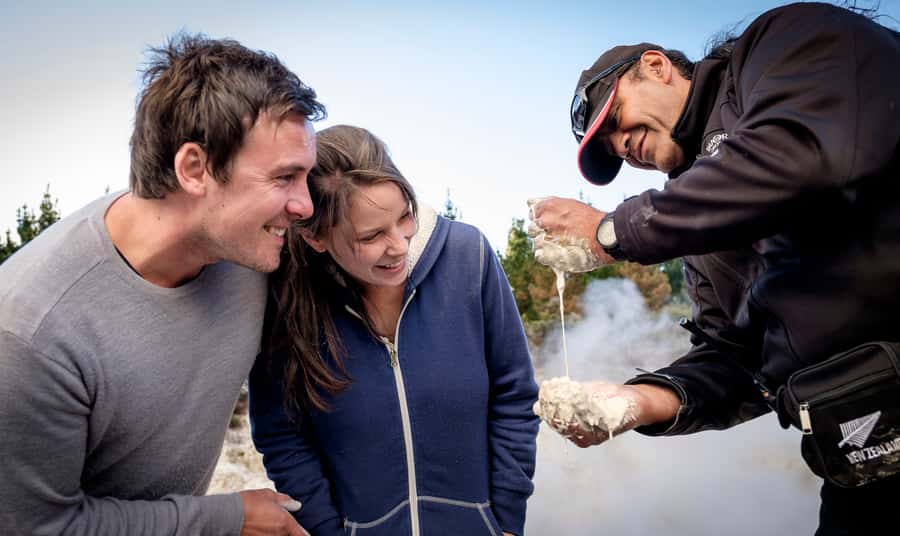
I would recommend Hell’s Gate to adults, couples, families with older children, and anyone who wants a manageable geothermal visit close to Rotorua. Children can walk the route, but the sulfur smell may be hard for very young children, and the carving activity is limited to ages 12 and up.
It suits people who like natural features with a strong sense of place. The experience is not a thrill ride, and it is not built around a single geyser eruption. You spend your time watching mud bubble, steam rise, water move, and minerals collect.
It is less suitable if you need step-free access, dislike strong smells, or want a fully scheduled tour with no independent walking. You should also allow time for the drive from Rotorua and check the guided walk schedule before setting out.
My final booking advice
I would book Hell’s Gate if you want a short, unusual geothermal walk with the option of a guide and a Māori carving activity. The mud volcano, hot waterfall, bush section, and active pools give it more variety than a simple hot-pool stop.
Choose the 10:30 AM or 2:30 PM guided departure if you want the best explanation of the plants, geology, and cultural setting. Choose the self-guided route if you are pressed for time or prefer moving at your own speed. Bring comfortable shoes, protect your jewelry, expect sulfur, and treat the barriers seriously.
This is good value for a compact Rotorua experience, but the extras are not guaranteed. If that suits your plans, Hell’s Gate is an easy choice for a close look at New Zealand’s restless volcanic ground.
FAQ
How long does the Hell’s Gate geothermal walk take?
The geothermal walking route takes about one hour. The guided tour is listed as lasting 1.5 hours.
How far is Hell’s Gate from central Rotorua?
Hell’s Gate is about a 15-minute drive from central Rotorua. Travel east on SH30, turn toward Whakatane about five minutes past the airport, then continue for 3 kilometres.
Are guided tours available?
Guided walks are available in English at 10:30 AM and 2:30 PM, subject to availability. You can also complete the route independently with the supplied map.
What geothermal features can I see?
You can see steaming fumaroles, hot water lakes, sulfur crystals and deposits, boiling pools, erupting water, a mud volcano, land coral, and a hot waterfall.
Is the walk suitable for people with mobility impairments?
The activity is not suitable for people with mobility impairments.
Can children take part in the Māori carving activity?
Children must be at least 12 years old to participate in the carving activity.
What should I bring to Hell’s Gate?
Bring comfortable shoes, sunglasses, sunscreen, water, and clothing suited to the weather. Rain capes are available to buy on site.
Just added around Rotorua
- Whaka Geothermal Trails Self-Guided Tour★ 3.5 · 44 reviews
- Mt. Tarawera Volcano Scenic Floatplane Tour from Rotorua★ 5.0 · 42 reviews
- Helicopter White Island / Mount Tarawera ‘Volcanic Extremes’★ 5.0 · 2 reviews
- Mt Tarawera Helicopter Tour with Volcano Landing★ 5.0 · 40 reviews
- Mount Tarawera Volcanic Adventure by Helicopter★ 5.0 · 11 reviews
- Polynesian Spa Rotorua: Family Hot Pools and Freshwater Pool★ 3.5 · 14 reviews
- From Rotorua WAIMANGU VOLCANIC VALLEY Half Day Tour★ 3.5 · 3 reviews
- Half-Day Tour – Ex Rotorua: WAI-O-TAPU Thermal Wonderland★ 4.0 · 8 reviews
Geothermal Parks & Geysers, compared.

Rotorua Lake: Deluxe Lake Spa Geothermal Hot Spring Bathing
Our review of it →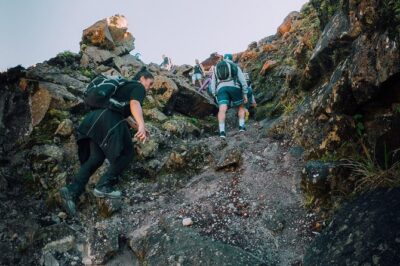
Rotorua Hiking: Mt Tarawera Guided Volcanic Crater Experience
Our review of it →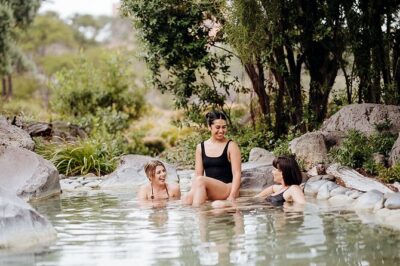
Polynesian Spa Rotorua: Deluxe Lake Spa Hot Spring Bathing
Our review of it →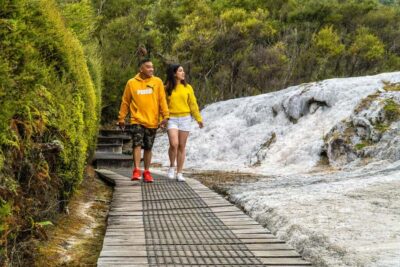
Taupo: Orakei Korako Geothermal Park and Cave Entry Ticket
Our review of it →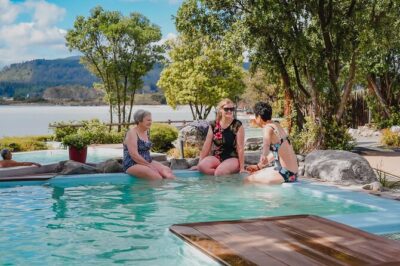
Polynesian Spa Rotorua: Pavilion (12+ yrs) Hot Pool Bathing
Our review of it →
Rotorua Geothermal Living Maori Village Tour Whakarewarewa 6.5hours Tour
Our review of it →Browse the lists this tour appears in