
REVIEW · BAKU
Baku: Gobustan/Absheron guided tour with lunch and tickets
Ancient stone, bubbling mud, and eternal fire await. This long day from Baku packs in Gobustan’s prehistoric carvings and Azerbaijan’s famous mud volcanoes, then adds the First Oil Well, Bibi-Heybat Mosque, Yanar Dag, and Ateshgah Fire Temple. I especially like the wide mix of ancient culture, natural oddities, and modern Azerbaijani history. The local lunch is another useful touch on a day with many stops.
The main caution is the pace. You cover a lot of ground in about 450 minutes, and some stops feel brief. The mud volcano visit is the star for many people, yet the time there may be limited. Bus space can also be tight, especially when a larger group is traveling.
Key points to know before booking
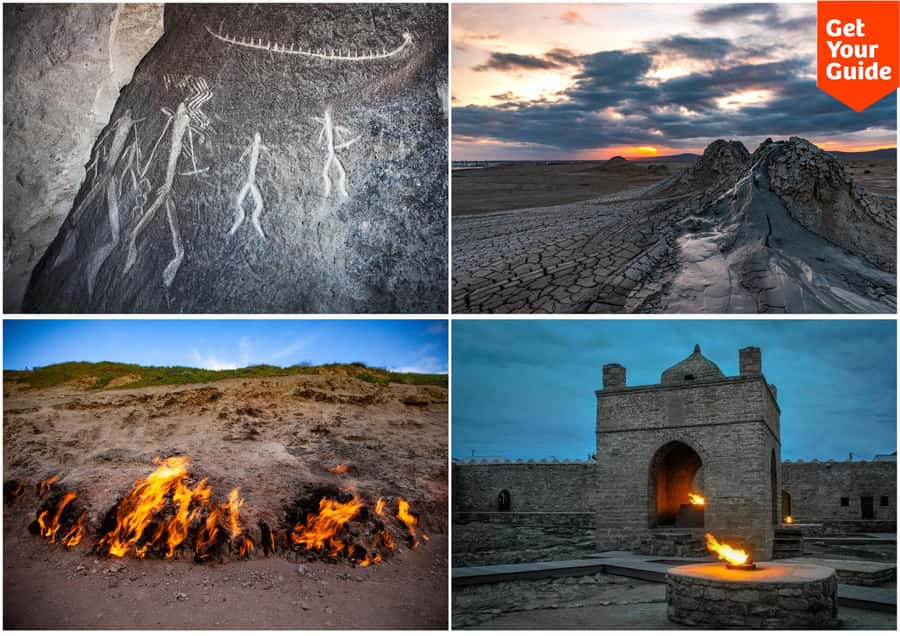
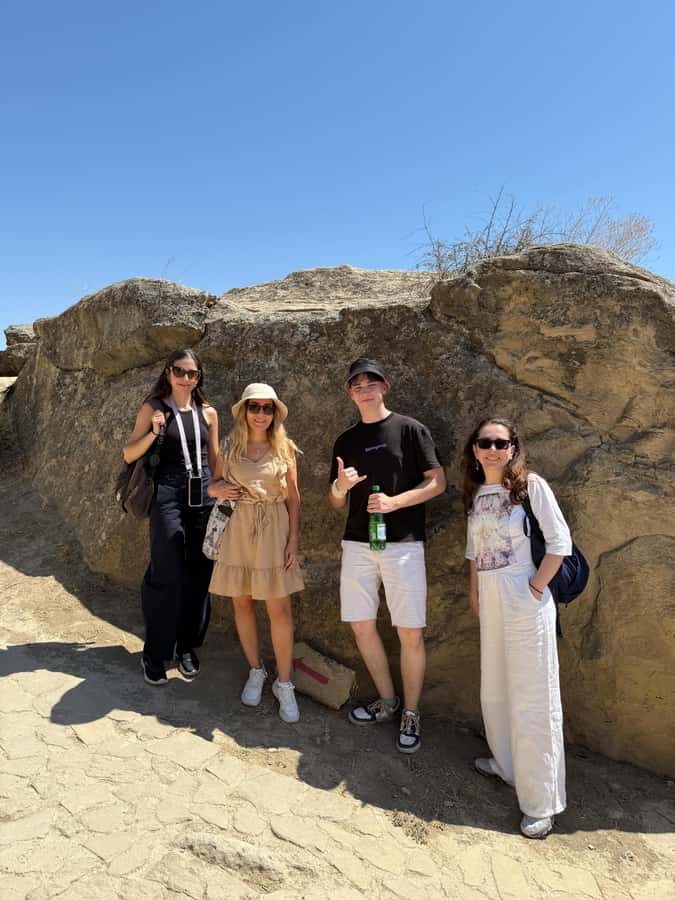
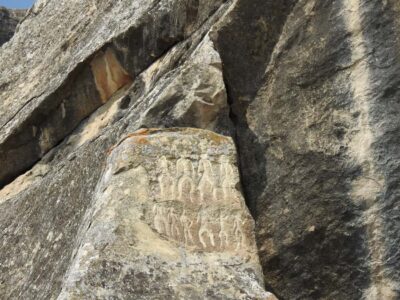
- Gobustan gives you prehistoric Azerbaijan: See petroglyphs made thousands of years ago at an open-air archaeological site.
- The mud volcanoes require a separate vehicle: Rough roads mean a jeep or SUV takes you into the bubbling volcanic area.
- The tour links two very different fire sites: Yanar Dag is a natural gas flame, while Ateshgah is a former place of fire worship.
- Guides are a major strength: Guides such as Murad, Mahabat, Javid, Seymur, Adil, and Vahid have been praised for clear explanations, humor, and friendly care.
- The day is packed rather than leisurely: You get a broad introduction to the Absheron Peninsula, but not much spare time at each attraction.
- Check the option carefully: Pickup, entrance fees, and lunch depend on the package you choose, despite the low advertised starting price.
What this full-day Baku outing is really like
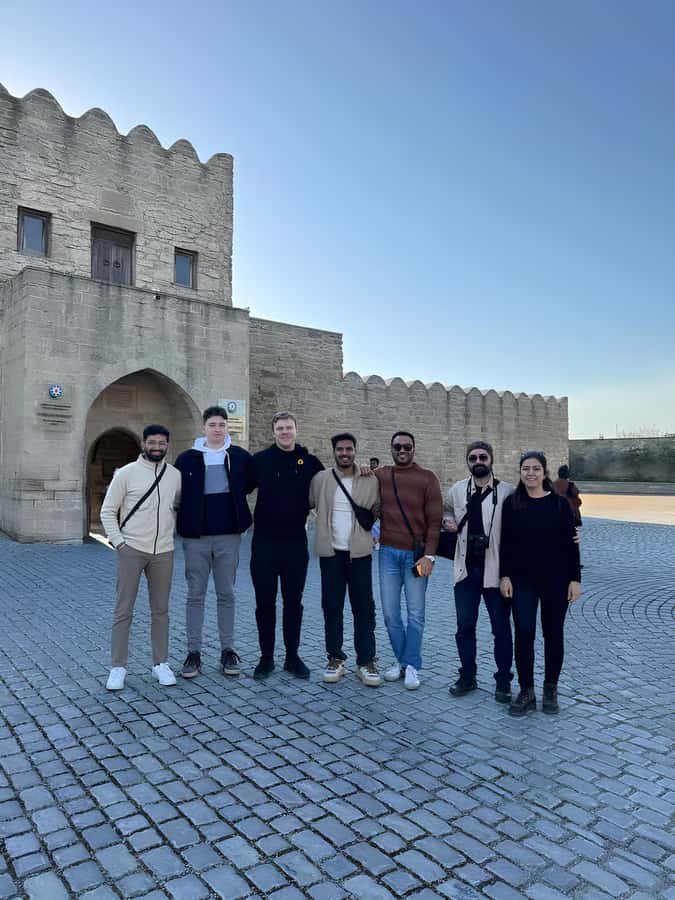
This is not a quiet countryside day with one main sight. It is a fast-moving survey of the Absheron Peninsula, the dry region around Baku where ancient settlements, oil production, unusual geology, and fire worship all meet.
You travel by air-conditioned coach for most of the day. A specialized jeep or SUV handles the rough road to the mud volcanoes. The route includes guided walks, short photo stops, a sit-down lunch, and several stretches on the road. You should think of it as a full introduction to the area, not a slow visit built around long museum time.
The guide can make or break the day. The strongest feedback centers on guides who explain the past in plain language, answer questions, and keep the group moving without making the day feel stiff. Murad receives repeated praise for mixing history with humor. Mahabat, Javid, Seymur, Adil, and Vahid are also singled out for being warm, active, and well prepared.
The tour is offered in English and Russian. If the group is mixed, explanations may take longer, and English conversation can receive less attention when most of the group speaks Russian. That is worth keeping in mind if you want a highly detailed English-only tour.
More Gobustan Mud Volcano Tours in Baku:
- Baku: Gobustan, Mud Volcano, Fire Mount, Temple Lunch Entry
★ 4.9 · 3,246 reviews - BEST Gobustan, Volcanoes & Absheron Fire Tour (Group or Private)
★ 5.0 · 1,254 reviews - Baku: Gobustan, Volcanoes, Fire Temple and Yanardag Day Trip
★ 4.7 · 433 reviews
Bibi-Heybat Mosque and the first glimpse of old Azerbaijan
The day begins with pickup at a selected central location, depending on the package. Listed meeting points include areas near Bayil, the Double Gates, the seafront, Sahil Metro, Winter Park, Nizami Street, and other central parts of Baku. Optional pickup and drop-off are available with some choices.
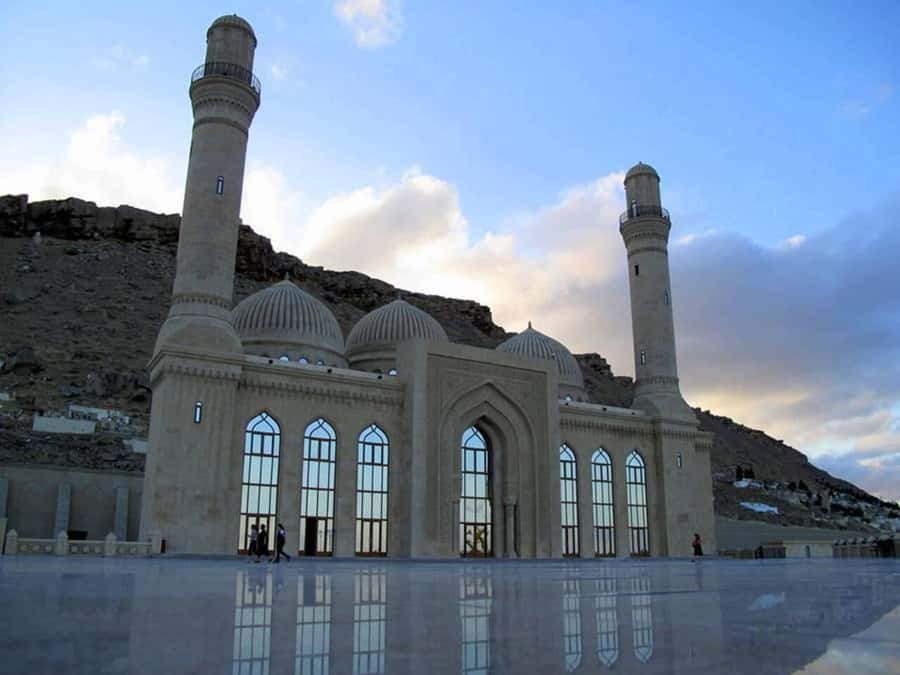
After a short ride, you visit Bibi-Heybat Mosque for about 25 minutes. The mosque is a reconstruction of a 13th-century religious site, combining traditional Islamic forms with newer construction. It is still a place of worship, so modest clothing and respectful behavior make sense.
This is a good opening stop because it gives you cultural context before the more unusual sights begin. The short visit also shows the tour’s basic rhythm: you get enough time for a guided look and photographs, but you are not settling in for a long architectural study.
One practical concern is that some people would prefer to use this time elsewhere. A critical opinion of the route suggested shortening the mosque and restaurant stops to allow more time at the mud volcanoes. If your main goal is geology and prehistoric art, the mosque may feel like a useful but secondary addition.
Gobustan’s petroglyphs, where the rocks tell the story
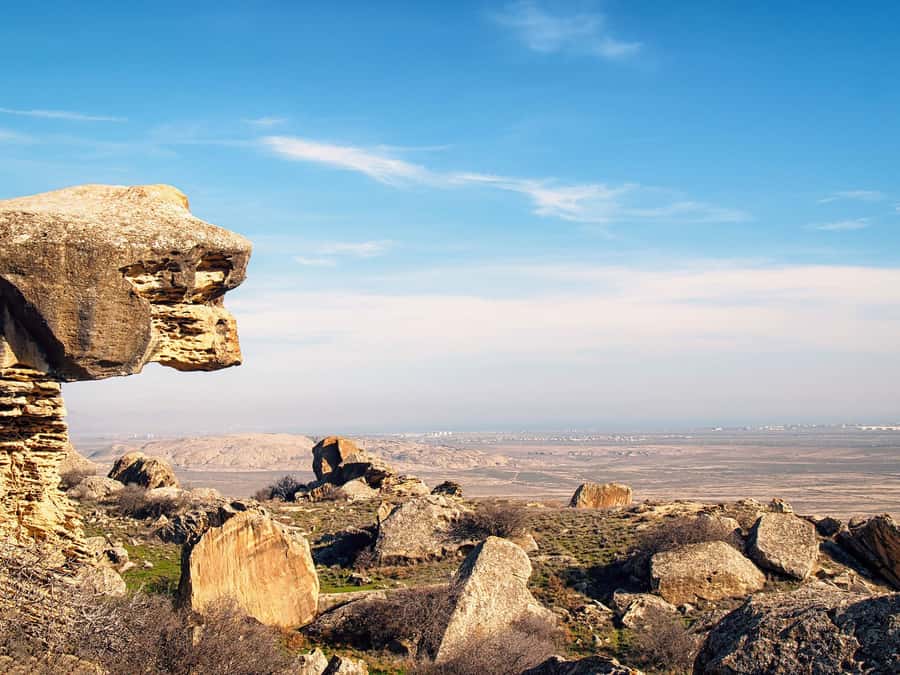
The coach then heads south toward Qobustan and Gobustan National Historical and Artistic Reserve. A short stop in the area provides scenic views and photographs before you enter the Gobustan Rock Art Cultural Landscape.
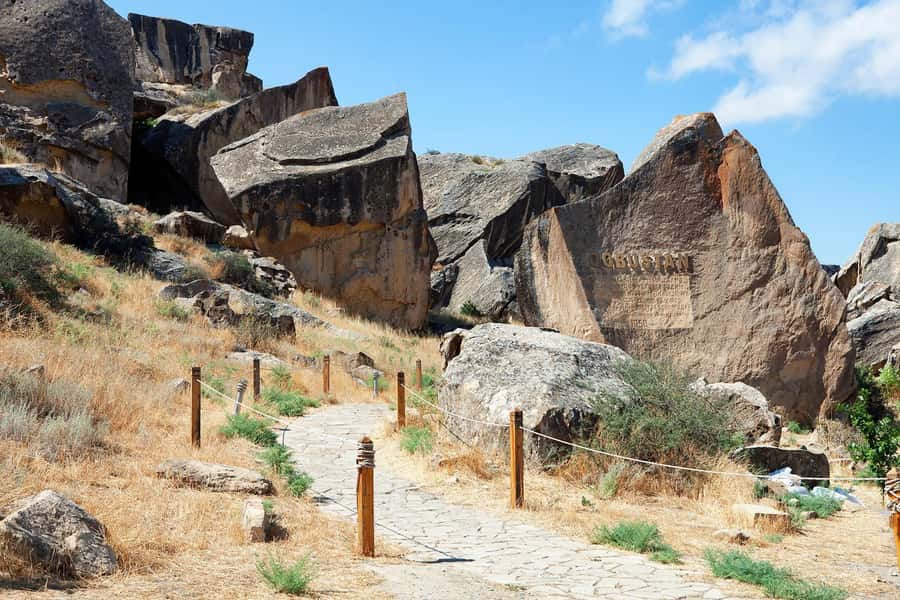
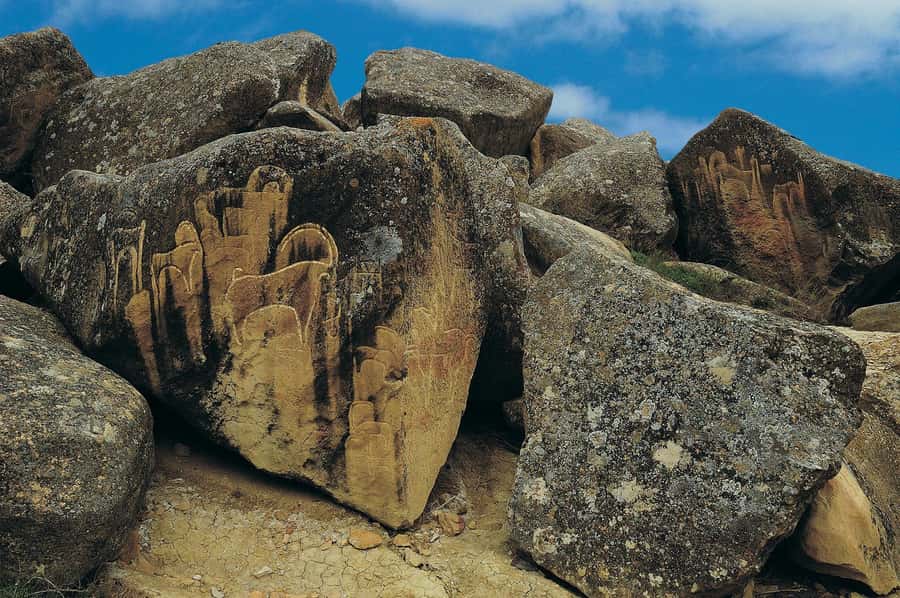
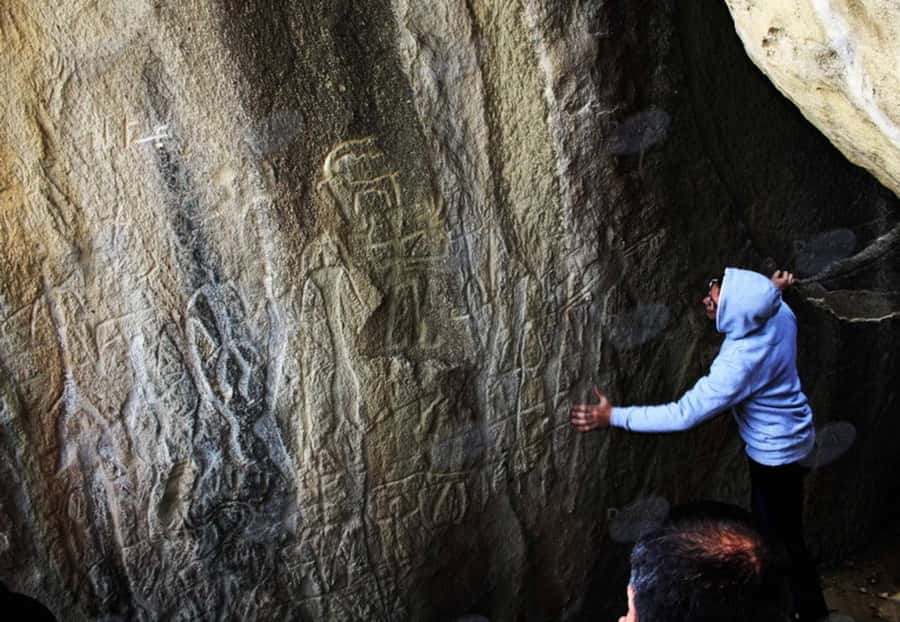
The guided visit lasts about 55 minutes and includes walking over uneven ground. This is the cultural heart of the tour. The petroglyphs show animals, people, hunting scenes, boats, and daily life from ancient communities. The carvings are not polished monuments. They are marks cut into stone, and their power comes from the direct connection they offer with people who lived here thousands of years ago.
Your guide matters greatly at Gobustan. Without explanation, some carvings can look faint or difficult to read. With a good guide, the site becomes a lesson in how early people observed animals, traveled, hunted, and recorded their world.
Bring proper shoes. The ground is not suited to smooth dress shoes, and the sun can be strong. A hat, sunscreen, and water are sensible choices. You will also want a camera, but do not let photographs replace the slower act of looking closely at the rock surfaces.
The time here is respectable for a group visit, though anyone fascinated by archaeology may want longer. The route gives you a clear introduction rather than a detailed study of every panel.
The mud volcano ride is the day’s oddest moment
After Gobustan, you switch to a jeep or SUV for roughly 20 minutes. This is not just a transport detail. The road conditions make a specialized vehicle necessary, and the ride is part of the adventure.
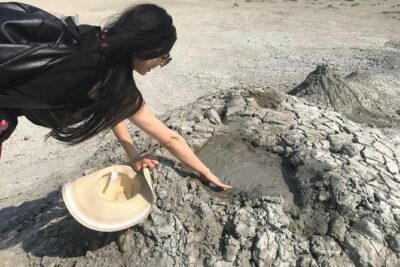
Azerbaijan has nearly half of the world’s mud volcanoes. These are not the fiery cones many people imagine. They bubble and ooze cold mud and gas, creating small eruptions and crusty formations in a dry, open setting. The result is strange, low-key, and very different from the usual sightseeing stop.
You receive about 35 minutes at the mud volcanoes for photographs, a walk, and time to look around on your own. Many people consider this the best part of the outing because it feels unlike anything else near Baku. The jeep ride adds a rough-edged sense of getting somewhere that a normal coach cannot reach.
This is also where the schedule can disappoint. One account describes barely five minutes at the volcanoes, with pressure to leave quickly. Another says the stop should have been longer. The formal timing allows more, but conditions can change with traffic, group size, and the day’s pace. If this sight is your main reason for booking, ask the operator at the start how much time is planned.
There is also a note about being asked to drive the local vehicle and then being pressed for a large tip. You should not feel forced into an activity you did not agree to. Carry some Azerbaijani manat for ordinary small expenses, but remember that tipping is your choice.
A few more volcano trips around Baku worth a look
- Pompeii and Mount Vesuvius Day Trip from Rome with Pizza Lunch
★ 4.5 · 6,151 reviews - From Rome: Pompeii Day Trip with Optional Vesuvius and Lunch
★ 4.6 · 5,067 reviews - Pompeii & Mt.Vesuvius Day Tour from Naples with Pizza Lunch
★ 4.0 · 2,901 reviews - Naples: Pompeii & Mt Vesuvius All-Inclusive Small Group w/ Lunch
★ 4.5 · 2,748 reviews
The First Oil Well and Azerbaijan’s modern identity
The route then returns to a coach for a long stretch, listed at about 70 minutes before lunch. Along the way, the tour includes a visit to the First Oil Well, a site tied to the beginnings of the modern oil industry.
Oil is not a side note in Azerbaijan. It shaped Baku’s wealth, architecture, politics, and place in the world economy. At the well, your guide explains how oil production transformed the region and helped turn Baku into a major industrial center.
This stop works best when your guide connects the physical site to the wider story. The value is less about a dramatic monument and more about understanding why Baku looks and feels the way it does. The city’s grand buildings and modern development make more sense after you see the source of its historic wealth.
The exact position of this stop within the road sequence can vary, so treat the day’s plan as a working route rather than a minute-by-minute promise. The important point is that the tour connects prehistoric Gobustan with the oil era, giving you a broad view of Azerbaijan’s past.
Lunch provides a needed pause
Lunch lasts about one hour at a local restaurant. If your selected package includes it, this is a chance to sit down properly and try Azerbaijani food rather than eating on the move.
The meal is useful for practical reasons as much as culinary ones. By this point, you have walked at Gobustan, ridden over rough ground to the mud volcanoes, and spent time in the sun. A proper break helps you handle the second half of the tour.
The restaurant is part of the fixed group route, so you should not expect to choose from a long list of independent dining options. One positive account describes the lunch venue as good, while another felt the stop lasted too long and suspected that several groups were being served there. That means the meal may be welcome, but the one-hour pause can feel excessive if you would rather spend more time outdoors.
If you have dietary needs, confirm what the selected package and restaurant can provide before booking. The supplied details promise local Azerbaijani cuisine, but they do not specify dishes or special menus.
Yanar Dag, the Burning Mountain
After lunch, the coach heads to Yanar Dag, or the Burning Mountain. The visit lasts about 35 minutes and includes a guided walk and photo time.
Here, natural gas burns from the side of the hill. The flame can look especially striking against the dry surroundings, and it explains why fire has played such a strong part in the region’s religious and cultural story.
Yanar Dag is a natural phenomenon, but it is also a place where expectation matters. It is not a huge mountain covered in fire. The attraction is a persistent flame emerging from the earth, viewed from a designated area. The guide’s explanation gives the sight meaning beyond a quick photograph.
This stop is easy to combine with the fire temple later in the day. First you see a natural flame, then you visit a site where people built a religious setting around fire. That pairing is one of the smartest parts of the route.
Ateshgah Fire Temple and the story of sacred flame
The final major attraction is Ateshgah Fire Temple, reached after about 25 minutes on the coach. The guided visit lasts roughly 40 minutes.
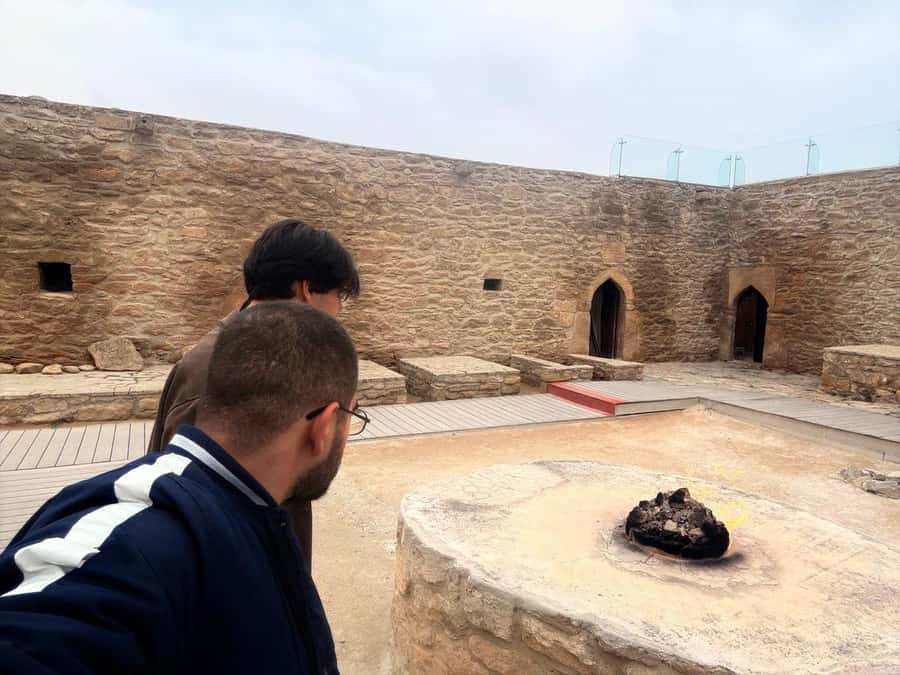
Ateshgah is associated with Zoroastrian fire worship and attracted pilgrims for centuries. The complex has a central fire area surrounded by stone rooms and arches. The site helps explain how natural gas and religious practice became linked in this region.
The temple is not identical to Yanar Dag. At Yanar Dag, nature provides the flame. At Ateshgah, people created a place for worship around the idea of eternal fire. Seeing both on one day gives you a clearer sense of how local geology influenced belief and ritual.
Forty minutes is enough for the main courtyard, photographs, and a guide’s explanation. If you want to read every sign or examine every room at length, the group schedule may feel quick. Still, this is a worthwhile final stop because it gives the day a clear cultural finish instead of ending with geology alone.
Transport, group comfort, and the real pace
The listed duration is 450 minutes, or about seven and a half hours. The route includes several coach transfers, and the final drop-off can be arranged at one of nine central locations, depending on the chosen option.
A small group is available, but you should check which version you are selecting. Vehicle comfort is not guaranteed to be generous. One account describes insufficient legroom and nine people in an eight-seat vehicle, which is an important warning for anyone tall or sensitive to cramped transport.
The driver feedback is generally positive, including praise for safe driving. Still, the long road sections and packed schedule mean you should be prepared for a full day in transit. Wear clothes that allow easy movement, and keep water with you rather than relying on a stop appearing exactly when you want one.
The tour is not suitable for wheelchair users or people with mobility impairments. Gobustan and the mud volcano area include walking over uneven ground, and the vehicle changes add another physical demand.
Is the advertised price good value?
The listed starting price is only $2 per person, which is unusually low for a day including transportation, a guide, lunch, and several admission-based attractions. Read the package details closely before assuming everything is included. Pickup, entrance fees, and lunch depend on the selected option.
Even when the final cost is higher than the headline figure, the route can offer strong value. Independent transport to Gobustan and the mud volcanoes takes planning, and the specialist vehicle for the rough road is not a minor detail. You are also fitting several separate destinations into one day.
The value is strongest if you want breadth. You see prehistoric art, a mosque, oil history, mud volcanoes, natural fire, and a temple without arranging each transfer yourself. The value is weaker if you prefer slow visits, long walks, or the freedom to skip stops that do not interest you.
Free cancellation up to 24 hours before departure and reserve-now, pay-later terms add flexibility. Availability and start times vary, so check those details when you choose the date.
Who should book this Baku day trip?
I would recommend it to a first-time visitor who wants a broad picture of Azerbaijan outside central Baku. It suits curious adults, couples, solo visitors, and anyone who enjoys unusual natural sights mixed with archaeology and culture.
It is especially useful if you have limited time in Baku. Rather than spending a day arranging separate taxis and tickets, you get a structured route and a guide who can explain why each place matters.
I would be more cautious if the mud volcanoes are your single priority. The stop may be shortened, and the day includes several attractions you may consider secondary. I would also hesitate if you dislike long coach rides, tight seating, or a firm group schedule.
FAQ
How long does the tour last?
The advertised duration is 450 minutes, which is about seven and a half hours. The schedule includes road transfers, guided visits, lunch, and the mud volcano vehicle ride.
What languages are available?
Live guiding is available in English and Russian. On mixed-language departures, explanations may be shared between both languages.
Is lunch included?
Lunch is included only with selected booking options. Check the package details before paying.
Are entrance tickets included?
Entrance fees depend on the option you choose. Several attractions require admission, so confirm that your selected package includes the tickets if you want them covered.
How do I reach the mud volcanoes?
A jeep or SUV takes you from the coach route to the mud volcano area because road conditions require a specialized vehicle.
Where can the tour pick up or drop off?
Pickup is optional and depends on the selected package. Listed central locations include Bayil, the Double Gates, the seafront, Old City Hub, Sahil Metro, Ahmad Rajabli, Winter Park, and Nizami Street.
Is the tour suitable for wheelchair users?
No. The activity is not suitable for wheelchair users or people with mobility impairments.
What should I bring?
Bring comfortable shoes, a hat, sunscreen, water, and a camera. These are useful for the outdoor walking and photo stops at Gobustan, the mud volcanoes, and Yanar Dag.
Should you book it?
Book this tour if you want maximum variety in one day and like having a guide connect the dots between ancient carvings, oil, fire, and unusual geology. The strongest reasons are the excellent guide feedback, the rare mud volcano visit, and the chance to see both Yanar Dag and Ateshgah without arranging separate transport.
Skip it if you want a relaxed archaeological day or guaranteed long time at the volcanoes. Before booking, check the exact inclusions, group size, vehicle type, and lunch option. If those details suit you, this is an efficient and memorable way to see the stranger, older, and more elemental side of Baku.
Just added around Baku
- Gobustan Rock Art & Mud Volcanoes Tour★ 5.0 · 36 reviews
- Small-Group Day Trip to Gobustan, Mud Volcanoes, Ateshgah & Yanar Dagh★ 4.5 · 3 reviews
- Qobustan rock arts, Mud Volcanoes, Fire temple Ateshgah, Yanardag★ 5.0 · 30 reviews
- Gobustan National Park & Mud Volcanoes Tour★ 5.0 · 17 reviews
- Gobustan and Mud volcanoes PRIVATE TOUR★ 4.5 · 12 reviews
- Mud Volcanoes & Gobustan Private Tour★ 5.0 · 9 reviews
- Gobustan and Mud volcanoe GROUP TOUR★ 5.0 · 13 reviews
- Gobustan Rock Art and Mud volcanoes PRIVATE TOUR★ 5.0 · 9 reviews
Gobustan Mud Volcano Tours, compared.
BEST Gobustan, Volcanoes & Absheron Fire Tour (Group or Private)
Our review of it →
Gobustan, Volcanoes, Fire Temple and Yanardag Day Trip
Our review of it →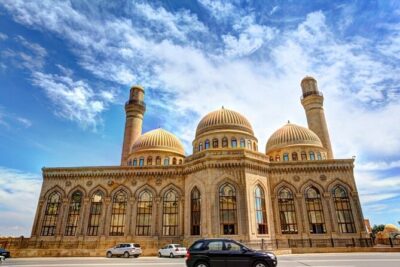
Gobustan-Mud Volcan-Fire Temple and Mountain Tour/Entrance inc
Our review of it →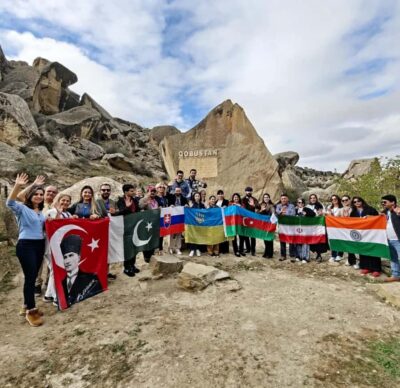

Tour to the Mud Volcano in Cartagena with Lunch
Our review of it →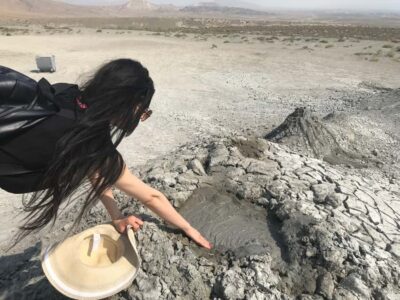
Half-Day Gobustan and Mud Volcanoes Tour with Entry
Our review of it →Browse the lists this tour appears in