
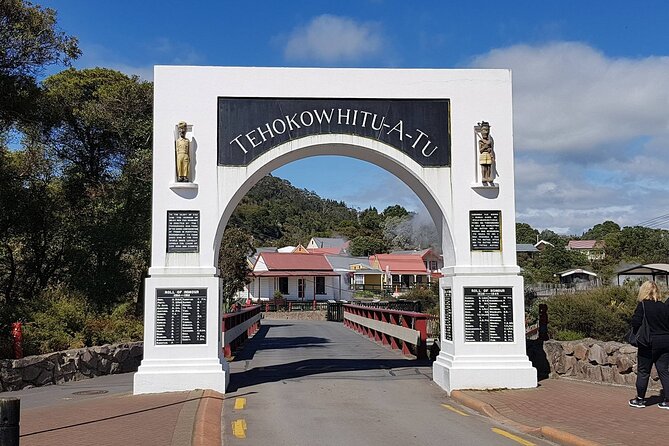
REVIEW · TAURANGA
Rotorua Geothermal Living Maori Village Tour Whakarewarewa 6.5hours Tour
Rotorua’s steam is more than scenery. This 6.5-hour excursion takes you from Tauranga to Whakarewarewa Living Māori Village, where people still live among boiling pools, steaming ground, and natural geysers. I like the direct connection with local life, plus the chance to see how geothermal heat supports cooking and daily routines.
I also like the small-group format, with minibuses capped at 20 people, and the port pickup and return. Guides such as Jack, Brian, Peter, Richie, Alistair, and Saskia have earned especially warm praise for their local knowledge and easy humor. The main drawback is the road time: the trip to the village can take about 75 to 80 minutes each way, and busy days may mean a larger group at the village itself.
Key points to know before booking
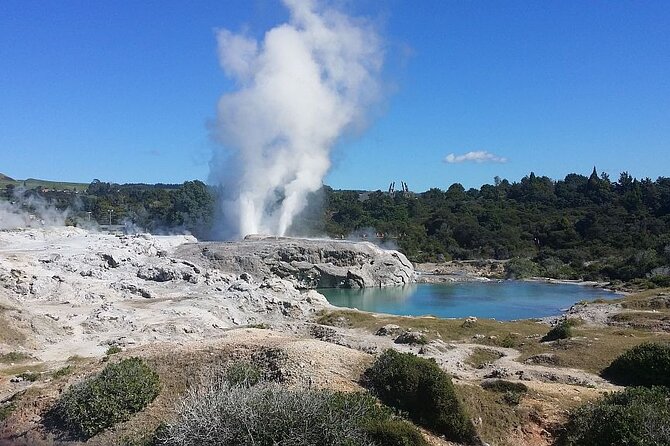
- Living Māori community: Whakarewarewa is a real village, not simply a staged cultural display, and Māori residents explain how the area functions today.
- Geothermal cooking: You see bubbling pools, hot water, steam, and the traditional hangi method used to prepare lunch.
- Pohutu geyser: The famous geyser can be viewed safely from a distance as it erupts naturally during the day.
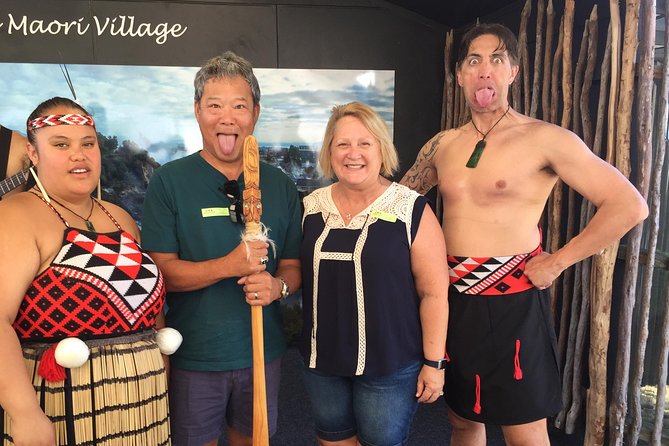
- 30-minute cultural concert: Singing, dancing, warrior demonstrations, and the haka form the emotional center of the visit.
- More than Rotorua: The drive includes Lake Rotorua, Government Gardens, Rotorua city, Mount Maunganui, Tauranga, forests, kiwifruit country, lakes, and coastal scenery.
- Useful for cruise passengers: Port pickup, a return to the meeting point, and careful attention to ship timing make this a practical shore excursion.
Why Whakarewarewa is the heart of the day
The best reason to book this outing is the village itself. Whakarewarewa Living Māori Village is a community where people continue to live with geothermal activity beneath and around them. You are not just looking at a geyser from a viewing platform. You are learning how residents use hot pools, steam, and naturally heated water as part of ordinary life.
A Māori villager guides you through the community and explains the challenges of living in such a powerful setting. The geothermal ground is beautiful, but it also demands respect. You will see steaming areas and bubbling water while staying at a safe distance. The sulfur smell can be strong, so if you are sensitive to it, be prepared. One guide joked that you get used to Rotorua’s aroma after a few hours. That is fair warning, not a complaint.
The village has a long connection with Māori life in the area, described by the tour team as more than 800 years. That length of time gives the visit weight. You can better understand why geothermal features are not simply tourist attractions here. They are part of cooking, bathing, heating, storytelling, and community life.
I especially like the fact that your village guide comes from the community. One guide was born there and showed how the village functions today. That personal link gives the visit a warmth that a standard museum display cannot provide.
More Geothermal Parks and Geysers in New Zealand:
- Rotorua: Wai-O-Tapu Geothermal Park Entry Ticket
★ 4.6 · 2,601 reviews - Rotorua: Hell’s Gate Outdoor Mud Spa & Guided Walk
★ 4.7 · 1,140 reviews - Rotorua Lake: Deluxe Lake Spa Geothermal Hot Spring Bathing
★ 4.5 · 302 reviews
The geothermal sights, including Pohutu geyser
The geothermal section covers bubbling pools, hot water, steam, and geysers. The star is Pohutu, one of Rotorua’s best-known natural features. You view it from a safe distance, and because it erupts naturally during the day, the timing is not presented as a tightly staged show.
You should not expect a private or quiet encounter with every geothermal feature. Whakarewarewa is a working village and a popular attraction. On busy days, the destination may combine several tour groups for the village portion. One party reported being part of a group of about 50 at the site, despite joining a smaller minibus from Tauranga. That is an important distinction: the transport group may be small, but the village operation can become larger at peak times.
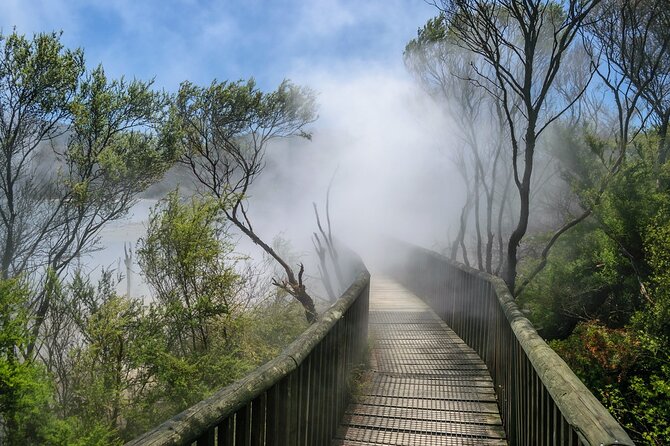
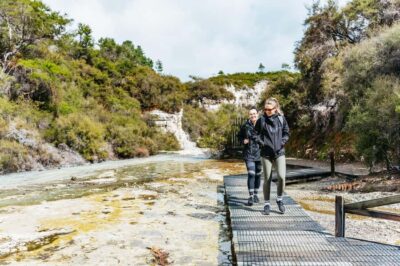
The walking portion lasts about two hours. Wear sensible shoes and bring layers. The tour operates in all weather, and the suggested kit includes a hat and sunscreen. Rain can change how pleasant the walk feels, while sun and steam can make the day warmer than expected.
Hangi lunch and the 30-minute Māori concert
Lunch is included and served in the hangi style. The important part is not only the food. You see how geothermal heat can be used in preparing it, linking the meal directly to the setting around you. It is a light lunch rather than a grand feast, so you may want breakfast before departure.
The cultural performance lasts about 30 minutes. It includes Māori singing, dancing, warrior demonstrations, and the haka. The haka is usually the moment that gets the strongest reaction, but the full performance matters because it gives you a sense of rhythm, welcome, identity, and group energy.
Several guides received praise for the performance and for the passion of the village presenters. A few comments were less enthusiastic, so expectations should stay sensible. This is a visitor presentation, not a private ceremony, and the quality of the experience can depend partly on the day’s group size and your position in the audience.
Still, the combination of village walk, geothermal life, lunch, and performance gives the day a good balance. You are not asked to sit through a long show and then leave without context. The performance follows a visit where you have already seen the setting and heard how local life works.
The drive from Tauranga to Rotorua
The road trip is a major part of the outing. From the port area, you pass through Tauranga, Mount Maunganui, forests, lakes, and the Te Puke region, known for producing about 85 percent of New Zealand’s kiwifruit crop. The countryside changes as you move inland toward Rotorua.
The drive can be scenic and informative, especially with a guide who adds local stories along the way. Jack, Brian, Richie, Peter, Alistair, Saskia, Charlie, and Grahame were all singled out for their humor, care, and commentary. Guide quality matters here because the road time is long. A quiet driver would leave you staring out the window for much of the morning.
The tradeoff is clear. You gain access to a major cultural and geothermal destination without arranging separate transport, but the journey takes time. The tour team says the drive is about 75 to 80 minutes each way because of speed limits for minibuses. You should think of this as a full-day regional outing, not a quick port activity.
For many people, the road time is worth it. It allows you to see two very different parts of the Bay of Plenty: the coastal setting around Tauranga and the geothermal interior around Rotorua. If you dislike long drives, this may feel tiring.
A few more volcano trips around New Zealand worth a look
- Whitianga: 2-Hour Cathedral Cove and Volcanic Coast Cruise
★ 4.8 · 816 reviews - 2 Hour Cathedral Cove and Volcanic Coast Cruise with Shade Canopy
★ 5.0 · 393 reviews - Geothermal Mineral Baths Experience: Pavilion Pools for 12+
★ 4.5 · 296 reviews - Rotorua Hiking: Mt Tarawera Guided Volcanic Crater Experience
★ 5.0 · 283 reviews
Lake Rotorua and Government Gardens
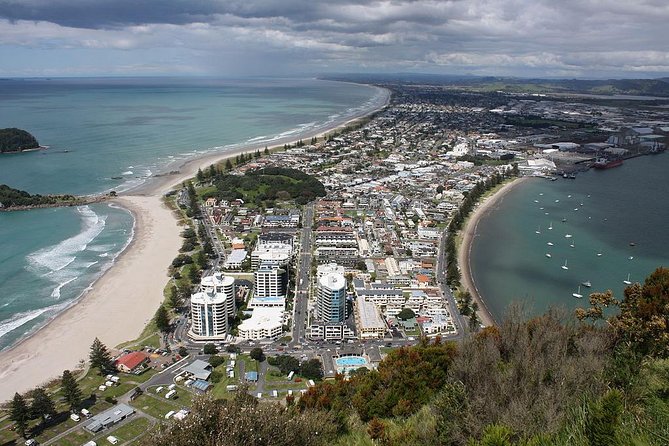
Lake Rotorua is a short viewing stop of about 15 minutes. The lake is the central focal point of Rotorua, so this is a useful place to get your bearings. Do not expect a long lakeside walk or a full sightseeing session. It is a brief pause for views and photographs.
Government Gardens receives roughly 10 minutes. The grounds are associated with an impressive Elizabethan-style building that once housed New Zealand’s first health spa and now houses the Rotorua Museum. The stop is mainly a look at the gardens and exterior features rather than a museum visit.
This is one of the tour’s weaker points for anyone who enjoys taking photographs. One person felt that more stops at viewpoints and gardens would have helped, since seeing places from inside a vehicle makes photos difficult. I agree with that practical concern. The tour covers a lot, but several Rotorua sights are viewed quickly or from the minibus.
The benefit is time control. A longer stop at every sight could put the return to the ship at risk. The operator says it has not missed a ship in 24 years, and the itinerary is built around getting you back on schedule. That is reassuring for cruise passengers, even if it means some stops are more of a look than a visit.
Rotorua city, Tauranga, and Mount Maunganui
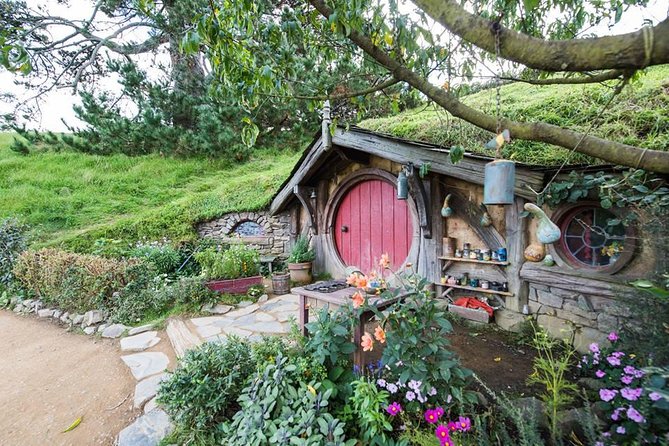
The tour allows about an hour to see Rotorua city as part of the drive. This gives you a broader sense of the town beyond the village and geothermal area. Your guide points out local sights and explains what you are seeing, though you should not expect a dedicated city walking tour.
On the way back, you spend about 30 minutes passing through Tauranga. It is one of New Zealand’s fastest-growing cities and home to the country’s largest port. That makes the return route useful for cruise passengers who want more context about the place where their ship is berthed.
Mount Maunganui receives another roughly 30-minute drive-through. This is one of New Zealand’s best-known and most expensive beachside suburbs, with the route following the coastal area near the port. Again, the word drive-through matters. You see the suburb and coastline from the vehicle rather than taking a long beach walk.
The route also includes Te Puke and its surrounding kiwifruit country. This small detail adds variety to the day. Rotorua supplies the steam and Māori culture, while Te Puke shows the agricultural side of the region.
Small minibus advantages and group-size limits
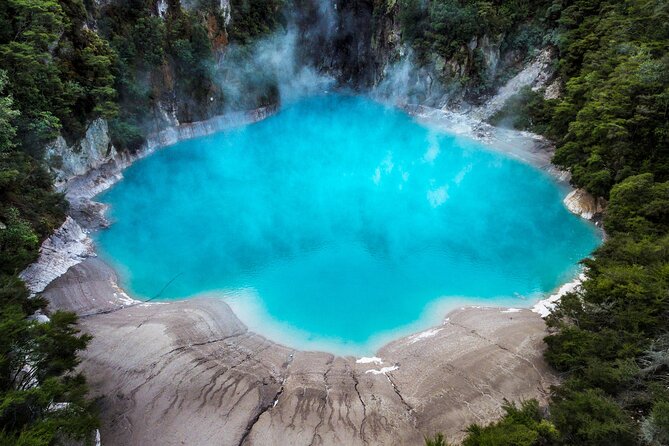
The tour vehicle is air-conditioned, and the maximum advertised group size is 20. That is much more manageable than a large cruise coach. You can hear the guide more easily, move through the day with less delay, and sometimes receive extra stops if time allows.
Brian was praised for handling a group that included three generations with different needs. Grahame was noted for keeping a difficult group on track with tact. These details suggest that the guide’s role is more than pointing out landmarks. A good guide can adjust the pace and keep the day pleasant.
There is one catch. Your minibus group may not be the same size as your village tour group. Whakarewarewa may combine groups at the destination, particularly on busy days. That can make it harder to hear the village guide or get close to the front during the performance.
If a small group is your top priority, ask about expected conditions when you book, but understand that the final village grouping is not fully controlled by the Tauranga operator. The transport side is intimate. The attraction itself may be busier.
Price, timing, and cruise-port value
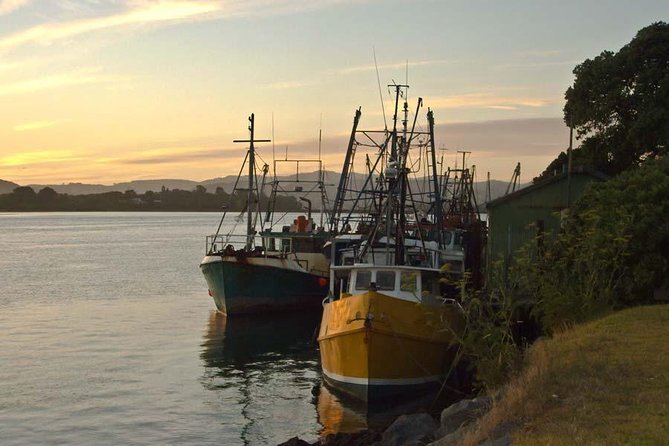
At $166.93 per person, this is not the cheapest way to spend a port day. It is also not simply a transfer to Rotorua. The price covers professional guiding, port pickup and return, air-conditioned transport, entry to Whakarewarewa, the cultural performance, and a light hangi-style lunch.
I think the value is strongest for cruise passengers. Organizing a private transfer to Rotorua, paying attraction admission, finding lunch, and watching the clock for the return journey could cost more and create far more stress. The tour bundles those tasks and keeps the day moving.
The tour start time is confirmed after booking and may change if your ship arrives early or late. Check your email carefully, then arrive 15 minutes before the confirmed departure. The meeting point is listed as 1 Salisbury Avenue, Mount Maunganui, although port pickup and drop-off are included, so confirm the exact pickup instructions before you leave the ship.
The operator requires good weather and a minimum number of participants. If the tour is canceled for either reason, you are offered another date or experience, or a full refund. You can cancel for a full refund up to 24 hours before the start time. Changes or cancellations inside that window are not accepted.
Who will enjoy this tour most
I would choose this outing if you want Māori culture presented by people connected to the community, rather than a general Rotorua sightseeing loop. It suits you if you enjoy guided interpretation, geothermal features, scenic drives, and a full schedule.
It is also a good fit for families and mixed-age groups. Children can see geysers and hot pools, while adults get cultural and regional context. The tour team has handled different age groups and needs well, although anyone with limited walking ability should ask about the route directly because the village visit involves walking outdoors.
You may want another option if you want a slow day, long photo stops, or a small private experience at every stage. The trip covers a large area in 6.5 hours, and some stops are short. The sulfur smell, changing weather, and long road sections are also real considerations.
Should you book the Whakarewarewa day trip?
Book it if the village visit is your priority. The strongest parts are the Māori guide from the community, the practical look at geothermal living, the hangi lunch, and the cultural performance with the haka. Those elements give the day a clear purpose.
I would be less enthusiastic if you mainly want to explore Rotorua Gardens, Lake Rotorua, or Mount Maunganui on foot. Those places are included, but mostly as short stops or guided drive-throughs.
For a cruise stop in Tauranga, this is a strong value when you want one well-organized day that reaches Rotorua without handling transport yourself. Confirm the departure time, pack layers and sun protection, allow for the long drive, and expect the village portion to be busier on some dates. If those conditions suit you, Whakarewarewa offers a memorable look at a living culture and a remarkable way of adapting to the earth’s heat.
FAQ
How long is the Whakarewarewa tour?
The excursion lasts approximately 6 hours and 30 minutes.
Where does the tour start?
The listed meeting point is 1 Salisbury Avenue, Mount Maunganui, New Zealand. Port pickup and drop-off are included, so confirm your exact pickup instructions after booking.
Does the tour return to the starting point?
Yes. The activity ends back at the meeting point.
Is port pickup included?
Yes. Port pickup and drop-off are included, which is useful for passengers arriving by cruise ship.
What is included in the price?
The tour includes an experienced professional guide, port transportation, an air-conditioned vehicle, the Māori cultural performance, and a light hangi-style lunch.
Is the lunch a traditional hangi?
Yes. The included light lunch is prepared in the hangi style, and the village visit explains how geothermal heat supports traditional cooking.
How long is the village visit?
The Whakarewarewa Living Māori Village portion lasts about two hours.
Will I see Pohutu geyser erupt?
You can view the famous Pohutu geyser from a safe distance as it erupts naturally during the day. The exact timing is not stated as guaranteed.
Is the tour suitable in bad weather?
The tour operates in all weather conditions, but it requires good weather to operate. If poor weather causes cancellation, you are offered another date or experience, or a full refund. Bring layers, a hat, and sunscreen.
How many people can join the tour?
The advertised maximum is 20 people. The village may combine groups at the destination on busy days, so the group there can be larger than the minibus group.
Can I cancel for a full refund?
Yes. You can cancel at least 24 hours before the start time for a full refund. Cancellations and changes made less than 24 hours before departure are not accepted.
When will I know the departure time?
The departure time is confirmed when the booking is accepted. It may change because of early or late ship arrivals and departures, so check your email and arrive 15 minutes before the confirmed time.
Just added around New Zealand
- Whaka Geothermal Trails Self-Guided Tour★ 3.5 · 44 reviews
- Mt. Tarawera Volcano Scenic Floatplane Tour from Rotorua★ 5.0 · 42 reviews
- Helicopter White Island / Mount Tarawera ‘Volcanic Extremes’★ 5.0 · 2 reviews
- Mt Tarawera Helicopter Tour with Volcano Landing★ 5.0 · 40 reviews
- Mount Tarawera Volcanic Adventure by Helicopter★ 5.0 · 11 reviews
- Polynesian Spa Rotorua: Family Hot Pools and Freshwater Pool★ 3.5 · 14 reviews
- From Rotorua WAIMANGU VOLCANIC VALLEY Half Day Tour★ 3.5 · 3 reviews
- Half-Day Tour – Ex Rotorua: WAI-O-TAPU Thermal Wonderland★ 4.0 · 8 reviews
Geothermal Parks & Geysers, compared.
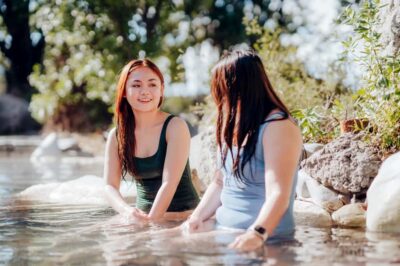
Rotorua Lake: Deluxe Lake Spa Geothermal Hot Spring Bathing
Our review of it →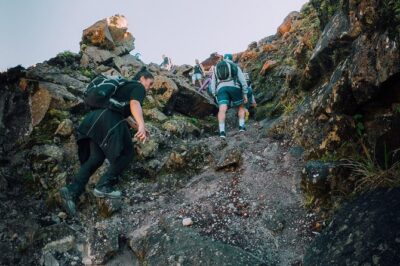
Rotorua Hiking: Mt Tarawera Guided Volcanic Crater Experience
Our review of it →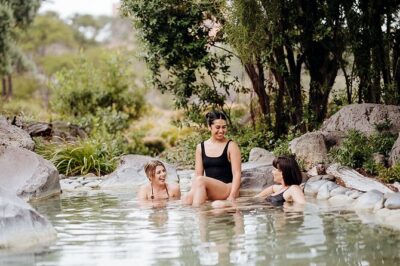
Polynesian Spa Rotorua: Deluxe Lake Spa Hot Spring Bathing
Our review of it →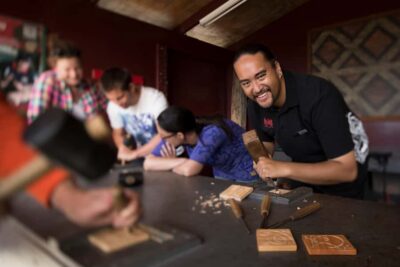
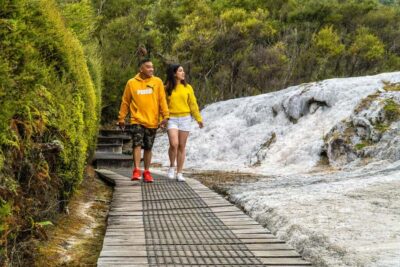
Taupo: Orakei Korako Geothermal Park and Cave Entry Ticket
Our review of it →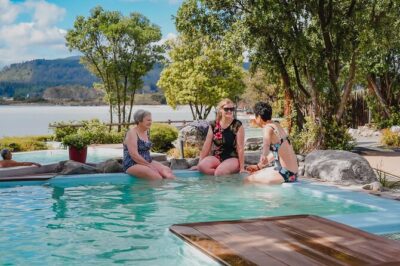
Polynesian Spa Rotorua: Pavilion (12+ yrs) Hot Pool Bathing
Our review of it →Browse the lists this tour appears in