
REVIEW · SANTA CRUZ, ECUADOR
BiciTour Giant Turtles and Lava Tunnel in Galapagos
Tortoises, tunnels, and a downhill ride. This four-and-a-half-hour outing gives you three very different slices of Santa Cruz: giant tortoises in a private reserve, a walk through old lava tubes, and a gentle finish at mangrove-fringed Laguna las Ninfas. I especially like the close look at tortoises in a natural setting and the chance to learn from César, the reserve owner, whose passion for the island’s plants and animals comes through clearly. The main point to weigh is the physical effort and guide-language mix. You need to be comfortable on a bicycle and ready for a roughly two-hour walk, while English ability may vary by guide.
At $90 per person, this feels like a fair half-day price if you want transport, bicycles, guiding, reserve access, and several activities bundled together. The tour is rated 4.9 out of 5, with 98 percent of participants recommending it. Still, the pace and route can feel less polished if your guide speaks only basic English or if you expect a short, easy bike outing rather than a longer ride through the highlands.
What makes this Santa Cruz outing special
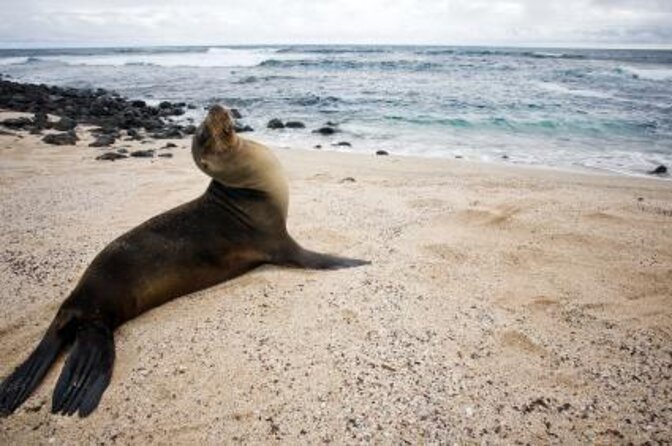
- Giant tortoises in open forest: You see them moving, feeding, resting, and cooling off in ponds rather than viewing them only in a formal breeding center.
- César’s personal expertise: The reserve owner explains the tortoises, trees, birds, and volcanic ground with clear enthusiasm.
- A real lava-tunnel walk: The route passes through two tunnels with stalactites and stalagmites, plus a chance of spotting a barn owl.
- A mostly downhill bicycle route: The ride begins in the highlands and returns toward Puerto Ayora, though the total distance may reach about 16 kilometers.
- Rubber boots are useful: Mud and uneven ground make sturdy footwear important during the reserve walk.
- A quiet finish at Laguna las Ninfas: Mangroves and seawater replace the highland forest, giving the morning a calm final stop.
From Puerto Ayora to the Santa Cruz highlands
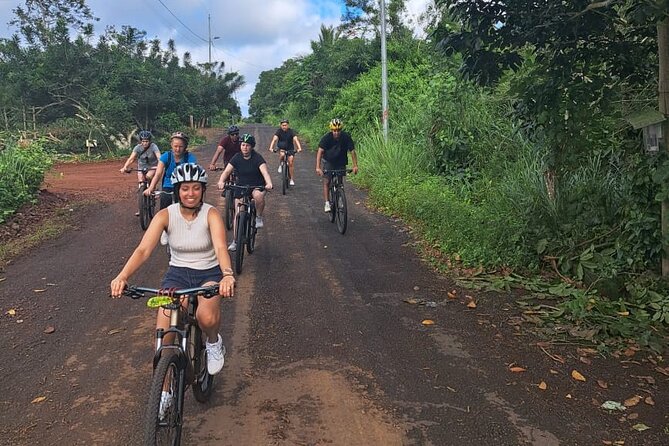
The outing begins in Puerto Ayora, with the meeting point listed around San Francisco Park and the town market area. From there, you choose a bicycle and the bikes are taken inland by bus, taxi, or pickup truck. The exact handoff can vary, but the basic idea is simple: avoid sending you uphill on a bicycle, then begin the ride in the higher part of the island.
That transfer matters. The highlands are greener and cooler than the coast, and the route gives you a quick change of scenery without spending a full day in a vehicle. The ride starts on quieter paved roads and then heads toward Galapagos Frontier. One route description gives about 4 kilometers downhill before the reserve and about 12 kilometers on the return, for roughly 16 kilometers total. Other accounts describe shorter portions, so I would not book this expecting a precise 2-kilometer ride.
The cycling is not presented as a hard athletic challenge, but you should be able to ride confidently on a road and manage a longer half-day outing. Some people asked to cycle farther than the standard plan, and the operator was willing to accommodate that. If you want an easy family ride, confirm the expected distance and bike size in advance.
Bike fitting is worth taking seriously. You can try different bicycles before setting off, and families have been able to find a suitable bike for a 9-year-old. Do not simply accept the first bicycle handed to you. Test the seat, brakes, and general fit while you are still in town.
More Lava and Eruption Tours in the world:
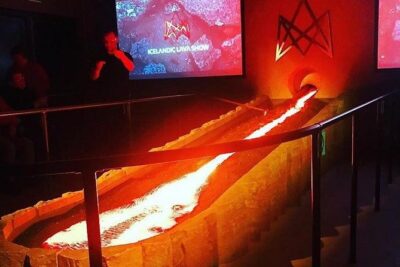
- Reykjavik: LAVA SHOW – Immersive Experience Entry Ticket
★ 4.8 · 3,360 reviews - Lava Show Reykjavik Admission Ticket – Optional Premium Upgrade
★ 5.0 · 3,278 reviews - Reykjavik: Red Lava Horse Riding Tour
★ 4.8 · 2,383 reviews
Galapagos Frontier and the giant tortoises
The main attraction is Galapagos Frontier, a private reserve in the transition zone of Santa Cruz. Before walking, you may be offered coffee, juice, water, or a light snack. This small pause is useful after the transfer and before the forest walk.
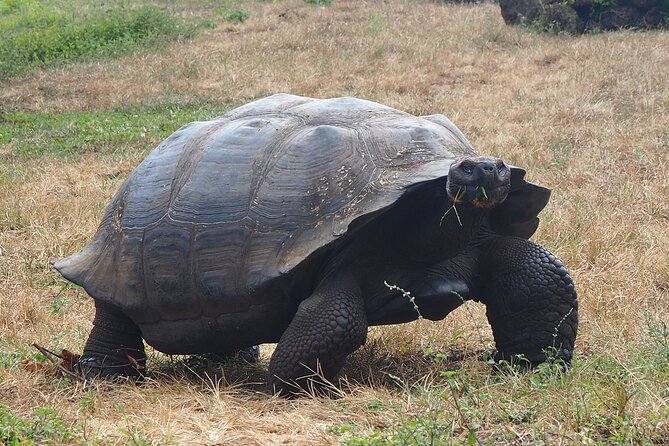
The reserve is the place where this tour earns its price. Instead of seeing a few tortoises behind a fence, you walk through forest and open ground where they move about naturally. You may see tortoises resting in shade, eating, or sitting in shallow ponds to cool themselves. Some are remarkably old, with one account noting animals estimated at up to 170 years.
That setting changes the experience. You are not simply ticking off a famous Galapagos animal. You are watching the tortoises choose where to go and what to do. They may be close to the trail, or they may make you slow down and scan the vegetation. The guide helps you understand what you are seeing, including the animals’ size, age, habits, and place in the island’s ecology.
César receives the strongest praise for this part of the outing. He is described as deeply committed to the reserve and able to explain not only the tortoises but also the endemic plants and trees. If you happen to have César leading the reserve walk, pay attention to the small details he points out. The trees and forest are not filler between the tortoises and the tunnels. They explain why this part of Santa Cruz looks so different from Puerto Ayora.
You may also see endemic birds, including mockingbirds, called cucuves locally, and Darwin’s finches. Bird sightings are never guaranteed, so keep your eyes open rather than expecting a formal birdwatching session. The reserve walk is more about the whole ecosystem than about collecting a long species list.
Why the rubber boots matter
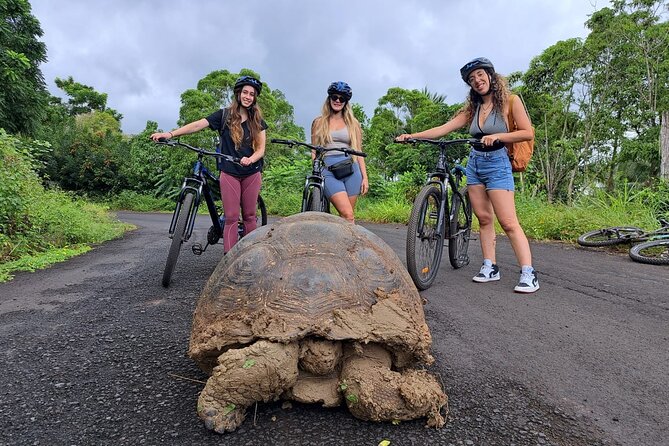
The walk through the reserve lasts around two hours when the tunnel section is included. It is not a strenuous mountain hike, but the ground can be muddy, rocky, and uneven. Rubber boots are provided according to the tour details and several accounts, and they are especially helpful around damp parts of the forest and near ponds.
Wear clothes that can handle dust or mud. Keep your phone or camera secure, since the route includes uneven footing and a low section inside one tunnel. The walk is manageable for people with moderate fitness, but you should not treat it as a flat stroll on a paved path.
One useful detail is that the reserve walk can be more physically demanding than the bicycle portion. A person who is comfortable riding but unsteady on rocks should move carefully. One account describes a low stretch of tunnel where you must crouch for about 25 feet. That is not extreme, but it matters if you have knee problems, limited mobility, or strong claustrophobia.
Inside the lava tunnels
The lava tubes are the tour’s most unusual stop. These underground passages formed when flowing lava cooled on the outside while hotter material continued moving beneath it. The result is a hollow passage through volcanic rock, with later mineral formations creating stalactites and stalagmites.
You enter with a flashlight or phone light and walk farther into the tube. The darkness, rough walls, and narrow sections give the stop a stronger sense of adventure than a standard cave visit. The guide explains how volcanic activity helped form the Galapagos Islands, connecting what you see underground to the wider story of Santa Cruz.
The tunnels are not filled with one spectacular chamber at every turn. Parts can look similar, and the appeal depends on your interest in geology and enclosed spaces. If you enjoy unusual natural formations, this may be your favorite part. If you dislike crouching in dark, narrow places, the tortoise walk alone may already be enough reason to book a different outing.
There may also be a chance to see a barn owl. Treat that as luck, not a promised sighting. The real value is the combination of physical exploration and a clear explanation of volcanic formation.
Take care not to touch the formations. Stalactites and stalagmites grow slowly, and the passage can be slippery or cramped. The guide’s instructions matter more here than speed.
A few more volcano trips around the world worth a look
- Reykjavik: Golden Circle Full-Day Tour with Kerid Crater
★ 4.8 · 24,485 reviews - From Naples: Pompeii Ruins & Mount Vesuvius Day Tour
★ 4.3 · 11,459 reviews - Santorini: Volcanic Islands Cruise with Hot Springs Visit
★ 4.4 · 10,869 reviews - Big Island in a Day: Volcanoes Waterfalls Sightseeing and History
★ 5.0 · 6,569 reviews
The ride back to Puerto Ayora
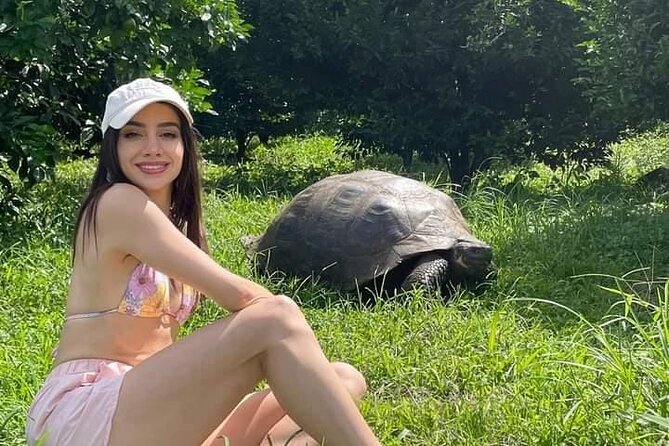
After leaving the tunnels, you return to the reserve area, change out of the boots, and may be offered fresh fruit juice. One account describes juice made from tangerines picked along the way. Small details like this make the outing feel connected to the working countryside rather than packaged as a quick attraction.
The bicycle ride back is generally downhill and described as enjoyable by many people. You may pass farms and catch further glimpses of tortoises along the route. The road provides a pleasant contrast to the slow forest walk: after two hours on foot, you can cover ground more quickly and let the highland air do some of the work.
Still, downhill does not mean effortless. You need to control your speed, watch the road, and stay with the guide. One account raised concerns about cycling through red lights and the guide riding too far ahead. The operator responded that local cyclists understand the area differently, but I would still advise you to put safety first and ask the guide to stay within sight.
The group size can reach 16 people, though it may be smaller. A small group makes it easier to hear explanations and choose a bicycle, while a larger group can spread out on the road and move more slowly through the tunnels. Ask how many people are booked if group size matters to you.
Laguna las Ninfas: a quiet final stop
The outing ends at Laguna las Ninfas in Puerto Ayora. This is a seawater lagoon surrounded by mangroves, including red and white mangrove species. A wooden bridge lets you see the water and vegetation without turning the final stop into another demanding walk.
The lagoon has a slower mood than the reserve. After tortoises, volcanic rock, bicycles, and muddy boots, the mangroves give you a chance to pause. Look for red mangrove fruits floating in the water or along the shore. The stop takes about 30 minutes, enough time for photos and a calm look around.
The stated end point is Laguna las Ninfas rather than the original meeting point. That can be convenient if you plan to continue exploring Puerto Ayora on foot. It also means you should keep track of your belongings during the transitions between bicycles, vehicles, the reserve, and the lagoon.
Guide quality and language
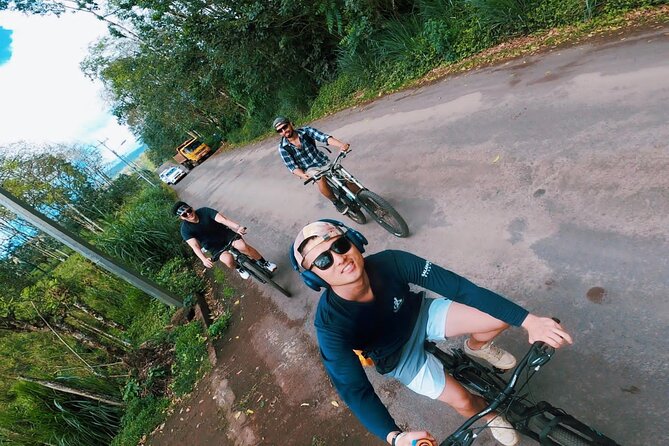
The guide can make a major difference. Julio is praised for being friendly, patient, and cheerful, and he has taken photographs along the route for participants. César brings the strongest natural-history background at the reserve. Other guides may have only basic English, so explanations can be less smooth if you do not speak Spanish.
This is not necessarily a dealbreaker. The most important information can still come through demonstrations, short explanations, and translation within the group. But if detailed English guiding is central to your plans, confirm the guide’s language ability before booking.
The company has also shown some flexibility. A family was able to reschedule on the morning of the tour when two people became ill. That is helpful, though the stated cancellation terms are stricter: cancel at least 24 hours before departure for a full refund, while cancellations inside 24 hours are not refunded. Poor weather can lead to a new date or a full refund.
Is $90 a good value?
At $90, you are paying for far more than a bicycle rental. The cost covers the bike, transport to the highlands, reserve access, a naturalist-led walk, lava-tunnel access, and the lagoon visit. It also compresses several Santa Cruz experiences into one morning or afternoon, leaving the rest of your day open.
I consider it good value if you want variety. You see wildlife, geology, forest, farmland, mangroves, and Puerto Ayora in one outing. The price is less attractive if you only want a short ride or if you already plan to visit several tortoise reserves and lava tunnels elsewhere.
Food should not be assumed to be part of the $90. Coffee, juice, fruit, or a snack may be offered, and some people have arranged lunch or enjoyed encebollado afterward, but the core description does not promise a full meal. Ask before counting lunch into your budget.
Who should book this tour?
I would recommend it to you if you:
- Want close encounters with giant tortoises in a natural setting.
- Enjoy combining light exercise with natural history.
- Can ride a bicycle confidently for up to about 16 kilometers.
- Are comfortable walking on muddy or uneven ground.
- Like caves, volcanic geology, and small moments of adventure.
- Have only half a day for a Santa Cruz activity.
I would hesitate if you need a fully smooth, highly scripted tour, speak no Spanish and require detailed English interpretation, dislike dark enclosed spaces, or want a very short bicycle ride. Families can enjoy it, but check the child’s bike size and make sure younger riders can manage the distance and road conditions.
Should you book the BiciTour Giant Turtles and Lava Tunnel?
Book it if you want one active, varied half-day that shows more than the usual Puerto Ayora waterfront. The tortoises and César’s explanations are the strongest reasons to go, while the lava tubes add a memorable change of pace. The mostly downhill return ride is a pleasant bonus.
Before paying, confirm the expected cycling distance, the guide’s English level, and the group size. Bring water, clothes that can get muddy, and a light source for your phone if needed. If those details suit you, this is one of the better ways to combine wildlife, geology, and a little exercise on Santa Cruz without giving up the rest of your day.
FAQ
Where does the tour start?
The meeting point is listed at 7M2P+VF6 in Puerto Ayora, near San Francisco Park and the municipal market area.
Where does the tour end?
The tour ends at Laguna las Ninfas in Puerto Ayora.
How long does the experience last?
The expected duration is about 4 hours and 30 minutes.
How much does the tour cost?
The listed price is $90 per person.
How far do you ride the bicycles?
The route can total about 16 kilometers, including a downhill section toward the reserve and a longer ride back to Puerto Ayora. The exact cycling distance may vary.
Do I need good physical fitness?
You need a moderate level of physical fitness. The tour includes bicycle riding, a roughly two-hour walk, uneven ground, and a low section in one lava tunnel.
Are bicycles provided?
Yes. You choose and test bicycles at the start, and the bicycles are transported to the highlands before the ride begins.
Are the giant tortoises seen in a natural setting?
Yes. Galapagos Frontier is a reserve where giant tortoises can be seen moving through forest and open areas, rather than only in a formal breeding center.
What happens if the weather is poor?
The experience requires good weather. If the operator cancels because of poor weather, you can receive a different date or a full refund.
Just added around the world
- Bali Tour: Village, Volcano, Holy Spring Temple, Waterfall Tour★ 5.0 · 2 reviews
- Ayung River Rafting and Kintamani Volcano Trip★ 4.5 · 3 reviews
- Kintamani Tours with Batur volcano★ 5.0 · 8 reviews
- Bali in 1-Day : Rice Terrace, Volcano, Tanah lot – All Inclusive★ 5.0 · 6 reviews
- Bali Swing Packages and Kintamani Mt Batur Volcano View★ 5.0 · 4 reviews
- Bali Full-Day Car Charter: Ubud and Kintamani Volcano Tour★ 5.0 · 10 reviews
- Bali Sensational Barong Dance And Kintamani Volcano Day Tour – All Inclusive★ 5.0 · 2 reviews
- Bali: Barong Dance, Rice Terrace, Volcano, Temple, Waterfall Tour★ 5.0 · 3 reviews
Lava & Eruption Tours, compared.

LAVA SHOW – Immersive Experience Entry Ticket
Our review of it →
Lava Show Reykjavik Admission Ticket – Optional Premium Upgrade
Our review of it →
Sunset Jeep Tour of Mount Etna and Lava Flow Caves
Our review of it →
Raufarhólshellir Lava Tunnel: Underground Expedition
Our review of it →
Browse the lists this tour appears in