
REVIEW · ROME
3 Day Vesuvius, Pompeii and Amalfi Small-Group Tour from Rome
Southern Italy packs a lot into three days. This small-group trip links Pompeii and Mount Vesuvius with the coastal towns of Sorrento, Positano, and Amalfi, then adds a visit to Montecassino Abbey on the way back to Rome. I like the mix of ancient sites, sea views, ferry rides, and free time for food and shopping. I also like the limited group size, with no more than 16 people, which should make the long drives and guided stops easier to manage.
The main drawback is the pace. You cover a large amount of ground in a short time, and the Vesuvius path is long and steep. Rough seas can also change the ferry plan, as one guest found when the boat journey to Amalfi and Positano had to be replaced by a minibus ride. At $1,463.43 per person, this is a serious expense, so it suits you best if convenience and a carefully arranged route matter more than independent travel.
Key points to know before booking
- Pompeii gets a focused two-hour visit: Ask for a map before entering, since the ancient city is large and easy to navigate badly without one.
- Vesuvius is a real uphill walk: The route can be physically demanding, so sturdy shoes are not optional.
- The Amalfi Coast is explored by water when conditions allow: The ferry links Sorrento, Positano, Amalfi, and Salerno, but rough seas may force a road transfer.
- Salerno is your overnight base: Its seafront promenade gives you a pleasant place for an evening stroll after Pompeii.
- Montecassino adds a thoughtful final stop: The abbey brings art, religious history, and the memory of World War II into the final day.
- Packing is tightly controlled: You may bring up to 20 kilograms in one small suitcase, roughly 55 by 45 by 25 centimeters, plus a small personal bag.
Why this three-day route works
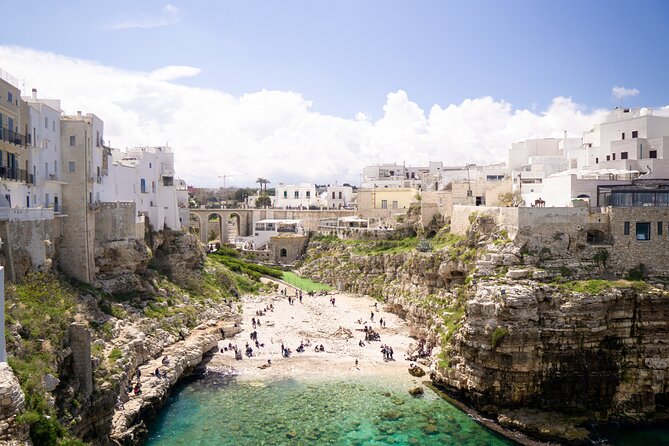
I like the shape of this trip because it joins several very different parts of southern Italy. Pompeii is solemn and archaeological. The Amalfi Coast is scenic and social, with cafés, shops, beaches, and ferries. Vesuvius gives the trip a physical challenge, while Montecassino closes the journey with a quieter look at religion, culture, and war.
You travel in a luxury mini-coach with a local driver and an English-speaking guide. That matters here. The roads around the Bay of Naples and Amalfi Coast can be tiring to manage on your own, and the route involves several transport changes. A small group of no more than 16 people is a useful middle ground: more personal than a large coach tour, but less costly than a private trip.
The tour starts at 8:30 a.m. from the Sheraton Rome Parco de’ Medici, at Via Salvatore Rebecchini 39. That is not a central Rome landmark, so check your route to the meeting point carefully. You should be in the hotel lobby 15 minutes before departure. The tour returns to the same meeting point after the Montecassino visit.
Two nights in three- or four-star hotels and continental breakfast are included. Lunches, dinners, drinks, and any attractions not specifically listed are extra. You should budget for meals, because the price does not cover the culinary side of the trip, despite the chance to eat local food along the coast.
More Vesuvius and Pompeii Tours in Italy:
- From Naples: Pompeii Ruins & Mount Vesuvius Day Tour
★ 4.3 · 11,459 reviews - Pompeii and Mount Vesuvius Day Trip from Rome with Pizza Lunch
★ 4.5 · 6,151 reviews - From Rome: Pompeii Day Trip with Optional Vesuvius and Lunch
★ 4.6 · 5,067 reviews
Day one: Pompeii’s streets and an evening in Salerno
The first major stop is Pompeii Archaeological Park, with about two hours inside. That is enough time to get a strong first look at the site, but not enough to see everything. Pompeii is a full ancient city, not a compact monument, and you can spend hours simply trying to understand its streets and neighborhoods.
I strongly recommend asking staff for a map before you enter. Without one, it is easy to lose your sense of direction or spend too much time wandering between areas without a plan. Two hours calls for sensible choices rather than an attempt to see every corner.
Pompeii is valuable because it gives you ordinary details, not just grand monuments. The preserved streets and buildings offer a direct look at ancient Roman urban life. The setting is also sobering. This is a city stopped suddenly by the eruption of Vesuvius, and the visit carries more weight than a standard archaeological tour.
The included entrance and guided visit help keep the stop organized. Still, you should wear shoes suited to uneven walking surfaces and avoid bringing more than you need. The site is large, and the combination of heat, stone paths, and constant walking can wear you down early in the trip.
After Pompeii, you continue to Salerno for the overnight stay. The town sits beside the Tyrrhenian Sea and gives you a calmer evening after the archaeological visit. Its palm-lined promenade, restaurants, and bars make it easy to leave the hotel for a sunset walk or dinner.
I like this overnight choice. Salerno is not treated as a rushed photo stop. You get the evening to look out over the water, eat at your own pace, and recover before the next day’s ferry rides. Since meals are not included, this is also your chance to choose your own restaurant and control your spending.
Day two: Sorrento, Positano, and Amalfi by ferry
Day two is the scenic heart of the trip. The plan uses ferries to reach Sorrento, Positano, and Amalfi, offering views of the Bay of Naples and the Amalfi Coast from the water. This is one of the best reasons to choose this route rather than a land-only excursion.
The important condition is the sea. The ferry schedule depends on weather and water conditions. One reported experience had rough seas, making boat travel to Amalfi and Positano impossible and requiring a minibus instead. You should see the ferry as a valuable feature, not an absolute guarantee.
Sorrento’s old lanes and lemon specialties
The first coastal stop is Sorrento, with about two hours to explore. From the waterfront, you can look across the Bay of Naples toward the silhouette of Vesuvius, often softened by haze. The view gives you a useful sense of how close these major places are, even though the roads and water make the journey feel longer.
Sorrento’s historic center is made for a short independent walk. Its narrow streets contain shops, cafés, and restaurants, with plenty of opportunities to stop for gelato or taste limoncello, the lemon liqueur associated with the region.
Two hours is enough for a stroll and a snack, but not for a long museum visit or an unhurried meal. I would use this stop for the atmosphere rather than trying to shop seriously. If you want souvenirs, note what catches your eye, then decide how much luggage space you have left. The tour allows only one small suitcase up to 20 kilograms, plus a small onboard bag.
More Three-Day Trips in Italy:
- Active Volcanoes Bromo and Ijen – Start Surabaya 3 Days and 2 Nights
★ 5.0 · 292 reviews - From Bali: 3-Day Excursion to Mount Bromo and Ijen Crater
★ 4.8 · 143 reviews - 3 Day Serengeti National Park & Ngorongoro Crater Camping Safari
★ 5.0 · 142 reviews - From Yogyakarta or Bali: 3-Day Bromo & Ijen Volcano Trip
★ 4.8 · 123 reviews
Positano, the beach, and a steep town
The ferry then continues to Positano, where you have roughly two hours. The town climbs the cliffside above Spiaggia Grande, its main beach, so even a short visit involves slopes and stairs. You can head down for a swim when the weather is suitable, or stay among the cafés, boutiques, and shops run by local artisans.
This is a stop where you need to choose. A swim takes time, especially when you must walk down to the beach and back up. Shopping and eating compete for that same window. You can have a quick look at the beach and still enjoy the town, but do not expect to experience every part of Positano in two hours.
The coastal views are the main reward. The town’s position makes it photogenic from the water and from its upper streets. I would keep your phone or camera accessible, but also watch your footing. The combination of crowds, uneven paths, and steep streets calls for attention.
Amalfi’s compact seaside center
The final coastal stop is Amalfi, also for about two hours. The town offers a more compact seaside setting, with time for a walk, gelato, or a relaxed drink. The description of the town is deliberately simple, and that is fair: Amalfi works best as an easygoing pause after the visual overload of Positano.
If the ferry is operating, the sequence of boat rides makes the day feel like a coastal journey rather than a series of road transfers. If the sea is rough, the minibus option will still get you between places, but the experience changes. Road travel can be slower and less restful on the winding coast, and you lose the open-water views.
The day’s timing also means you should not build your own dinner reservation around a precise return hour. Transport conditions and ferry schedules may affect the plan. Keep the evening flexible.
Day three: Hiking Vesuvius and visiting Montecassino
The third day begins with Mount Vesuvius. The volcano has long carried religious and legendary associations, including connections to Jupiter and stories of giants living inside the mountain. Those old tales help explain why Vesuvius was viewed as more than a geological feature.
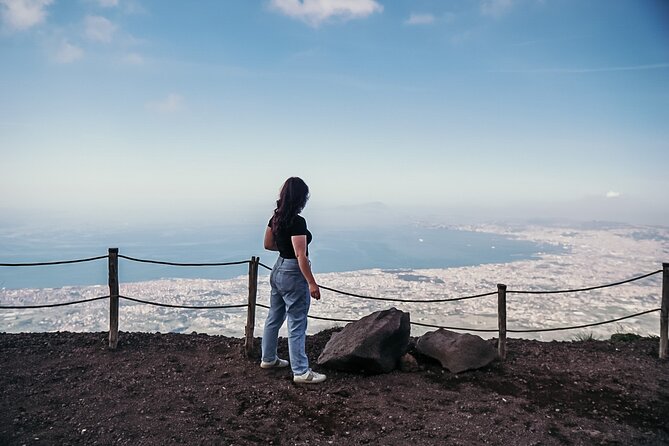
The practical point is simpler: you hike up to the crater. The route is described as long and steep, and the physical challenge was the clearest negative detail in the available feedback. You should bring sturdy walking shoes and be honest about your fitness before booking.
The entrance to Vesuvius is included, but the included admission does not make the walk easy. Bring water and dress for walking, though the tour information does not specify a required clothing list. You will want to keep your hands free and avoid carrying unnecessary luggage during the climb.
Reaching the crater area gives the volcano its meaning. You are not just looking at Vesuvius from a distance, you are walking on the mountain that shaped Pompeii’s fate. The pairing of Pompeii on day one and Vesuvius on day three creates a clear historical connection, even with a night and a coastal day between them.
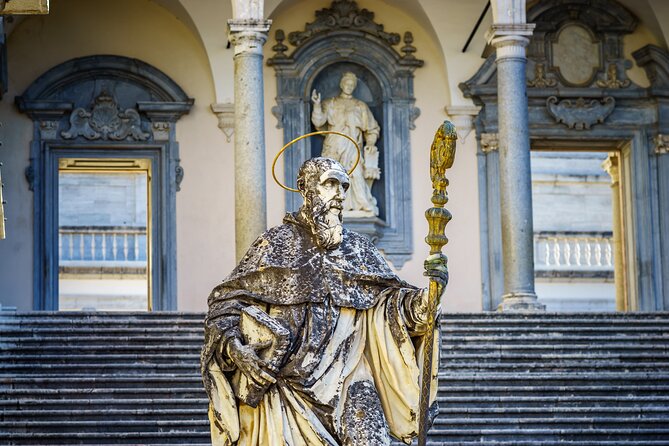
After Vesuvius, the group heads north toward Montecassino Abbey. This is a useful change of mood. Instead of another busy coastal town, you reach a monastery high on a mountain, with cloisters, religious spaces, and views from the hilltop setting.
The abbey is still a working monastery and a pilgrimage site. It was also a center of art, culture, and learning, and the area was involved in a decisive World War II battle. The stop therefore covers more than architecture. You have time to consider how a place devoted to prayer and study was also caught up in modern warfare.
Entrance and the tour of the abbey are included, with about two hours to walk through the cloisters and reflect on the site. This is not a throwaway stop added to fill the drive back to Rome. It gives the final day a serious historical finish, though anyone focused only on beaches and ancient ruins may find the change of subject less appealing.
What the $1,463.43 price buys you
At $1,463.43 per person, this is not a budget option. The value depends on how much you want handled for you. The price covers luxury mini-coach transport, a local driver, an English-speaking guide, two hotel nights, continental breakfasts, Pompeii admission, Vesuvius admission, Montecassino Abbey admission and tour, and the ferry connections between Positano, Amalfi, and Salerno.
You still pay for meals, refreshments, and attractions not listed as included. That means the final cost will be higher than the advertised figure. You should also account for the fact that a continental breakfast is practical rather than a full food plan.
The tour offers good value if you would otherwise need to arrange separate transport, hotels, site tickets, ferry journeys, and a return from the Amalfi Coast to Rome. The route is complicated, and the small group reduces some of the friction. You also avoid packing and unpacking every night, though the two-night accommodation details are not fully specified beyond the three- to four-star rating.
The price is harder to justify if you prefer long stays in one place, want to choose every restaurant and departure time, or already feel comfortable arranging southern Italy transport yourself. You also spend only about two hours in each major sightseeing stop. You pay for the route and the coordination, not for extended time at every site.
Group size, hotels, and what to pack
The maximum group size is 16 people. That is small enough to make walking tours and meeting instructions more manageable, while still keeping the price below a private tour. You will travel with an English-speaking guide, but no guide’s name is provided in the tour information.
The luggage rule deserves attention. You are limited to 20 kilograms, or 44 pounds, in one piece of luggage similar to an airline carry-on, approximately 55 by 45 by 25 centimeters. You may also bring a small personal bag onboard.
Pack light, because you will be moving between Rome, the coast, and the return route. Comfortable walking shoes are essential for Pompeii and Montecassino, while sturdy shoes matter most for Vesuvius. A swimsuit is useful if you want to swim at Spiaggia Grande, but the schedule may not leave much time for a full beach outing.
You must be at the Sheraton Rome Parco de’ Medici hotel lobby 15 minutes before the 8:30 a.m. start. The activity ends back at that meeting point. It is near public transportation, and most people can participate, but the Vesuvius climb is the part you should assess carefully.
The tour does not permit anyone under 18 on its Europe tours because of the activities included. At booking, specify your preference for a double or twin room under special requirements.
Who will enjoy this tour most
I would recommend this trip to you if you want southern Italy’s headline sights but do not want to solve the transport puzzle yourself. It works particularly well for an adult who enjoys a full schedule, can manage uphill walking, and likes having a guide provide context at archaeological and historical sites.
It is also a good fit if you want more than the Amalfi Coast alone. Pompeii and Vesuvius give the trip substance, while Montecassino adds a less expected final chapter. The ferry rides, when weather allows, are another strong reason to choose it.
I would hesitate if you need a slow holiday. Two hours in Pompeii, Sorrento, Positano, Amalfi, Vesuvius, and Montecassino means you will keep moving. The tour also depends on weather for its most attractive transport feature, and rough seas can replace the ferries with a minibus.
Should you book the three-day tour?
Book it if you want a tightly organized southern Italy sampler with Pompeii, Vesuvius, and the Amalfi Coast in one trip from Rome. The best parts are the range of experiences, the small group, the included major admissions, and the chance to spend an evening in Salerno rather than rushing straight back north.
Think carefully before booking if the Vesuvius hike sounds beyond your ability, if you dislike fixed schedules, or if $1,463.43 feels high once meals and extra costs are added. For an active adult who values convenience and wants to see several major sites without arranging each connection, the package can earn its price. For a slower and more independent trip, you would be better off choosing fewer destinations and staying longer in each one.
FAQ
Where does the tour start and end?
The tour starts at 8:30 a.m. at the Sheraton Rome Parco de’ Medici, Via Salvatore Rebecchini 39, Rome. It ends back at the same meeting point.
How many people are in the group?
The group has a maximum of 16 travelers.
What transportation is included?
Transport is provided in a luxury mini-coach with a local driver. Ferry travel between Positano, Amalfi, and Salerno is included, and the itinerary also includes ferry travel to Sorrento when conditions allow.
Are hotel stays and breakfasts included?
Yes. The tour includes two nights in three- to four-star hotels and continental breakfast.
How much luggage can I bring?
You may bring up to 20 kilograms, or 44 pounds, in one piece of luggage approximately 55 by 45 by 25 centimeters, plus a small personal bag for onboard items.
Is the tour suitable for children under 18?
No. People under 18 are not permitted on these Europe tours because of the nature of the included activities.
Just added around Italy
- Mount Vesuvius & Wine Tasting with Lunch Private Tour from Amalfi Coast★ 4.5 · 2 reviews
- Naples: visit vesuvius skip the Line tickets with roundtrip bus★ 3.0 · 2 reviews
- Pompeii Ruins & Wine Tasting with Lunch on Vesuvius with Private Transfer★ 4.5 · 10 reviews
- Pompeii SkipTheLine and Mt Vesuvius with Lunch&WineTasting from Rome★ 5.0 · 3 reviews
- from Rome, Pompeii and Vesuvius★ 4.0 · 10 reviews
- Day trip from Rome to Pompei Mt Vesuvius & Local Guide included★ 5.0 · 2 reviews
- From Rome: Pompeii and Vesuvius Crater Experience with lunch★ 5.0 · 4 reviews
- From Rome private guided tour to Pompeii and Vesuvius★ 3.0 · 2 reviews
Mount Vesuvius & Pompeii Tours, compared.

Pompeii and Mount Vesuvius Day Trip from Rome with Pizza Lunch
Our review of it →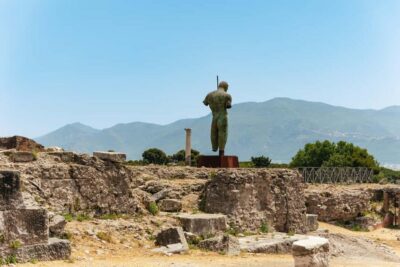
Pompeii Day Trip with Optional Vesuvius and Lunch
Our review of it →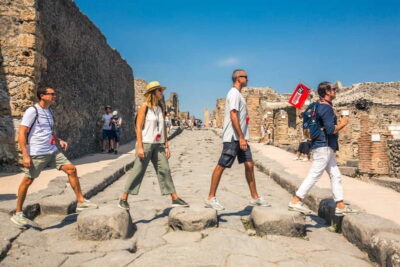
Naples or Sorrento: Full-Day Pompeii and Mount Vesuvius Tour
Our review of it →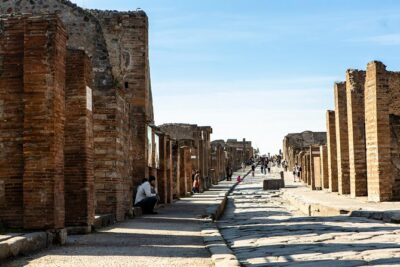
Pompeii & Mt.Vesuvius Day Tour from Naples with Pizza Lunch
Our review of it →
Mount Vesuvius: Skip-the-Line Ticket and Smart Digital Guide
Our review of it →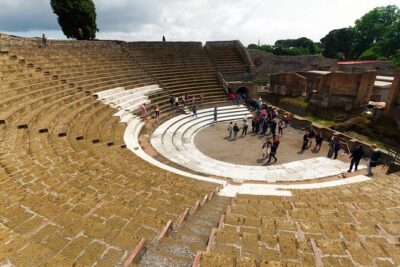
Pompeii & Mt Vesuvius All-Inclusive Small Group w/ Lunch
Our review of it →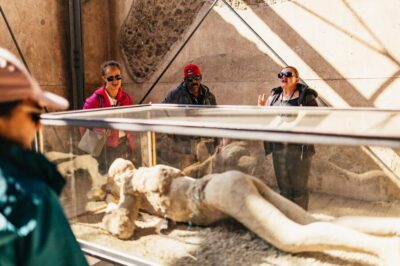
Pompeii and Mt. Vesuvius with Lunch and Wine Tasting
Our review of it →Browse the lists this tour appears in