REVIEW · REYKJAVIK
Iceland Volcanic Eruption Area Helicopter Tour from Reykjavík
Volcanic ground looks different from the sky. This 35 to 45 minute flight from Reykjavík takes you over the Reykjanes Peninsula, where recent eruptions have left fresh lava fields, craters, and smoking ground. I like the small five-person maximum, which gives you a better chance at clear views, and I like the mix of raw geology and city scenery.
I also appreciate the pilots’ focus on the story beneath the rocks. Laura, Oliver, Robert, and Aleksander have all been praised for calm flying and clear explanations about eruption dates, fissures, craters, and Reykjavík. The main drawback is simple: weather and volcanic activity control the show, so you may see an active eruption, old lava, or only a postponed flight.
What makes this helicopter tour worth considering
- Fresh volcanic terrain: Fly over Reykjanes, one of Iceland’s most active volcanic regions, with eruption sites dating from 2021 onward.
- Only five passengers: The small helicopter group gives the flight a more personal feel and limits crowding at the windows.
- Two very different views: See Reykjavík’s rooftops and Faxaflói Bay, then head toward stark volcanic ground.
- Possible lava-field landing: Some flights land near an eruption site, allowing you to walk on solidified lava when conditions permit.
- Strong pilot commentary: Pilots explain the timing and type of eruptions, along with features around Reykjavík and the peninsula.
- Weather matters greatly: Wind and poor visibility can cause delays, rescheduling, or cancellation with a refund.
From Reykjavík rooftops to Reykjanes craters
The tour begins at Glacier HeliACE FBO on Nauthólsvegur, close to Reykjavík’s city area and public transportation. You meet there and return to the same point after the flight. Hotel pickup and drop-off are not included, so you need to make your own way to the base.
Once airborne, the first few minutes give you a useful sense of Iceland’s scale. Reykjavík spreads below with colorful roofs, a long shoreline, and Faxaflói Bay beyond it. From the ground, the capital feels compact. From a helicopter, you see how quickly the city gives way to open Arctic terrain.
That city view is not just a bonus. It gives the flight a good rhythm. You start with familiar urban sights, then watch the built-up area thin out as the aircraft heads toward the Reykjanes Peninsula. You get both sides of Iceland in one short outing: a modern capital and a young, restless volcanic region.
The helicopter route and exact order can change with weather, air traffic, and volcanic conditions. The main destination is the peninsula, located about 30 kilometers from Reykjavík. That short distance makes this practical for a free morning, a final-day treat, or a break between longer road trips.
More Lava and Eruption Tours in Iceland
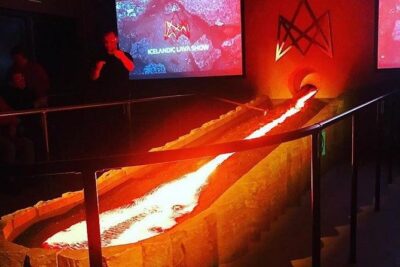
- Reykjavik: LAVA SHOW – Immersive Experience Entry Ticket
★ 4.8 · 3,360 reviews - Lava Show Reykjavik Admission Ticket – Optional Premium Upgrade
★ 5.0 · 3,278 reviews - Reykjavik: Red Lava Horse Riding Tour
★ 4.8 · 2,383 reviews
The Reykjanes Peninsula from above
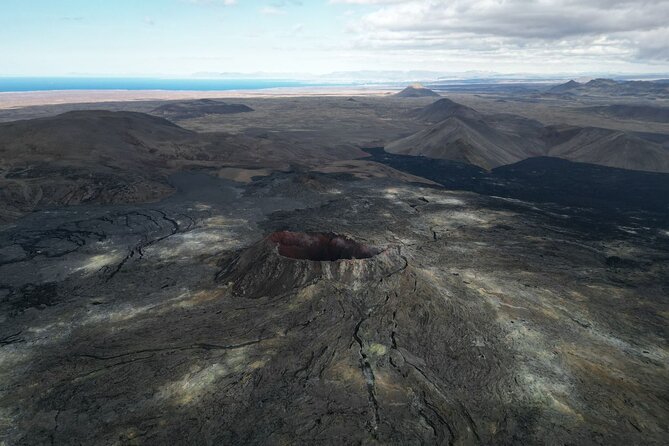
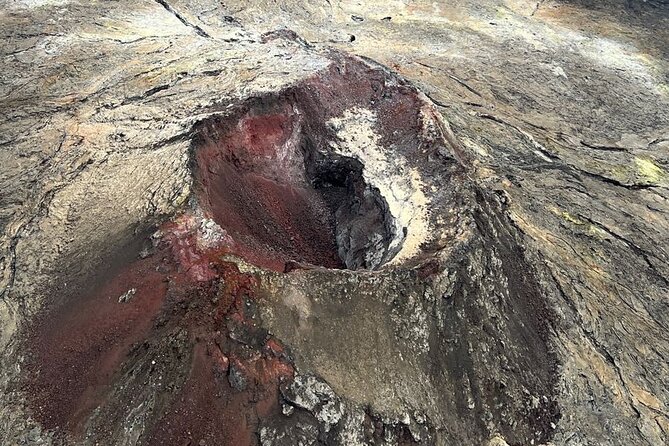
Reykjanes is among Iceland’s most active geological areas. Recent eruptions have repeatedly changed the ground, leaving dark lava flows, new craters, fissures, and broad stretches of rough volcanic rock. From the air, you can see patterns that are hard to understand at ground level.
The pilot points out the sites and explains how the eruptions differ. You may hear about the dates of recent activity, how lava moved across the peninsula, and which areas may show signs of heat or gas. Several flights have passed over active fissures or glowing lava, but the volcanic activity is never guaranteed.
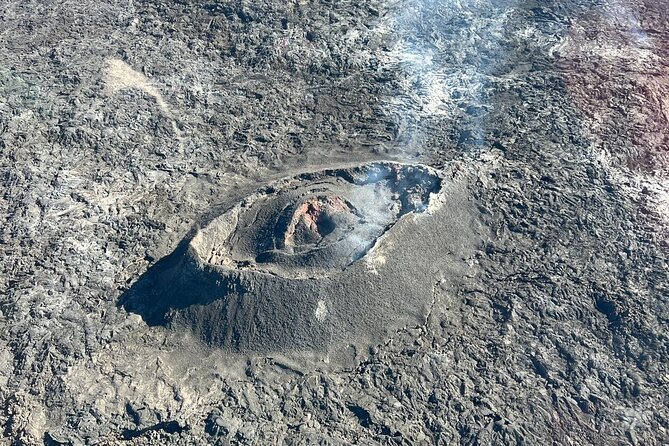
That uncertainty is part of the experience, though it also calls for realistic expectations. An eruption can stop days before your flight. You might still see smoking craters, fresh lava, and ground altered by heat, but not the red glow shown in promotional pictures. The peninsula remains impressive when quiet, yet the sight will be more geological than dramatic.
The region has recorded more than 50,000 earthquakes in recent years. That figure helps explain why the ground here changes so quickly. You are not simply looking at an old volcano preserved for tourists. You are seeing a place that continues to shift, crack, and produce new rock.
The small helicopter changes the experience
The maximum group size is five people. One passenger may sit beside the pilot, while the others sit behind, and the pilot works to give everyone repeated views. Several flights have made multiple passes around a volcano or fissure rather than giving one quick look and moving on.
That matters for photography. A single pass can leave the person on the wrong side of the aircraft staring at the back of someone’s head. Repeated circuits improve your chances of seeing the key features and getting a usable photograph. The helicopter’s small size also makes the experience feel more personal than a large sightseeing aircraft.
Still, you should not expect complete control over seating. One passenger cannot simply claim the front seat, and the pilot may decide who sits where. If you care about a particular view, ask politely at the base, but understand that safety and fair access come first.
The flight is short. Thirty-five to 45 minutes passes quickly, especially if the aircraft spends time positioning around volcanic features. That duration is enough for a strong overview, not a full-day expedition. If you want extended time on the peninsula, hiking, or a long stop beside lava, this is not the right format.
A possible landing on solidified lava
The most memorable version of this tour includes a landing near an old eruption site. When weather, regulations, and ground conditions allow, you may step out and walk on a lava field. The solidified rock can still be warm in places, and sulfurous gas may vent from the ground.
This is a powerful moment because the volcano stops being a distant shape below the aircraft. You are standing beside the product of a recent eruption, looking at broken black rock and signs that the ground is not entirely cold or finished. Several people found this landing to be the highlight of the experience.
You should treat the landing as a possibility, not a promise. The supplied tour details describe the volcanic flight, while landing reports vary with conditions. Some flights land near a crater or lava field. Others remain in the air, particularly when the volcano is inactive, the weather is poor, or the site is not suitable.
If you do land, the stop may also help solve the seating problem. After landing, the group can change positions so everyone gets a better look at the surrounding terrain. That small detail makes the five-person setup especially useful.
More Lava and Eruption Tours in Reykjavik
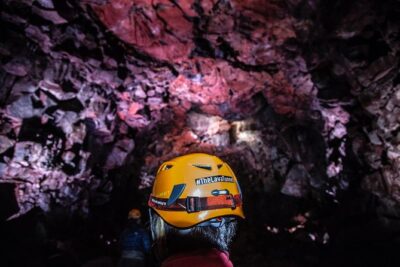
- The Lava Tunnel Tour – Raufarhólshellir
★ 5.0 · 2,373 reviews - From Reykjavík: Icelandic Horse Riding Tour in Lava Fields
★ 4.7 · 1,356 reviews - Reykjavik: Snæfellsnes Day Trip with Vatnshellir Lava Cave
★ 4.7 · 1,108 reviews - Reykjavík: Volcano Eruption Site and Reykjanes Hiking Tour
★ 4.6 · 1,066 reviews
What the pilots add to the flight
The aircraft provides the spectacle, but the pilot shapes the experience. The strongest feedback centers on pilots who keep the flight smooth, explain what you are seeing, and make several passes so each person gets a fair view.
Laura is repeatedly singled out for excellent service and informative guiding. Oliver has been praised for explaining the eruption site during a weather-rescheduled flight. Robert made a birthday flight memorable by landing near a crater and explaining the area. Aleksander, a pilot from Norway, was praised for staying in touch during a weather change and explaining eruption types and time frames.
Those details point to what you should expect from a good flight: not a long lecture, but useful context at the right moment. You may learn why one crater looks different from another, when a lava flow formed, or how the peninsula’s recent activity fits into Iceland’s wider geology.
The pilots have also earned praise for calm handling. That is important if this is your first helicopter ride or you are nervous about heights. One person who had never flown in a helicopter described being frightened at first, then enjoying the experience because the pilot remained reassuring and professional.
Weather is the real scheduling factor
Icelandic weather can change quickly, and this tour requires suitable conditions. Wind and visibility have caused cancellations, sometimes on the day of departure. The operator has called passengers in the morning, offered a new time, and in some cases provided a full refund when no workable slot could be found.
I would schedule this tour early in your Iceland stay if possible. That gives you room to move it by a day or two if the weather turns bad. You can also book it near the end of your trip if you want a memorable final outing, but that leaves less flexibility if the flight is canceled.
Communication has usually been handled well, but scheduling is not always perfect. One dissatisfied passenger reported several attempts to move an already confirmed time and felt the company was poorly organized. The practical lesson is to keep your phone available, check messages, and avoid booking a tight connection immediately afterward.
The cancellation terms are straightforward. You can cancel for a full refund up to 24 hours before departure. Changes or cancellations inside that window are not accepted for a refund. If bad weather or insufficient numbers cancel the activity, you are offered another date, another experience, or a full refund.
Is $592.82 good value?
At $592.82 per person, this is a major Iceland expense. I would not call it a casual add-on. The price includes the helicopter tour and fuel surcharge, but not food, drinks, or transport to the base.
The value depends on what you want from Iceland. If you are mainly seeking inexpensive sightseeing, the cost will feel steep. You can see volcanic scenery from the ground on other outings, and a short flight cannot compete with a full day exploring the peninsula.
I see better value if you care about photography, geology, or a rare view that ground tours cannot provide. The helicopter gives you scale: broad lava flows, several craters at once, the coastline, and the sudden change from city to open volcanic terrain. A possible landing adds another layer, though it should not be the sole reason you book.
The small group also helps justify the price. You are not being moved through a large aircraft with dozens of people. With five passengers at most, the pilot can make repeated passes and answer questions more easily. For a special occasion, the cost may feel worthwhile. For a family watching every krona, it requires more thought.
Who should book this experience?
I would recommend it most strongly to photographers and people fascinated by natural forces. You get changing views, unusual angles, and a chance to photograph lava fields from above. The city-to-volcano route also gives you varied images in a short time.
It suits first-time helicopter passengers, too, provided you can accept a short flight and possible delays. Calm pilots and a small group make the ride less intimidating. Teenagers have also responded well to the mix of aircraft, volcanoes, and possible landing.
This is less suitable if you need a fixed schedule. It is also a poor fit if you expect guaranteed flowing lava. Volcanic eruptions are not a stage performance, and the tour cannot make an inactive crater erupt on command.
Keep your expectations centered on Iceland’s active geology, not only on red lava. A quiet flight over new rock and steaming craters can still be striking. In some ways, it may give you a clearer look at how eruptions reshape the peninsula.
Practical details before you reserve
The tour is offered in English and uses a mobile ticket. Confirmation arrives at booking. Most people can take part, but each passenger has a total weight limit of 243 pounds, so check how the operator applies that limit to your booking.
You do not need to arrange a separate return transfer. The flight finishes back at Glacier HeliACE FBO. Since the base is near public transportation, reaching it is simpler than arranging a remote pickup, but the tour does not include hotel transportation.
I would leave space in your schedule after the flight. Delays have occurred, and weather can shift the departure time. The operator may also contact you to offer a different slot. Give yourself enough breathing room to avoid turning a thrilling outing into a race to your next booking.
Should you book the Reykjanes helicopter tour?
Book it if you want a close, aerial look at Iceland’s newest volcanic ground and can accept uncertainty. The strongest version includes active lava or a landing on solidified lava, but even an inactive volcano can reveal craters, smoking ground, old flows, and the vast scale of Reykjanes.
I would reserve it early in your Reykjavík plans, watch the weather, and keep your expectations flexible. At this price, you should demand good communication and a safe, well-run flight. Most signs point to strong pilots, excellent views, and a small-group experience, but the short duration and unpredictable conditions are real limitations.
For a once-in-Iceland splurge, this is one of the more distinctive ways to see the country. Just remember that the volcano decides what kind of story you get.
FAQ
Where does the helicopter tour start?
The tour starts at Glacier HeliACE FBO Reykjavik, at Nauthólsvegur 101, 105 Reykjavík, Iceland.
Where does the tour finish?
The activity ends back at the same meeting point, Glacier HeliACE FBO.
How long does the tour last?
The flight lasts approximately 35 to 45 minutes.
How many people can join the tour?
The activity has a maximum of five travelers.
Is hotel pickup included?
No. Hotel pickup and drop-off are not included.
Is transportation to the meeting point provided?
No. You must make your own way to the meeting point, though the location is near public transportation.
Will I definitely see an active eruption?
No. Eruptions are natural and may not be active when you fly. You may instead see old lava flows, craters, or smoking ground.
Can the helicopter land on the lava field?
Some flights have landed near an eruption site or on a lava field, but a landing depends on weather, safety, and current conditions.
What happens if bad weather cancels the flight?
You will be offered a different date or a full refund if poor weather causes the cancellation.
Can I cancel for a full refund?
Yes. You can cancel at least 24 hours before the experience starts for a full refund. Cancellations or changes made less than 24 hours before departure are not accepted.
More Volcano Helicopter Flights in Reykjavik
- Fire and Ice Helicopter Tour: Glacier and Hengill Geothermal Area
★ 5.0 · 60 reviews - Private Reykjavik Helicopter Flight: Reykjanes Peninsula and Volcanic Landscapes
★ 5.0 · 47 reviews - Reykjavik: 45-Minute Volcano Sightseeing Helicopter Tour
★ 4.6 · 45 reviews - Reykjavik Helicopter Private Tour of Volcanoes
★ 5.0 · 37 reviews
More Volcano Helicopter Flights in Iceland
- From Reykjavik: New Volcanic Area Helicopter Tour
★ 4.8 · 500 reviews - 1-Hour Helicopter Tour in Iceland: The Geothermal Tour
★ 4.9 · 263 reviews - Helicopter Flight Over Geothermal Landscapes from Reykjavik
★ 5.0 · 154 reviews - Helicopter Tour Over Iceland’s Reykjanes Volcano Eruption Site
★ 5.0 · 68 reviews
Just added around Reykjavik
- Reykjavik Whale Watching and Lava Show★ 4.0 · 4 reviews
- South Coast Waterfalls Vík and Lava Show Tour From Reykjavík★ 3.5 · 4 reviews
- Northern Lights & Geothermal Baths Adventure★ 4.5 · 24 reviews
- Helicopter Tour Over Iceland’s Reykjanes Volcano Eruption Site★ 5.0 · 68 reviews
- Lava Caving Experience★ 5.0 · 23 reviews
- Lava Waterfalls, Sagas & Unique Canyon Baths – Small Group Tour★ 5.0 · 58 reviews
- Small Group Golden Circle with Kerid Crater & Tomato Farm Visit★ 4.5 · 13 reviews
- Reykjanes Peninsula: Volcanos & Blue Lagoon Self-Guided Tour★ 5.0 · 3 reviews
Lava & Eruption Tours, compared.
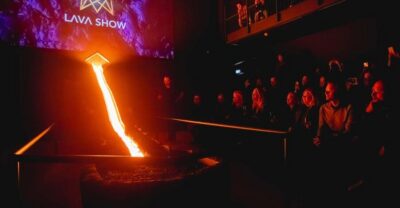
LAVA SHOW – Immersive Experience Entry Ticket
Our review of it →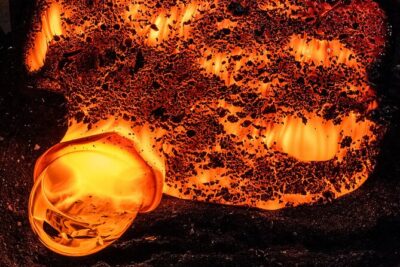
Lava Show Reykjavik Admission Ticket – Optional Premium Upgrade
Our review of it →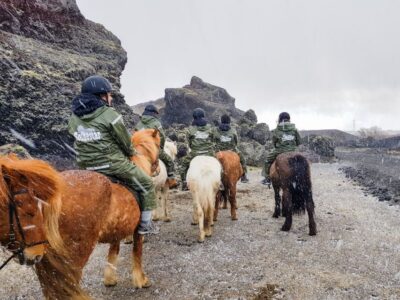
Sunset Jeep Tour of Mount Etna and Lava Flow Caves
Our review of it →
Raufarhólshellir Lava Tunnel: Underground Expedition
Our review of it →