
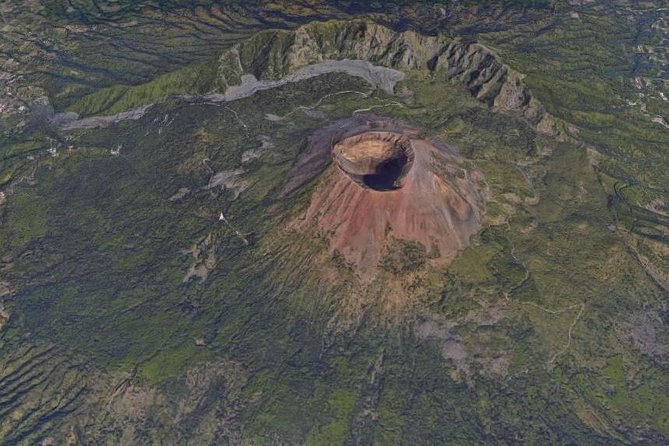
REVIEW · POMPEII
Private Day Tour to Vesuvius, Herculaneum & Pompeii with Pick Up
Ancient cities, one smoking volcano. This private day tour links Pompeii, Herculaneum, and Mount Vesuvius in a long but rewarding outing from Naples, Sorrento, Salerno, Amalfi, or nearby ports and stations. I like the door-to-door pickup and the freedom of a private vehicle, and I especially like the chance to compare Pompeii’s broad streets with Herculaneum’s better-preserved homes.
I also like the human touch offered by guides such as Antonino, Antonio, Tony, Giacomo, and Ilaria, whose approach ranges from detailed history to lively storytelling. The main drawback is the schedule: seeing three major sights in eight or nine hours means you get a strong introduction, not a slow archaeological study.
Key things to know before booking
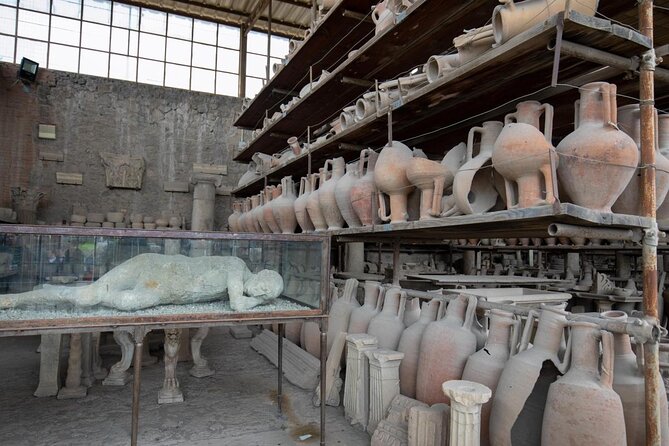
- Three major sights in one day: Pompeii, Herculaneum, and the crater trail of Mount Vesuvius.
- Private transport: Pickup can be arranged from accommodation, ports, train stations, or airports where vehicle access allows.
- Guiding options: You can select professional guiding and entrance tickets, or arrange parts of the experience separately according to the booking option.
- The volcano takes effort: The climb from the upper parking area includes roughly 35 minutes uphill and 35 minutes back down.
- Budget for Vesuvius: The volcano ticket costs an additional €12.60 per person.
- Best for active sightseers: You need moderate fitness, comfortable shoes, and enough energy for a full day outdoors.
Why this private Pompeii tour works well
The clever part of this outing is not simply the number of stops. It is the private transport between them. Pompeii, Herculaneum, and Vesuvius sit close together on a map, but arranging all three by public transport in one day can be awkward, especially when you add port schedules, train connections, and the mountain road.
Your driver collects you from an agreed point and handles the roads while you focus on the ruins. Pickup is offered from accommodation, cruise ports in the Naples, Salerno, Amalfi, and Sorrento areas, train platforms, and airports. If a narrow street blocks direct access, you are collected at the nearest place a vehicle can reach.
The group is private, so you are not tied to strangers or a fixed commentary style. That matters at archaeological sites. You can ask why a Roman shop had a particular layout, pause for photos, or spend more time on a home that catches your eye.
The experience is still tightly timed. Pompeii receives about two hours, Herculaneum about one hour and 40 minutes, and Vesuvius roughly two and a half hours including the mountain road and climb. You will see the main sights, but Pompeii alone can occupy several days if you want every street and building.
More Private Volcano Tours in Italy
- Private Pompeii and Vesuvius with Wine Tasting and Full Tickets
★ 5.0 · 18 reviews - Pompeii and Vesuvius Private Tour from Naples
★ 4.5 · 15 reviews - From Amalfi: Pompeii and Mount Vesuvius Private Day Trip
★ 5.0 · 10 reviews
Pompeii: a fast route through an entire Roman town
Pompeii is the largest and most demanding stop. You meet a licensed guide at the main gate, then enter after tickets are handled according to your selected option. The route begins near Piazza Porta Marina, the western entrance and one of the city’s most impressive gates.
From there, the guide leads you toward the Forum, the civic center of Pompeii. This was where administration, justice, trade, public business, and worship came together. The Forum gives you the essential map of Roman public life before the tour moves into more personal spaces.
The Basilica is next. Its name can mislead modern visitors, since this was not a Christian church. It was a place for legal business and commercial dealings, entered from the Forum through five openings divided by tuff pillars.
A stop at Thermopolium VI adds a useful everyday detail. This small cook shop sold hot food, giving you a glimpse of how residents without a full kitchen might eat. It is easier to picture Pompeii as a lived-in town when you move from grand civic buildings to counters serving quick meals.
Casa del Fauno shows the other end of the social scale. Covering about 3,000 square meters, it occupies a full city block and dates in its original layout to the second century BC. The house helps explain the size and wealth available to Pompeii’s elite.
Casa dei Vettii offers another look at prosperity. The home belonged to two freed brothers who became wealthy through trade. A painting of Priapus, associated with prosperity, guards the entrance. This is exactly the sort of detail that can disappear if you walk through Pompeii alone with only a map.
The Stabian Baths then show how Romans handled exercise, bathing, and social life. You see the sequence from dressing room to cold bath, warm bath, and hot bath. The arrangement is practical, and the guide’s explanation helps you read the building rather than simply admire its old walls.
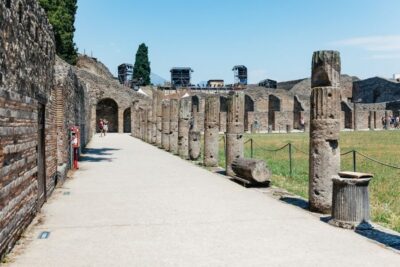
The final listed Pompeii stop is the Teatro Grande. Built into a natural slope, its divided seating and covered passageways reveal how Roman theater design worked. The theatre is a good reminder that Pompeii was not just a market town or a disaster site. It was a functioning community with entertainment, politics, commerce, and private luxury.
Two hours is enough for a clear introduction to these highlights. It is not enough to cover Pompeii at leisure. I would book this format if you want the key sights and an efficient overview. If Pompeii is your main reason for coming to Campania, a separate full day would suit you better.
Herculaneum: smaller, closer, and more detailed
Herculaneum changes the rhythm of the day. After Pompeii, your driver takes you to the Archaeological Park of Herculaneum, where you meet a licensed guide at the main gate. The site is smaller than Pompeii, but that does not make it secondary.
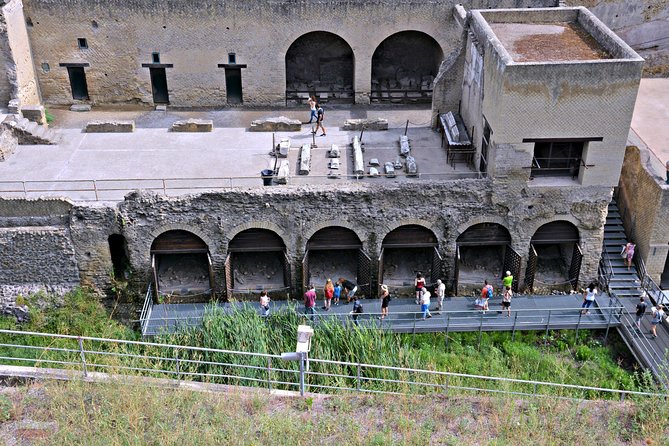
Many buildings here are preserved to a higher level of detail. The difference gives you a closer look at domestic life, building materials, and the physical effect of the eruption. Instead of crossing a huge city, you can focus on individual homes and surviving features.
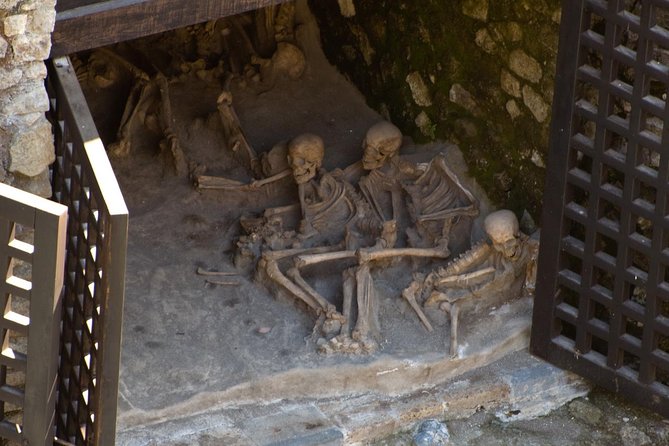
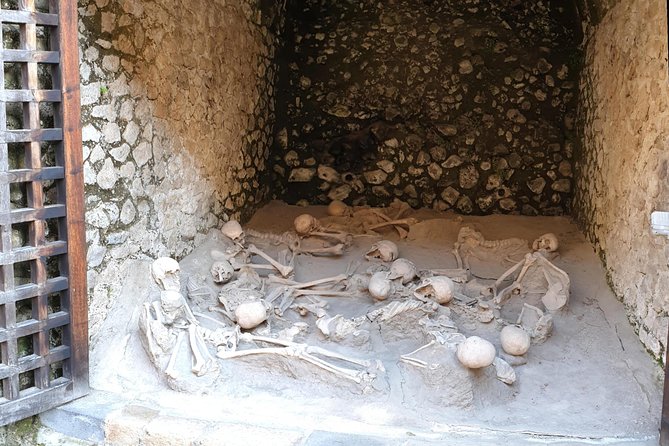
The Salone della Barca di Ercolano is a striking stop. Archaeologists restored the remains of a boat found in the marina area, the same general area where 300 skeletons were discovered. The boat brings the ancient waterfront into view and gives the visit a strong human dimension without requiring a long detour.
Casa dei Cervi is another highlight. It was one of the wealthiest private houses in Herculaneum, and its scale points to an owner of enormous means. Seeing it after Casa del Fauno makes the two sites work well together. Pompeii gives you breadth, while Herculaneum rewards attention to individual homes.
The scheduled Herculaneum visit lasts about 100 minutes. That is enough for a focused route, particularly with a guide who can explain what you are seeing. It is still a short visit for anyone who wants to examine every house, street, and shoreline feature.
I would not treat Herculaneum as an optional substitute for Pompeii. The two places tell different parts of the same story. If you have already heard that Herculaneum is simply a smaller Pompeii, this tour gives you a chance to correct that impression.
Mount Vesuvius: the day’s physical finale
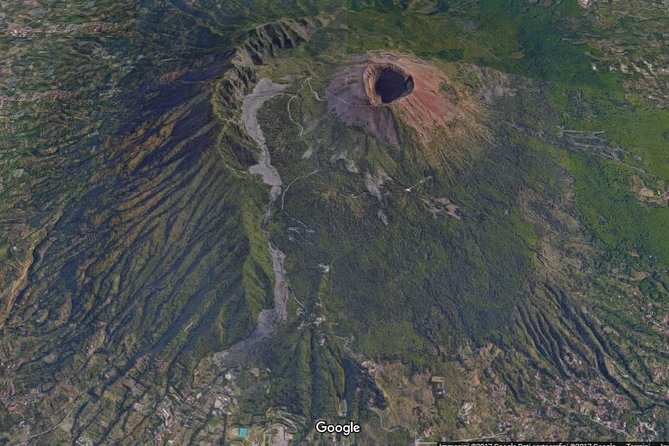
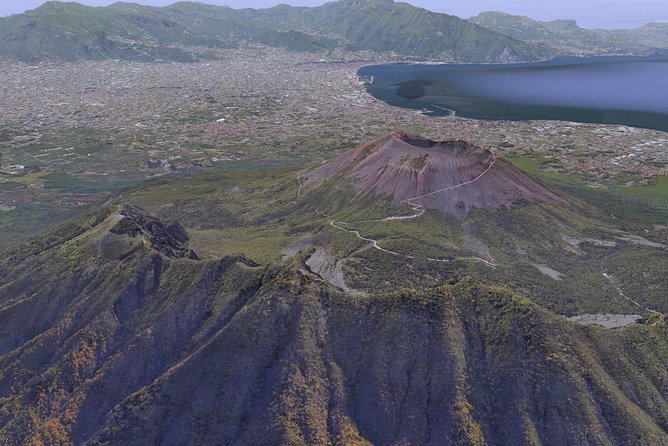
The road to Vesuvius takes you uphill from Herculaneum toward the national park. The trail begins at the upper parking area, around 1,000 meters above sea level, at the end of the Ercolano-Vesuvio provincial road.
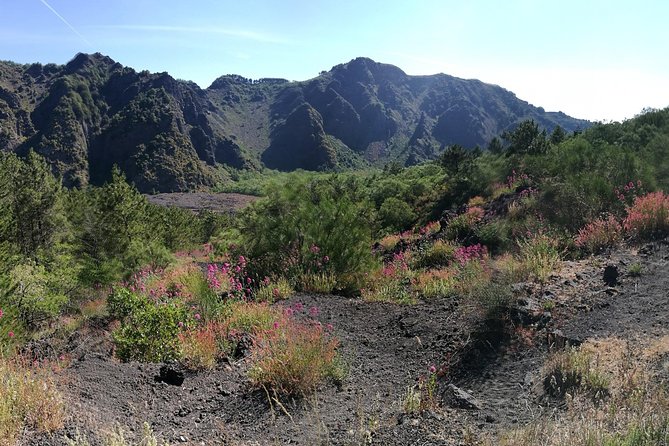
The park’s Gran Cono trail starts from the piazzale. There is an information point where you can get useful details about the protected area and buy a map. From the parking area, you can already look toward Mount Somma and the older volcanic formations before beginning the climb.
The walking section takes about 35 minutes to the top and another 35 minutes back to the vehicle. Other timing information allows around 40 minutes for the drive from the highway to the trail and another 40 minutes down. Altogether, the Vesuvius portion is listed at about two and a half hours.
The trail is not described as highly technical, but the surface can be rough and gravelly. One person described the route as a roughly two-mile hike up and back, with a wide trail and a manageable incline. Another advised hiking shoes. I would wear firm, comfortable walking shoes and avoid treating this as a casual stroll.
At the summit, you may be able to look into the caldera and see across the Bay of Naples, toward Sorrento, and over the surrounding area. Weather matters greatly. Cloud can block the crater and views, so an otherwise worthwhile climb may offer less scenery than expected.
The Vesuvius entry ticket is not included in the base details and costs €12.60 per person. Check the exact booking option carefully, since Pompeii and Herculaneum tickets may also depend on the package you choose.
More Vesuvius and Pompeii Tours in Pompeii:
- Naples: Pompeii and Mt. Vesuvius with Lunch and Wine Tasting
★ 4.5 · 2,454 reviews - From Pompeii: Bus Transfer to Vesuvius with Park Entry Fee
★ 4.4 · 1,205 reviews - From Pompeii/Naples: Vesuvius Easy Transfer and Entry Ticket
★ 4.3 · 660 reviews - Pompeii: Mount Vesuvius Crater Transfer with Ticket
★ 4.0 · 541 reviews
Guides, drivers, and the private format
The strongest part of this experience is the personal service. Antonino is repeatedly praised for clear explanations, easy conversation, patience, and the ability to keep children interested. He has also helped a family member using a wheelchair and adjusted the pace when needed.
Antonio and Tony are also named as guides or drivers in different arrangements. Their role may vary, so check who is assigned to your departure. Giacomo and Ilaria are named as site guides, while Dominic and Enzo are praised for calm, professional driving.
That variety is worth noting. You may not receive the same person for every section, and the exact setup can depend on the selected option. In the strongest arrangements, the driver handles the transfers and a licensed guide meets you at Pompeii and Herculaneum.
Private touring also helps families. Guides have kept children and teenagers involved by using stories, questions, and visual explanations. Couples and small groups benefit from being able to ask repeated questions without holding up a large coach party.
The style may not suit everyone. Some guides use theatrical storytelling and a lively delivery. If you prefer a quiet, academic lecture, say so early. A private tour gives you a better chance to set the tone.
Cost, lunch, and what the price really covers
The advertised price is about $120.98 per person, though the final cost depends on the selected package, group size, tickets, and guide arrangement. For a private vehicle, pickup, driver, and access to three major sites in one day, that can be fair value, especially for a family or small group.
The price becomes harder to judge if you expect long visits at each site. You are paying for transport, coordination, and a guided overview, not for three full archaeological days. The private format also avoids the lost time and fixed pace of a large group.
Lunch is not included. Food and drinks are also excluded, so ask how much time is available for a meal before the day begins. A farm or local restaurant may be suggested, but check the menu and prices before ordering. You are free to choose what suits your budget.
The tour commonly lasts eight to nine hours, and it may run longer when roads, site entry, or your own questions add time. That makes pickup location important. A cruise passenger must provide the ship name, docking time, disembarkation time, and re-boarding time when booking.
Who should book this day tour
I would choose this tour if you have limited time in Campania and want all three major sights without managing transport yourself. It works particularly well for cruise passengers, families, couples, and small groups staying in Naples, Sorrento, or along the Amalfi Coast.
It is also useful if someone in your group does not travel easily. Private transport reduces station changes and unnecessary walking between connections, and the pace can sometimes be adjusted.
I would not choose it if you want to study Pompeii in depth, spend hours photographing every room, or take a slow lunch between sites. The schedule is full, the sun can be strong, and the volcano adds a real physical challenge.
Free cancellation is available up to 24 hours before the start time. Poor weather can cancel the mountain portion or the experience, with a different date or refund offered under the stated conditions. Service animals are allowed, and a moderate fitness level is required.
Should you book it?
Book this tour if your priority is seeing Pompeii, Herculaneum, and Vesuvius in one well-organized day. The private vehicle, pickup service, and strong guides can turn a complicated route into a manageable one.
Skip it if one archaeological site deserves your full attention. In that case, spend a day at Pompeii or Herculaneum instead, then visit Vesuvius separately. For most first-time visitors with limited time, though, this is a practical and memorable way to connect the ruins with the volcano that changed them forever.
FAQ
How long does the tour last?
The experience lasts approximately eight to nine hours. Some departures may run longer without an added charge, depending on the day’s conditions.
Is hotel pickup available?
Pickup is offered from accommodation when the streets allow vehicle access. If not, you meet the driver at the closest accessible point.
Can I be picked up from a cruise port?
Yes. Pickup is available from cruise docking areas in Naples, Salerno, the Amalfi Coast, and the Sorrento area. Cruise passengers must provide ship and port timing details when booking.
Can I be picked up from a train station?
Yes. Pickup can be arranged from the train platform if you are arriving by train.
Are Pompeii and Herculaneum tickets included?
Tickets depend on the option selected. The tour information lists tickets to Pompeii and Herculaneum as included only when that option is chosen.
Is the Mount Vesuvius ticket included?
No. The Vesuvius ticket costs €12.60 per person and is listed separately.
How long is the Pompeii visit?
The Pompeii portion is scheduled for about two hours. It covers major areas such as the Forum, Basilica, Thermopolium VI, Casa del Fauno, Casa dei Vettii, Stabian Baths, and Teatro Grande.
How long is the Herculaneum visit?
The Herculaneum visit lasts about one hour and 40 minutes. The route includes the archaeological park, the restored boat remains, and Casa dei Cervi.
How difficult is the Vesuvius walk?
You need moderate physical fitness. The route takes about 35 minutes up and 35 minutes back down, and the surface may be rough and gravelly.
Can I cancel for a refund?
You can cancel at least 24 hours before the start time for a full refund. Changes or cancellations made less than 24 hours in advance are not accepted for a refund under the stated policy.
More Private Volcano Tours in Pompeii
- Full Day Private Tour of Naples and Vesuvius
★ 5.0 · 2 reviews - BEST Gobustan, Volcanoes & Absheron Fire Tour (Group or Private)
★ 5.0 · 1,254 reviews - Mount Batur: Private Volkswagen Volcano Safari
★ 4.6 · 1,120 reviews - Mount Batur Sunrise Trekking Private All Inclusive
★ 5.0 · 906 reviews
Just added around Pompeii
- Wine tasting in the Vesuvius national park★ 5.0 · 3 reviews
- Vesuvius tour entrance to the crater and return bus★ 4.5 · 9 reviews
- Mt. Vesuvius Wine Tasting and Lunch Experience from Pompeii★ 4.5 · 20 reviews
- Tour Mount Vesuvius with Entry Tickets and Round Trip Transfer Included★ 3.5 · 4 reviews
- Skip-the-Line Pompeii & Volcano Vesuvius Day Tour w Hotel or Port Pickup★ 5.0 · 28 reviews
- Sunset Experience at Vesuvius★ 4.0 · 3 reviews
- Pompeii: living with the volcano★ 5.0 · 5 reviews
- Trip Excursion to Mt. Vesuvius – Pompeii + Handmade pasta class with lunch★ 5.0 · 5 reviews
Mount Vesuvius & Pompeii Tours, compared.

Pompeii and Mount Vesuvius Day Trip from Rome with Pizza Lunch
Our review of it →
Pompeii Day Trip with Optional Vesuvius and Lunch
Our review of it →
Naples or Sorrento: Full-Day Pompeii and Mount Vesuvius Tour
Our review of it →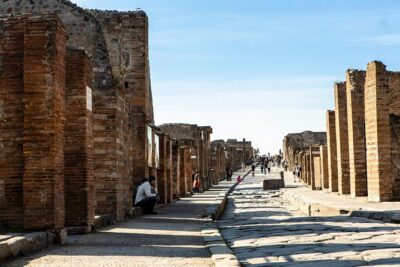
Pompeii & Mt.Vesuvius Day Tour from Naples with Pizza Lunch
Our review of it →
Mount Vesuvius: Skip-the-Line Ticket and Smart Digital Guide
Our review of it →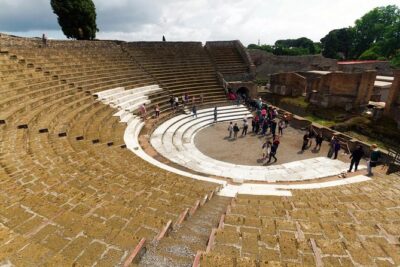
Pompeii & Mt Vesuvius All-Inclusive Small Group w/ Lunch
Our review of it →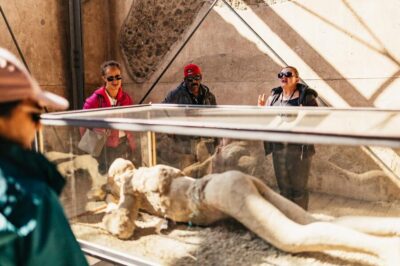
Pompeii and Mt. Vesuvius with Lunch and Wine Tasting
Our review of it →Browse the lists this tour appears in