REVIEW · HAWAII
Hawaii Volcanoes National Park Self-Guided Driving Audio Tour
Volcanoes make excellent storytellers. This 24.5-mile audio route turns a drive through Hawaiʻi Volcanoes National Park into an easy history and geology lesson, with more than 43 GPS-triggered stories along the way. I especially like the freedom to stop for a trail, skip a point, or pause the narration for photos. I also like the price: $16.99 covers an entire carload of up to four people, not just one seat.
The main drawback is the setup. You must download the separate Action Tour Guide app and tour content while you have strong Wi-Fi or cellular service. Once inside the park, weak coverage can make troubleshooting difficult, and the tour works best when you follow the route from the recommended starting point.
Key things to know before you go
- The route runs 24.5 miles: Allow about two to three hours for the drive, without counting longer hikes or extended stops.
- You get more than 43 audio stories: GPS starts each section as you approach, so you can keep your eyes on the road.
- It begins at the park entrance: The route leads through the entrance station, past the visitor center area, and toward Hōlei Sea Arch.
- The tour covers major sights: Expect volcanic craters, steam vents, a lava tube, petroglyphs, forest pockets, and coastal views.
- It is sold per car: One purchase works for a group of up to four people, making the cost low for families and couples.
- Download before arrival: The audio works offline, but the app and tour must be installed before you lose reliable service.
Why this audio tour works well inside a huge national park

Hawaiʻi Volcanoes National Park can feel scattered at first. Its highlights are spread along roads, short trails, overlooks, and side routes. A self-guided driving tour gives you a clear line through the park without tying you to a bus schedule or a guide’s timetable.
The narration is triggered by your phone’s GPS. You begin at the Entrance Station in Volcano, then follow the suggested route as stories start near each point of interest. That hands-free format matters here. You can listen through Bluetooth, USB, or AUX in your car, while the app continues to guide you from one stop to the next.
The route is designed for a two to three hour visit, but you can stretch it over a full day. Pause the tour for a walk, lunch, photographs, or a longer look at a crater. You can also repeat stories if the next one begins before you have finished listening. That is useful when you are driving slowly, stopping often, or sharing the audio with a car full of people.
The tour is offered in English only. It is also private in the practical sense that only your group takes part. No one meets you at the entrance, and there is no group vehicle to find.
More Volcano National Parks in Big Island
- Hilo Shore Excursion: Volcanoes National Park & Black Sand Beach
★ 4.5 · 2,338 reviews - Big Island: Fat Tire E-Bike Tour through Volcanoes National Park
★ 5.0 · 546 reviews - Big Island, Hawaii: Volcanoes National Park Safari
★ 4.5 · 545 reviews
Starting near Kīlauea Military Camp
After you pass through the Entrance Station, the first major stop is Kīlauea Military Camp. Today it is a recreational facility for military personnel, but the site also carries a difficult wartime history.
During World War II, the area was used as an internment camp for prisoners of war and Japanese citizens who had not been accused of wrongdoing. That context gives the opening section more weight than a simple introduction to park facilities. The narration helps connect the park’s volcanic setting with the human events that took place here.
Plan about 10 minutes for the stop if you are following the suggested schedule. The audio tour does not include an admission ticket to the park, so you must pay the separate national park entrance fee before reaching these sites.
Steam Vents and the unpleasant Sulphur Banks Trail
The Steam Vents offer one of the easiest ways to see volcanic activity without a strenuous hike. Heat from Kīlauea warms groundwater in underground pockets, and the resulting steam rises through cracks in the ground.
The audio explains why these vents matter. They are not simply clouds drifting across the road. They provide clues about heat and activity below the surface. Give yourself about 10 minutes here, though you may want longer if the weather and visibility are good.
Nearby, the Sulphur Banks Trail begins. The name is honest, but the smell can be sharp. Sulfur gases give the area an unmistakable odor, and the tour uses that sensory detail to explain what you are seeing. If you are sensitive to strong smells, this may be a short walk rather than a leisurely stroll.
Kīlauea Overlook and Kīlauea Iki
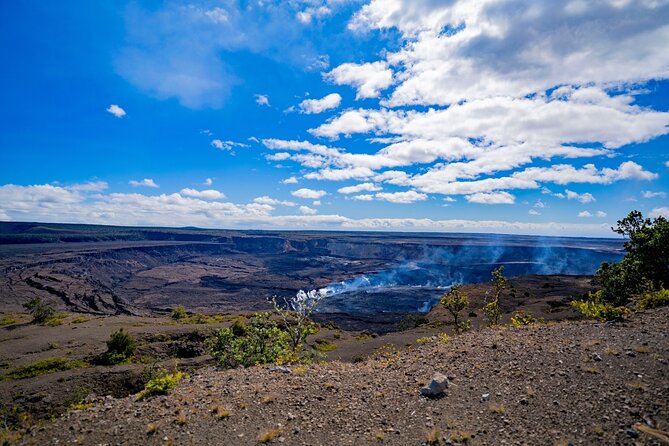
Kīlauea Overlook is one of the route’s essential viewpoints. The crater may not match the classic image of a steep, cone-shaped volcano, but Kīlauea is among the world’s most active volcanoes. The audio gives the broad geological setting before you continue along the road.
Next comes the Kīlauea Iki Trailhead. The trail is a 3.3-mile loop that crosses the Kīlauea Iki Crater. It takes about three hours and includes an elevation change that can feel strenuous. The tour sensibly treats the trailhead as a stop rather than assuming you have time to complete the hike.
That distinction is important. If you only have two or three hours for the entire route, you will likely pause for a look and save the full loop for another visit. If you have a full day, this is one of the places where the audio tour’s flexibility pays off. Pause it, take the hike, then resume when you return.
More Volcano National Parks in the USA
- Small-Group Big Island Tour: Hawaii Volcanoes National Park and Kona Coffee Farm
★ 5.0 · 343 reviews - Volcano National Park Adventure From Kona
★ 5.0 · 339 reviews - Private Tour: Hawaii Volcanoes National Park Eco Tour
★ 5.0 · 276 reviews - Volcano National Park Adventure from Waikoloa
★ 5.0 · 216 reviews
Nahuku, Thurston Lava Tube
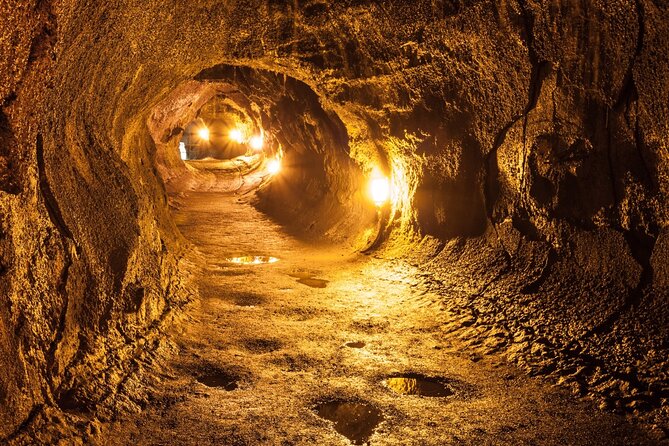
Nahuku, also called Thurston Lava Tube, is one of the park’s most unusual stops. More than 500 years ago, molten lava flowed through the area. The outside cooled and hardened while lava continued moving inside, leaving a tunnel behind.
You can walk through the resulting cave system. The tour explains the process in plain language, giving you something to look for beyond a dark passage and rough rock. Allow roughly 10 minutes in the scheduled tour plan, but add time if you want to explore at a slower pace.
The lava tube is a good example of the tour’s strength. A printed map can point you toward a cave, but audio helps explain how the feature formed while you are standing inside it.
Luamanu, Puhimau, and Pauahi craters
The route then moves through several volcanic features that can blur together without context. The narration helps separate them.
Luamanu Crater was once covered by dense forest. A single day changed that setting, and the stop shows how quickly volcanic activity can reshape an area. Puhimau Crater offers another look at volcanic formations created by underground forces.
Pauahi Crater is more dramatic in scale. It is a steep-sided pit crater about 330 feet deep and 1,000 feet across. Look for lava spatter deposits and fumaroles, the openings that release steam and gases. The audio gives these details meaning, especially if you are not used to reading volcanic features from a roadside viewpoint.
Each stop is listed at about 10 minutes. You do not need to treat that as a rule. The tour is built around your pace, and you can linger at the features that interest you most.
Puʻu Huluhulu and Kipuka Puaulu
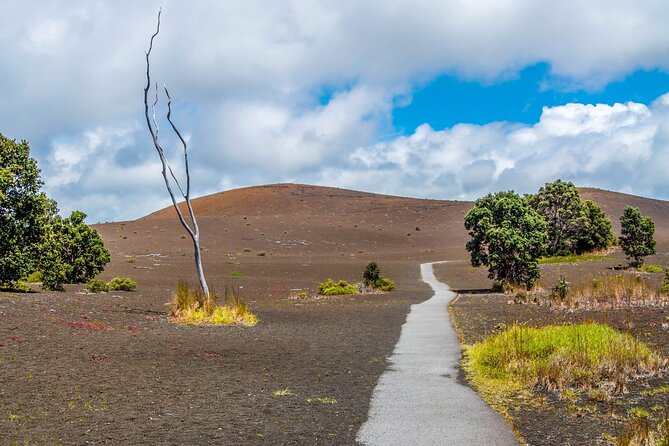
Puʻu Huluhulu is a cinder cone, similar to Puʻupuaʻi. Its name means hairy hill, a reference to the low shrubs that cover it and give it a fuzzy look from a distance.
This is a smaller detail, but it is the kind of detail that makes a drive more memorable. You are not only looking at a mound of dark volcanic material. You are learning how local names describe what people see on the ground.
Kipuka Puaulu offers a sharp contrast. A kipuka forms when a lava flow surrounds an older patch of vegetation. The plants remain as an island of life inside a much newer lava field, often with its own soil, moisture, and plant life.
The Kipuka Puaulu Trail lets you see this idea more closely. If you have only a short afternoon, you may need to choose between a quick roadside visit and a longer walk. The app lets you skip or pause content, so you are not forced to rush through every point.
Mauna Ulu Lookout and the long route to the coast
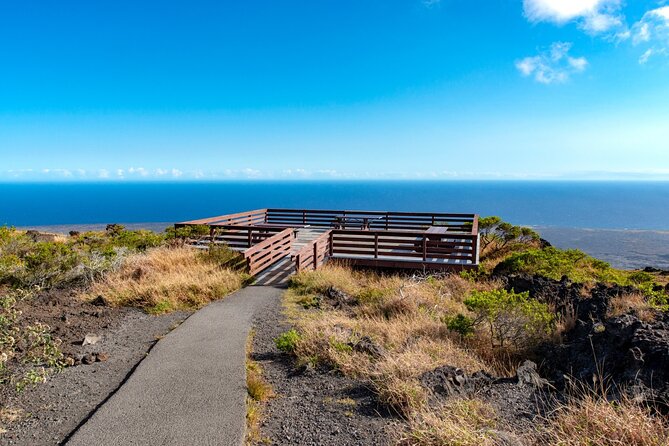
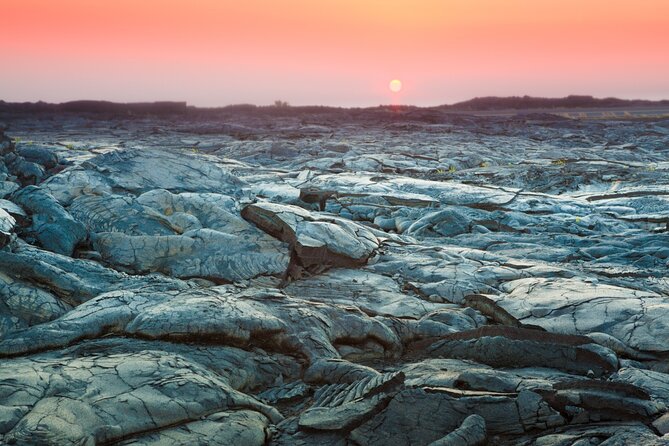
At Mauna Ulu Lookout, a raised platform gives you broad views of the Mauna Ulu lava flow. Much of the scene is flat and gray, but look for the toadstool-shaped formations. They add an unexpected bit of texture to an otherwise stark volcanic field.
This part of the route is a reminder that the park is not only about craters and steaming ground. Lava can create broad, quiet spaces that look almost bare at first glance. The narration helps you notice the smaller forms.
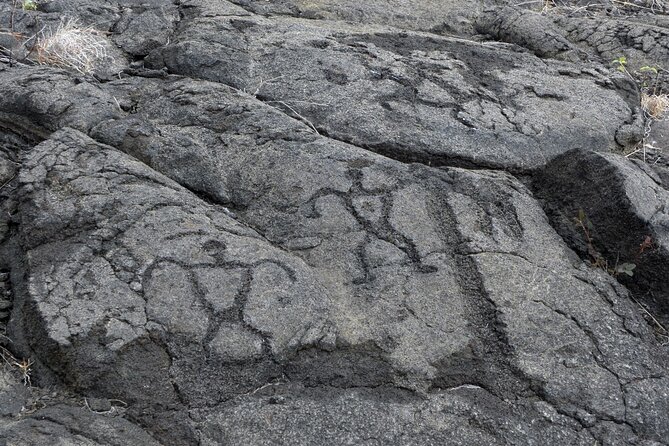
The drive continues toward Puʻu Loa Petroglyphs. More than 23,000 ancient petroglyphs are etched into hardened lava rock here. Treat the site with care. The markings are not decoration, and the value of the stop comes from seeing them in their original setting.
Because Puʻu Loa is reached along the longer road, time becomes important. If you begin late or spend hours on the Kīlauea Iki Trail, you may not reach every stop before your preferred return time. Start early enough for the sea arch and remember that the tour is designed to be paused across multiple days.
Hōlei Sea Arch, the route’s rewarding finish
Hōlei Sea Arch is the final major point on the route. The arch was formed naturally in the coastal cliff and creates one of the most photogenic views in the park.
I would make a special effort to reach this stop. The drive adds time, but the sea arch gives the route a strong finish after the inland craters, vents, and lava fields. The tour ends at Hōlei Sea Arch on Chain of Craters Road, near Pāhoa.
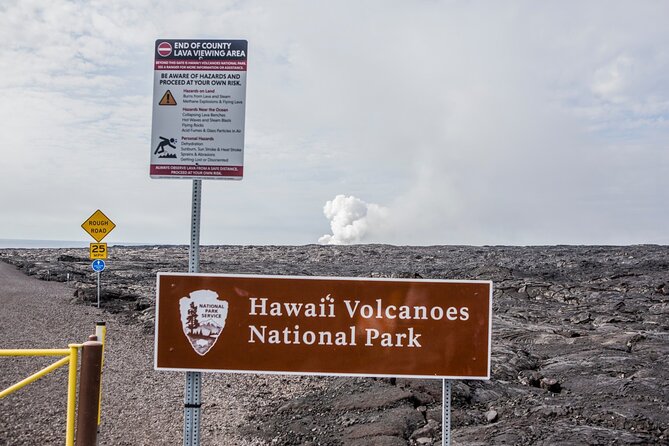
Road and park conditions can change, so check official updates before setting out. Government shutdowns or temporary closures may affect access, and current warnings should always take priority over the app’s route.
Volcano Art Center Gallery near the visitor center
The Volcano Art Center Gallery is in a small building separate from the main visitor center. It is a useful optional stop if you want a change from geology and driving.
The gallery focuses on fine arts. You may not have time for it on a short visit, but it fits nicely at the beginning or end of your park outing. The tour’s flexible format means you can stop the audio, browse the gallery, and continue later.
Price, app setup, and value
At $16.99 per group of up to four, the price is the tour’s strongest selling point. A family of four pays less than four separate tickets for many guided activities, and a couple can share the cost easily. You also receive lifetime access with no expiry, so you can use the tour on another trip or spread it across more than one day.
The value depends on preparation. After booking, look for setup instructions and the password in your email and text messages. Search for audio tour if the information does not appear quickly.
Then download the separate Action Tour Guide app and the tour itself while you have strong Wi-Fi or cellular service. Enter the password, open the tour once onsite, and choose the version that matches your starting point and direction if more than one appears.
For the best setup, connect your phone to your car stereo through Bluetooth, USB, or AUX. The app works offline after downloading. It is recommended for iPhone with iOS 15 or later, Android version 9 or later, or an iPad or tablet with GPS and cellular connectivity.
One caution: the tour is not always as simple as downloading a normal podcast. A few people have found the setup confusing, and weak park coverage can make last-minute help difficult. I would install the app the evening before, test the password, and preview the first section before driving to the entrance.
Who should choose this tour?
I would recommend it most strongly to families, couples, and independent drivers who want background information without joining an organized group. It is also a good choice if your schedule is uncertain. You can see only the first few sights on a short visit, or continue all the way to the sea arch when time allows.
The tour is less suitable if you want a live guide, a fixed hiking program, or a route that can be driven equally well in reverse. The recommended direction matters, and one useful tip is to keep to the posted speed limit so the narration has time to finish.
Should you book it?
Book it if you want an inexpensive way to organize a large park, learn the story behind the volcanic features, and keep control of your day. The strongest parts are the GPS-triggered narration, the broad range of stops, the offline function, and the low per-car price.
Skip it if you dislike app setup or prefer to plan every stop yourself using the free national park app. That free option can provide written information, while this tour adds spoken stories and automatic audio as you drive.
For most visitors with a rental car, the $16.99 cost is easy to justify. Just download everything before you reach the park, start at the Entrance Station, and save enough time to reach Hōlei Sea Arch.
FAQ
How long does the Hawaii Volcanoes National Park audio tour take?
The driving route is about 24.5 miles and takes approximately two to three hours. Longer hikes, such as the 3.3-mile Kīlauea Iki loop, require additional time.
Where does the tour start and end?
It starts at the Entrance Station in Volcano, Hawaii. The route ends at Hōlei Sea Arch on Chain of Craters Road near Pāhoa.
Does the tour include the national park entrance fee?
No. You must pay the separate entrance fee for Hawaiʻi Volcanoes National Park. Attraction tickets, passes, and reservations are not included.
Does the audio work without cell service?
Yes, but you must download the app and tour content while you have strong Wi-Fi or cellular service. After downloading, the audio and offline maps can work without a connection.
How many people can use one purchase?
One purchase covers a group of up to four people in the same car. The activity is private, with only your group participating.
Can I pause the tour or use it on another day?
Yes. The tour has lifetime access with no expiry. You can pause it, take side trips, skip stops, and continue later or use it again on another trip.
More Self-Guided Tours in Big Island
- Hawaii: Volcanoes National Park E-Bike Rental and GPS Audio
★ 4.8 · 16 reviews - Volcanic Valley Self Guided Walking and Hiking at Waimangu
★ 4.5 · 248 reviews - Self-Guided Geothermal Tour in Orakei Korako
★ 5.0 · 178 reviews - Vesuvius National Park Skip-The-Line Ticket and Audio Guide
★ 3.4 · 141 reviews
More Hawaii Volcano Tours in Big Island
- Private Guide Meet In Hawaii Volcanoes National Park
★ 5.0 · 181 reviews - Self-Guided GPS Audio E-Bike Tour Hawaii Volcanoes National Park
★ 4.5 · 131 reviews - Hilo Cruise Ship Excursion: Volcanoes National Park Rainbow Falls
★ 4.5 · 130 reviews - Hawaii Volcanoes National Park Experience from the Big Island
★ 4.5 · 102 reviews
Just added around Big Island
- Private Electric Bike Tour with Lava Hike in Pāhoa★ 5.0 · 8 reviews
- Volcanoes Hawaii Wonders National Park – Full Day★ 5.0 · 5 reviews
- Volcanoes National Park Private Tour★ 5.0 · 13 reviews
- Volcano Adventure – Search the Most Recent Active Volcano from Kona★ 4.0 · 27 reviews
- Volcano Adventure Tour & Waterfall – Shore Excursion from Hilo Harbor★ 4.0 · 10 reviews
- Hilo-6 Hour Private Tour-Volcanoes NP, Rainbow Falls and more.★ 5.0 · 16 reviews
- Volcano Tour from Kona★ 5.0 · 5 reviews
- Private – Hawaii Volcanoes NP and Black Sand Beaches Tour★ 5.0 · 9 reviews
Volcano National Parks, compared.
Teide National Park Sunset & Stargazing Tour
Our review of it →
Sunset and Stargazing at Teide National Park
Our review of it →
Teide National Park Sunset & Stargazing with Dinner (Star Safari)
Our review of it →
Hilo Shore Excursion: Volcanoes National Park & Black Sand Beach
Our review of it →
Teide National Park: Sunset & Stargazing Safari with Dinner
Our review of it →
Timanfaya National Park Volcanic Craters Tour
Our review of it →
Teide National Park Full-Day Tour with Pickup
Our review of it →