
REVIEW · TENERIFE
Tenerife: Teide Stargazing with an Astrophysicist
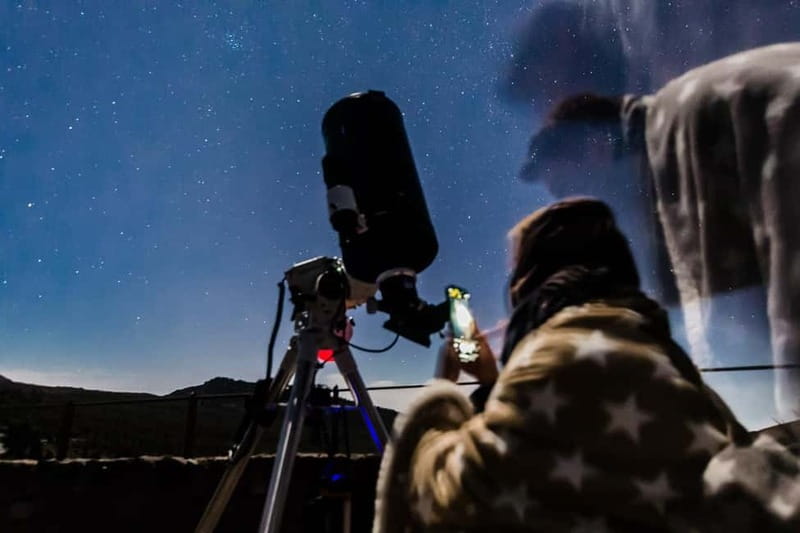
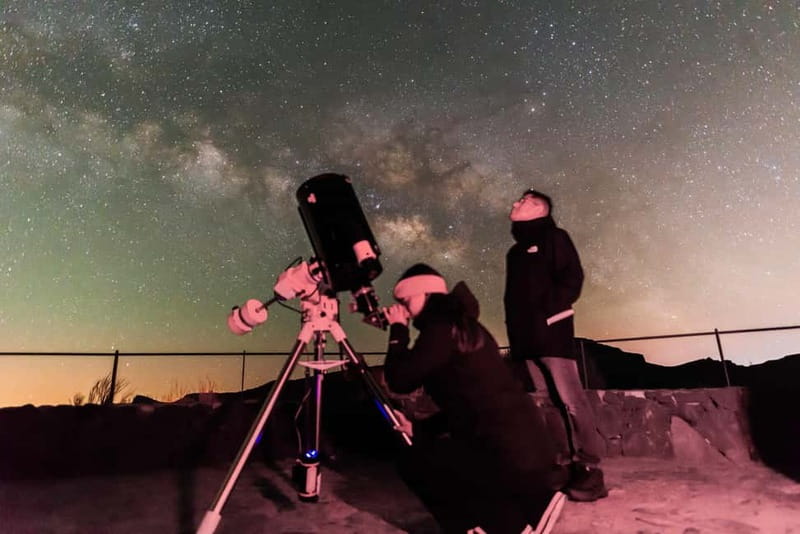
Stars look different from Teide. This 1.5-hour evening experience takes you into Teide National Park for a close look at the night sky with Adal, a trained astrophysicist and certified guide. You meet outside the Parador de Cañadas del Teide, then learn about constellations, astronomy, and current space research before viewing selected objects through a professional 8-inch telescope.
I like the small group limit of 10 people, which gives you a better chance to see through the telescope and ask questions. I also like the guide’s mix of science, humor, and plain explanations. The main drawback is the setting itself: this is high in the mountains, so cold weather, clouds, and difficult access can affect the evening.
You need your own vehicle or a taxi to reach the Parador, and transport is not included. That extra planning matters. Still, for $47 per person, this offers more than a basic look at the stars. You get a proper telescope, a specialist guide, and one of the best-known stargazing locations in the world.
Key points to know before booking
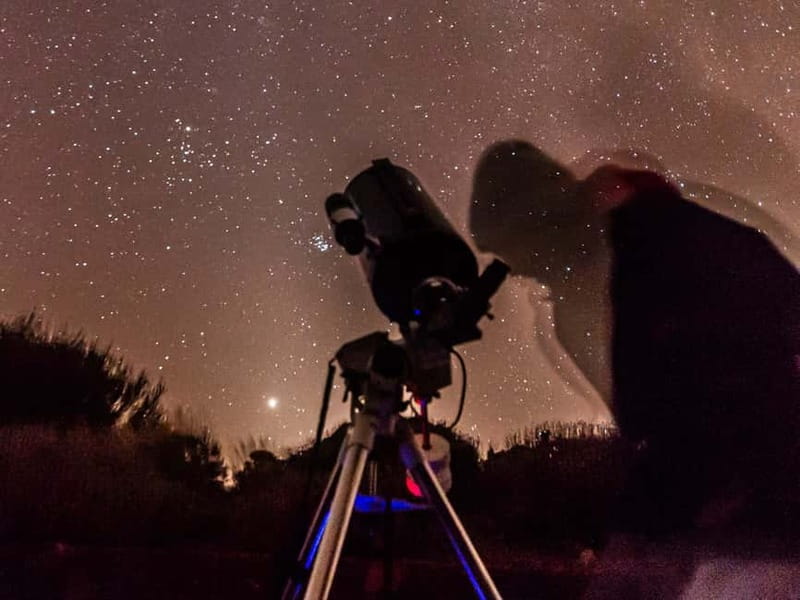
- The meeting point is high in Teide National Park: You meet at the entrance and outdoor patio of the Parador de Cañadas del Teide, not at a hotel in the resort areas.
- Adal is the main strength: He explains astronomy for complete beginners while still offering enough detail for keen amateurs.
- The 8-inch telescope can reveal real detail: Depending on the night, you might see star clusters, binary stars, a nebula, a galaxy, planets, or lunar craters.
- Groups stay small: A maximum of 10 people makes this more personal than a large coach-based astronomy event.
- Mountain clothing is essential: Expect about 0 to 4°C from October through March, and around 10 to 15°C from April through September.
- Weather can cancel the session: If the operator cancels, you receive a full refund, but you should keep your evening flexible.
Why Teide is a serious place for stargazing
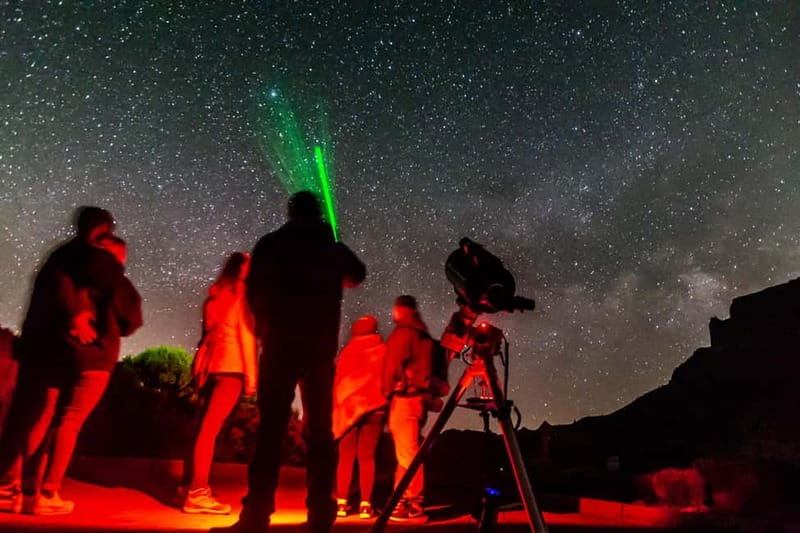
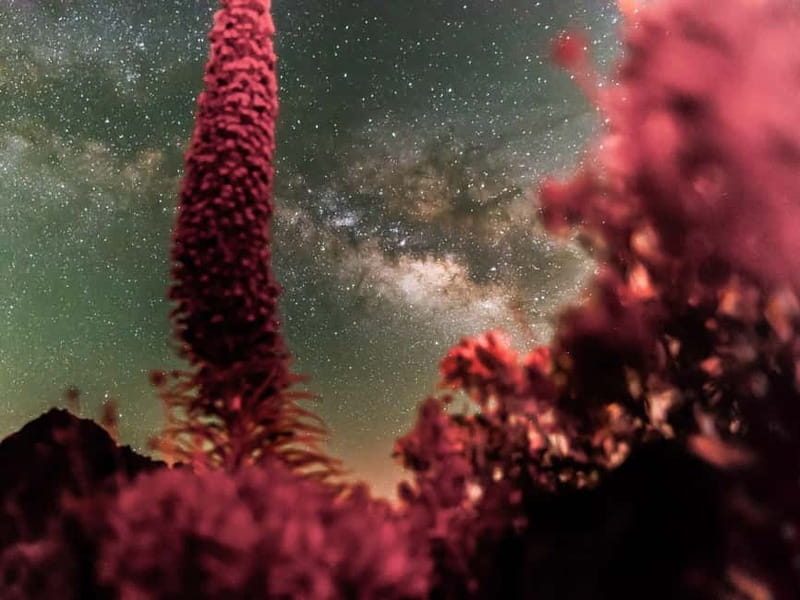
Teide National Park gives this experience its real value. You are far above Tenerife’s coastal resorts, at a high mountain location where the night sky can appear far more crowded with stars than it does from a town or beach.
That does not mean every evening will be perfect. Clouds, wind, visibility, and the phase of the Moon all affect what you see. One evening may be ideal for the Moon and planets, while another may be better for faint star groups or a nebula. The guide adjusts the session to the conditions rather than forcing a fixed list of objects.
The setting also changes the mood. You are outside at night, in cool mountain air, with a lantern and laser pointer helping the group follow the explanation. This is not a planetarium presentation with a polished ceiling. You are looking at the real sky above Tenerife, and the cold is part of the bargain.
That is why I would not treat this as a casual after-dinner activity. Plan it as a proper mountain outing. Bring warm layers, sturdy warm shoes, water, and comfortable clothing. From October to March, thermal clothing is a sensible choice. Even during the warmer months, the temperature can be much lower than at the coast.
More Volcano Sunset Tours in Spain
- Tenerife: Teide National Park Sunset & Stargazing Tour
★ 4.2 · 3,812 reviews - Tenerife: Sunset and Stargazing at Teide National Park
★ 4.7 · 2,826 reviews - Teide National Park Sunset & Stargazing with Dinner (Star Safari)
★ 5.0 · 2,601 reviews
Meeting at the Parador de Cañadas del Teide
The experience begins at the entrance and outdoor patio of the Parador de Cañadas del Teide. The address is Las Cañadas del Teide, 38300, Santa Cruz de Tenerife, Spain.
You are responsible for getting there. No transport, food, or drinks are included, so check your driving plan before booking. A taxi is another option, but you should arrange that in advance rather than assume one will be waiting in the high mountain area.
The location is important for another reason: you need to arrive ready for the temperature. Comfortable shoes are listed as essential, and that advice makes sense. You will be outdoors for the full session, and the ground may not feel as easy as a paved town square.
Regular group sessions are offered on Tuesdays and Fridays. Private sessions can be arranged on other days, which may suit couples, families, or small groups wanting a more personal pace. The standard experience is held in one language, either English or Spanish, rather than switching between several languages during the explanation.
The first part: constellations, stories, and the working night sky
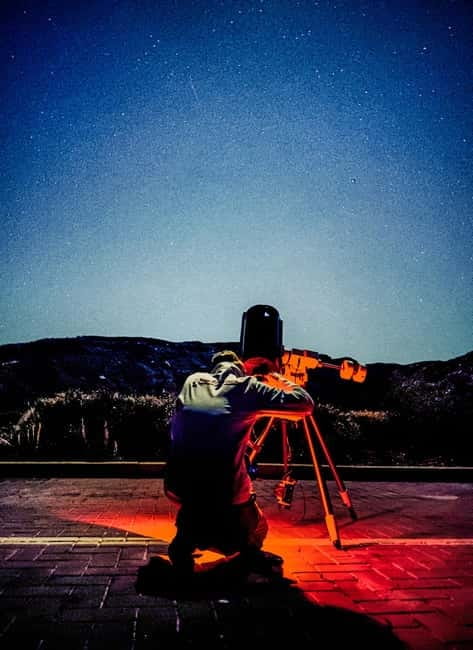
The opening part of the session introduces the sky without assuming that you already know astronomy. The guide uses a laser pointer and lantern to help direct your attention, then explains constellations and the myths connected with them.
This part matters because a dark sky can be confusing at first. You may see far more stars than you are used to seeing, but it is not always easy to identify a pattern. A guide who can point out the main shapes gives you a useful framework for understanding what is above you.
Adal’s teaching style is one of the strongest reasons to book. He has a friendly, energetic approach and can explain basic ideas to children and adults without making the subject feel like a school lesson. Questions are welcome, including simple ones. That makes the session suitable for beginners who might otherwise feel out of place at an astronomy event.
The talk also reaches beyond star names. You learn about the history of science and astronomy, as well as modern astrophysical research. The wording promises an introduction to the forefront of research, but you should not expect a university lecture or a specialist observatory course. The value is in connecting big ideas with what you can actually see in the sky that night.
Setting up the 8-inch telescope
A particularly useful feature is that you do not simply arrive and look through a telescope without explanation. Adal shows the group how the equipment is set up and explains what the telescope can do.
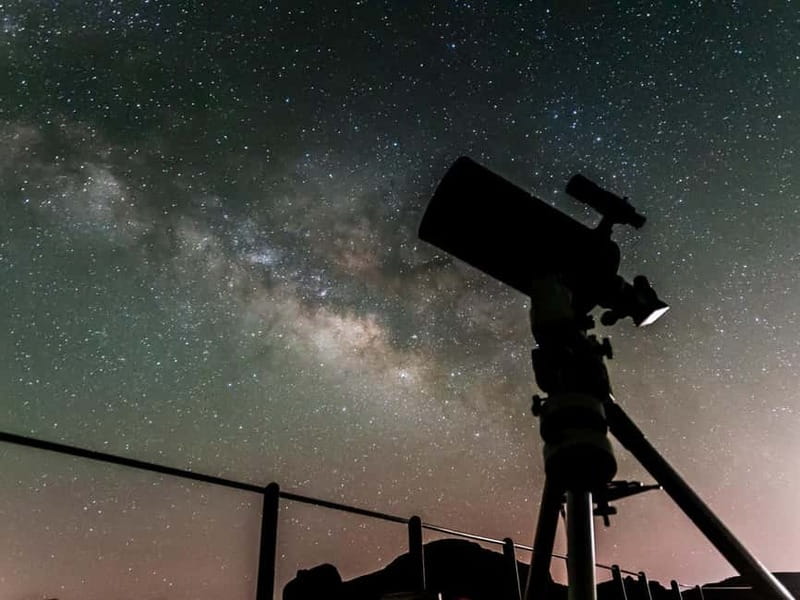
The professional 20-centimeter, or 8-inch, telescope is large enough to show more than bright points of light. Depending on the weather and the objects visible that evening, the session may include star clusters, false binary systems, nebulae, galaxies, planets, and the Moon.
The exact program cannot be guaranteed. This is astronomy, not a stage show. Clouds can block an object, a planet may not be visible at the right time, and the Moon can brighten the sky. That uncertainty is not a flaw in the activity, but you should understand it before paying.
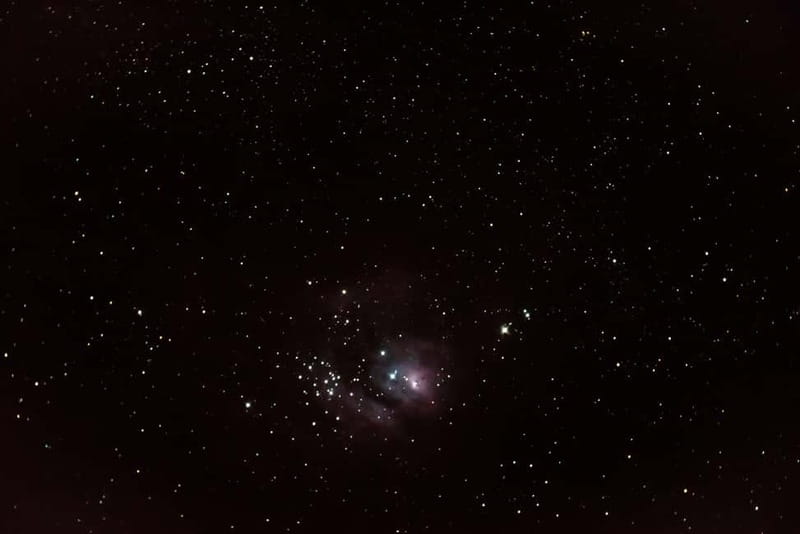
Past sessions have included Jupiter and Saturn, with Saturn’s rings and some moons visible through the telescope. Neptune has also been viewed, along with the Moon and its craters. Other observations have included young and old star groups, a reflection nebula, a galaxy, and binary stars.
That range is impressive for a 1.5-hour public session, but it is best to think in terms of possibilities rather than promises. The guide selects the most worthwhile targets available on your date.
More Volcano Sunset Tours in Tenerife
- Teide National Park: Sunset & Stargazing Safari with Dinner
★ 4.6 · 2,115 reviews - Teide by Night: Sunset & Stargazing with Telescopes Experience
★ 4.5 · 1,492 reviews - Teide: Guided Sunset & Stargazing Tour by Night with Dinner
★ 4.7 · 1,339 reviews - Sunset & Stargazing Experience From Teide
★ 4.5 · 1,129 reviews
What you may see through the telescope
The Moon is often the easiest object to appreciate. Through a telescope, its craters become sharply defined, and the familiar white disk turns into a surface with texture and shadows. A bright Moon can reduce the number of faint stars you see, but it can also provide one of the clearest views of the evening.
Planets offer a different kind of interest. Jupiter may show its position among the stars and, under suitable conditions, some of its moons. Saturn’s rings are a memorable sight because they turn a tiny point of light into an unmistakable planet. Neptune is much more subtle, and seeing it is more about recognizing a distant world than expecting a large, detailed image.
Star clusters help explain how stars appear in groups. A binary star system shows that two stars can look like a single point to the naked eye, then separate through the telescope. Nebulae and galaxies may appear faint, but their importance comes from what they represent: enormous structures far beyond our own solar system.
The guide’s role is crucial here. A telescope image can seem underwhelming if you do not know what you are looking at. With context, even a small, dim object can become one of the most interesting parts of the night.
A 1.5-hour format that stays focused
The session lasts 90 minutes and returns to the Parador meeting area. That is long enough for a substantial introduction, telescope setup, several viewing opportunities, and questions without turning into an exhausting late-night program.
The short format also helps families and casual stargazers. You do not need a full night of technical observation to enjoy the experience. Children from about eight years old can take part, although the operator warns that high-mountain conditions may not suit younger children. Babies under one year and children under eight are not considered suitable.
Families with older children can find plenty to enjoy. Adal has explained telescope equipment and celestial objects in ways that held the attention of children aged nine and thirteen. At the same time, adults with a stronger interest in astronomy can ask more detailed questions.
Couples may appreciate the atmosphere, but the experience is not designed as a private romantic event unless you arrange a private session. Solo visitors can also fit in comfortably because the small group format creates an easy setting for questions and conversation.
The guide makes the difference
The strongest part of this activity is the human side. Adal is described as passionate, funny, patient, and able to adjust his explanations to different levels. Those qualities matter more here than a long list of technical terms.
A specialist who talks only to experts can make a public astronomy event feel closed off. Adal’s approach appears more welcoming. He explains the telescope, responds to basic and advanced questions, and changes the focus when the conditions require it.
That flexibility is useful on a cloudy or imperfect night. You may not see every planned object, but a good guide can still make the time worthwhile by focusing on constellations, the science behind the objects, or the story of how astronomers study the universe.
The experience also includes more than entertainment. It gives you a clearer idea of how astronomers classify stars, use telescopes, and understand objects that are too distant to visit. You leave with practical knowledge you can use the next time you look up at the sky.
What the $47 price really buys you
At $47 per person, this is fairly priced for a specialist-led mountain activity. You are paying for a trained astrophysicist, a certified official guide, a professional 8-inch telescope, a small group, and a focused 90-minute session.
The price is especially reasonable if you care about the guide and the explanation, not just the view. A basic stargazing stop may show you a dark sky, but it may not explain why the stars look different, how the telescope works, or what separates a nebula from a galaxy.
The cost does not include transport, meals, or drinks. If you are staying near the coast, the drive or taxi will add to your overall budget. You also need to bring your own water and warm clothing.
There is one more financial point to consider: weather. The activity may be canceled because of high-mountain conditions. If the operator cancels, you receive a full refund. If you cancel within 24 hours, there is no refund, so avoid booking this as an inflexible final-night plan.
You can reserve now and pay later, which helps if your Tenerife schedule depends on weather. I would place it early enough in your trip to leave room for a second attempt if conditions cause a cancellation.
The main drawbacks to plan around
The location is both the attraction and the inconvenience. You cannot simply walk from a coastal hotel, and the activity does not provide a shuttle. You need your own car or a taxi to reach the Parador.
The cold is another real issue. Tenerife’s beaches may be warm while the Parador area feels wintry after dark. A light jacket is not enough for the colder months. Pack thermal layers, warm footwear, and clothing suited to the forecast.
The activity may not suit very young children. The late hour, darkness, and mountain temperature can be hard on children under eight, and the operator specifically excludes babies under one year.
Finally, astronomy has limits. You may not see the exact planet, galaxy, or nebula you hoped for. If you need a guaranteed visual program, this may frustrate you. If you enjoy learning how the sky changes from night to night, the uncertainty is part of the appeal.
Who should book this experience?
I would recommend it most strongly to first-time stargazers, couples, older families, solo visitors, and anyone who wants science explained without a heavy academic tone. The small group size is useful if you want time at the telescope and a chance to ask questions.
It also suits people who have already looked at the stars but want to understand more. Seeing Saturn’s rings, a cluster of stars, or the Moon’s craters through a proper telescope can add a new layer to a familiar subject.
I would hesitate if you dislike cold weather, cannot arrange transport to the Parador, or want an activity with a guaranteed list of objects. I would also think twice about taking very young children.
Should you book Teide Stargazing with an Astrophysicist?
Book it if you want a personal, science-led evening rather than a quick photo stop under the stars. Adal’s clear explanations, the 8-inch telescope, and the small group make the $47 price good value when the weather cooperates.
Pack seriously for the cold, arrange your own transport, and keep your expectations flexible. You may see the Moon, Saturn, Jupiter, Neptune, clusters, nebulae, or a galaxy, but the real promise is a better understanding of whatever the sky gives you that night.
FAQ
Where does the stargazing experience begin?
It begins at the entrance and outdoor patio of the Parador de Cañadas del Teide in Las Cañadas del Teide, Tenerife.
How long does the experience last?
The guided stargazing session lasts 1.5 hours and returns to the Parador meeting point.
Is transport included?
No. You need your own vehicle or must arrange a taxi to reach the Parador.
What languages are available?
The live guide is available in English and Spanish. Regular sessions are single-language experiences.
How large is the group?
The group is limited to a maximum of 10 participants.
What equipment is provided?
The experience includes a laser-guided presentation, a lantern, and a professional 8-inch telescope.
What should I wear?
Bring warm, weather-appropriate clothing and warm shoes. From October to March, temperatures may be between 0 and 4°C. From April to September, temperatures may be around 10 to 15°C.
What happens if bad weather cancels the activity?
The activity may be canceled because of mountain weather. If the operator cancels, you receive a 100 percent refund. If you cancel within 24 hours of the session, no refund is provided.
More Mount Teide Tours in Tenerife
- Tenerife: Mount Teide Tour with Cable Car Ticket & Transfer
★ 4.3 · 5,094 reviews - Tenerife: Mount Teide, Masca, Icod and Garachico Day Trip
★ 4.5 · 2,065 reviews - Tenerife: Teide National Park Full-Day Tour with Pickup
★ 4.5 · 1,613 reviews - Tenerife: Quad Adventure Tour in Teide National Park
★ 4.7 · 1,492 reviews
Just added around Tenerife
- Tenerife: Water Jet-Ski / Teide Volcano Quad Safari Combo★ 4.5 · 6 reviews
- Puerto de la Cruz: Quad to Mount Teide Day or Sunset★ 4.7 · 25 reviews
- Tenerife: Teide National Park and Volcano Buggy Tour★ 4.0 · 39 reviews
- Tenerife: Teide National Park & Teno Rural Park Private Tour★ 5.0 · 35 reviews
- Tenerife: Teide Mountain Buggy On-Road GuidedTour with drink★ 4.6 · 67 reviews
- Tenerife: Teide & Orotava Shore Excursion (special cruises)★ 4.7 · 19 reviews
- Tenerife: Teide and Stars★ 4.2 · 24 reviews
- Tenerife: Stargazing Walk in Teide National Park★ 4.8 · 28 reviews
Mount Teide Tours, compared.
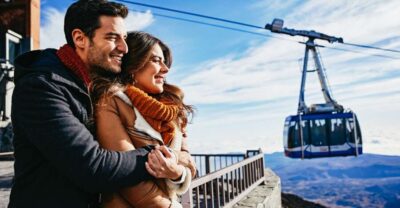
Mount Teide Tour with Cable Car Ticket & Transfer
Our review of it →
Teide National Park Sunset & Stargazing Tour
Our review of it →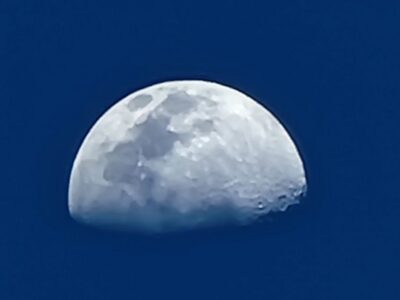
Sunset and Stargazing at Teide National Park
Our review of it →
Teide National Park Sunset & Stargazing with Dinner (Star Safari)
Our review of it →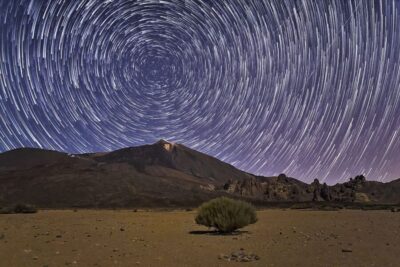
Teide National Park: Sunset & Stargazing Safari with Dinner
Our review of it →
Mount Teide, Masca, Icod and Garachico Day Trip
Our review of it →
Teide National Park Full-Day Tour with Pickup
Our review of it →
Browse the lists this tour appears in