REVIEW · TENERIFE
Tenerife. Stargazing in Teide National Park
The night sky puts Tenerife in a new light. This two-hour stargazing session in Teide National Park combines a high-end telescope with clear explanations of stars, planets, constellations, and sky mythology. The small-group setting gives you time at the eyepiece instead of making you shuffle through a large crowd.
I especially like the personal touch from guide Roberto, who explains difficult astronomy in plain language and keeps the session lively for children and adults. The free night-sky photographs are another real plus. The main drawback is simple but important: it can be very cold and windy at around 2,000 meters after dark, so a light holiday jacket will not always be enough.
I also like that you meet 40 minutes after sunset, when the sky has properly darkened, rather than rushing into an early evening appointment. The tradeoff is that transport is not included, so you need to arrange your own way to the Ermita de las Nieves.
Key points at a glance
- Roberto makes astronomy easy to follow: He explains the science, stories, and movements of the sky in English and Spanish, without assuming prior knowledge.
- The telescope is the star of the show: You may view planets, double stars, clusters, nebulae, galaxies, and the Moon through quality equipment.
- Small groups improve the experience: Groups are generally around 10 to 12 people, giving everyone a fair turn at the telescope.
- Bring serious warm clothing: Mountain wind and night temperatures can make the evening feel colder than expected.
- Free photos add lasting value: Roberto takes photographs of participants beneath the stars, sometimes with Teide in the background.
- You drive yourself to the meeting point: Parking is available near the meeting area, but the activity does not include hotel transfers, food, or drinks.
Why Teide is such a good place for stargazing
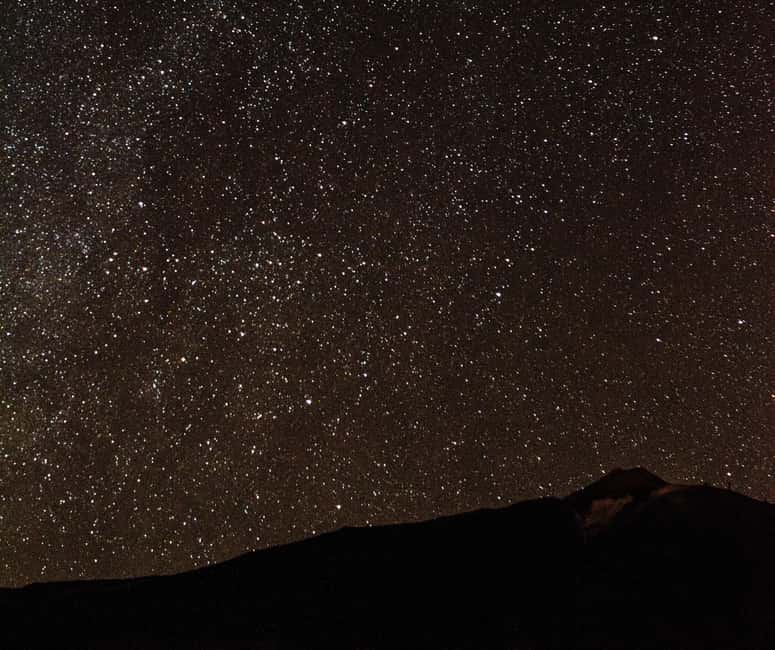
Teide National Park gives this experience a strong natural advantage. The meeting point is high in the mountains, away from the bright lights of Tenerife’s coastal resorts. That makes the sky darker and allows you to see far more than you would from a hotel balcony.
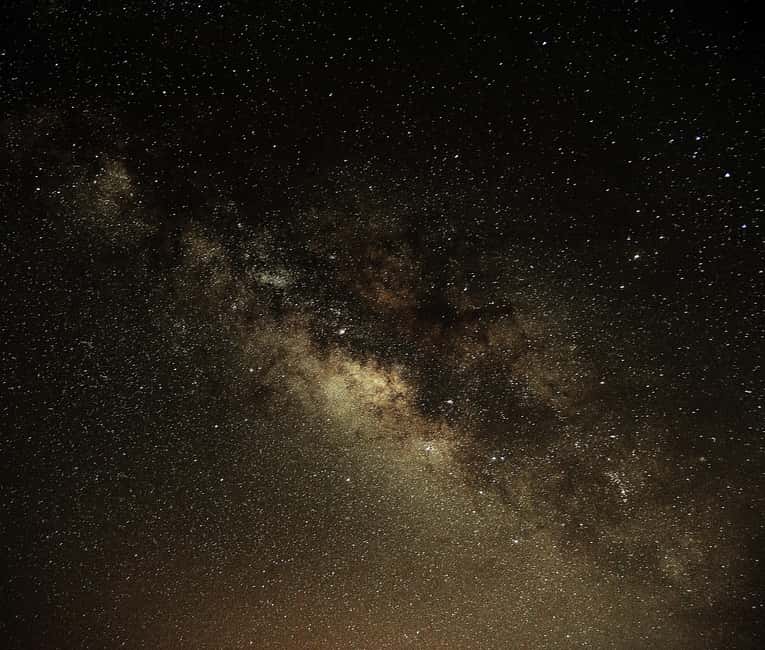
You will not simply be looking at a few bright stars. With clear conditions, the telescope may reveal planets, star clusters, nebulae, galaxies, double stars, and the Moon. Several sessions have included views of Saturn and its rings, Neptune, Andromeda, shooting stars, and the Milky Way. The exact sights change with the season and the weather, so you should treat the list as a guide rather than a promise.
The drive up is part of the outing. If you are renting a car, allow plenty of time because the roads can be busy around sunset, especially when visitors stop for the famous evening views from Teide. Arriving early also gives you time to enjoy the park before the activity begins.
The meeting point is next to the Ermita de las Nieves. The guide waits there, and the stargazing starts 40 minutes after sunset. That timing matters. At first, you may still see traces of daylight, but by the main viewing period the sky should be dark enough for the session to make sense.
More Volcano National Parks in Spain
- Tenerife: Teide National Park Sunset & Stargazing Tour
★ 4.2 · 3,812 reviews - Tenerife: Sunset and Stargazing at Teide National Park
★ 4.7 · 2,826 reviews - Teide National Park Sunset & Stargazing with Dinner (Star Safari)
★ 5.0 · 2,601 reviews
Meeting Roberto after sunset
Roberto is the main reason this experience feels more personal than a standard astronomy presentation. He has a warm, playful style and takes questions seriously, even when they come from children. You do not need to know the difference between a nebula and a constellation before arriving.
His explanations cover three connected subjects:
- The science of stars, planets, galaxies, and the movement of the celestial sphere
- The main constellations and how to recognize them
- The myths and cultural stories attached to the night sky
That mix works well. Pure science can feel dry if you are new to astronomy, while mythology without science leaves you with attractive stories but little understanding. Roberto links the two, showing you where to look and explaining why the sky appears to move during the night.
He also guides the session in English and Spanish. This is useful for mixed-language groups, and his clear presentation helps people who are not fully confident in either language. The pace is relaxed, with time to ask questions rather than rushing from one object to the next.
Several families have found the format especially successful. Children as young as nine have stayed engaged, while older adults have also been able to follow the explanations. That makes this a good choice if your group includes different ages and levels of interest.
What happens during the two-hour session
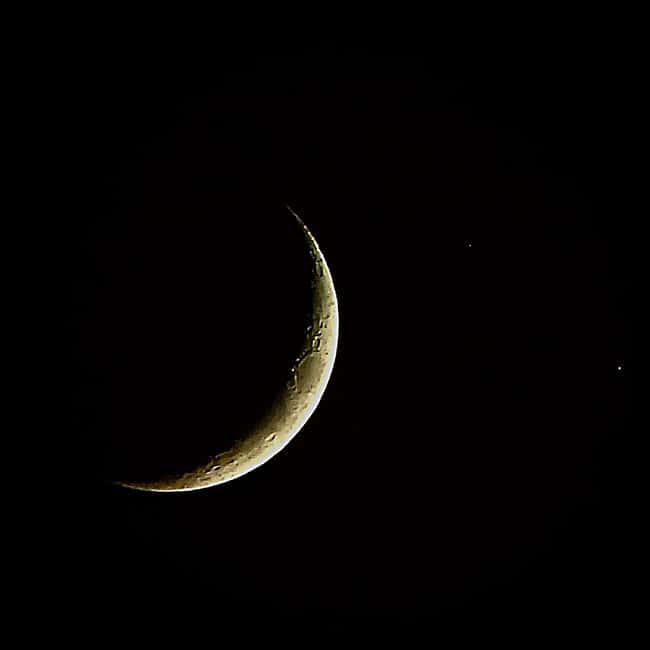
The exact order can change depending on the sky, but you can expect a steady progression from the naked-eye sky to telescope viewing.
First, you get your bearings
Roberto introduces the night sky and points out the major stars and constellations visible on that evening. He explains how the celestial sphere appears to move and shows you how to distinguish major stars from the patterns formed by constellations.
This opening is valuable because it gives you a framework. Without it, a dark sky can look like a mass of random white points. Afterward, you begin to recognize shapes and understand why certain stars are easy to find.
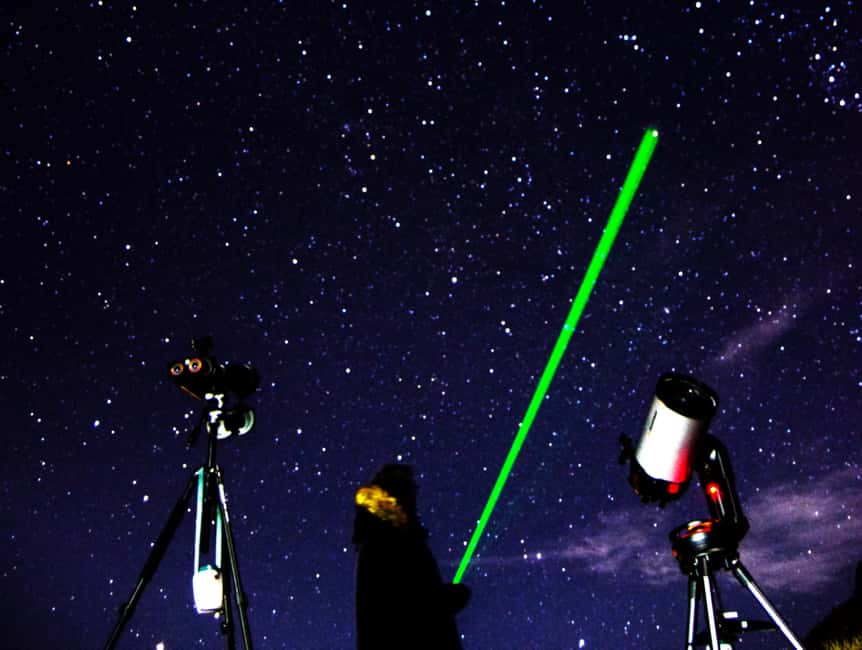
The laser explanations are particularly helpful here. A laser can point out a constellation or star without the guide having to wave vaguely toward a large patch of darkness. It keeps the whole group looking in the same direction.
More Volcano National Parks in Tenerife
- Teide National Park: Sunset & Stargazing Safari with Dinner
★ 4.6 · 2,115 reviews - Tenerife: Teide National Park Full-Day Tour with Pickup
★ 4.5 · 1,613 reviews - Tenerife: Quad Adventure Tour in Teide National Park
★ 4.7 · 1,492 reviews - Tenerife: Teide National Park Guided Buggy Tour
★ 4.7 · 609 reviews
Then, you take turns at the telescope
The high-end telescope brings the session close to the stars. One review identified the main instrument as an impressive 8-inch Go-To telescope, paired with astronomy binoculars on a tripod for broader viewing. The supplied details describe the equipment as high quality, and the repeated references to planets, galaxies, clusters, and nebulae support that claim.
Do not expect every object to look like a glossy space-agency photograph. Telescope views depend on the object, the weather, the phase of the Moon, and the amount of magnification. Even so, seeing Saturn’s rings, the surface of the Moon, a double star, or a distant galaxy with your own eyes is quite different from seeing an image on a screen.
Roberto makes sure the group gets turns at each point of interest. In a larger group, this can become frustrating, but groups here are kept small. Around 10 or 12 people is common, which gives you a reasonable chance to look carefully and ask questions.
The telescope portion is also not aimed only at experts. If you have used a telescope before, you can ask more technical questions. If this is your first time, Roberto starts at a basic level and builds from there.
Finally, you get the photo session
The free photographs are a thoughtful extra rather than the main event. Roberto takes pictures of participants beneath the starry sky, often with Teide visible behind them. Some sessions also include playful light effects, including lightsabers.
This is useful because night photography is difficult with a phone. You can try to take pictures yourself, but the result may be a dark blur with a few pinpricks overhead. The guide’s camera produces a much better keepsake, and the photographs are included rather than sold as an add-on.
One practical note: the photo session comes near the end, so stay until the activity is finished if you want the full experience and the group picture opportunities.
The cold is the one serious warning
The biggest issue is not the astronomy. It is the temperature.
You are high in the mountains, outside at night, often standing still while waiting for your turn at the telescope. Even if Tenerife feels warm at the coast, conditions at Teide can be sharply colder. Some participants have experienced temperatures around 3 degrees Celsius with strong wind, while others have found the cold manageable with good preparation.
Bring more than you think you need:
- A warm coat or thick fleece
- Long trousers
- Sturdy shoes or trainers
- Extra layers for the waiting periods
- A hat or other protection from wind
Roberto has provided blankets, spare fleece tops, jackets, water, and chocolates during some sessions. Those touches are welcome, but you should not rely on them as your main clothing plan. The listing specifically asks you to bring weather-appropriate clothing, and that advice deserves attention.
The cold can affect your enjoyment. Astronomy rewards patience, and shivering makes it harder to listen, look through the telescope, or enjoy the quiet. Dress for a mountain night, not a beach evening.
Small groups, comfort, and access
The small group is one of the strongest features. Astronomy works best when the mood is calm, and a group of about 10 to 12 people allows for questions without turning the session into a lecture hall.
Roberto also seems attentive to comfort. Water and chocolate have been offered, and blankets have been available when the wind picks up. These are modest details, but they matter when you are spending two hours outdoors.
The activity is listed as wheelchair accessible. Since the supplied information does not describe the exact ground surface or the route from the parking area to the viewing position, you should confirm any specific mobility needs before booking.
Babies under one year are not suitable for this activity. The length, late hour, cold, and outdoor setting make that restriction sensible.
Is the $41 price good value?
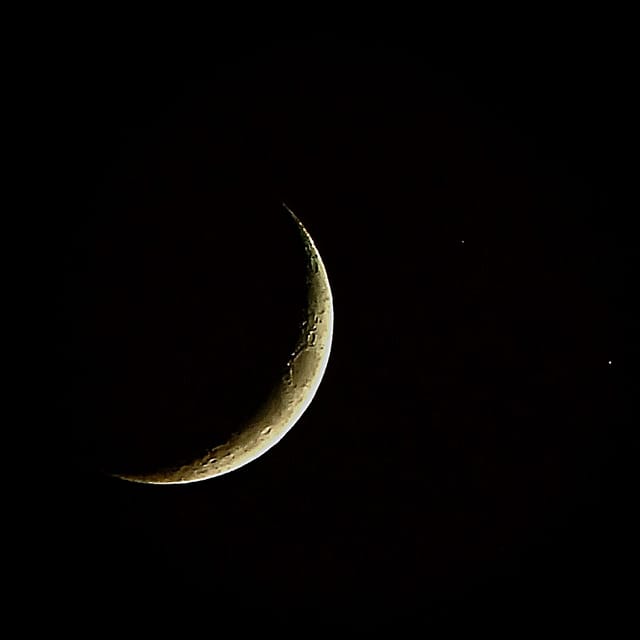
At $41 per person, this is a fair price for a two-hour guided astronomy session, especially when you consider the telescope, small group, bilingual guide, and free photographs.
You are not paying simply for access to a dark mountain. You are paying for someone to identify the objects, line them up in the telescope, explain what you are seeing, and make sure the group gets a turn. If you drove up alone, you might see plenty of stars, but you would miss much of the meaning and structure behind them.
The price also compares well with the personal attention. Roberto answers questions, adjusts the explanations for children and adults, and helps participants with simple astrophotography. The photos would otherwise require your own camera, tripod, and some familiarity with night shooting.
There are limits. The price does not include transportation, lunch, or drinks. You need to reach the park yourself, and you will want to eat before arriving. If you are not renting a car, check your transport options carefully because no transfer is included.
This is a good-value choice if you are curious about astronomy and want more than a quick look through a telescope. It is less appealing if you dislike cold nights, standing outdoors, or driving mountain roads after dark.
Who will enjoy this most?
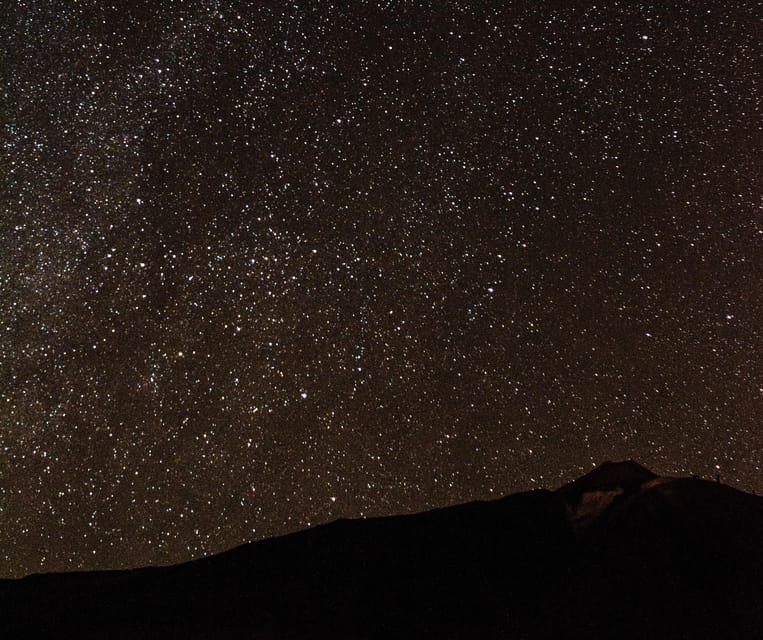
I would recommend this session to families, couples, solo visitors, and anyone who wants a quieter evening away from Tenerife’s resort entertainment.
It works particularly well for:
- First-time telescope users
- Families with school-age children
- Adults who enjoy science but do not have technical training
- Amateur astronomers who want to see a darker sky
- Visitors looking for a memorable evening activity
- Photographers who would like help with simple night-sky pictures
The experience is not only for serious astronomy fans. Roberto’s storytelling and humor keep it accessible, while the equipment gives experienced sky-watchers enough substance to stay interested. The range of objects changes across the year, so returning in another season could show you a different section of the sky.
I would be more cautious about recommending it to very young children, anyone who strongly dislikes the cold, or anyone expecting a luxury evening with transport and refreshments included. This is an outdoor mountain activity, and you should prepare accordingly.
Timing, language, and booking flexibility
The activity lasts two hours and begins 40 minutes after sunset. Starting times change with the season, so check the available time for your date.
Live guidance is available in English and Spanish. Some material may be shown in its original language, so ask questions if you need clarification.
You can cancel up to 24 hours before the activity for a full refund. The reserve-now, pay-later option also gives you some flexibility when your Tenerife plans are still changing.
Should you book Tenerife stargazing at Teide?
Book it if you want a friendly, hands-on introduction to the night sky, especially if you are happy to drive to Teide and dress for cold mountain weather. Roberto’s clear explanations, quality telescope, small groups, and free photographs give the evening more substance than a simple star-viewing stop.
I would book this as one of the more memorable activities on Tenerife, but I would not book it casually. Check the forecast, pack proper warm layers, allow extra driving time, and plan to eat beforehand. If you do that, the $41 price buys you a calm and personal way to see planets, clusters, galaxies, and constellations that you might otherwise pass over without recognizing.
FAQ
Where does the stargazing activity meet?
The guide waits next to the Ermita de las Nieves in Teide National Park.
When does the session start?
The activity begins 40 minutes after sunset. The exact starting time depends on the date.
How long does the experience last?
The full stargazing session lasts two hours.
Which languages are available?
The live guide speaks English and Spanish.
Is transportation included?
No. You must arrange your own transport to the meeting point. Lunch and drinks are also not included.
What should I bring?
Bring weather-appropriate clothing, including warm layers for the cold and wind at night in the mountains.
Are photographs included?
Yes. Free photographs of the experience are included, and the guide takes pictures beneath the night sky.
More Volcano Sunset Tours in Tenerife
- From Santiago del Teide: Sunset Quad Trip to Mount Teide
★ 4.8 · 735 reviews - Tenerife: Morning or Sunset Teide Buggy Tour
★ 4.9 · 404 reviews - Tenerife: Quad Bike Tour to Mount Teide at Sunset
★ 4.4 · 368 reviews - Teide Night Experience with Dinner and Stargazing
★ 3.9 · 359 reviews
More Volcano Sunset Tours in Spain
- Teide by Night: Sunset & Stargazing with Telescopes Experience
★ 4.5 · 1,492 reviews - Teide: Guided Sunset & Stargazing Tour by Night with Dinner
★ 4.7 · 1,339 reviews - Sunset & Stargazing Experience From Teide
★ 4.5 · 1,129 reviews - Tenerife: Teide Quad Trip (day/sunset) with jet ski option
★ 4.7 · 932 reviews
Just added around Tenerife
- Tenerife: Teide Stargazing with an Astrophysicist★ 4.9 · 74 reviews
- Tenerife: Water Jet-Ski / Teide Volcano Quad Safari Combo★ 4.5 · 6 reviews
- Puerto de la Cruz: Quad to Mount Teide Day or Sunset★ 4.7 · 25 reviews
- Tenerife: Teide National Park and Volcano Buggy Tour★ 4.0 · 39 reviews
- Tenerife: Teide National Park & Teno Rural Park Private Tour★ 5.0 · 35 reviews
- Tenerife: Teide Mountain Buggy On-Road GuidedTour with drink★ 4.6 · 67 reviews
- Tenerife: Teide & Orotava Shore Excursion (special cruises)★ 4.7 · 19 reviews
- Tenerife: Teide and Stars★ 4.2 · 24 reviews
Mount Teide Tours, compared.
Mount Teide Tour with Cable Car Ticket & Transfer
Our review of it →
Teide National Park Sunset & Stargazing Tour
Our review of it →
Sunset and Stargazing at Teide National Park
Our review of it →
Teide National Park Sunset & Stargazing with Dinner (Star Safari)
Our review of it →
Teide National Park: Sunset & Stargazing Safari with Dinner
Our review of it →
Mount Teide, Masca, Icod and Garachico Day Trip
Our review of it →
Teide National Park Full-Day Tour with Pickup
Our review of it →