
REVIEW · TENERIFE
Tenerife: Mount Teide Observatory Astronomical Tour
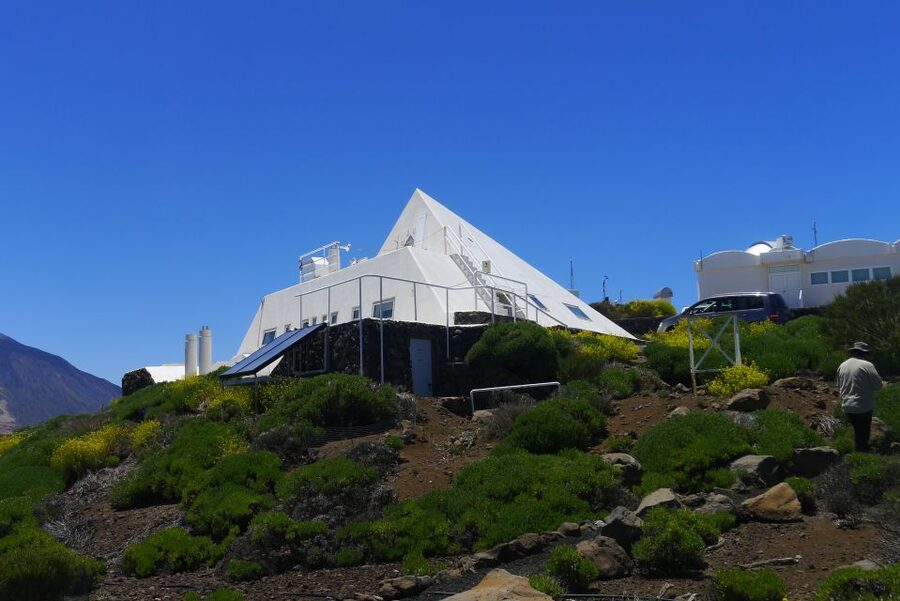
The stars are only half the story. This eight-hour Mount Teide outing combines a guided visit to the world’s largest solar observatory with sunset and night-sky viewing from one of Tenerife’s best astronomical locations. I especially like the mix of serious science and volcanic scenery, plus the small-group transport that avoids the feel of a big coach excursion.
I also like that professional astronomy guides explain what you are seeing rather than simply pointing a telescope at the sky. The main drawback is the cold: Tenerife may be warm at your hotel, but the mountain can be around 7°C with strong wind, and anyone arriving in shorts, sandals, or sleeveless clothing can be refused.
Key points before you book
- Two different skies in one day: See solar activity in daylight, then watch stars and planets after sunset.
- A rare observatory visit: This is the only tour in the supplied information that includes a guided visit to Teide Observatory.
- Professional astronomy guidance: Guides such as Lucas and Micaela have been praised for clear explanations and patient answers.
- Bring serious warm clothing: Long trousers, closed shoes, long sleeves, and warm layers are required.
- Eight hours from pickup to return: The day includes transport, observatory time, sunset, and night viewing.
- Best for curious adults and older children: It is not recommended for children under eight or people with mobility impairments.
Why Mount Teide is a strong astronomy setting
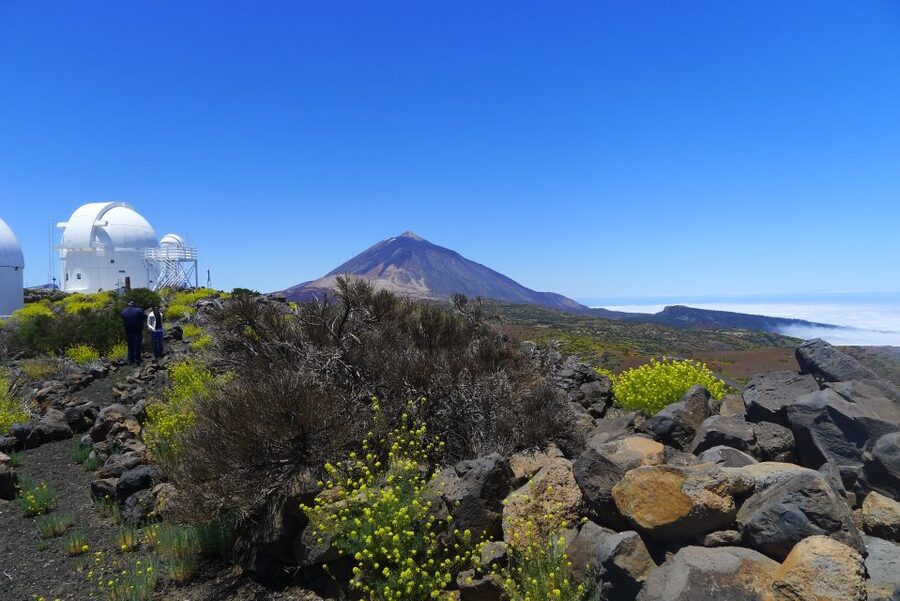
Mount Teide gives this excursion a useful advantage: you are far above Tenerife’s coastal resort areas, looking up from a volcanic mountain rather than from a town full of streetlights. The tour places astronomy at the center of the day, but you still get a good look at the island’s changing scenery on the drive.
The setting matters because the sky is not just decoration here. The guides explain how to identify constellations, how telescopes work, how stars develop, and how scientists identify elements in distant stars and planets. That turns stargazing from a quick look through a lens into something you can understand.
I like this approach for first-time telescope users. You do not need a background in astronomy. The explanations are designed to make complicated subjects approachable, and several guides have been praised for being friendly, clear, and willing to answer many questions.
The tour is also a good fit for people who want more than the standard Mount Teide cable-car visit. A daytime trip can give you dramatic volcanic views, but this experience adds the scientific side of the mountain and keeps you there after dark.
More Mount Teide Tours in Tenerife:
- Tenerife: Mount Teide Tour with Cable Car Ticket & Transfer
★ 4.3 · 5,094 reviews - Tenerife: Teide National Park Sunset & Stargazing Tour
★ 4.2 · 3,812 reviews - Tenerife: Sunset and Stargazing at Teide National Park
★ 4.7 · 2,826 reviews
The drive into Teide National Park
Pickup is available from selected hotels and meeting points in north Tenerife, including Parque San Antonio, GF Noelia, Hotel Magec, Hotel Concordia, Tucán, Coral Teide Mar, Riu Garoé, CC La Cúpula, and Kiosko Paragüitas. The exact pickup time changes with the season because the schedule is tied to sunset.
Transport is provided in a small vehicle rather than a large sightseeing coach. That matters on an eight-hour outing, especially when the route includes several stops and mountain roads. You can expect the ride to be part of the experience, not just a way to get from a hotel to an observatory.
One memorable route described by a past participant went up the west coast, with views toward the Los Gigantes cliffs. Another account praised the driver, Frederico, for handling the journey well, while guide Natasha was described as attentive and informative. Routes and pickup patterns can vary, so treat these details as possible highlights rather than fixed promises.
There is one practical weakness. Picking up people from several hotels can add time to the day. A central meeting point might be quicker, but hotel pickup is easier if you are staying in one of the listed areas and do not want to arrange your own transport.
Inside the world’s largest solar observatory
The observatory visit is the heart of the daytime program. This is not simply a photo stop outside a scientific building. A guide takes you through the facility and explains what its telescopes do and why solar observation matters.
The exact route inside can depend on operating conditions, but the visit may include a look at telescope equipment and demonstrations of how the instruments are used. One especially memorable part for past participants was seeing solar flares in real time. That is a useful reminder that the sun is an active star, not merely a bright disk in the sky.
The observatory also gives the tour a scientific edge that many sunset excursions lack. You are not only looking at stars after dark. You are learning how scientists study our own sun, then applying that interest to the wider night sky.
A fair warning: one participant felt the solar telescope used was smaller than the promotional image suggested. That does not cancel out the visit, but it is worth keeping expectations realistic. You are joining a guided scientific tour, not receiving private access to every major instrument in the facility.
The guide quality makes a large difference here. Lucas has been praised for explaining telescope design, star navigation, stellar life cycles, and the way elements are identified in distant objects. Micaela was also singled out for her professional manner. If your guide is as engaged as these two, the observatory visit can be much more rewarding than a self-guided look at equipment.
Sunset from the volcanic mountain
After the observatory, the day shifts from science to scenery. The group stops at a viewpoint to watch the sun go down over the volcanic surroundings.
Sunset is a useful bridge between the two parts of the excursion. You arrive in daylight, see the observatory at work, and then watch the colors change before the sky becomes dark enough for astronomy. It also gives you a chance to take photographs before you need to focus on preserving your night vision.
Do not assume the mountain will feel like coastal Tenerife. Conditions can change sharply with altitude. One account described temperatures near 30°C at the hotel and about 7°C at the cable-car station, with strong winds. That contrast is one of the most important facts to plan around.
The sunset stop is also when warm clothing starts to matter. If you are shivering, you will enjoy less of the astronomy talk and spend more time thinking about the ride back. Pack layers rather than relying on a single jacket.
A few more volcano trips around Tenerife worth a look
- Teide National Park Sunset & Stargazing with Dinner (Star Safari)
★ 5.0 · 2,601 reviews - Teide National Park: Sunset & Stargazing Safari with Dinner
★ 4.6 · 2,115 reviews - Tenerife: Mount Teide, Masca, Icod and Garachico Day Trip
★ 4.5 · 2,065 reviews - Tenerife: Teide National Park Full-Day Tour with Pickup
★ 4.5 · 1,613 reviews
Night sky viewing with powerful telescopes
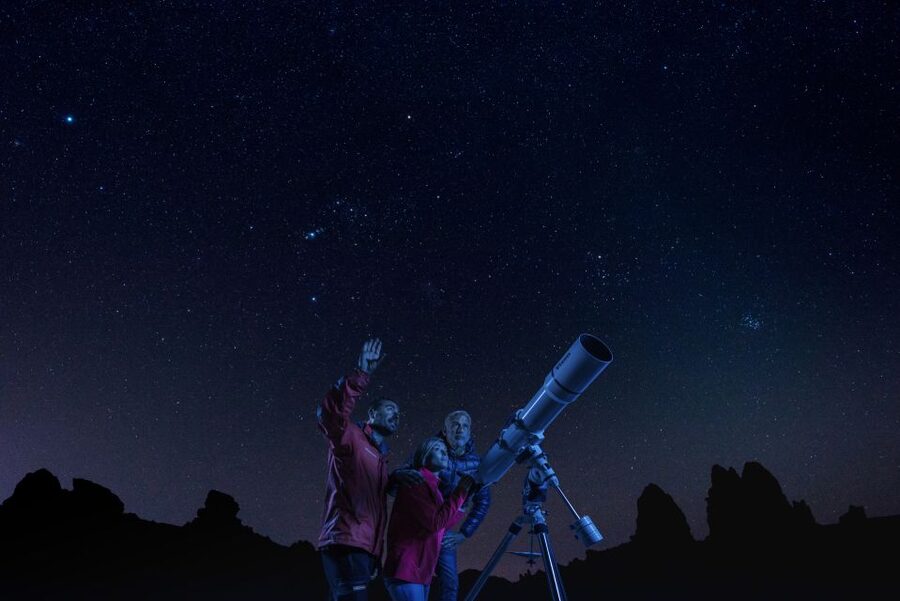
Once darkness arrives, the main event begins. The guide first helps you look at the sky with your unaided eyes. This is important because a telescope can show you one object at a time, while your eyes help you understand the overall arrangement of constellations.
The program then uses long-range telescopes for closer views. Past participants have looked at several different sights in the night sky, with the guide explaining what they were seeing. The exact objects depend on the date and conditions, so do not book expecting one fixed list of stars or planets.
On a clear night, the experience can be striking. One person happened to see a comet and shooting stars. Another described the view of the stars as unlike anything they had seen before. Those are weather-dependent bonuses, not guaranteed features, but they show why staying after sunset is worthwhile.
The guides also teach practical astronomy. You may learn how to find your way using stars, how constellations are recognized, and why different stars show different chemical signatures. This turns the telescope session into a lesson you can carry home and use when looking at the sky elsewhere.
The quality of the explanation matters as much as the equipment. A telescope can be impressive, but without context you may simply see a bright spot and move on. The best part of this tour is the combination of equipment and interpretation.
What happens if the weather turns bad
The tour is weather dependent, and mountain weather can change quickly. If conditions prevent proper viewing through one solar telescope, the itinerary may use two nocturnal telescopes instead of one.
If stars cannot be seen clearly at all, the guides use audiovisual equipment for a virtual tour of the night sky, constellations, and prominent objects that might otherwise have been visible. This is not equal to a clear night under the stars, but it does give the day a useful backup rather than ending the astronomy program altogether.
You should still book with realistic expectations. No guide can guarantee a clear sky, a particular planet, a comet, or shooting stars. The observatory visit and sunset help protect the value of the excursion, but the night viewing remains dependent on nature.
Food, clothing, and physical demands
Food and drinks are not included. Bring something to eat and drink unless you have confirmed that a suitable food stop will be available. One past participant found the mountain café poorly stocked and busy, so I would not make the café your only plan.
The clothing rules are strict:
- Warm clothing
- Long trousers
- A long-sleeved shirt
- Closed-toe shoes
- Comfortable clothing
Sandals, flip-flops, shorts, short skirts, and sleeveless shirts are not allowed. This is not a minor suggestion. The information specifically warns that people without the required clothing may not be allowed to join.
The tour is not recommended for children under eight. Children must confirm their age with a passport or identity card, so bring the required document if a child is attending.
It is also not suitable for people with mobility impairments. The observatory visit and mountain setting may involve walking and uneven or demanding conditions. Anyone with a health condition should consult a doctor before taking part.
Is $121 good value?
At $121 per person, this is more expensive than a simple Mount Teide sightseeing trip, but it includes much more than transport to a viewpoint. You are paying for an eight-hour outing, small-group transportation, a guide, the observatory visit, sunset, and telescope-based astronomy.
I think the value is strongest if you would otherwise book separate daytime and nighttime activities. The tour links them together and saves you from arranging a return to the mountain after dark. It also gives you access to professional astronomy guidance, which is difficult to reproduce with an ordinary scenic visit.
The value is weaker if you mainly want a quick sunset photograph or a short look through a telescope. This is a long commitment, and much of the appeal lies in listening, learning, and waiting for darkness.
The included transport also has real value if you are staying in north Tenerife and do not want to drive mountain roads at night. Just remember that multiple hotel pickups can lengthen the day.
Free cancellation up to 24 hours before the activity and the option to reserve now and pay later make the booking less rigid. Those policies are useful here because weather plays such a large part in the final night-sky experience.
Who will enjoy this tour most?
I would recommend it first to adults and older children who already enjoy astronomy or want a serious introduction to it. The strongest guides explain difficult ideas in plain language, and the small-group setting makes it easier to ask questions.
It also suits visitors who want to see a different side of Tenerife. The island is not only beaches and resort towns. This trip combines volcanic scenery, scientific research, sunset, and a dark sky in one long outing.
You should think twice if you dislike cold, long drives, waiting for darkness, or uncertain weather. The tour has a full schedule, but it is not a quick, highly flexible activity.
FAQ
How long does the Mount Teide Observatory tour last?
The tour lasts eight hours. The timing includes pickup, transport, the observatory visit, sunset, and nighttime astronomy.
What languages are available?
Live guiding is available in Spanish and English.
Is hotel pickup included?
Pickup is available from selected hotels and meeting points in north Tenerife, including Parque San Antonio, GF Noelia, Hotel Magec, Hotel Concordia, Tucán, Coral Teide Mar, Riu Garoé, CC La Cúpula, and Kiosko Paragüitas.
What should I wear?
Wear warm clothing, long trousers, a long-sleeved shirt, and closed-toe shoes. Comfortable clothing is recommended.
Can I wear sandals or shorts?
No. Sandals, flip-flops, shorts, short skirts, and sleeveless shirts are not allowed.
Is food included?
No. Food and drinks are not included, so you should plan to bring your own provisions.
What happens if the stars cannot be seen?
The guides may use audiovisual equipment for a virtual tour of the night sky, constellations, and notable objects. If conditions affect one solar telescope, the program may use two nocturnal telescopes instead.
Is the tour suitable for young children?
The tour is not recommended for children under eight. Children must confirm their age with a passport or identity card.
Should you book it?
Book this tour if you want astronomy to be the main event, not a brief add-on to a Mount Teide sightseeing trip. The observatory visit, professional guides, sunset, and telescope session create a full day with real substance.
I would skip it if you want a warm, short, guaranteed-clear evening or if you are not prepared for strict clothing rules. For the right person, though, $121 buys a thoughtful look at Tenerife’s scientific and volcanic side, followed by the simple pleasure of standing under a remarkably star-filled sky.
Just added around Tenerife
- Tenerife: Teide Stargazing with an Astrophysicist★ 4.9 · 74 reviews
- Tenerife: Water Jet-Ski / Teide Volcano Quad Safari Combo★ 4.5 · 6 reviews
- Tenerife: Teide National Park & Teno Rural Park Private Tour★ 5.0 · 35 reviews
- Puerto de la Cruz: Quad to Mount Teide Day or Sunset★ 4.7 · 25 reviews
- Tenerife: Teide National Park and Volcano Buggy Tour★ 4.0 · 39 reviews
- Tenerife: Teide Mountain Buggy On-Road GuidedTour with drink★ 4.6 · 67 reviews
- Tenerife: Teide & Orotava Shore Excursion (special cruises)★ 4.7 · 19 reviews
- Tenerife: Teide and Stars★ 4.2 · 24 reviews
Mount Teide Tours, compared.
Mount Teide Tour with Cable Car Ticket & Transfer
Our review of it →
Teide National Park Sunset & Stargazing Tour
Our review of it →
Sunset and Stargazing at Teide National Park
Our review of it →
Teide National Park Sunset & Stargazing with Dinner (Star Safari)
Our review of it →
Teide National Park: Sunset & Stargazing Safari with Dinner
Our review of it →
Mount Teide, Masca, Icod and Garachico Day Trip
Our review of it →
Teide National Park Full-Day Tour with Pickup
Our review of it →
Browse the lists this tour appears in