
REVIEW · SPAIN
La Palma: Group Stargazing in Private Volcano Location
The night sky does the heavy lifting. This La Palma stargazing experience takes you to the San Antonio Volcano Visitor Center in Fuencaliente, where certified astronomical monitors guide a small group through constellations, planets, nebulae, and galaxies. I like the private viewing site and the chance to adjust the telescope for your own eyes, while the main drawback is simple: clear skies are never guaranteed, and the volcanic setting can feel very cold at night.
I also like the thoughtful setup. You get a flat, accessible location at 632 meters above sea level, bathrooms, private parking, covered areas, hot drinks, and a group limited to 10 people. This is not the high-mountain Roque de Los Muchachos observatory experience, but it is an easier, more comfortable option, especially for families, older visitors, and anyone staying near the La Palma & Teneguía Princess Hotel.
Key points to know before booking
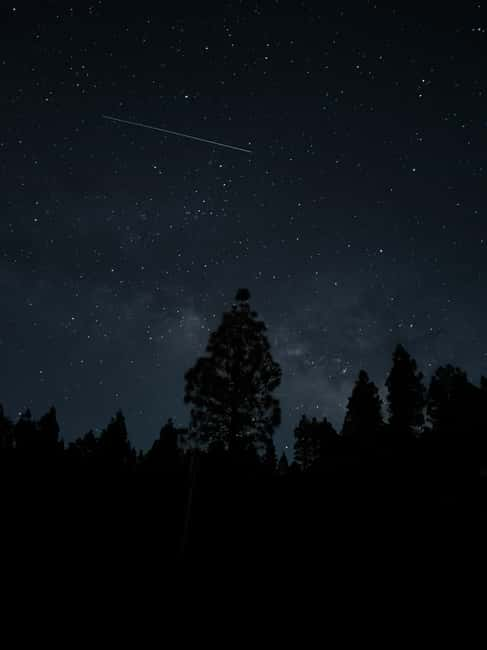
- A private volcano setting: Stargazing takes place at the San Antonio Volcano Visitor Center in Fuencaliente, not at a remote roadside pull-off.
- Small groups matter: The maximum of 10 participants gives you more time at the telescope and more room to ask questions.
- Several ways to see the sky: You begin with the naked eye and laser pointer, then use binoculars and an advanced astronomical telescope.
- The program changes with the sky: The Moon, Jupiter, Saturn, nebulae, and galaxies may be visible depending on weather, season, and their position above the horizon.
- Comfort is built in: Bathrooms, private parking, a flat surface, accessibility, covered areas, hot drinks, a water bottle, and a small souvenir are included.
- Bring serious warm clothing: A clear night at the volcano can be surprisingly cold, so warm shoes and several layers are sensible.
Why Fuencaliente is a smart place for stargazing
La Palma is known for its exceptionally clear and dark skies, and Fuencaliente is one of the island’s certified areas for astronomical observation. That matters because successful stargazing depends on more than having a telescope. Artificial light, clouds, haze, and humidity can all erase the faint objects you came to see.
The meeting point is the Centro de Visitantes del Volcán de San Antonio, at 632 meters above sea level. You do not need to hike into a remote mountain area or find an unmarked viewpoint in the dark. You simply meet at the entrance, let the team know you are outside, and they bring you in.
I see this as one of the activity’s strongest advantages. The site gives you a proper base for the evening, with private parking and restrooms close by. You can focus on the sky rather than worrying about uneven ground, a long walk, or a difficult drive back after midnight.
This is also a useful choice if you are staying at the La Palma & Teneguía Princess Hotel. The visitor center is only a few minutes away, making this an easy evening outing rather than a major expedition across the island.
More Private Volcano Tours in Spain
- Tenerife: Teide, Masca, Garachico, and Sunset Exclusive Tour
★ 4.7 · 187 reviews - Private excursion to Teide National Park
★ 5.0 · 129 reviews - Teide National Park Exclusive and private Tour
★ 5.0 · 115 reviews
The first 15 minutes: finding constellations with a laser
The experience begins with the naked eye. An astronomical monitor uses a laser to point out constellations, satellites, and other moving objects overhead. This opening is important because it helps you understand the shape of the sky before you look through any equipment.
A telescope can show an impressive object, but it does not always tell you where that object sits in relation to everything around it. The laser-guided introduction gives you a sense of direction. You begin to recognize patterns instead of seeing only a mass of stars.
The guides also bring stories into the session. You hear about myths and legends from different cultures, along with explanations of the physics of the Cosmos and the chemistry that creates stars. That mix keeps the program from becoming a dry list of names and distances.
I would pay close attention during this part, even if you are mainly excited about the telescope. Once you know a few constellations, you can continue looking up after the tour ends and begin finding familiar shapes on your own.
Binoculars reveal the wider sky
After the naked-eye introduction, the group uses binoculars to inspect broad regions of the sky. This is a different experience from looking through a telescope. Binoculars give you a wider field of view, so you can see star clusters and nebulae as part of a larger area.
That wider view helps connect the dots between the individual targets. You are not just handed a magnified object and told its name. You see how a cluster fits into the surrounding stars, and you get a better feel for the scale of the night sky.
The activity is designed to move at an unhurried pace. The team describes the opportunity to observe without haste, and the small group limit supports that promise. With no more than 10 participants, you should have a reasonable chance to see the targets clearly and ask questions without competing with a busload of people.
Still, the exact number of objects you see can change from one night to the next. Clouds, haze, the Moon’s brightness, and the position of planets all affect the program. The telescope cannot force a galaxy or nebula into view when conditions are poor.
The telescope: from the Moon to distant galaxies
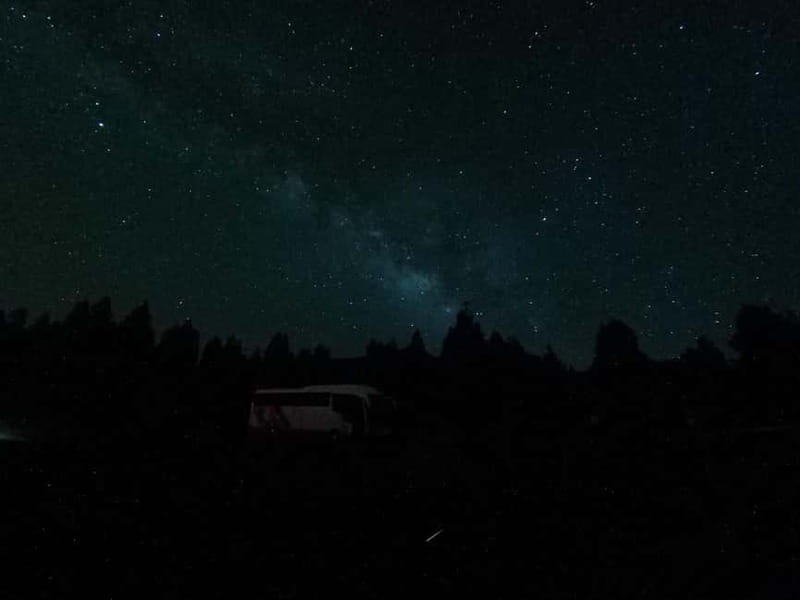
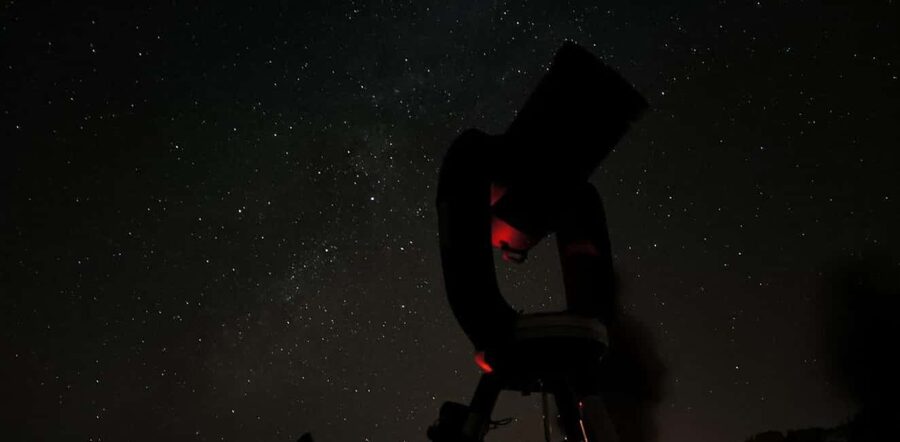
The most anticipated part of the evening is the advanced astronomical telescope. The team can guide you from the Solar System outward, beginning with nearby objects before reaching deep space.
The Moon is often the most immediately rewarding target when it is visible. Through a telescope, its surface becomes more than a bright circle. You may see craters and textured areas that are lost to the naked eye. The exact view depends on the Moon’s phase and position, so it is best to think of lunar observation as a possible highlight rather than a guaranteed feature.
Planets may also be observed when they are in a useful position. Jupiter can appear with its four Galilean moons, while Saturn may show its famous ring system. These are the kinds of targets that make the experience especially memorable for children, since the objects feel suddenly real rather than like distant points in a textbook.
The telescope also reaches toward stars, nebulae, and galaxies. These targets can look subtler than a bright planet, but they give the evening its sense of scale. You move from familiar objects nearby to faint light that has traveled enormous distances before reaching your eyes.
The staff lets you adjust the telescope for your own eye and invites questions. That personal adjustment is valuable. People do not all see through an eyepiece in exactly the same way, and a few seconds spent setting it correctly can make the difference between a sharp view and a disappointing blur.
More Volcano Sunset Tours in Spain
- Tenerife: Teide National Park Sunset & Stargazing Tour
★ 4.2 · 3,812 reviews - Tenerife: Sunset and Stargazing at Teide National Park
★ 4.7 · 2,826 reviews - Teide National Park Sunset & Stargazing with Dinner (Star Safari)
★ 5.0 · 2,601 reviews - Teide National Park: Sunset & Stargazing Safari with Dinner
★ 4.6 · 2,115 reviews
A personal session rather than a lecture
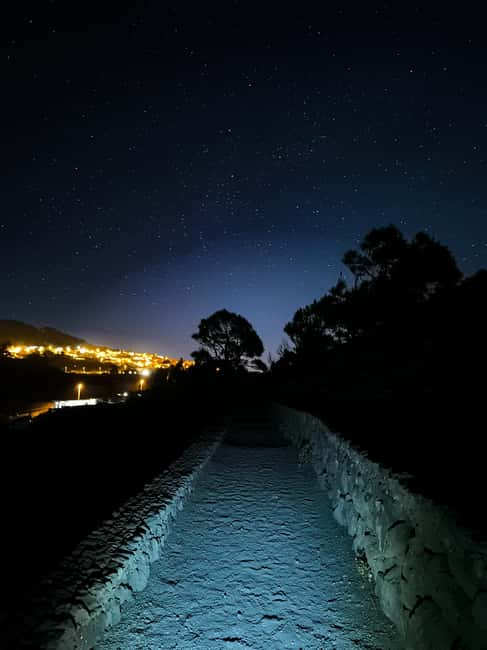
The most highly praised part of this experience is the guide interaction. Maria and Jose are noted for bringing the stars to life with interesting explanations, while Nicolas is praised for detailed answers and for making people feel comfortable.
Those names matter because astronomy can become intimidating when the guide races through technical terms. Here, the stated format encourages questions about anything you are observing. You can ask about a constellation, a planet, a myth, or the science behind a star.
The small-group format also changes the mood. A maximum of 10 people is small enough for the team to give individual attention, but large enough that the evening does not feel like a private lesson. You can listen to other questions as well, which often reveals points you had not thought to ask.
I would recommend telling the guide early if you are new to astronomy. You do not need prior knowledge to enjoy this program, and the explanations cover basic observation, cultural stories, physics, and chemistry. The activity is built for children and families as well as adults with a serious interest in the sky.
The practical comfort of a 632-meter viewpoint
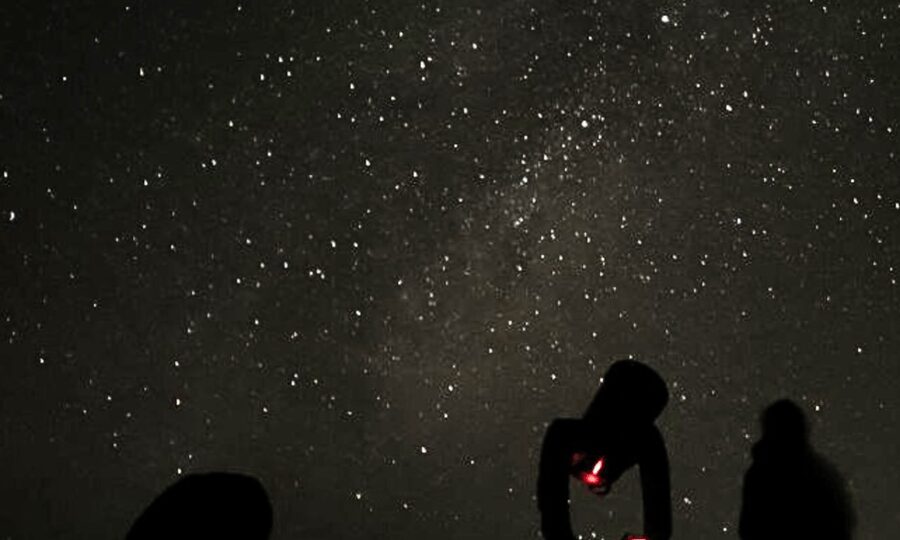
Many stargazing outings involve a long drive to a high mountain, rough ground, and limited facilities. This one takes a gentler approach. The surface at the visitor center is safe and flat, the location has bathrooms, and the site is accessible for people with reduced mobility.
That makes the experience suitable for seniors and families with children who may not manage a remote mountain viewpoint comfortably. Covered areas are available if the weather turns cold, and hot drinks help take the edge off the night air.
Do not mistake the convenient setting for a warm one. The cold is the main practical warning. One visitor described the location as extremely cold up top, and that is advice worth taking seriously. Bring warm clothing, comfortable clothes, and warm shoes. A light jacket may not be enough.
The experience lasts about 1.5 hours, with the stated duration sometimes extending to 1 hour and 45 minutes. That is long enough to cover the main equipment and explanations without turning into an exhausting late-night program.
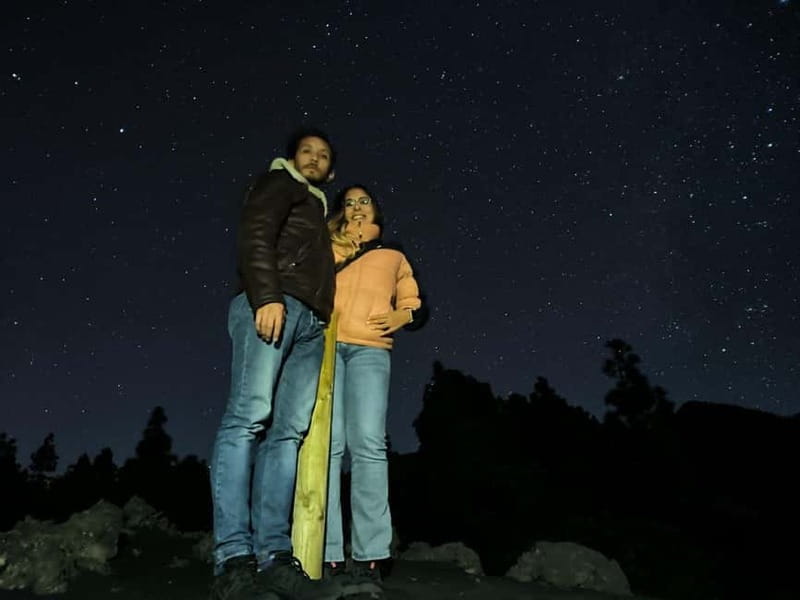
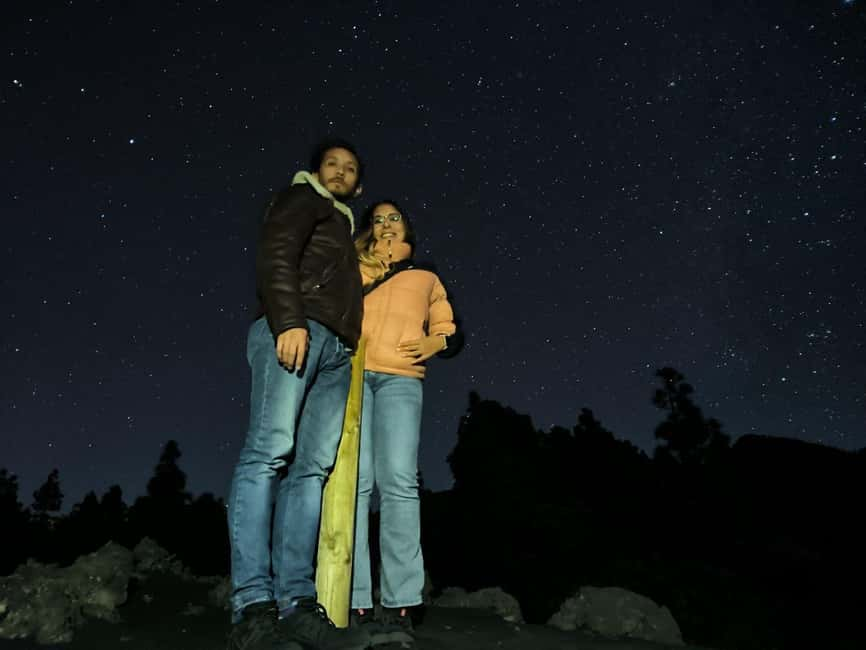
A personal water bottle and a small souvenir gift from the team are included. These are modest extras, but they fit the friendly, well-prepared character of the outing. You also receive a group photograph with the stars, giving you a simple memento of the evening.
What the $55 price delivers
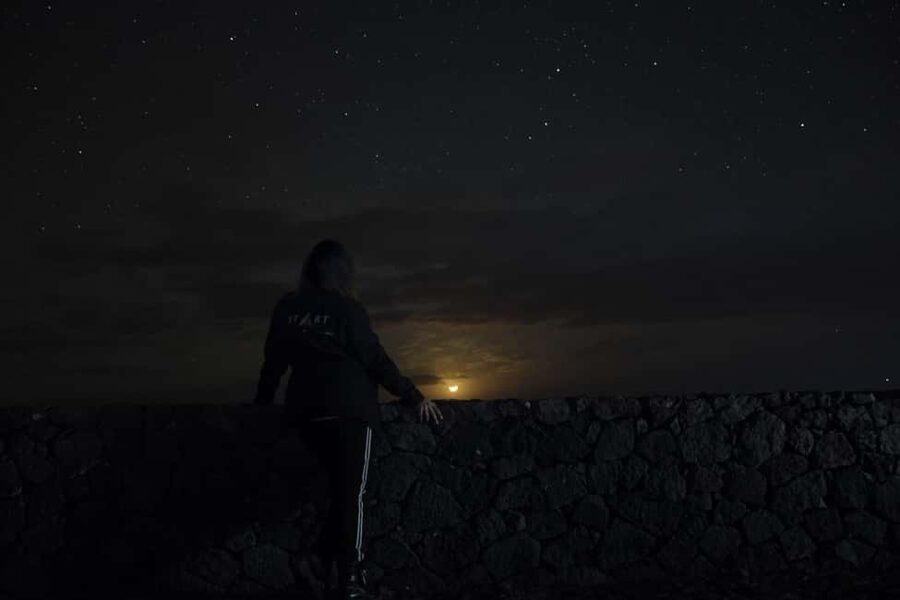
At $55 per person, this is not the cheapest way to spend an evening in La Palma, but the price is reasonable for a guided session with several kinds of equipment and a maximum group of 10.
You are paying for more than a telescope view. The cost includes a private astronomical viewpoint, a trained guide, naked-eye instruction with an astronomical laser, binocular observation, telescope access, storytelling, facilities, parking, a photograph, a water bottle, and a souvenir.
The small group is especially important to the value. A larger group could still show you the same objects, but you might spend less time at the eyepiece and have fewer chances to adjust the telescope or ask questions. Here, the stated aim is personalized treatment, and the group size gives that aim a fair chance.
There are limits. Transportation to the meeting point is not included, and food is not included. This is also not an observation session at Roque de Los Muchachos. If your main goal is to visit the island’s famous high-altitude observatory area, this activity does not replace that excursion.
For a comfortable evening focused on learning and direct observation, I think the price works. For someone expecting a full observatory tour, hotel pickup, dinner, or a visit to Roque de Los Muchachos, the package may feel narrower than expected.
Weather can change the entire evening
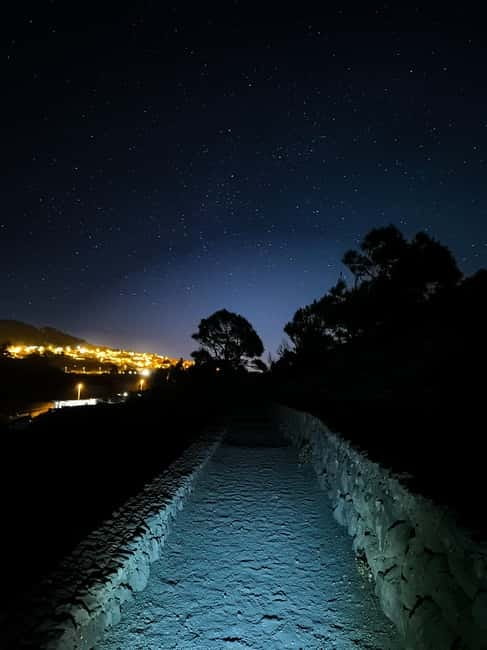
Stargazing is always weather dependent, and the provider takes that seriously. The team checks radar, satellite photographs, and weather station information before each activity. If conditions prevent useful observation, the session may be postponed or canceled, with the relevant refund provided.
That policy is sensible, but it means you need some flexibility in your schedule. A cloudy night is not a failure of the guide or equipment. Even the clearest skies in the world cannot guarantee stars on every date.
The activity also allows free cancellation up to 24 hours in advance for a full refund. You can reserve now and pay later, which helps if your La Palma plans are still changing. These terms are useful, but they do not remove the need to watch the forecast and keep warm clothing ready.
I would avoid making this your only fixed plan on the final night of your holiday. Give yourself another possible evening if your schedule allows. That way, a weather postponement is an inconvenience rather than a lost opportunity.
Who will enjoy this La Palma stargazing tour?
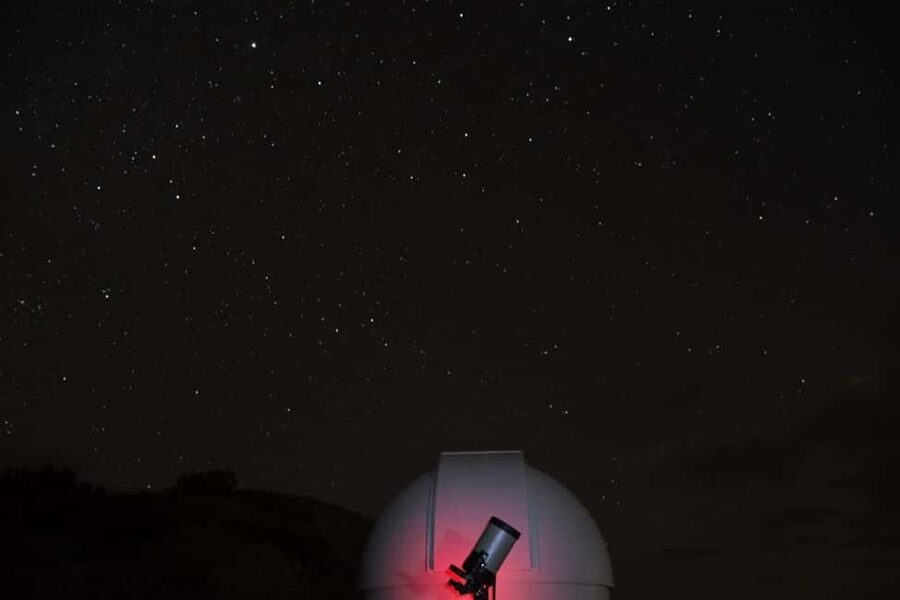
I would recommend it most strongly to:
- Families who want an educational activity with a clear structure
- First-time stargazers who want help finding their way around the sky
- Adults who enjoy science, mythology, and thoughtful questions
- Older visitors who prefer easy access and nearby facilities
- People staying near Fuencaliente or the La Palma & Teneguía Princess Hotel
- Anyone who wants a small group instead of a crowded night excursion
Children should benefit from the mix of laser-guided constellations, planets, and telescope viewing. Saturn and Jupiter can provide a strong hook, while the myths and legends give younger listeners a way into the subject.
I would be more cautious if you dislike cold evenings, have no way to reach Fuencaliente, or want a large professional observatory facility. The location is comfortable, but it is still an outdoor nighttime activity. The group is small, but the program is not a private one-to-one astronomy lesson.
The guides speak English and Spanish. That makes the experience practical for international visitors, though you should select the language that suits you when checking availability.
Meeting point and evening routine
You meet at the entrance of the San Antonio Volcano Visitor Center in Fuencaliente. The team lets you in after you notify them that you are outside. If you cannot find them, the instructions advise contacting the provider.
The activity finishes back at the same meeting point. Since hotel transfers are not included, plan your route before sunset and allow enough time to park and reach the entrance without rushing.
The setting includes private parking, which is useful because you are not searching for a roadside space in darkness. After the session, you return to your vehicle from the same location rather than trying to find a distant pickup point.
The evening itself follows a sensible progression: naked-eye orientation, binoculars, telescope viewing, and conversation. You start with the broadest view and gradually move toward smaller, more distant targets. That order makes the science easier to follow and gives you several different ways to experience the sky.
Should you book this La Palma stargazing experience?
I would book it if you want a friendly, small-group astronomy night in a comfortable location. The private viewpoint, telescope adjustments, personal questions, and guides such as Maria, Jose, and Nicolas give the activity more warmth than a quick look through a public telescope.
The strongest reason to choose it is the balance between access and real observation. You do not need to hike into the mountains, but you still get binoculars, an advanced telescope, constellation guidance, stories, and a chance to see planets or deep-space objects when conditions cooperate.
I would skip it only if you need guaranteed targets, hotel transportation, food, or a visit to Roque de Los Muchachos. For everyone else, bring genuinely warm clothes, keep one backup evening free if possible, and arrive ready to ask questions. At $55, this is a good-value way to give La Palma’s dark sky the attention it deserves.
FAQ
Where does the La Palma stargazing experience take place?
It takes place at the San Antonio Volcano Visitor Center in Fuencaliente, La Palma, at 632 meters above sea level. You meet at the entrance and finish back at the same location.
How long does the stargazing activity last?
The stated duration is 1.5 hours, with the activity sometimes lasting about 1 hour and 45 minutes.
What can I see through the telescope?
Depending on weather and viewing conditions, you may observe the Moon, planets such as Jupiter and Saturn, stars, galaxies, nebulae, and other deep-space objects. Jupiter may be seen with its four Galilean moons.
Is the activity suitable for people with reduced mobility?
Yes. The site has accessibility for people with reduced mobility and offers a safe, flat surface. Bathrooms, private parking, covered areas, and hot drinks are also available.
What should I bring?
Bring warm clothing, comfortable clothes, and warm shoes. The location can feel extremely cold at night.
Is transportation to the meeting point included?
No. Transfer to the meeting point or to your hotel is not included. Food is also not included, while a personal water bottle and a small souvenir gift are included.
Just added around Spain
- Corralejo: self guided Ebike tour to Popcorn beach and volcanoes★ 5.0 · 19 reviews
- Walking Tour through La Corona Volcano and Famara Cliff★ 5.0 · 14 reviews
- Trekking in the Volcanoes Natural Park in a small group★ 5.0 · 97 reviews
- Sunset Playa Mujeres or Volcan del Cuervo Connect&flow Yoga practice★ 5.0 · 2 reviews
- Timanfaya Evening Experience and Volcano Dinner★ 4.0 · 35 reviews
- On-Road Guided Buggy Volcano Ride in Lanzarote★ 4.5 · 63 reviews
- North Volcano Trekking Tour★ 5.0 · 15 reviews
- North Tour, Viewpoint, Brunch, White beach & lava pools★ 5.0 · 39 reviews
Volcano Sunset Tours, compared.
Mount Etna Morning or Sunset Day Trip with Tasting
Our review of it →
Teide National Park Sunset & Stargazing Tour
Our review of it →
Sunset and Stargazing at Teide National Park
Our review of it →
Teide National Park Sunset & Stargazing with Dinner (Star Safari)
Our review of it →
Teide National Park: Sunset & Stargazing Safari with Dinner
Our review of it →
Sunset Jeep Tour of Mount Etna and Lava Flow Caves
Our review of it →
Small Group Big Island Twilight Volcano and Stargazing Tour
Our review of it →
Teide by Night: Sunset & Stargazing with Telescopes Experience
Our review of it →Browse the lists this tour appears in