
REVIEW · HAWAII
Kona: Hawaii Volcanoes National Park Tour
Volcanoes, coffee, and black sand await. This 12-hour Big Island tour packs several very different sides of Hawaii into one long day, from a working Kona coffee farm to the steaming volcanic ground of Hawaii Volcanoes National Park. I especially like the small group of no more than 12 people and the chance to see the island change from coffee country to dry forest, lava fields, and rainforest.
I also like that lunch takes place at Punalu’u Black Sand Beach, rather than at a standard restaurant. The main drawback is the length: 12 hours is a serious commitment, and the day includes walking over uneven volcanic ground. People with respiratory or back problems should think carefully before booking.
Key points at a glance
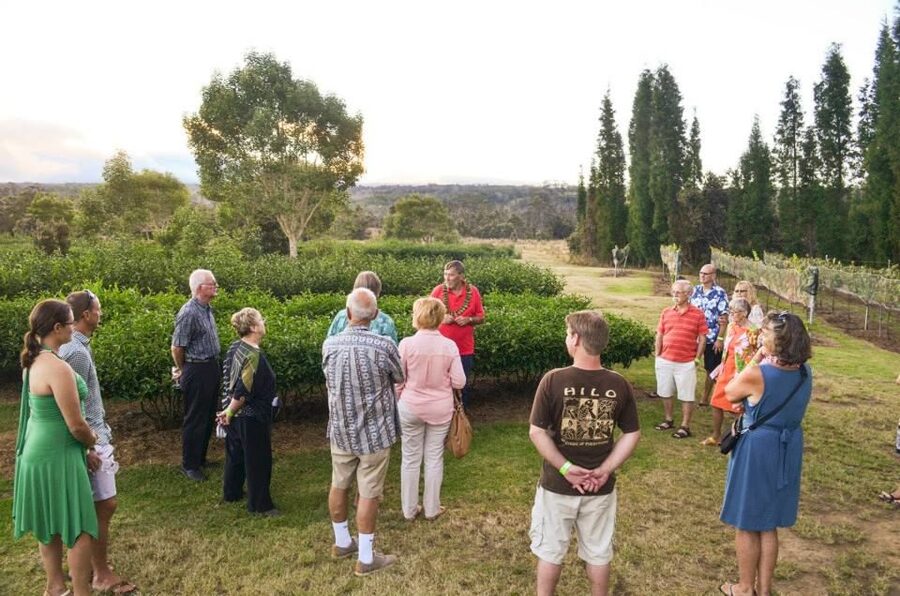
- Bay View Farm gives you a real look at Kona coffee production, with coffee trees, farm processing, and 100% Kona Coffee served above Kealakekua Bay.
- Punalu’u Black Sand Beach adds a memorable coastal stop, with coconut palms, possible honu sightings, and a deli-style picnic lunch.
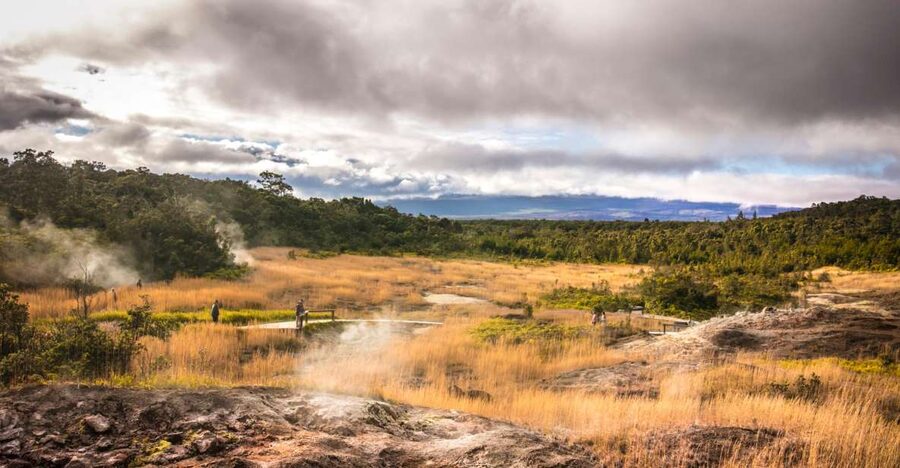
- The volcano portion is the heart of the day, including Kilauea Visitor Center, Sulphur Banks, the Volcano Art Center, Keanakako’i Crater, and Mauna Ulu.
- Small groups make the long route easier, with a maximum of 12 people and a live English-speaking guide.
- The terrain and weather can change fast, so closed-toe shoes matter, and a jacket or rain layer is a smart idea.
- The $249 price includes useful extras, including hotel pickup and drop-off, lunch, and park entrance fees.
Why this 12-hour Big Island outing works
The Big Island is large enough that a single day can feel like several different trips. This route makes good use of that scale. You begin in Kona coffee country, move through South Kona and Ka’u, stop at the southern coast, then spend the afternoon and evening in the national park.
That variety is the tour’s biggest strength. You are not looking at the same scenery all day. Coffee trees give way to dry Hawaiian forest, black lava, coastal palms, and volcanic craters. From the broad windows of the vehicle, you can watch the island change without worrying about directions or a long return drive.
The small group size also matters. With no more than 12 people, the guide can explain what you are seeing and answer questions without shouting across a crowded bus. Several people have praised guides such as Erik and Scott, and Patricia Morales specifically described a patient guide who allowed plenty of time at each stop. That sort of flexibility can make a full-day outing feel less rushed.
Still, the schedule is ambitious. You cover a lot of ground, and some stops are brief. If you want a slow morning at the beach or several hours on one trail, this is not the right format. If you want a broad first look at the southern half of the island, it makes much more sense.
More Volcano National Parks in the USA
- Hilo Shore Excursion: Volcanoes National Park & Black Sand Beach
★ 4.5 · 2,338 reviews - Big Island: Fat Tire E-Bike Tour through Volcanoes National Park
★ 5.0 · 546 reviews - Big Island, Hawaii: Volcanoes National Park Safari
★ 4.5 · 545 reviews
Bay View Farm and the story of Kona coffee
The first main stop is Bay View Farm, a working 24-acre coffee farm on the slopes of Mauna Loa above Kealakekua Bay. This is more useful than simply drinking a cup of Kona Coffee at a cafe because you can see the beans growing on the trees and learn how the product is handled on the farm.
The setting adds plenty to the stop. You sample 100% Kona Coffee at an overlook facing Kealakekua Bay and the monument to Captain Cook. The monument sits on the only sliver of British land in the United States, an unusual detail that gives the view a bit of historical oddness as well as beauty.
I like this opening because it gives you a practical introduction to one of Hawaii’s best-known agricultural products. You learn that coffee is not just a souvenir label. It comes from a particular growing area, and the farm handles the process from plant to finished drink.
The farm visit is also a good way to ease into the day. You are not starting with a strenuous hike or a crowded attraction. You begin with a calm stop, a scenic view, and a chance to ask questions before the longer drive south.
One thing to keep in mind is that coffee tasting may not be equally exciting for everyone. If you do not drink coffee, the farm setting and view still give the stop value, but the tasting itself will be less important to you.
South Kona, Ka’u, and the changing scenery
After the farm, the route continues through South Kona and the Ka’u District. This is where the vehicle becomes part of the experience. The wide windows let you see broad stretches of lava and dry forest as the scenery changes along the road.
The contrast is worth noticing. Hawaii can look green and tropical in one area, then stark and almost bare a short distance later. Here, the route helps you understand that the island is not one uniform place. Weather, elevation, volcanic ground, and rainfall all shape what grows.
Your guide can add meaning to those changes. Scott, one of the guides praised for this experience, explained the different weather patterns across the island and also spoke about agriculture and real estate. That kind of local commentary can turn a long drive into one of the day’s more useful parts.
You also get time at Punalu’u Bake Shop, described as the southernmost bakery in America. The shop has been making Hawaiian sweetbreads since 1991 and sells breads and cookies. This is a purchase stop, not a full meal stop, so you can pick up a snack if something catches your eye.
Do not expect a long bakery tour. The value is simple: stretch your legs, look at the local baked goods, and perhaps add a sweet treat to the day. It breaks up the drive before the coast.
Lunch beside Punalu’u Black Sand Beach
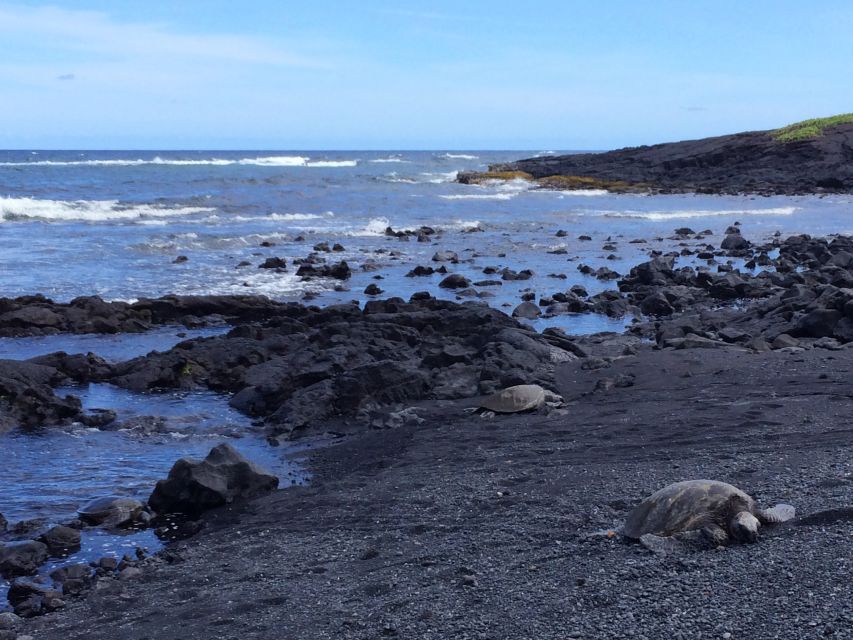
Punalu’u Black Sand Beach is one of the most memorable stops on the route. Coconut palms line the shore, and the dark sand comes from volcanic material. The beach gives you a chance to leave the vehicle, walk along the water, and take in a distinctly Hawaiian coastal setting.
Lunch is deli-style and picnic-like, served at the beach when weather allows. That wording matters. This is not a formal restaurant meal, and the outdoor setting depends on conditions. You should be ready for a simple lunch rather than a leisurely dining experience.
I like the choice of location. A picnic beside a black sand beach feels tied to the island, while a restaurant could be anywhere. It also gives you a useful pause after the morning drive and before the volcano portion.
You might see honu, or Hawaiian Green Sea Turtles, feeding offshore or resting on the sand. They are not guaranteed, so treat them as a possibility rather than the main reason to book. If you do see them, keep your distance and let them remain undisturbed.
The beach stop has a few practical limits. Weather can affect the picnic, and black sand can become uncomfortable under strong sun. The supplied information does not specify how much free time you receive here, so do not assume you will have a long swim or extended beach break. The point is a scenic stop and lunch, not a full beach day.
More Hawaii Volcano Tours in the USA:
- Diamond Head Crater
★ 5.0 · 943 reviews - Small-Group Big Island Tour: Hawaii Volcanoes National Park and Kona Coffee Farm
★ 5.0 · 343 reviews - Private Tour: Hawaii Volcanoes National Park Eco Tour
★ 5.0 · 276 reviews - Hawaii Volcanoes National Park and Hilo Highlights Small Group Tour
★ 5.0 · 260 reviews
Hawaii Volcanoes National Park: the day’s main event
The tour then reaches Hawaii Volcanoes National Park, the part most likely to justify the long day. The route includes Kilauea Visitor Center, the Volcano Art Center, and Sulphur Banks before moving into more active walking sections.
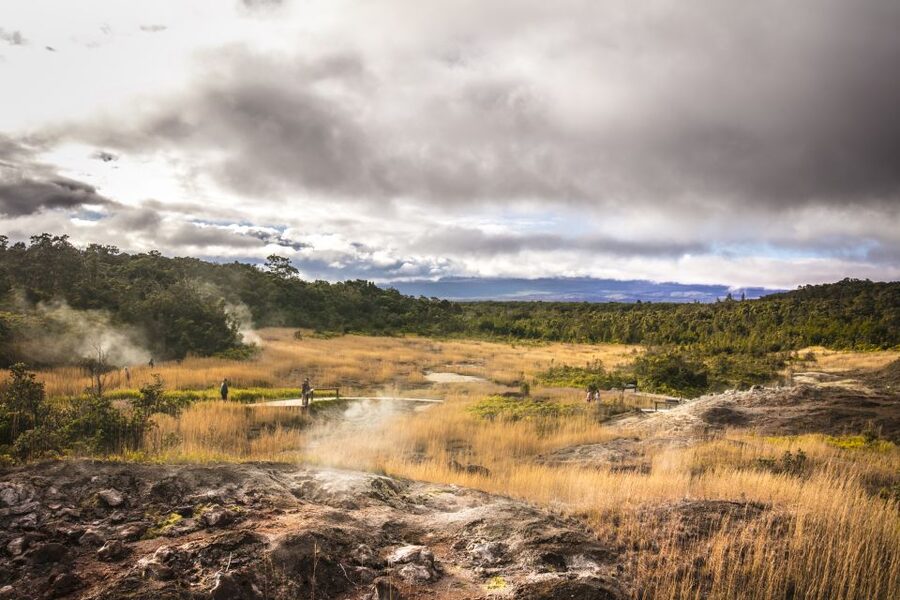
The visitor center helps you get oriented. It is a sensible first point in a park where volcanic features can otherwise blur together. The Volcano Art Center adds a cultural and creative angle, while Sulphur Banks gives you a chance to see and smell the volcanic forces below the surface.
Sulphur odors can be strong. That matters if you are sensitive to fumes or have breathing trouble. The tour specifically says it is not suitable for people with respiratory issues, and this is one of the reasons. Follow the guide’s instructions and do not treat volcanic areas like ordinary countryside.
The walk to Keanakako’i Crater brings you closer to the effects of the 2018 eruption. You can step over sinkholes and cracks left in the roads by that historic event. These scars make the eruption easier to understand than a display panel alone. You are seeing how the ground itself was broken and changed.
This portion requires proper footwear. Closed-toe shoes are required, and open-toed shoes are not allowed. Volcanic ground can be uneven, so sandals are a poor choice even if the weather feels warm when you leave Kona.
Mauna Ulu and the cultural side of the park
Mauna Ulu is another important stop, both for its volcanic setting and its cultural meaning. The walk takes you through the forest, adding a different kind of scenery after the exposed lava and crater areas.
I like that the tour does not reduce the park to glowing lava or dramatic smoke. Mauna Ulu shows that Hawaii Volcanoes National Park is also a cultural place, with meaning that goes beyond geology. Your guide can help connect the natural features with the importance of the area.
The description calls this a hike, but it does not give a distance or difficulty rating. You should therefore prepare for walking on uneven ground without assuming it will be a paved stroll. A pair of closed-toe shoes with a solid sole is the safest choice.
Some people have received hiking poles, warm jackets, rain jackets, and flashlights during the outing. Those extras were not listed as standard inclusions, so do not rely on them being provided every time. Still, the feedback suggests that the operator can be attentive to changing conditions, particularly when the park turns cold, wet, or windy.
A pause at Volcano House
Volcano House has welcomed people to Kilauea since 1864, including Mark Twain and Jack London. The stop gives you a chance to pause after the park walks and enjoy a place connected with the area’s long visitor tradition.
It is a short break, not a separate hotel stay or a major attraction. That is fine. On a 12-hour tour, a warm or sheltered pause has real value. The park can feel cold and windy, especially later in the day, and one person specifically praised getting hot coffee and dinner after time in those conditions.
The exact end-of-day schedule can vary. One account describes seeing an orange glow from lava at night, but current volcanic conditions change, and the listed itinerary does not promise an active lava glow. You should book this for the park’s scenery and interpretation, not for a guaranteed eruption view.
How the price compares with the effort
At $249 per person, this is not a cheap sightseeing outing. I think the value depends on how you would otherwise visit the park.
The price includes hotel pickup and drop-off, lunch, entrance fees, a live English-speaking guide, and transportation for a full 12-hour day. You also avoid planning the route through several districts, handling park entry, and driving back after walking and sightseeing.
The small group is another part of the value. A maximum of 12 people is much more personal than a large coach, and it makes it easier to hear the guide and ask questions. If the guide is as patient as Patricia described, you may also get a little breathing room at stops instead of being pushed from one photo point to the next.
The price makes less sense if you already have a rental car, want to spend several days in the national park, or prefer to choose your own stops. A self-guided visit gives you more control and may cost less, though you lose the farm visit, included lunch, local commentary, and the ease of having someone else handle the long route.
Who should book this tour?
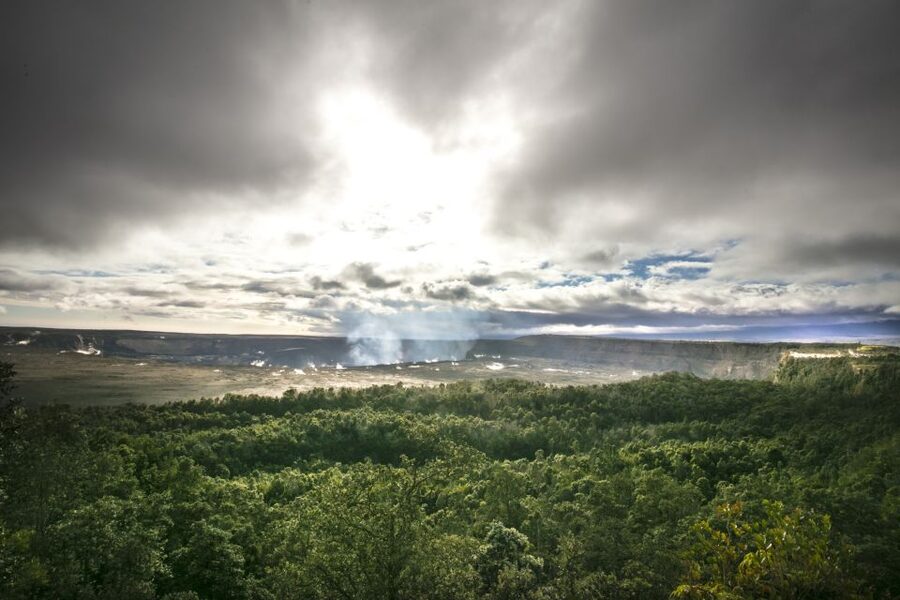
I would recommend it to someone staying in Kona who wants to see much more than the immediate coast. It suits first-time visitors who want coffee country, the southern shore, and Hawaii Volcanoes National Park in one organized day.
It is also a good fit if you do not want to drive long distances on unfamiliar roads. The route is broad, and the return to your hotel after a full day is a real benefit.
You should think twice if you dislike long vehicle rides, need a slow pace, or have back or respiratory problems. The outing includes volcanic fumes, uneven walking, and a full 12 hours away from your accommodation.
Pack closed-toe shoes. A light jacket, rain layer, and flashlight are sensible additions based on the changing conditions described by people who have taken the outing, although those items are not listed as included equipment.
Should you book it?
Book this tour if your priority is variety: Kona coffee, a black sand beach, and Hawaii Volcanoes National Park without arranging the details yourself. The strongest part is the combination of a small group and a guide who can explain agriculture, weather, geology, and local places along the way.
Skip it if you want a relaxed beach day or an in-depth park visit with your own schedule. For most people with only one full day to spare from Kona, though, the $249 cost is reasonable because it covers transport, lunch, park admission, and a very full route through the southern half of the island.
FAQ
How much does the Hawaii Volcanoes National Park tour cost?
The tour costs $249 per person.
How long does the tour last?
The experience lasts 12 hours, including hotel pickup and drop-off.
Where is pickup available?
Pickup is available from your accommodation at Pleasant Holidays or from the Courtyard by Marriott King Kamehameha’s Kona Beach Hotel.
Is lunch included?
Yes. A deli-style, picnic-style lunch is included and is served at Punalu’u Black Sand Beach when weather allows.
Is the tour conducted in English?
Yes. The tour has a live English-speaking guide.
How large is the group?
This is a small-group tour limited to 12 participants.
What should I wear or bring?
You must wear closed-toe shoes. Open-toed shoes are not allowed. A jacket or rain layer may also be useful because conditions in the park can be cold, windy, or wet.
Is the tour suitable for people with respiratory or back problems?
No. The experience is not considered suitable for people with respiratory issues or back problems.
Just added around the USA
- 3 Day Tour to Oregon Redwood Crater Lake from San Francisco★ 4.0 · 13 reviews
- Volcano & Mountain Air Tour by Envi Adventures★ 5.0 · 5 reviews
- Northern Arizona Meteor Crater and Walnut Canyon from Phoenix – Private Tour★ 5.0 · 22 reviews
- Wupatki and Sunset Crater National Monuments from Phoenix – Private Tour★ 5.0 · 7 reviews
- See Park City Olympic Park Utah Crater Cheese Farm & Jordanelle★ 4.5 · 24 reviews
- Lava Run Off-Road Adventure★ 5.0 · 115 reviews
- Natural Indoor Hot Spring and Spa Utah Crater Soak & Swim★ 4.5 · 20 reviews
- Crater Lake Day Shared Tour★ 5.0 · 51 reviews
Volcano National Parks, compared.
Teide National Park Sunset & Stargazing Tour
Our review of it →
Sunset and Stargazing at Teide National Park
Our review of it →
Teide National Park Sunset & Stargazing with Dinner (Star Safari)
Our review of it →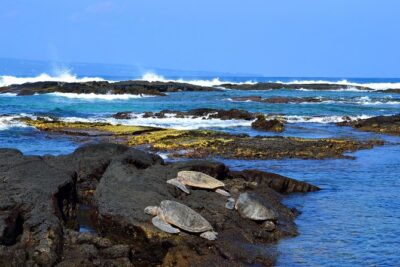
Hilo Shore Excursion: Volcanoes National Park & Black Sand Beach
Our review of it →
Teide National Park: Sunset & Stargazing Safari with Dinner
Our review of it →
Timanfaya National Park Volcanic Craters Tour
Our review of it →
Teide National Park Full-Day Tour with Pickup
Our review of it →
Browse the lists this tour appears in