
REVIEW · ARUSHA
3 days to Serengeti NP and Ngorongoro Crater Tour in Tanzania
See Tanzania’s big two in three days. This $800 safari from Arusha links the open plains of Serengeti National Park with the wildlife-rich floor of Ngorongoro Crater, while keeping the trip small with a maximum of seven people. I like the route’s strong mix of game viewing and scenery, and I like that park fees, meals, camping, and an English-speaking guide are included. The main catch is the amount of time spent on the road, especially on the first day.
I also like the chance to explore the Seronera Valley and visit the hippo habitat before reaching Ngorongoro. Guide Eddy has earned praise for being warm, attentive, and well informed about wildlife and the region. Still, this is a brisk safari, not a leisurely camp holiday, and the camping arrangements and exact pickup time deserve a check before you pay.
Key points to know before booking
- The first day covers about 335 kilometers: Expect roughly six hours by road from Arusha to the southern Serengeti, usually passing through the Ngorongoro gate.
- Seronera is the wildlife heart of the route: Acacia-dotted valleys, kopjes, grassland, and open plains offer a varied setting for game drives.
- Ngorongoro Crater is the main event on day three: The early descent is planned around finding black rhino, one of the harder animals to spot in the crater.
- Camping keeps the price down: The overnight stop is at Simba Campsite in the Ngorongoro Conservation Area, with dinner and breakfast included.
- The group is capped at seven: That is small enough to make the vehicle feel more personal than a large coach tour.
- The schedule is full: You get two major protected areas, but there is little spare time if roads, wildlife sightings, or border formalities run long.
What this three-day safari is really offering
This trip is built for people who want to see Serengeti and Ngorongoro in one short outing from Arusha. It is not designed as a slow, specialist safari with long hours at one camp. Instead, it gives you a practical route through two of Tanzania’s best-known wildlife areas, with transport, park fees, food, and a guide bundled into one price.
At $800 per person, the value depends on what you want from a safari. The included park fees alone can make a short Tanzania trip expensive, and you are also paying for a professional driver-guide, meals, camping, and transport. You do not have to arrange each park entry or coordinate separate transfers.
The trade-off is time. Day one begins with a long drive, day two includes another transfer toward Ngorongoro, and day three ends with a return to Arusha. I would choose this trip if I had only three days available and wanted the classic combination. If I had a full week, I would want more nights inside the parks.
The small group limit of seven is useful. In a compact safari vehicle, extra passengers can affect window access and comfort. A group of seven is not private, but it should feel more manageable than a large bus tour. You will still want to confirm the vehicle setup and seating arrangement before departure.
More Ngorongoro Crater Safaris in Arusha:
- 5-Day Highlights mid-Range Crater, Serengeti, Tarangire
★ 5.0 · 296 reviews - Private 6-Day Tarangire Manyara Crater and Serengeti with Mid-Range Lodges
★ 5.0 · 238 reviews - 5 Days Camping Tarangire, Serengeti & Ngorongoro crater & Visiting Maasai
★ 5.0 · 229 reviews
Day one: the long road to Serengeti
The scheduled start is listed as 7:00 a.m., while the detailed plan describes breakfast after 7:30 and pickup at 8:00. That difference matters, so confirm the exact time with Safari G.O.A.T.S. before bed. A prompt start helps on a day that already includes about six hours of driving.
The route covers roughly 335 kilometers to the southern part of Serengeti National Park, passing through the Ngorongoro gate. This is a major transfer, not a quick ride between nearby sights. You will want comfortable clothes, water, sun protection, and patience for the road.
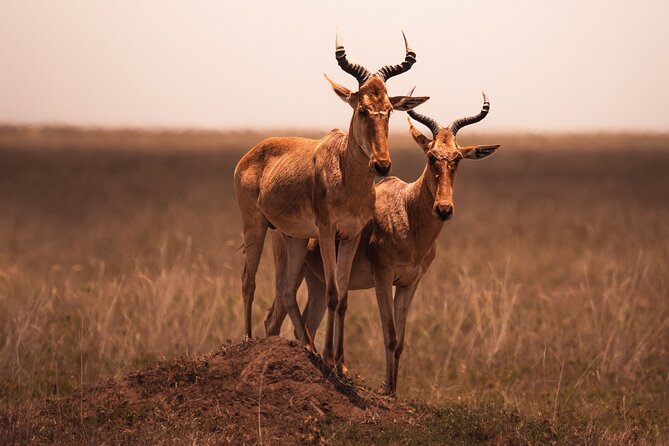
The reward comes when the route reaches the southern and central sections of Serengeti. The name Serengeti is linked to the Maasai word Serengit, meaning endless plains, and the description fits the broad savannah here. The southern zone supports grazing animals such as wildebeest, zebra, Coke’s hartebeest, waterbuck, Grant’s gazelle, Thomson’s gazelle, and impala.
These open areas are good for understanding how the park works. Instead of one dramatic viewpoint, you get wide grasslands where animals can be spread over a large area. Sightings are never guaranteed, but the setting itself is part of the experience.
The route also reaches the Seronera Valley. Here, scattered acacias and rocky kopjes break up the grassland. Kopjes are old rock formations that rise above the plain, and they give the area more shape and variety than the southern open zone.
The plan includes a game drive on arrival and a visit to a hippo habitat. That adds a welcome change from searching the grasslands. Hippos are usually associated with water, so this stop gives you a different type of wildlife encounter from the grazing herds and open-country animals.
The drawback is simple: you may feel that the first day is split between transport and safari. If you imagine spending the whole day slowly tracking animals, this schedule may disappoint. If you see the road as the necessary link between Arusha and Serengeti, the plan makes more sense.
Day two: a half-day game drive before Ngorongoro
Day two begins with a packed lunch and a half-day game drive in Serengeti. The schedule allows about six hours for this portion, followed by the move toward the Ngorongoro Conservation Area.
This is your second chance to explore the park, and it may be the best time to ask the guide to focus on what you missed the day before. If day one produced open grassland sightings, day two may give you more time around the Seronera area and its acacias and kopjes. The exact route depends on conditions and animal movements.
A professional guide can make a real difference here. Eddy is specifically praised for his friendly manner, care for the group, and strong understanding of the area and its animals. Those qualities matter on a safari because the guide is not just driving. You will depend on the guide to explain what you are seeing, set a sensible pace, and help make a long day feel less tiring.
After the game drive, you continue toward Ngorongoro. The route includes game viewing along the way, so the transfer is not treated as dead time. Still, this remains a travel day, and you should not expect an uninterrupted afternoon in the park.
The overnight stop is Simba Campsite in the Ngorongoro Conservation Area. Dinner and breakfast are included, which makes the evening straightforward. The information provided does not describe tent style, bedding, showers, or other campsite facilities, so ask about those details if comfort is important to you.
Camping is part of the appeal for some people. It keeps you close to the protected area and helps hold down the cost. For others, it is the least comfortable part of the trip, particularly after two long days in a safari vehicle. Pack with simple outdoor living in mind, and confirm exactly what the operator supplies.
Day three: black rhino and the Ngorongoro Crater
The final morning starts early with breakfast and a descent into Ngorongoro Crater. The crater floor is one of the most concentrated wildlife settings on this route, and the plan gives it serious attention rather than treating it as a brief photo stop.
The stated priority is finding black rhino. Rhinos are among the more difficult animals to spot in the crater, so the early start is practical. You may see other animals more easily because the crater floor is enclosed by steep walls and contains a range of habitats in a relatively compact area.
That does not mean every animal will be close or guaranteed. Wildlife remains unpredictable, and a rhino search may take time. The guide’s local knowledge becomes especially useful here, but patience is still part of the bargain.
After lunch, the plan continues with a game drive before ascending the crater and packing for the return to Arusha. This gives you a substantial day in the conservation area, but it also creates another long finish. Depending on road conditions and the pace of the game drive, the return to town may feel tiring.
I like the order of this route. Serengeti comes first, with its wide plains and longer-distance wildlife viewing. Ngorongoro then provides a more enclosed setting and a concentrated final day. The contrast helps the two parks feel distinct rather than repetitive.
More Three-Day Trips in Arusha:
- 3 Day Serengeti National Park & Ngorongoro Crater Camping Safari
★ 5.0 · 142 reviews - 3 Days Small Group Safari to Serengeti NP and Ngorongoro Crater Tour in Tanzania
★ 5.0 · 77 reviews - 3 Days Safari to Serengeti National Park & Ngorongoro Crater in Tanzania
★ 5.0 · 34 reviews - 3 Days Safari Serengeti & Ngorongoro Crater
★ 5.0 · 26 reviews
Why the guide matters on this route
The strongest personal detail attached to this safari is the praise for Eddy. He is described as personable, attentive, and highly informed about wildlife and Tanzania. That is exactly the kind of guide you want on a schedule with long drives and several major stops.
A good guide cannot control animal sightings, road conditions, or traffic at park gates. He can explain the difference between the grassland zones, identify animals, adjust the timing when possible, and keep the group cared for during long transfers.
The tour specifies an English-speaking professional driver-guide. If you need another language, that is not stated, so ask before booking. It is also worth asking how much time is normally spent outside the vehicle and how the guide handles requests for extra stops.
Food, fees, and what the $800 covers
The price includes park fees, three lunches, three breakfasts, and dinner. A professional English-speaking guide is also included, as is the camping arrangement described for the Ngorongoro overnight.
That package has real value because park access in Tanzania can be a major part of a safari budget. You are also avoiding the work of arranging transport between Arusha, Serengeti, and Ngorongoro on your own.
The meal information is slightly unclear in the schedule. Day two specifically mentions a lunch box, and dinner is listed at Simba Campsite. The included services list three breakfasts, three lunches, and dinner, so ask how those meals are distributed across the three days.
Tipping and visas are not included. Build both into your budget. The tour price is not the final amount if you still need a Tanzanian visa or plan to tip the guide and other staff.
The tour offers pickup and a mobile ticket. It also notes access near public transportation, although this is primarily a safari by vehicle. Most people can participate, but no detailed mobility information is supplied. If you have mobility needs, ask about vehicle access and campsite conditions directly.
Who will enjoy this safari most
I would recommend this trip to someone with limited time in northern Tanzania who wants the two headline destinations without arranging a complicated series of transfers. It also suits people who prefer a small group and do not mind camping.
It is a good fit if you value:
- Two major wildlife areas in one compact route
- A professional English-speaking guide
- Park fees and meals included in the price
- A group of no more than seven people
- A mix of open plains, valleys, crater scenery, and a hippo habitat
I would be more cautious if you dislike long drives, early starts, or basic camping. The schedule is active from the first morning through the return to Arusha. You will spend meaningful time on the road, and the itinerary does not leave much room for rest.
Families and mixed-age groups may find the route appealing because most people can participate, but the long vehicle days should be discussed before booking. The trip can also suit solo participants who want a small group rather than a private safari.
Booking details worth confirming
Confirmation is provided at booking, and free cancellation is available if you cancel at least 24 hours before the scheduled start. Changes made inside that 24-hour window are not accepted, and the local time cutoff applies.
Before you finalize the booking, confirm four practical points: the exact pickup time, the sleeping setup at Simba Campsite, the vehicle seating arrangement, and how the three breakfasts and three lunches are handled. Those questions do not change the route, but they can shape your comfort.
Also confirm the visa requirements that apply to your nationality. Visas are not part of the tour price, and tips are separate as well.
Should you book this Serengeti and Ngorongoro tour?
Book it if you want a focused three-day safari with the essential northern Tanzania sights, included park fees, and a small group. The route gives you a genuine taste of Serengeti’s open country, Seronera’s varied terrain, a hippo habitat, and Ngorongoro’s crater floor. Eddy’s warm, attentive guiding style is another reason to feel positive about the experience.
Skip it if you want a relaxed safari with short transfers, private space, or several nights in one camp. At $800, the trip offers solid coverage for the price, but you pay for that coverage with long road days and a fast pace. For a first safari with only three days to spare, I think the balance is sensible, provided you arrive ready for early mornings, camping, and plenty of time in the vehicle.
FAQ
Where does the safari start?
The safari starts in Arusha, Tanzania, with pickup offered from your accommodation.
What time does the tour start?
The meeting information gives a 7:00 a.m. start. The detailed schedule says breakfast is after 7:30 a.m. and pickup is at 8:00 a.m., so confirm the exact pickup time before departure.
How long is the safari?
The experience lasts approximately three days.
How many people can join the tour?
The maximum group size is seven people.
Is an English-speaking guide included?
Yes. The tour includes a professional English-speaking driver-guide.
What meals are included?
The included services list breakfast three times, lunch three times, and dinner. Day two specifically includes a lunch box, and dinner is planned at Simba Campsite.
Is camping included?
Yes. The itinerary includes an overnight stay at Simba Campsite in the Ngorongoro Conservation Area.
Are park fees included?
Yes. All park fees are included in the tour price. Visas and tips are not included.
Just added around Arusha
- 3 Days Safari to Tarangire NP, Ngorongoro Crater and Lake Manyara NP★ 5.0 · 2 reviews
- 4 Days Tanzania Safari Tarangire, Serengeti and Ngorongoro Crater★ 4.5 · 16 reviews
- Manyara and Ngorongoro Crater★ 5.0 · 3 reviews
- Small Group Serengeti and Ngorongoro Crater Adventure Safari★ 5.0 · 7 reviews
- Tanzania Safari 10 Days- Serengeti, Lake Manyara, Ngorongoro Crater.★ 5.0 · 4 reviews
- 3Days luxury safari to Tarangire Ngorongoro crater and Manyara★ 5.0 · 16 reviews
- 03 days Serengeti and Ngorongoro Crater group (camping)★ 5.0 · 75 reviews
- Elephant Special Serengeti & Ngorongoro Crater 5 Days / 4 Nights★ 5.0 · 21 reviews
Ngorongoro Crater Safaris, compared.
5-Day Highlights mid-Range Crater, Serengeti, Tarangire
Our review of it →
Private 6-Day Tarangire Manyara Crater and Serengeti with Mid-Range Lodges
Our review of it →
5 Days Camping Tarangire, Serengeti & Ngorongoro crater & Visiting Maasai
Our review of it →
4 Days Join Group tour Tarangire Serengeti and Ngorongoro crater
Our review of it →3 Day Serengeti National Park & Ngorongoro Crater Camping Safari
Our review of it →
5 Days Tanzania Group Joining Safari, Tarangire/Serengeti/Ngorongoro Crater
Our review of it →
5 day safari Tarangire Serengeti and Ngorongoro crater
Our review of it →Browse the lists this tour appears in